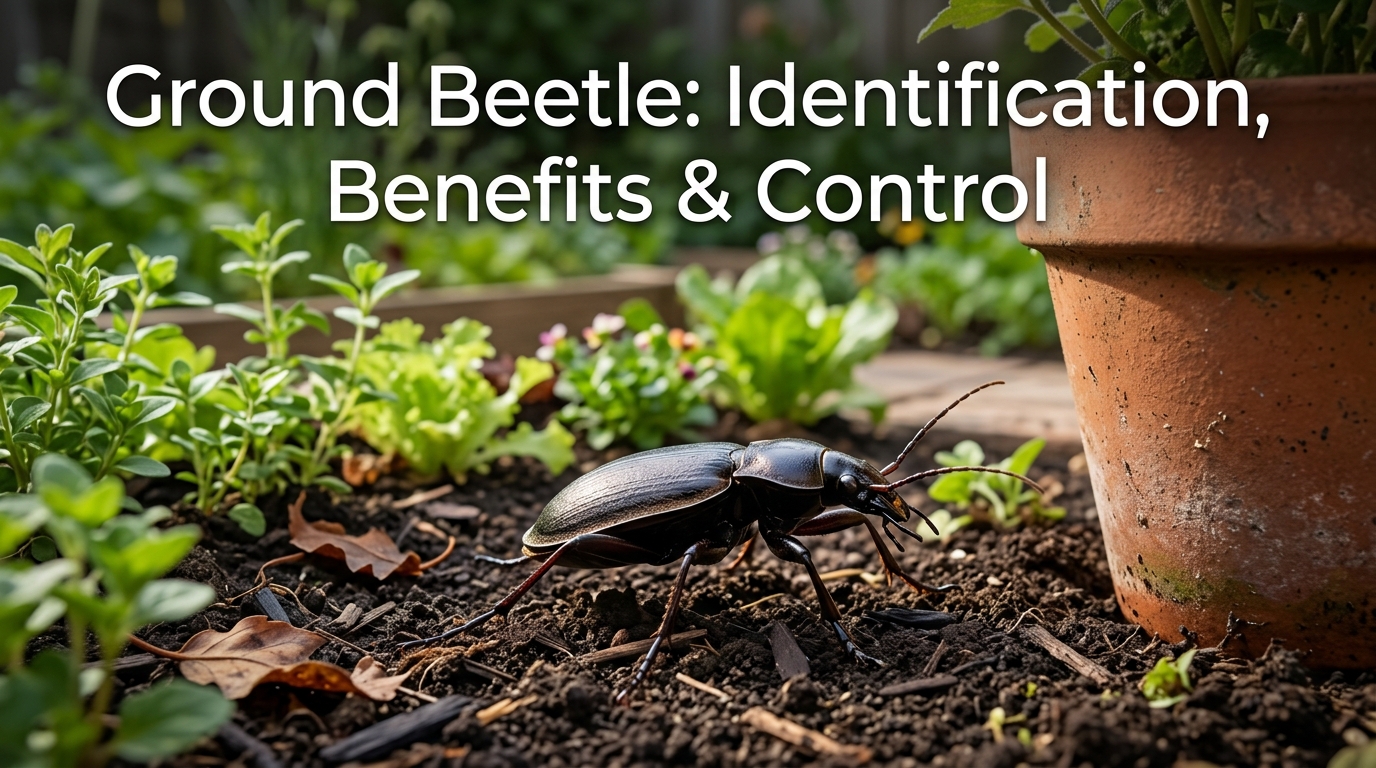

Found a dark beetle racing through soil or beneath a pot? Learn how to spot a ground beetle, why it is usually welcome, and the rare times simple exclusion makes sense.
Quick answer: usually leave them alone.
Ground beetles (family Carabidae) are typically nighttime predators. Outdoors, they do not damage plants, buildings, food, or clothing—and they may help reduce pests near the soil surface.
How to identify a ground beetle
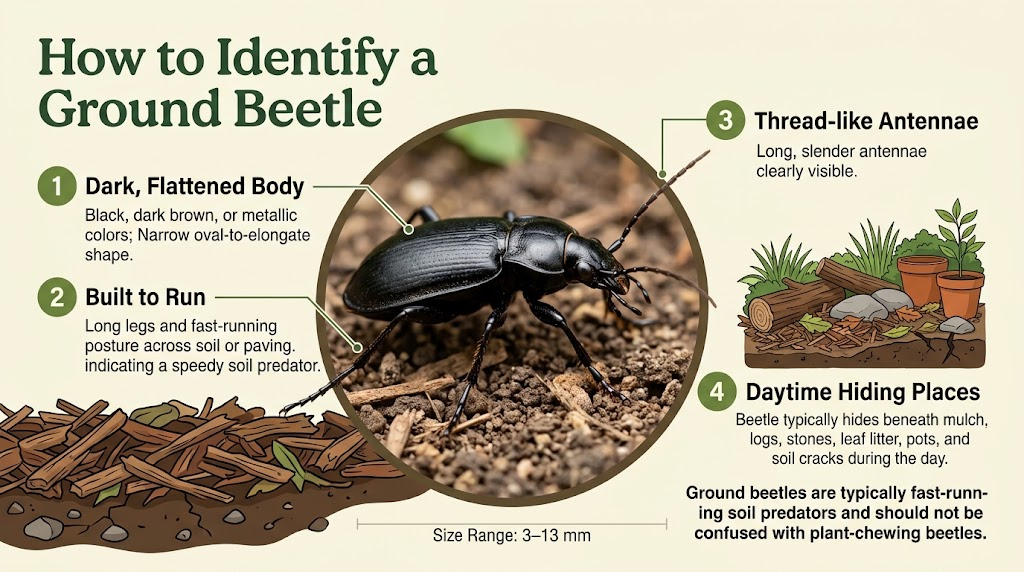
Most ground beetles are about 3–13 mm (1/8–1/2 inch) long, though some species are larger. Look for a low, streamlined body and quick running behavior rather than chewing damage on your plants.
| Dark, flattened body Usually black, dark brown, or metallic, with a narrow oval-to-elongate shape. | Built to run Long legs and a very fast dash across paths, soil, or paving are classic signs. |
| Thread-like antennae Their antennae are noticeably long and slender, helping them navigate at night. | Daytime hiding places Check beneath mulch, logs, stones, leaf litter, pots, and soil cracks. |
Why gardeners welcome them
Adult ground beetles and their larvae hunt on or near the soil surface. They are broad-spectrum natural enemies, so their value is steady pest pressure over time—not an instant cure for a serious outbreak.
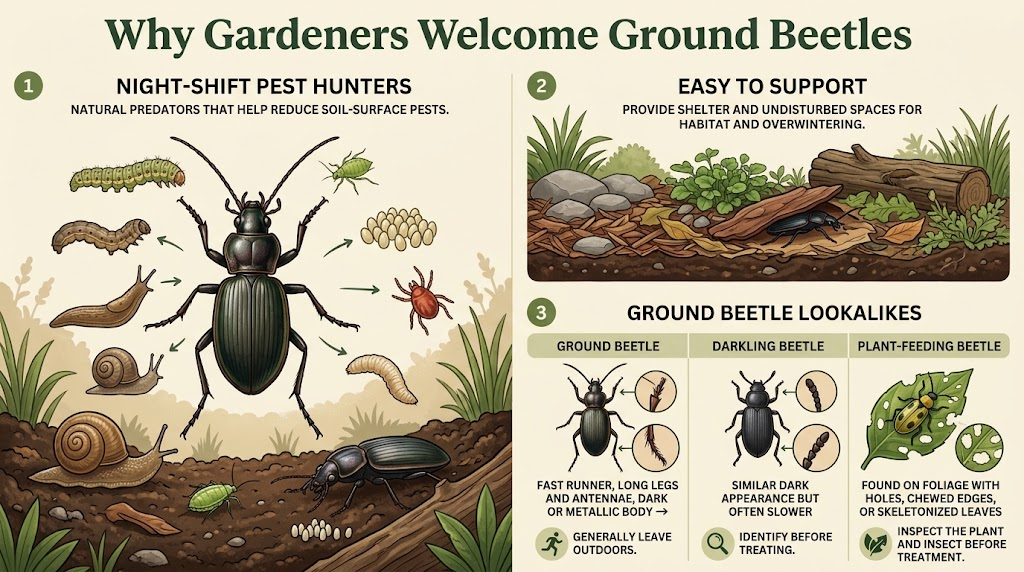
Night-shift pest hunters
Their menu can include caterpillars, cutworms, slugs, snails, aphids, insect eggs, maggots, mites, and other small soil-dwelling pests.
Easy to support
Keep some mulch, stones, leaf litter, perennial cover, and undisturbed edges for shelter and overwintering habitat.
Ground beetle lookalikes
A dark beetle is not automatically a garden pest. Use behavior and where you found it as clues before deciding any treatment is needed.
| Could it be… | Helpful clue | What to do |
|---|---|---|
| Ground beetle | Fast runner; long legs and antennae; often under cover by day; usually dark or metallic. | Leave outdoors. It is generally a useful predator. |
| Darkling beetle | Can look similarly dark but often moves more slowly than a ground beetle. | Identify before treating. Many are harmless visitors in garden spaces. |
| Plant-feeding beetle | Often found directly on foliage or flowers alongside visible leaf holes, skeletonizing, or chewed edges. | Inspect the plant and insect closely before choosing a targeted response. |
Do ground beetles need control?
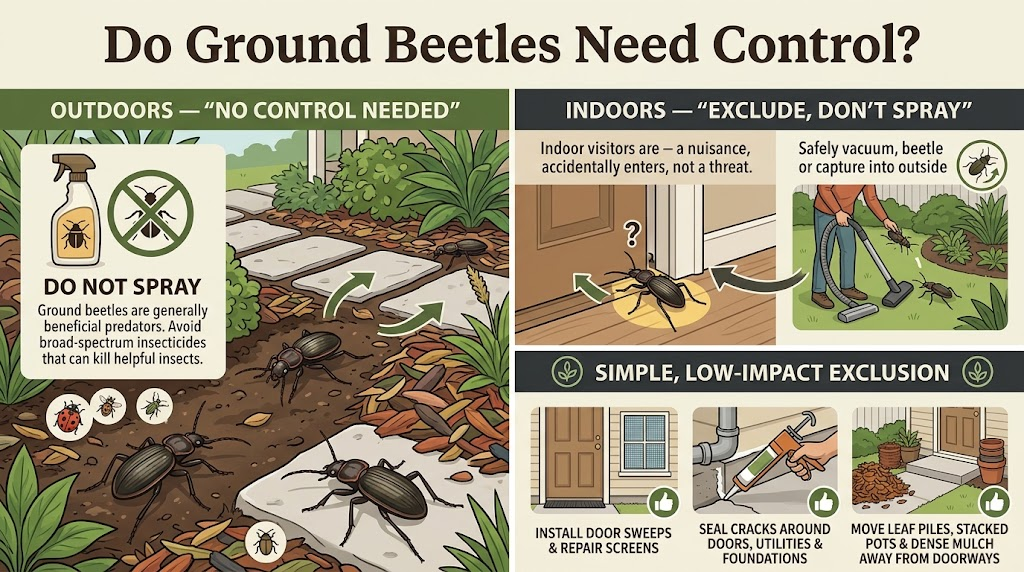
Outdoors: no control needed
If they are in soil, mulch, pathways, or around plants, they are not harming the garden. Avoid broad-spectrum insecticides, which can kill these helpful predators along with pests.
Indoors: exclude, don’t spray
Late-summer wanderers are a nuisance rather than a threat. Capture and release them outside or vacuum occasional visitors, then reduce entry points around doors and foundations.
Simple, low-impact exclusion
Ground beetles are not indoor pests, but a few small home-maintenance steps can reduce accidental visitors while keeping your garden habitat intact.
- Fit or refresh door sweeps, and repair damaged window or foundation screens.
- Seal obvious cracks around doors, utility openings, and the lower foundation.
- Keep leaf piles, stacked pots, and dense mulch a little back from exterior doorways.
Frequently Asked Question’s
1. What is a ground beetle?
A ground beetle is a fast-moving beetle from the family Carabidae. Most species live on or near the soil and are predators that feed on small insects and other garden pests.
2. Are ground beetles good for gardens?
Yes. Ground beetles are generally beneficial garden insects. They prey on caterpillars, cutworms, slugs, insect eggs, aphids, and other small pests.
3. How can I identify a ground beetle?
Look for a dark, flattened body, long slender legs, thread-like antennae, and very fast running behavior. They are often found under mulch, stones, pots, logs, and leaf litter.
4. Do ground beetles damage plants?
Usually, no. Most ground beetles are predators rather than plant feeders, so finding one near your plants does not normally mean your plants are being damaged.
5. Should I get rid of ground beetles?
Outdoor ground beetles generally do not need control. They can help naturally reduce garden pests, so it is usually better to leave them alone.