
How to tell black flies from lookalikes, reduce biting around your home, and avoid treatments that will not solve the real problem.
The short answer
Black flies (Simuliidae) breed in clean, moving water—not in lawn puddles or houseplants. They can bite people and pets, but they rarely damage garden plants. Start with personal protection and timing, not broad insecticides.
How to identify black flies
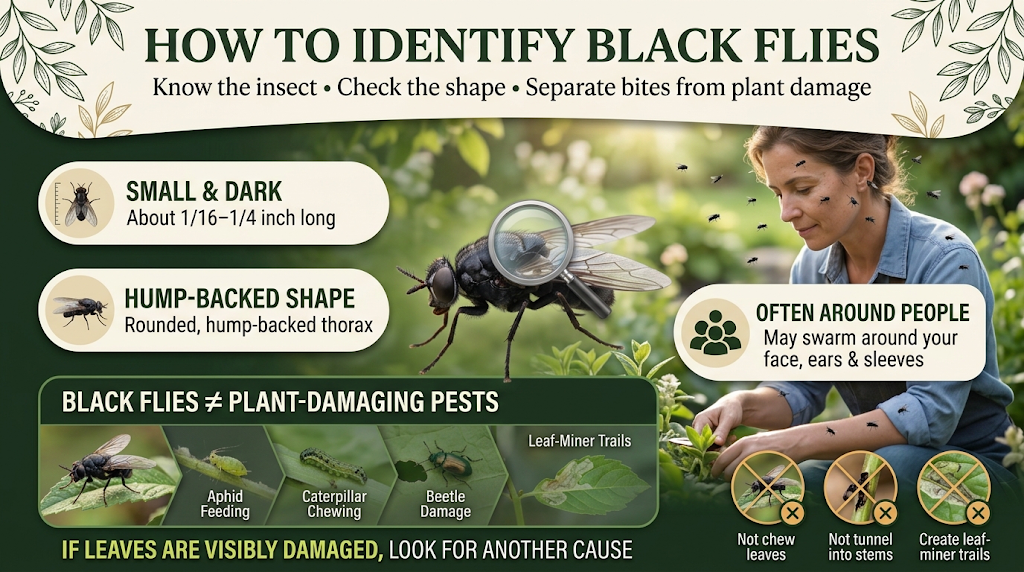
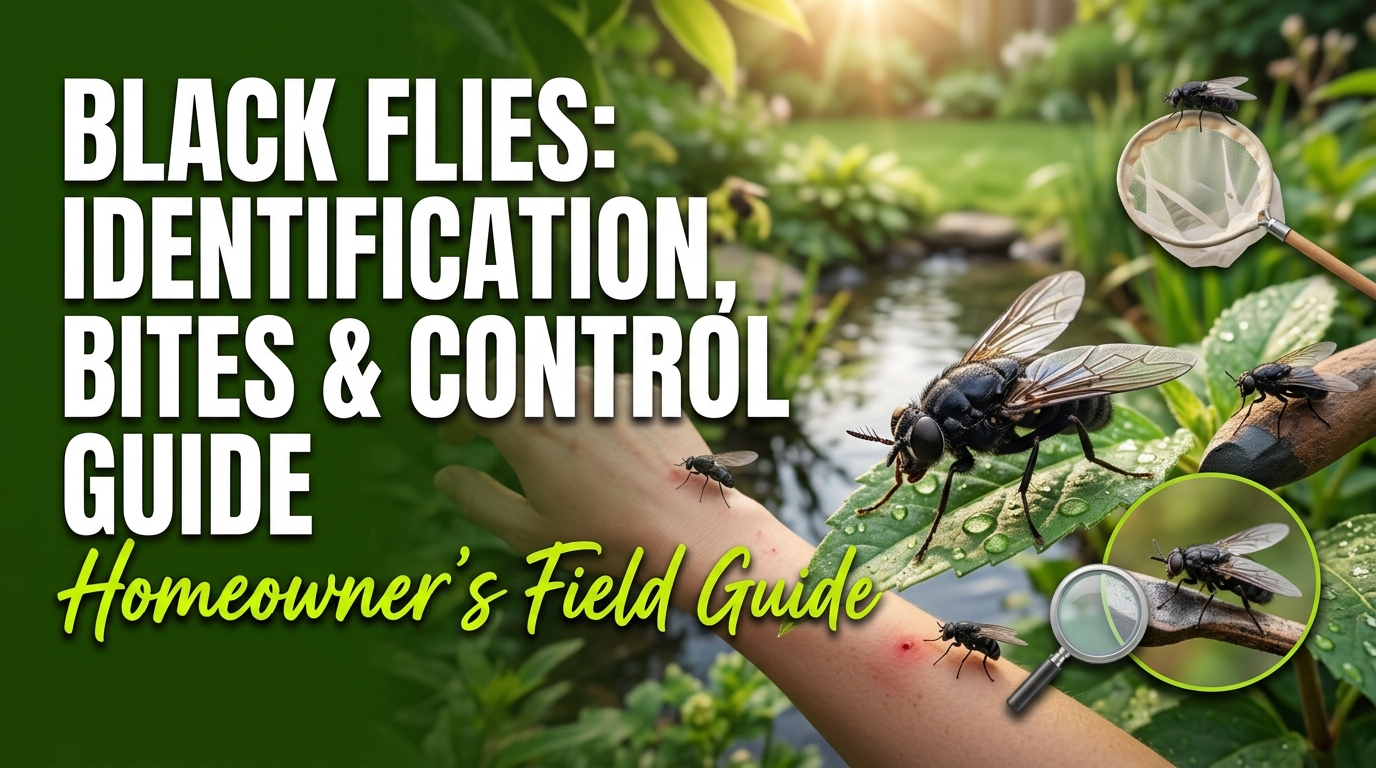
Black flies are tiny, sturdy-looking flies, usually about 1/16 to 1/4 inch long. Many are dark gray, black, or brown, but their most helpful feature is a distinctly rounded, hump-backed thorax when viewed from the side. You may notice them swarming around your face, hairline, ears, or sleeves outdoors.
For gardeners, the key distinction is this: adult black flies are a nuisance because some species bite. They do not chew foliage, tunnel into stems, or leave the plant damage associated with aphids, caterpillars, beetles, or leaf miners. If leaves are visibly damaged, look for another cause.
Signs you may be dealing with black flies
- Small, dark, compact flies with broad wings and a hump-backed silhouette.
- Biting or swarming outdoors, especially near rivers, streams, spillways, or irrigation channels.
- Activity may be strongest in daylight and can spike on still, humid days during spring or early summer.
Lifecycle: why moving water matters
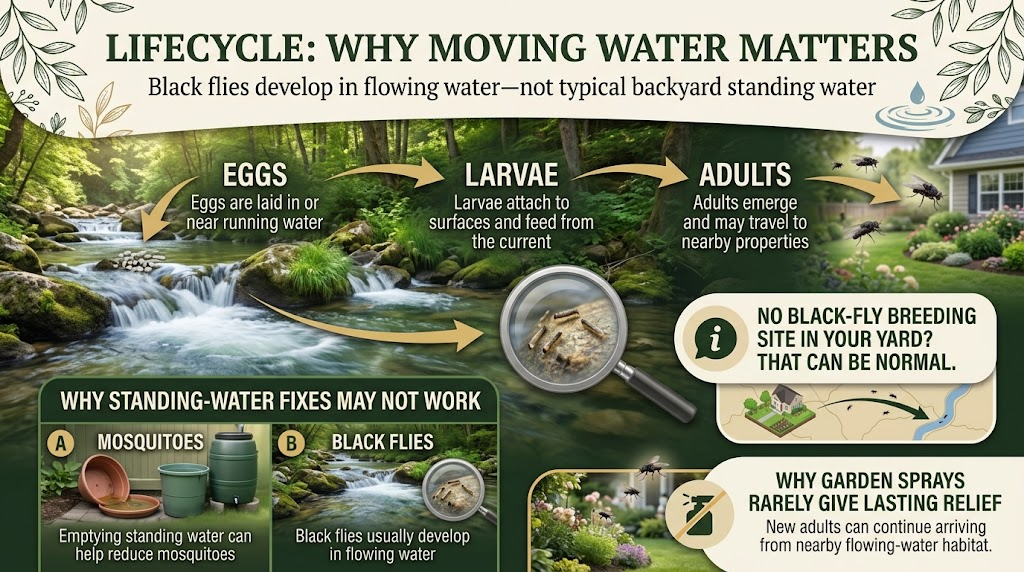
Black flies lay eggs in or near running water. Their larvae attach to submerged rocks, plants, or other firm surfaces and filter food from the current. This is why backyard standing-water fixes—such as emptying saucers or treating rain barrels—are useful for mosquitoes but do not usually address black flies.
Because the source can be a public waterway or drainage channel some distance away, adult activity around a property does not necessarily mean the insects are breeding on that property. This is also why spraying the garden rarely gives lasting relief: new adults can simply fly in from nearby habitat.
What black fly bites can look and feel like
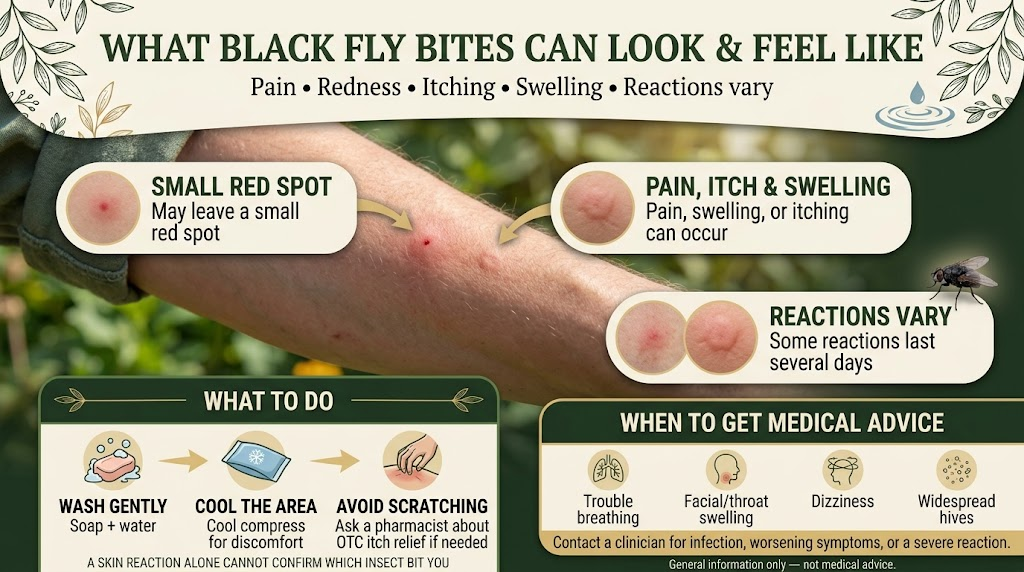
Only females of certain species bite. Their bites can be surprisingly painful and may leave a small red spot, swelling, itchiness, or a little bleeding. Reactions vary widely: one person may have only brief irritation while another develops a larger itchy welt that lasts for several days.
Wash a bite gently with soap and water, avoid scratching, and use a cool compress for discomfort. A pharmacist can help you choose an appropriate over-the-counter option for itching if needed. Keep in mind that a skin reaction alone cannot confirm which insect bit you.
When to get medical advice
Seek urgent care for trouble breathing, facial or throat swelling, dizziness, or widespread hives. Contact a clinician for signs of infection, worsening symptoms, or a severe reaction. This article is general information and is not medical advice.
Common lookalikes
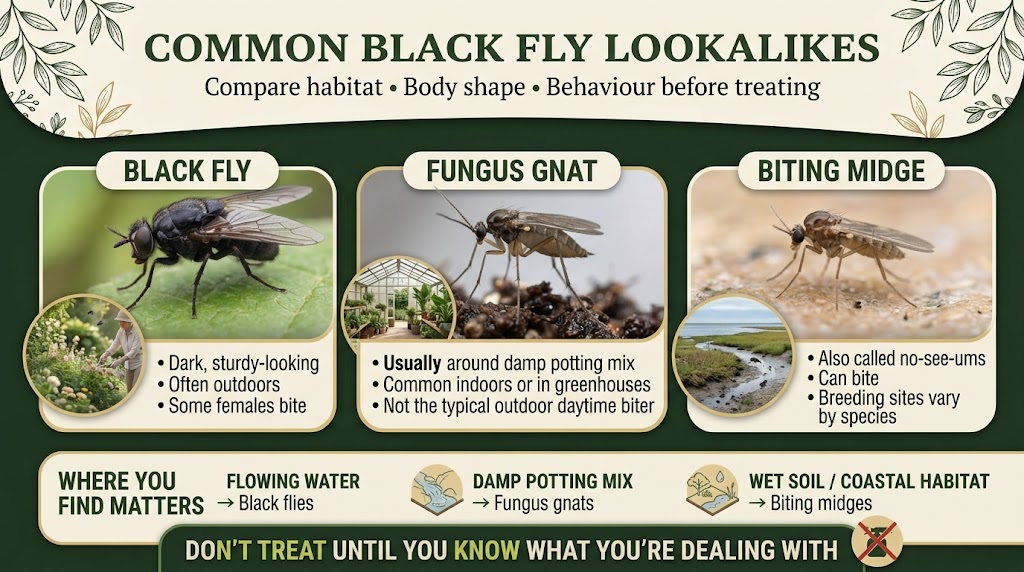
Small flies are easy to misidentify. Comparing where they are found and how they behave can prevent a pointless treatment.
Fungus gnats
Usually seen hovering around damp potting mix indoors or in greenhouses. They are slender, long-legged, and are not the outdoor daytime biters black flies can be.
Biting midges
Often called no-see-ums, these can bite too, but they are typically much finer and more delicate-looking. Their breeding sites vary by species and may include wet soil or coastal areas.
Least-disruptive control options
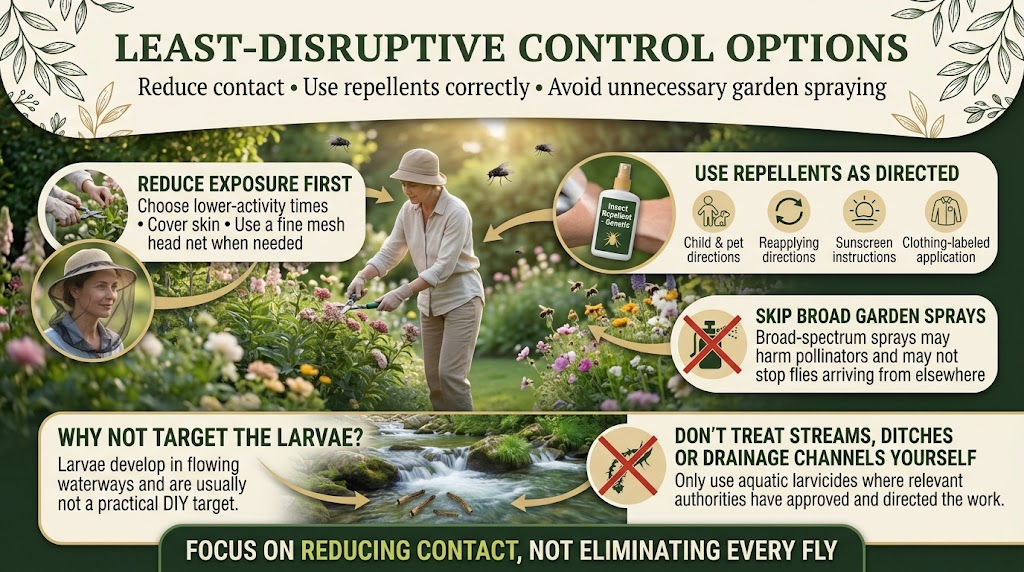
The most effective plan is usually to limit contact with adults rather than trying to eliminate them. Black fly larvae in flowing waterways are not a practical or appropriate DIY target for most homeowners.
1. Reduce exposure first
Schedule pruning, weeding, and other outdoor work for times when activity is lower. Wear light-coloured long sleeves, trousers, and a close-fitting hat. A fine mesh head net is one of the most reliable options when swarms are intense.
2. Use repellents as directed
Choose a skin-applied insect repellent registered for your location and use it exactly according to its label. Follow label instructions for children, pets, reapplication, and combining repellent with sunscreen. Consider treating clothing only with products specifically labeled for that use.
3. Skip broad garden sprays
Foggers and broad-spectrum garden insecticides may harm pollinators and other beneficial insects while doing little about flies arriving from outside your yard. Do not apply larvicides to streams, ditches, or drainage channels unless a relevant authority has approved and directed that work.
A practical prevention routine
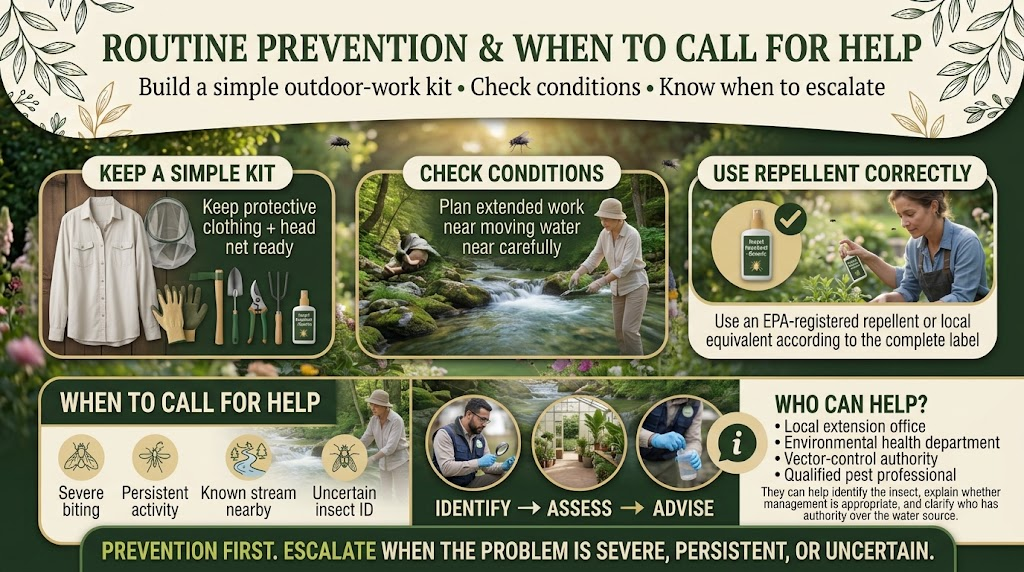
Think of prevention as a small outdoor-work kit. It is simple, repeatable, and much kinder to your garden ecosystem than routine spraying.
- Keep a light long-sleeved overshirt and head net near your gardening tools.
- Check local conditions before planning extended work near moving water.
- Use an EPA-registered repellent or local equivalent according to the complete product label.
When to call for help
If biting is severe, unusually persistent, or concentrated around a known stream, spillway, or public drainage feature, contact your local extension office, environmental health department, or vector-control authority. They can help identify the insect, explain whether management is appropriate, and advise who has authority over the water source. A pest professional can also help rule out another biting fly when identification remains uncertain.
Frequently asked questions
Do black flies damage garden plants?
Usually not. Adult black flies are mainly a biting nuisance to people and animals. Visible chewing, tunnelling, or leaf mines point to a different garden pest or plant problem.
Where do black flies simuliidae come from?
Their larvae develop in clean, moving water, often on submerged rocks or plants. Adults may travel from a stream, river, spillway, or drainage channel beyond your property.
What is the best way to reduce bites?
Limit time outdoors during peak activity, wear light-coloured covering clothing and a fine mesh head net, and use a properly labelled repellent according to its directions.