
A practical, experience-based guide to identifying common garden ants, understanding the real risks, and choosing the least-disruptive control method that actually works.
Finding a trail of ants marching across your kitchen bench or swarming around your patio paving is unsettling — but before you reach for the strongest spray on the shelf, it’s worth pausing. Most ant species in home gardens are harmless, and some are actually beneficial. The key is identifying what you’re dealing with, understanding whether they pose a real risk, and choosing a proportionate response.
I’ve dealt with ants in my own garden and home for over a decade — from minor pavement ant trails to a carpenter ant problem that needed professional help. This guide shares what I’ve learned about getting results without over-treating, wasting money, or harming beneficial insects in the process.
Identifying Common Garden Ants
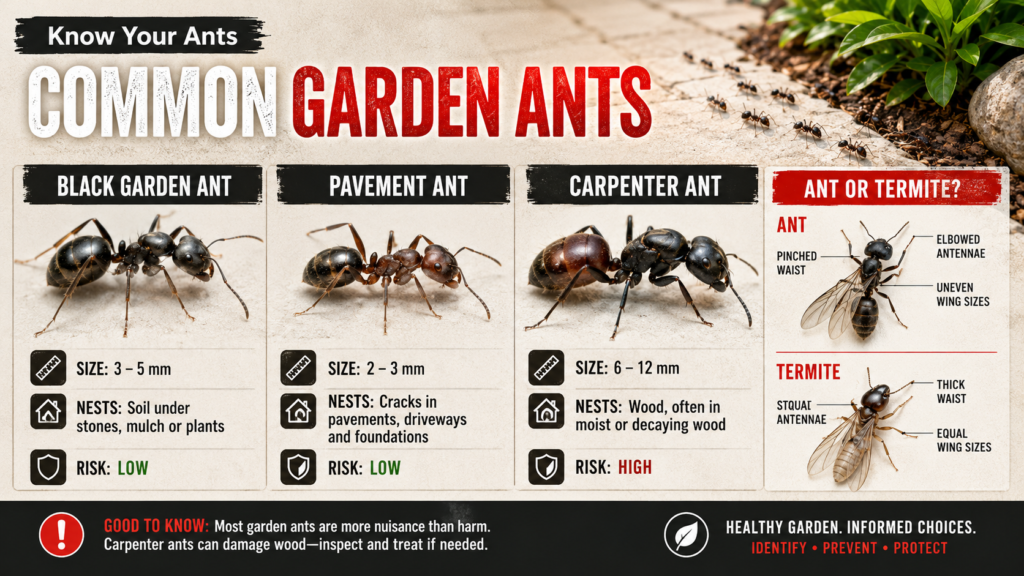
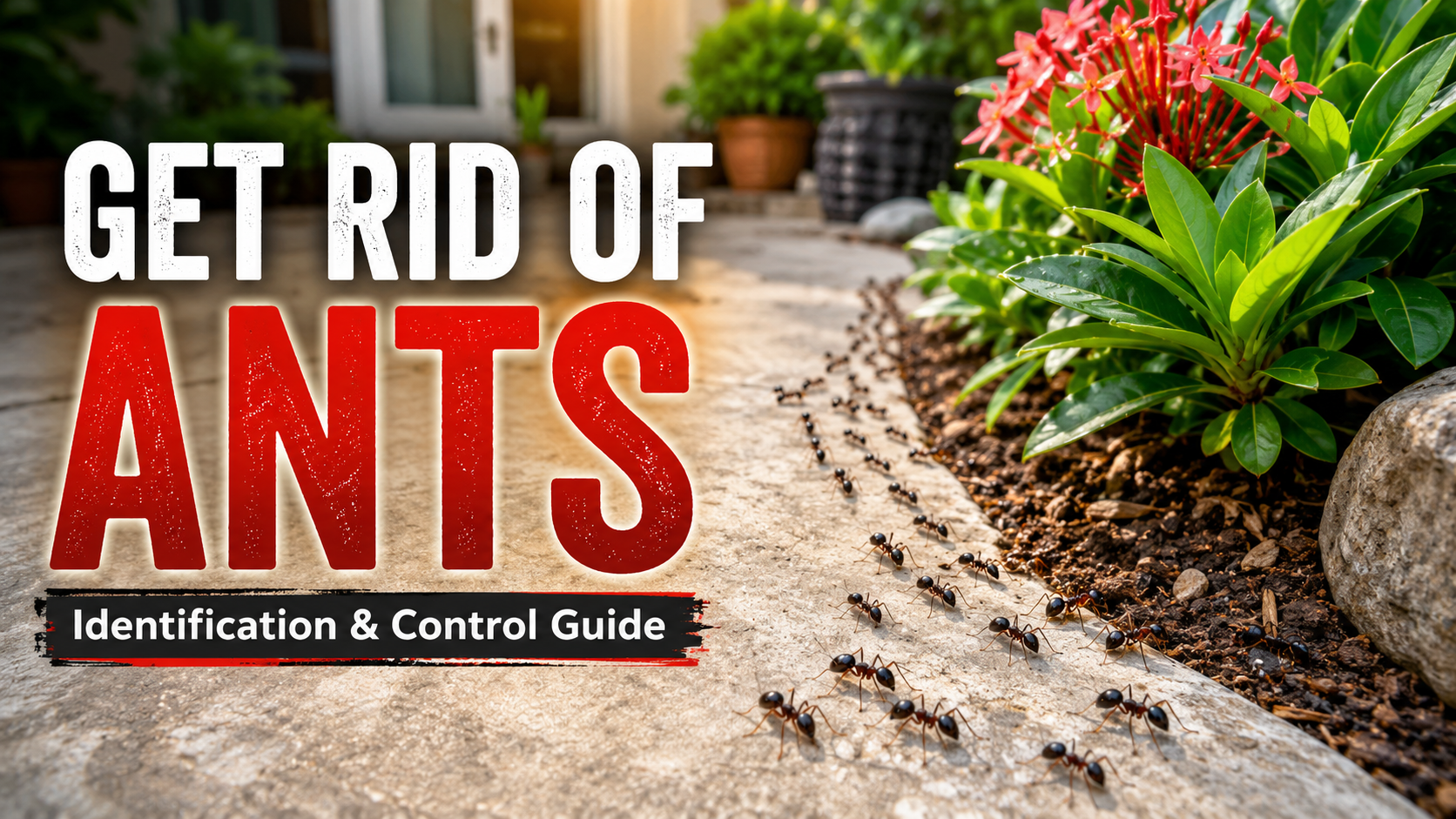
Before choosing a control method, you need to know which ant you’re dealing with. The three most common types found around homes and gardens are black garden ants (Lasius niger), pavement ants (Tetramorium caespitum), and carpenter ants (Camponotus spp.). They differ in size, colour, nesting habits, and — most importantly — the level of risk they pose.
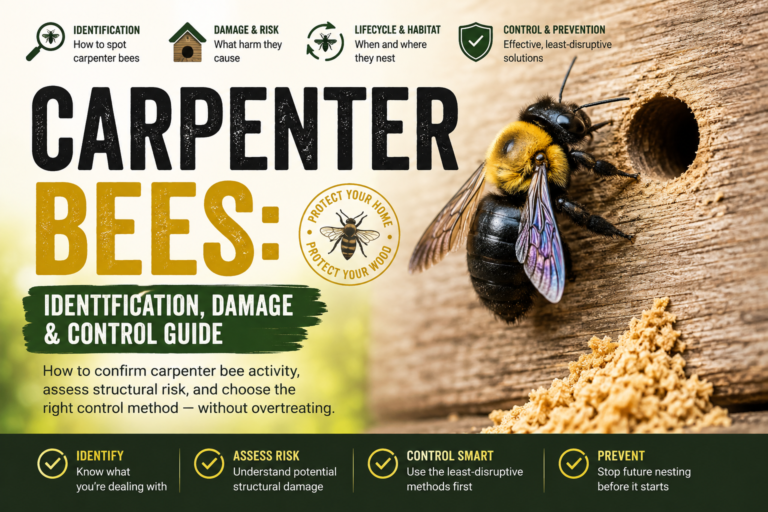
Black garden ants are 3–5 mm long, uniformly dark brown to black, and nest in soil — often under paving slabs, at lawn edges, or in garden beds. They’re the most common species and are generally harmless to plants. Pavement ants are similar in size but lighter brown, with fine parallel grooves on the head visible under magnification. Carpenter ants are significantly larger (6–13 mm), black or dark red-and-black, and nest inside wood rather than soil.
Look for small mounds of fine soil near pavement cracks or at the base of walls (garden/pavement ants), or tiny piles of sawdust-like frass near wooden structures (carpenter ants). Follow ant trails to locate the nest — they almost always travel the same route between nest and food source.
Lookalikes: Termites vs. Ants
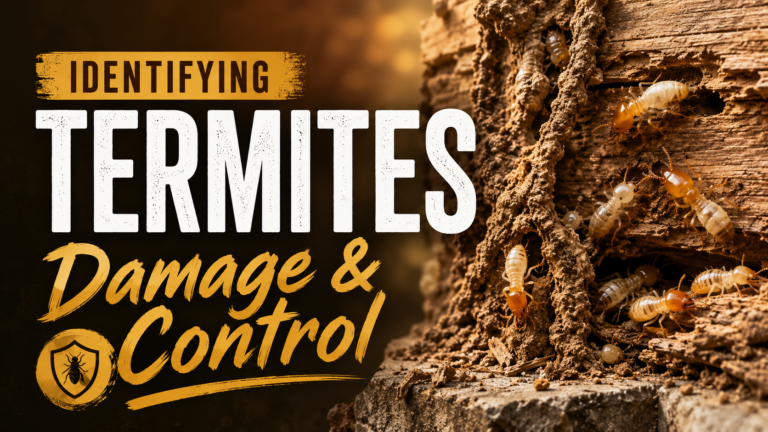
Winged ants are often confused with termites during swarming season. Key differences: ants have a pinched waist, elbowed antennae, and forewings longer than hindwings. Termites have a thick, straight waist, straight bead-like antennae, and wings of equal length. If you suspect termites, seek professional inspection immediately — the damage they cause is far more serious.
Damage & Risks: Are Ants Actually Harmful?
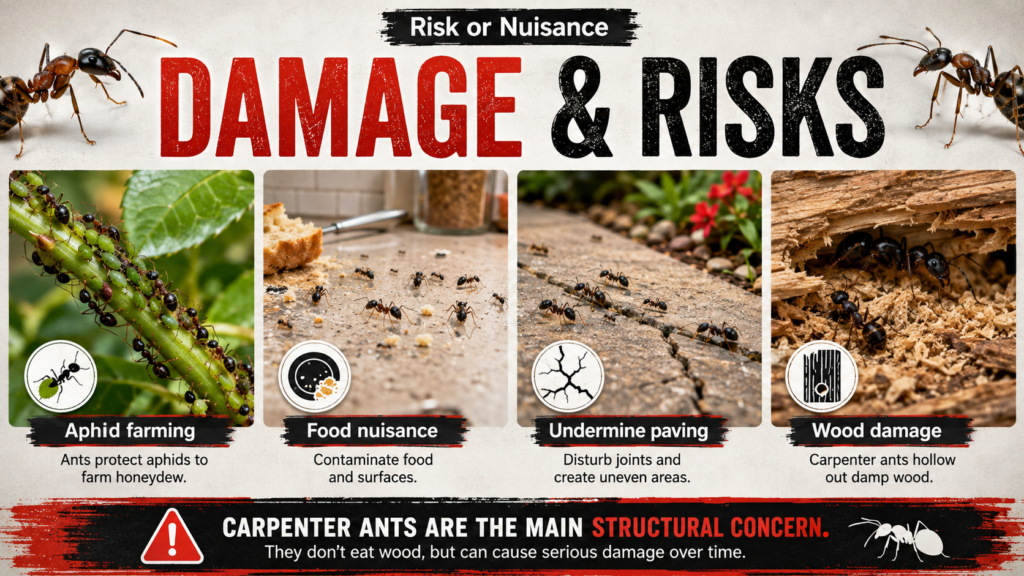
Most garden ants don’t directly damage plants. However, they ‘farm’ aphids — protecting them from predators and moving them to fresh growth — because they feed on the honeydew aphids produce. If you notice a sudden aphid explosion on your roses or beans, check for ant trails running up the stems. Controlling the ants often solves the aphid problem too.
Indoors, ants contaminate food and are a nuisance. Carpenter ants are the exception that causes real structural concern — they excavate galleries inside damp or decaying wood for nesting, weakening timbers over time. Pavement ants can undermine paving and paths by excavating soil beneath slabs.
⚠️ If you find large black ants (6 mm+) emerging from wall cavities, skirting boards, or roof timbers — especially with fine sawdust trails — you may have carpenter ants. Don’t delay: they can cause significant structural damage if left untreated.
Control Methods: Least-Disruptive First
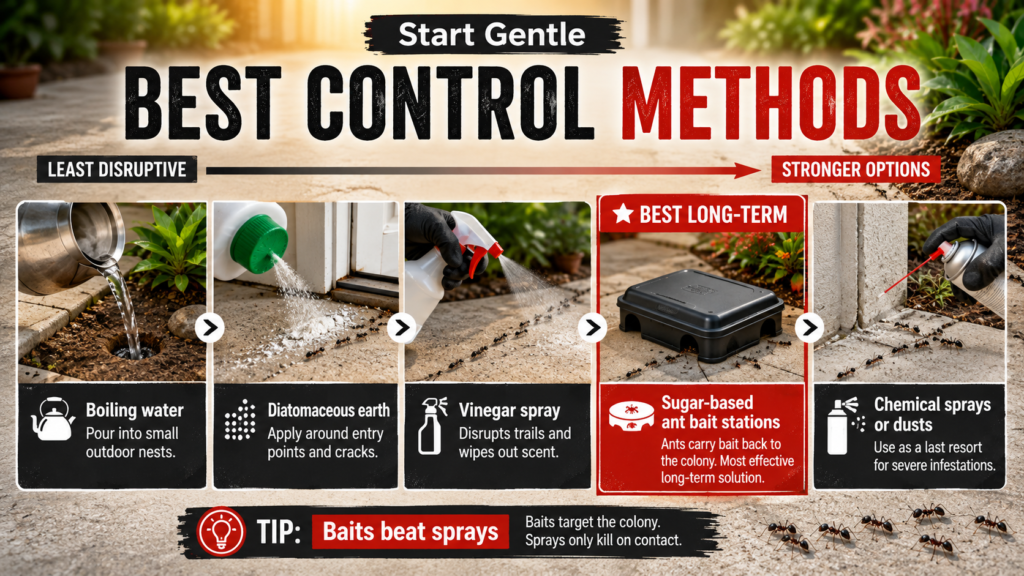
I always recommend starting with the gentlest approach and escalating only if it doesn’t work. Many ant problems resolve with simple habitat changes and don’t need chemicals at all.
Natural & Physical Controls
Boiling water poured directly into nest entrances is immediately effective for small garden nests — repeat over several days. Diatomaceous earth (food-grade) sprinkled around entry points and trails dehydrates ants on contact; reapply after rain. A 50/50 white vinegar and water spray disrupts pheromone trails — spray along windowsills, door thresholds, and known entry points. Cinnamon, peppermint oil, and coffee grounds act as short-term deterrents but won’t eliminate a colony.
Ant Baits (Most Effective Long-Term)
Baits are the gold standard for eliminating entire colonies. Worker ants carry the bait back to the nest, feeding it to larvae and the queen. Use sugar-based baits for most garden ants (they prefer sweet foods) and protein-based baits for grease ants. Place baits along active trails, not directly on the nest. Be patient — it takes 1–2 weeks for the colony to collapse. Borax mixed with sugar water (1 tablespoon borax to 1 cup sugar water) on cotton balls is a cheap and effective DIY option.
Chemical Sprays & Dusts (Last Resort)
Contact sprays kill ants on sight but don’t reach the queen — the colony recovers within days. They also kill beneficial insects indiscriminately. If you must use a chemical treatment, choose a residual dust (permethrin or deltamethrin) applied directly into nest cavities. Always read the label, wear gloves, and keep children and pets away from treated areas. In my experience, baits plus sealing entry points outperform sprays every time.
💡 Emma’s tip: Don’t kill ants you see on the trail — you want them alive to carry bait back to the nest. If you spray the trail, the colony simply reroutes and you’ve lost your best delivery system.
Prevention: Keeping Ants Out Long-Term
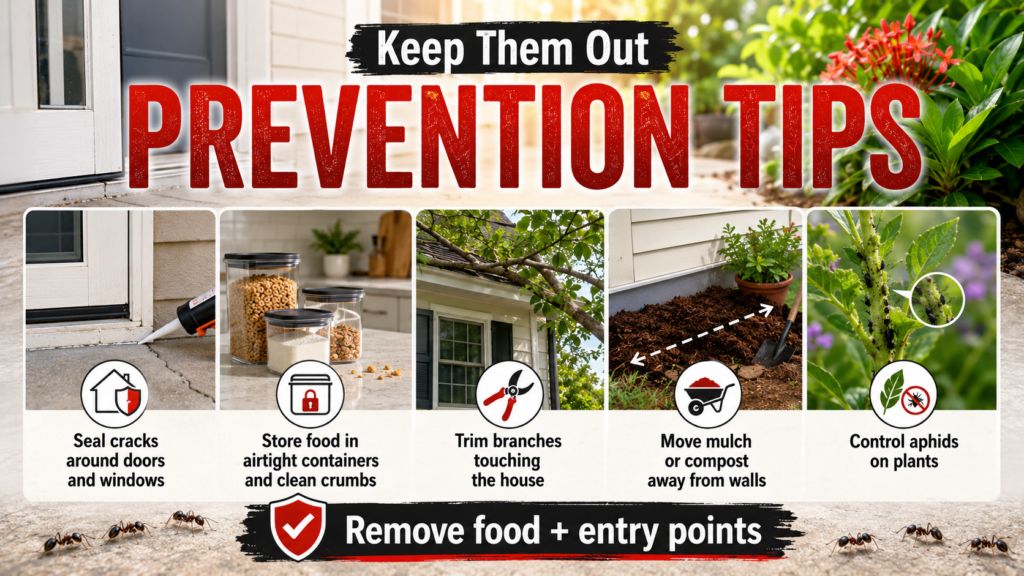
Seal cracks around windows, doors, and pipe entry points with silicone caulk. Keep food in airtight containers and clean up crumbs and spills immediately — especially sugary residues. Move compost bins and mulch at least 30 cm from the house wall. Trim branches and shrubs that touch the building, as ants use these as bridges.
In the garden, manage aphid populations to remove the ants’ food incentive. Encourage natural ant predators: birds, ground beetles, and parasitic wasps all help keep numbers in check. Avoid over-watering near foundations, as damp soil and decaying wood attract carpenter ants.
When to Call a Professional
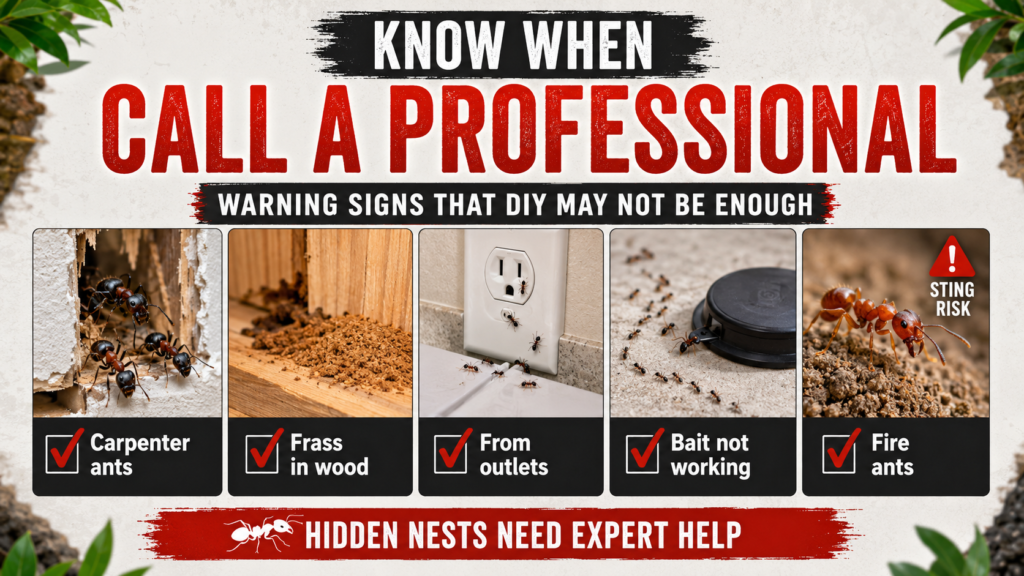
Most ant problems are manageable with the DIY methods above. However, call a licensed pest controller if: you suspect carpenter ants in structural timbers; a colony persists after 3–4 weeks of baiting; ants are emerging from electrical outlets or appliances; or you’re dealing with fire ants (aggressive, painful sting, mound-building species — uncommon in the UK but present in warmer climates).
A professional can identify the species with certainty, locate hidden nests using specialist equipment, and apply targeted treatments that are more effective and less disruptive than broad-spectrum sprays. Expect to pay for an inspection plus 1–2 follow-up visits.
Frequently Asked Questions
Are ants harmful to my garden plants?
Most ants don’t directly damage plants. The main concern is their symbiotic relationship with aphids — they protect aphids from predators in exchange for honeydew, leading to larger aphid infestations. Controlling ants near affected plants often reduces aphid numbers significantly.
How to Get Rid of Ants Quickly?
Boiling water poured into the nest gives instant results for outdoor colonies. Indoors, sugar-and-borax bait placed along trails is the fastest route to eliminating the whole colony — expect 7–14 days for full effect. Contact sprays kill visible ants immediately but don’t solve the problem long-term.
Will vinegar actually get rid of ants?
Vinegar disrupts pheromone trails and deters ants from crossing treated surfaces, but it won’t kill a colony or reach the queen. It’s useful as part of a prevention strategy — spray entry points daily — but pair it with baits if you want the colony gone.
How do I tell if I have carpenter ants?
Carpenter ants are noticeably large (6–13 mm), black or bicoloured red-and-black, and often active at night. Key signs include small piles of fine, sawdust-like frass near wood, faint rustling sounds inside walls, and winged ants emerging indoors in spring. Unlike termites, they don’t eat wood — they excavate it for nesting.