
Everything a beginner needs to grow sweet, juicy strawberries at home — from first seedling to first harvest.
Strawberries are one of the most rewarding crops for home gardeners. They don’t need much space, produce fruit in their first year, and taste incomparably better picked fresh from the garden. In my own raised beds here in Zone 7, I’ve grown June-bearing, everbearing, and day-neutral varieties — and I’ll walk you through what actually works based on seasons of trial and error.
1. When & How to Grow Strawberries
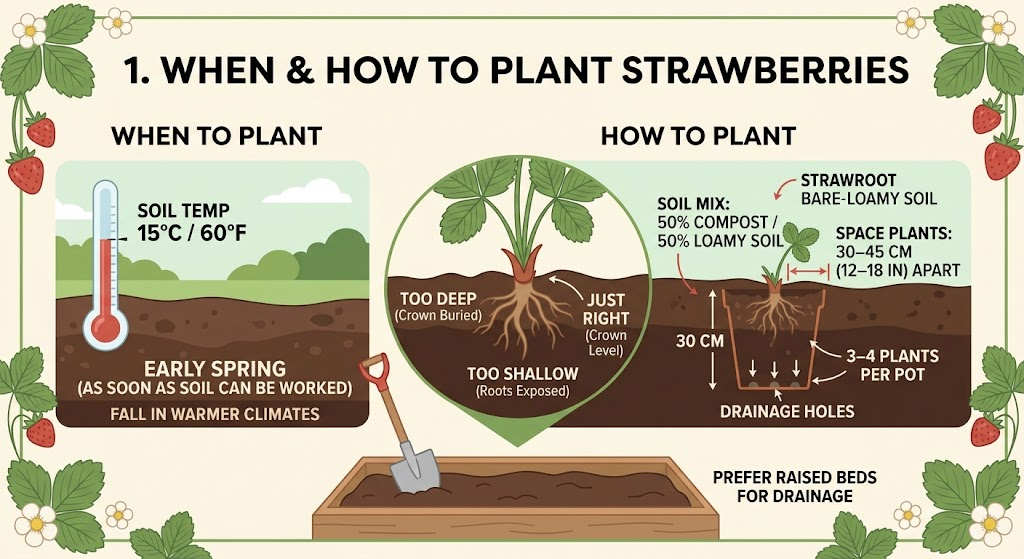
Plant bare-root strawberries in early spring as soon as the soil can be worked (soil temperature around 15°C / 60°F). In warmer climates, a fall planting works well too. Space plants 30–45 cm (12–18 in) apart in rows, with the crown level at the soil surface — burying it too deep is the #1 rookie mistake.
I personally prefer raised beds filled with a 50/50 mix of compost and loamy garden soil. This gives excellent drainage while holding moisture — strawberry roots hate sitting in water. If you’re container gardening, a 30 cm deep pot with drainage holes works perfectly for 3–4 plants.
2. Sun, Soil & Watering
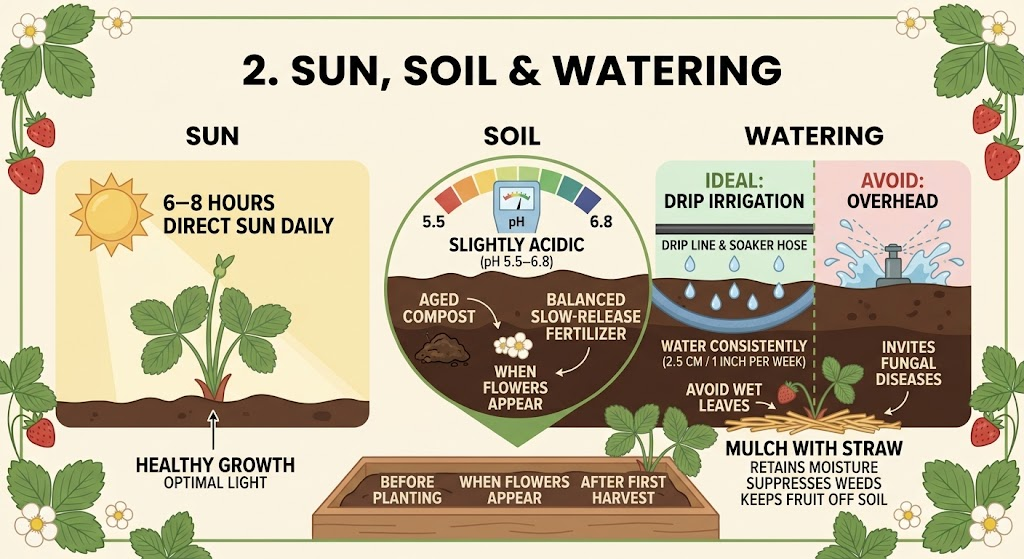
Strawberries need 6–8 hours of direct sunlight daily. They prefer slightly acidic soil (pH 5.5–6.8). Before planting, work in aged compost and a balanced slow-release fertiliser. Feed again when flowers appear and after the first harvest flush.
Water consistently — about 2.5 cm (1 inch) per week. Drip irrigation or soaker hoses are ideal because wet leaves invite fungal diseases. Mulch with straw (yes, that’s where the name comes from!) to retain moisture, suppress weeds, and keep fruit off bare soil.
3. Common Pests & Problems
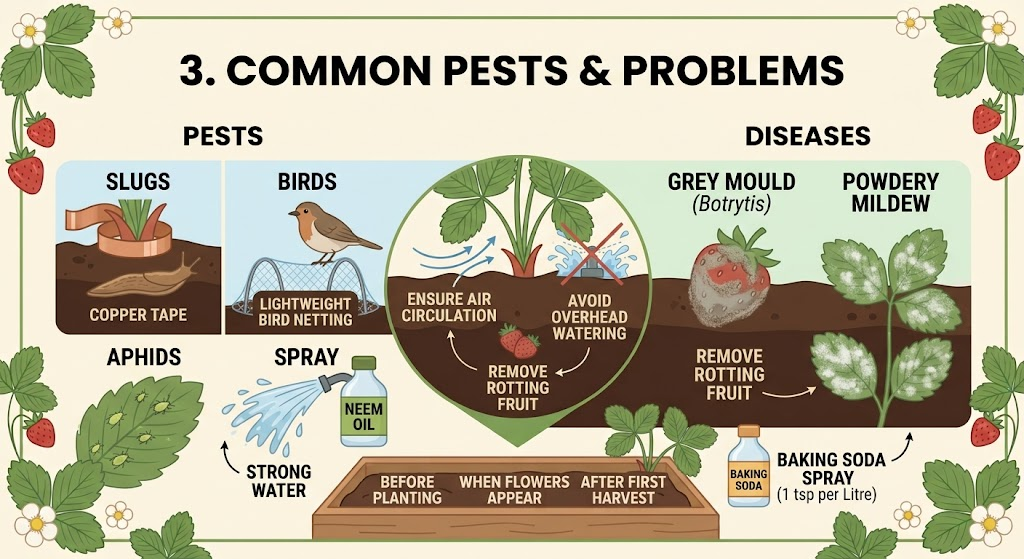
Slugs and birds are your main rivals. I use copper tape around raised beds for slugs and lightweight bird netting draped over hoops for birds. Check under leaves for aphids weekly — a strong water spray or neem oil handles small outbreaks.
Grey mould (Botrytis) appears in humid weather. Prevention is key: ensure air circulation, avoid overhead watering, and remove any rotting fruit immediately. Powdery mildew can strike in late summer — a baking soda spray (1 tsp per litre) helps in early stages.
4. When to Harvest Strawberries
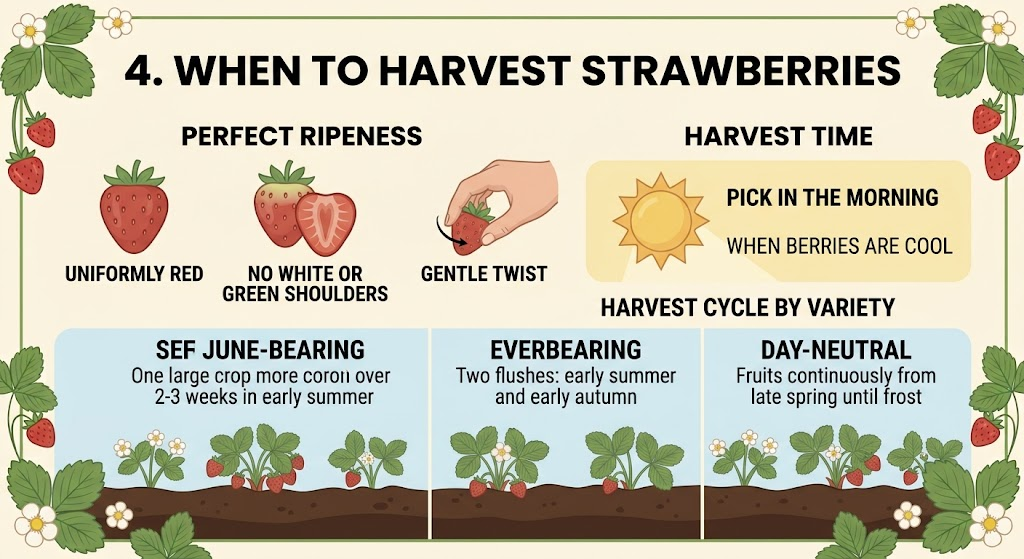
Pick strawberries when they are uniformly red with no white or green shoulders. The fruit should feel slightly soft and come away easily with a gentle twist. Harvest in the morning when berries are cool — they bruise less and last longer.
June-bearing varieties give one large crop over 2–3 weeks. Everbearing types produce two flushes (early summer and early autumn). Day-neutral varieties fruit continuously from late spring until frost. In my experience, everbearing ‘Ozark Beauty’ offers the best balance of flavour and yield for beginners.
5. Beginner Mistakes to Avoid
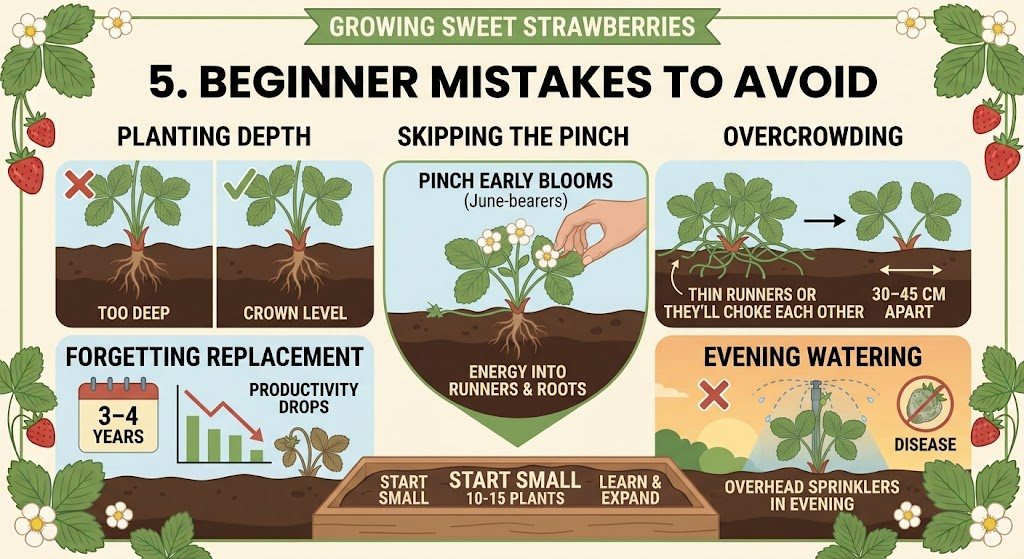
• Planting the crown too deep or too shallow. • Skipping the first-year flower pinch (pinching early blooms on June-bearers lets the plant put energy into runners and roots). • Overcrowding — runners fill space fast, so thin them or they’ll choke each other out.
• Forgetting to replace plants every 3–4 years (productivity drops). • Using overhead sprinklers in the evening, which invites disease. Start small with 10–15 plants, learn your microclimate, and expand from there.
Frequently Asked Questions
Can I grow strawberries in pots on a balcony?
Absolutely. Use at least a 30 cm deep container with drainage holes, quality potting mix, and place it where it gets 6+ hours of sun. Water more frequently than in-ground plants since pots dry out faster.
How long until I get fruit from a new plant?
Everbearing and day-neutral types can produce within 6–8 weeks of spring planting. June-bearers planted in spring are best left to fruit the following year for a stronger harvest.
Do strawberries come back every year?
Yes — strawberries are perennials. With proper winter mulching and bed renovation, a planting can produce well for 3–4 years before needing replacement.