Everything you need to know about planting, caring for, and enjoying these vibrant, easy-to-grow annual flowers in your garden.
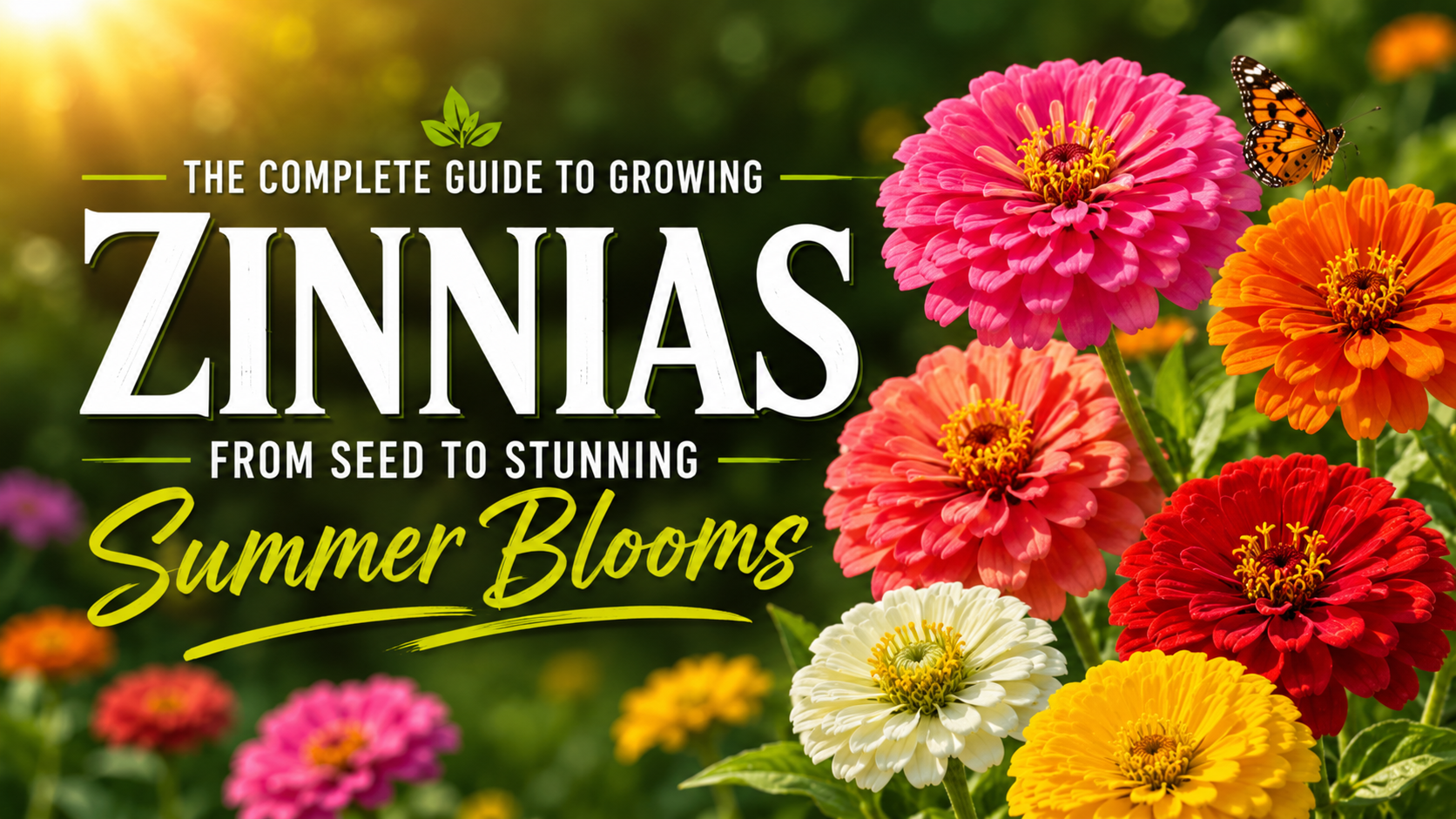
Zinnias are one of the easiest and most rewarding annual flowers you can grow. Native to Mexico, these cheerful plants produce an incredible range of colors — from fiery reds and hot pinks to soft pastels and vibrant lime greens — blooming continuously from midsummer right through to the first frost.
Whether you’re a complete beginner looking for a foolproof first flower, or an experienced gardener wanting armloads of cut flowers, zinnias deliver. They germinate quickly, grow fast in warm weather, and reward regular cutting with even more blooms. This guide covers everything from choosing the right varieties to saving seeds for next year.
Zinnia Care at a Glance
| Full sun — at least 6–8 hours daily | Water at soil level, 1 inch per week |
| Plant after last frost when soil reaches 21°C (70°F) | Space 9–12 inches apart for airflow |
| Well-draining, fertile soil (pH 5.5–7.5) | Blooms in 60–70 days from seed |
Popular Zinnia Varieties
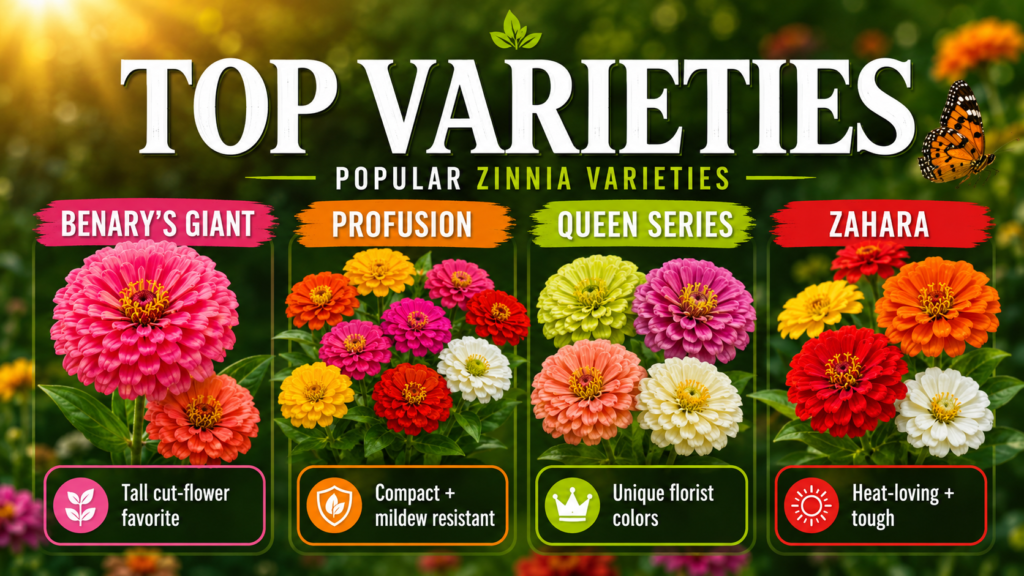
Choosing the right zinnia variety depends on whether you want tall stems for cutting, compact plants for containers, or disease-resistant performers for low-maintenance borders. Here are the top varieties gardeners love:
Benary’s Giant
The gold standard for cut-flower growers. Grows 3–4 feet tall with fully double blooms up to 6 inches across. Long, strong stems make stunning bouquets.
Profusion Series
Compact plants (12–18 inches) with exceptional disease resistance. Perfect for containers, borders, and gardeners in humid climates where mildew is a concern.
Queen Series (Queen Lime, Queen Red Lime)
Beloved by florists for their unusual muted colours — lime green, blush, antique rose. Semi-double flowers on 30-inch stems.
Zahara Series
Extremely heat-tolerant and disease-resistant. Compact habit makes them ideal for hot-climate gardens and containers where other zinnias struggle.
When and How to Plant Zinnias
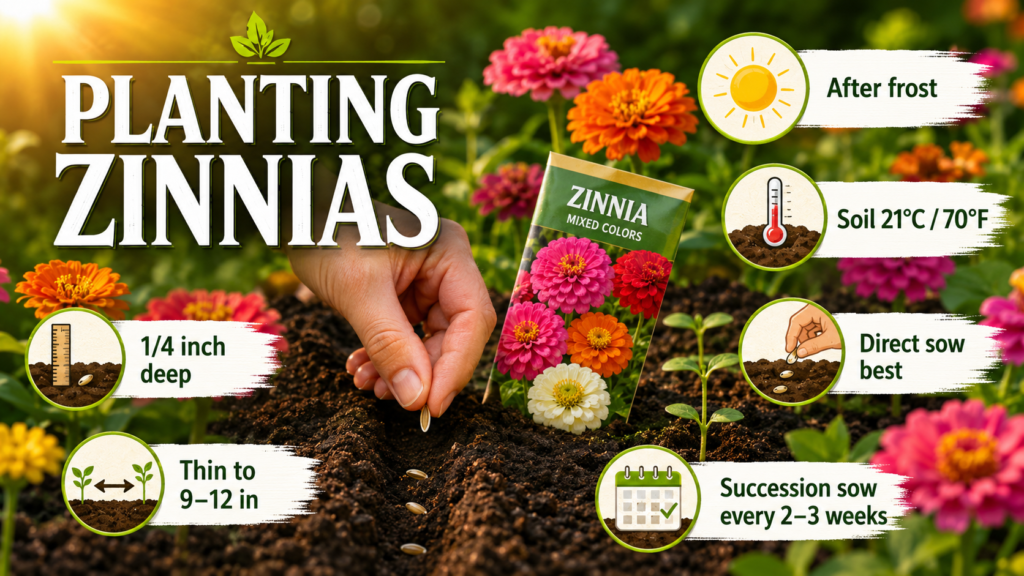
Zinnias are warm-season annuals that despise cold soil. The single most important rule: wait until all danger of frost has passed and your soil temperature has reached at least 21°C (70°F). In most regions, this means late spring to early summer. Planting too early leads to poor germination, rotting seeds, and stunted seedlings.
Direct sowing outdoors is the preferred method for zinnias. They germinate in just 5–7 days in warm soil and dislike root disturbance from transplanting. Sow seeds ¼ inch deep, spacing them 4–6 inches apart. Once seedlings have two sets of true leaves, thin to 9–12 inches apart depending on variety size.
If you want a head start, sow indoors 4–6 weeks before your last frost date in biodegradable pots to minimize transplant shock. Harden off seedlings for a week before planting out. Succession sow every 2–3 weeks through early summer for continuous blooms until frost.
Watering, Feeding & Ongoing Care
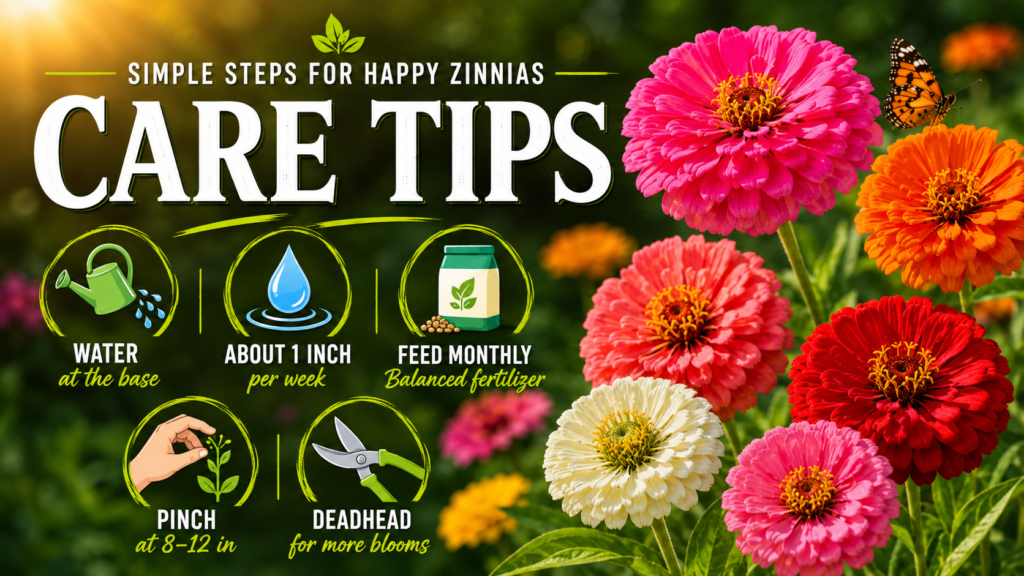
Water zinnias at the base of the plant rather than overhead. Wet foliage is the number one cause of powdery mildew in zinnias. Aim for about 1 inch of water per week — a deep soak every few days is better than frequent shallow watering. Drip irrigation or soaker hoses work brilliantly.
Feed with a balanced flower fertilizer (such as 10-10-10) once a month during the growing season. Avoid high-nitrogen feeds which produce lush foliage at the expense of flowers. Too much fertilizer often results in tall, floppy plants with disappointing bloom counts.
Should You Pinch Zinnias?
Yes! Pinching is the secret to bushy, multi-stemmed zinnia plants. When seedlings reach 8–12 inches tall with 3–4 sets of leaves, snip the main stem just above a leaf node. This sacrifices the first bloom but encourages 3–4 side branches, each producing its own flower. The result: more stems and a much bushier plant.
How to Deadhead Zinnias
Regular deadheading keeps zinnias blooming non-stop. Cut spent flowers back to just above the next leaf node or branching point — don’t just snap off the head. This encourages new flowering stems. Better yet, cut fresh blooms for vases before they fade, and the plant will keep producing replacements.
Zinnias & Pollinators
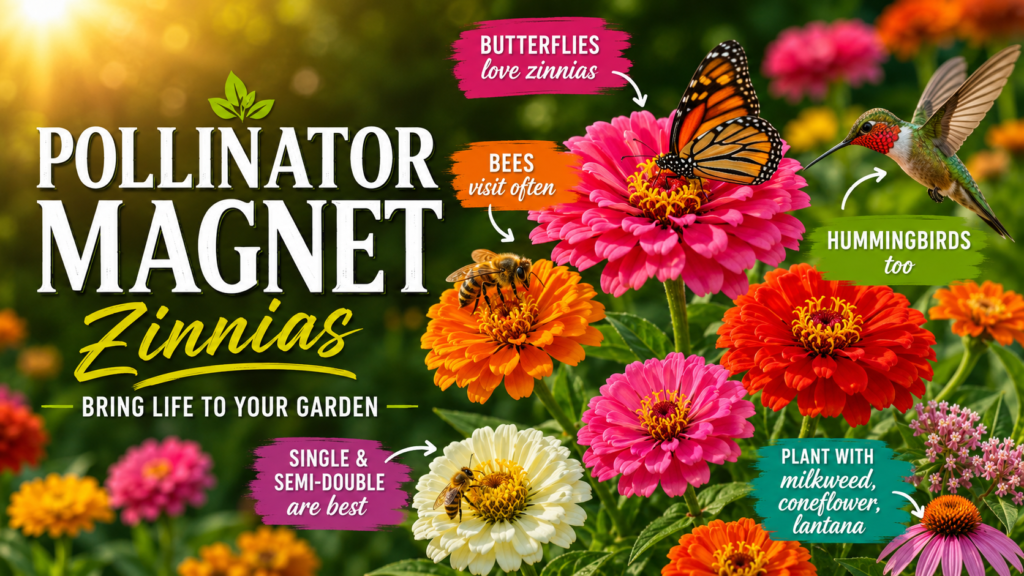
Zinnias are pollinator magnets. Butterflies — especially monarchs, swallowtails, and painted ladies — are drawn to the flat, open flower heads where they can land and feed easily. Bees and hummingbirds visit regularly too. Single and semi-double varieties provide easier access to pollen and nectar than fully double types. Plant zinnias alongside milkweed, coneflowers, and lantana for a pollinator paradise.
Zinnias as Cut Flowers
Zinnias are among the best cut flowers for home gardeners. They last 7–10 days in a vase and the more you cut, the more they produce. For the longest vase life, cut stems in the morning when they’re fully hydrated. Choose blooms that are just fully open — the “wiggle test” works well: gently shake the stem near the flower head. If it wobbles, it’s too young and may wilt.
Strip lower leaves that would sit below the waterline, cut stems at an angle, and place immediately into clean water with flower food. Change water every 2–3 days. Benary’s Giant, Oklahoma, and Queen series are the top picks for cutting gardens.
Common Zinnia Problems & Solutions
Powdery mildew is the most common zinnia issue, appearing as white powdery spots on leaves in late summer. Prevention is key: space plants adequately for airflow, water at soil level, and choose resistant varieties like Profusion or Zahara. If mildew appears, remove affected leaves and apply neem oil or a baking soda spray (1 tablespoon per gallon of water).
Other issues include bacterial leaf spot (brown spots with yellow halos — remove affected foliage), Japanese beetles (hand-pick or use neem oil), and leggy growth (usually from insufficient sunlight or overcrowding). Zinnias planted in full sun with good spacing rarely have serious problems.
How to Save Zinnia Seeds
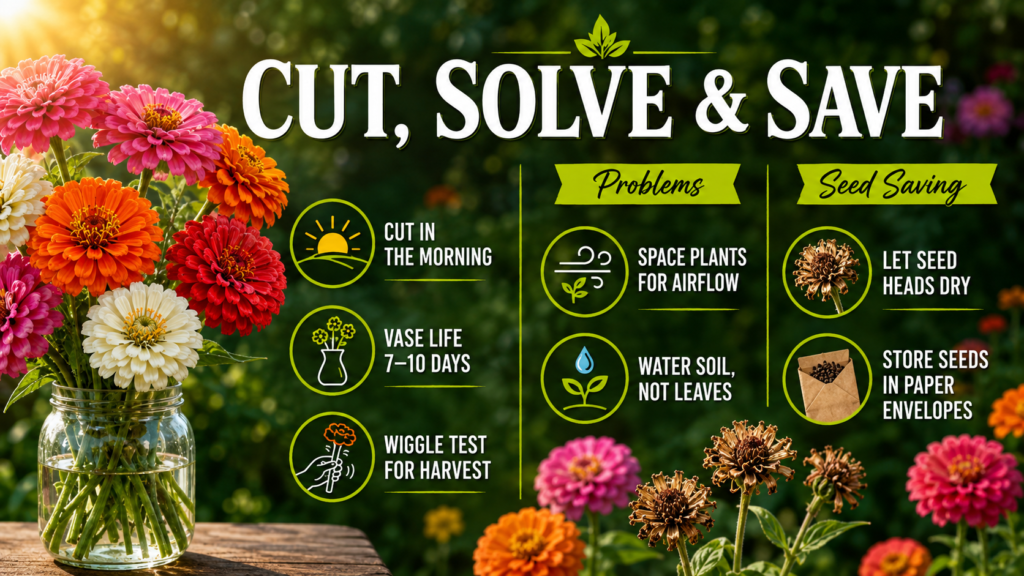
Saving zinnia seeds is simple and satisfying. At the end of the season, allow a few flower heads to fully dry on the plant — they’ll turn brown and papery. Once completely dry, pull the petals apart to reveal arrow-shaped seeds nestled inside. The seeds at the base of each petal are the viable ones.
Store seeds in a paper envelope in a cool, dry place. Label with the variety and date. Zinnia seeds remain viable for 3–5 years when stored properly. Note: hybrid varieties (like Profusion) won’t come true from saved seed, but open-pollinated types will give you similar plants next year.
Frequently Asked Questions
Are zinnias annuals or perennials?
Zinnias are true annuals — they complete their lifecycle in one growing season and do not return from roots the following year. However, they self-seed readily, so you may see volunteer seedlings appear in spring if you leave spent flowers in the garden.
Can I grow zinnias in pots and containers?
Absolutely! Choose compact varieties like Profusion, Zahara, or Thumbelina for containers. Use a pot at least 12 inches wide with drainage holes and quality potting mix. Container zinnias need more frequent watering since pots dry out faster than garden beds.
Why are my zinnias not blooming?
The most common reasons are insufficient sunlight (zinnias need 6–8 hours minimum), too much nitrogen fertilizer (promotes leaves over flowers), or the plants are still too young. Most zinnias begin blooming 60–70 days after sowing. Ensure full sun and switch to a bloom-boosting fertilizer higher in phosphorus.
How do I prevent powdery mildew on zinnias?
Space plants 9–12 inches apart for airflow, water at the base (never overhead), grow in full sun, and choose mildew-resistant varieties. Remove affected leaves promptly and avoid crowding. A preventive spray of neem oil every 2 weeks in humid weather also helps.