
Everything you need to know about planting, growing, and caring for stunning dahlias in your garden.
You May Also Like: Red Flowers: A Bold Statement For Your Garden And Bouquets
What Are Dahlias?
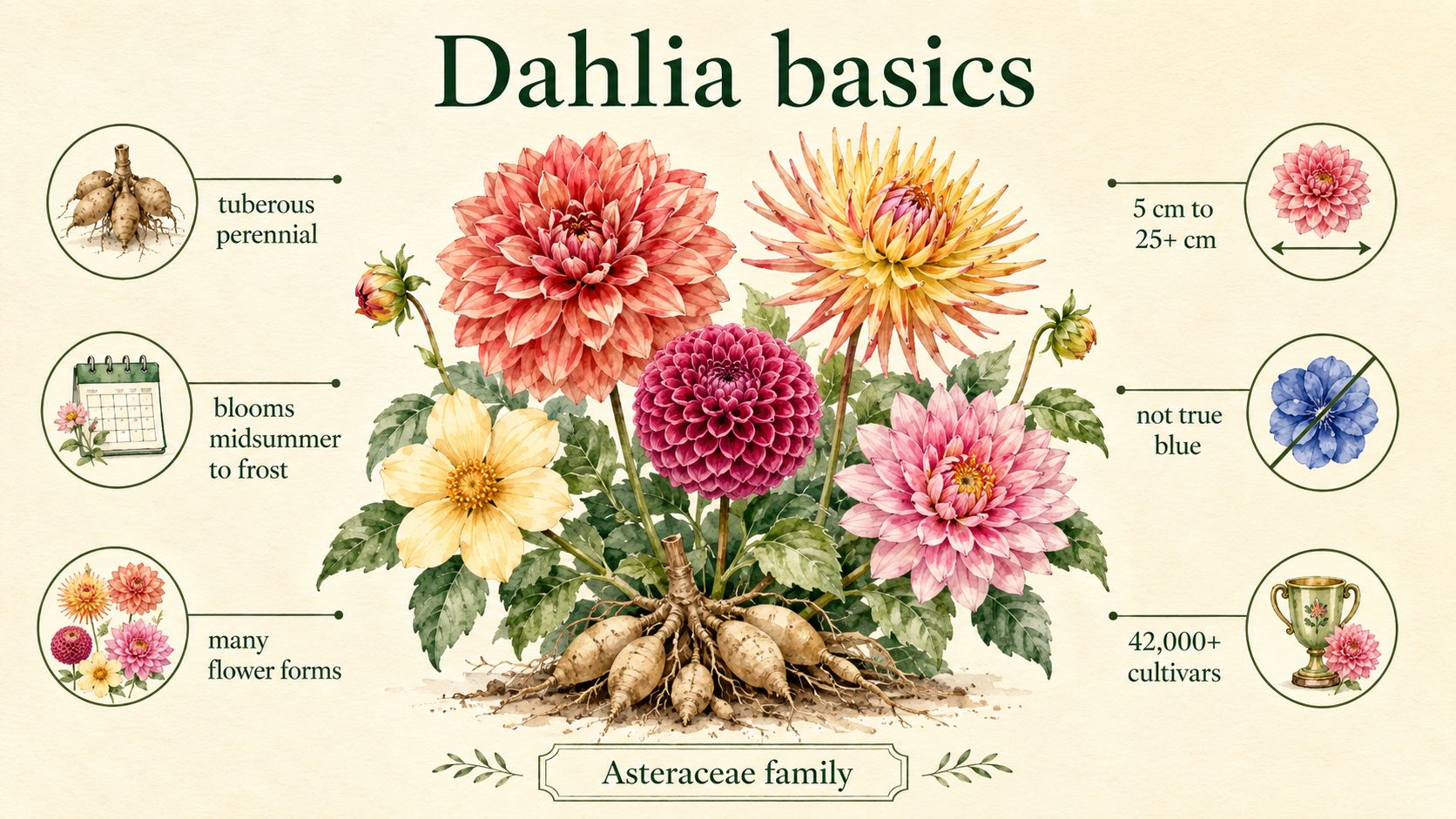
Dahlias are tuberous perennials in the Asteraceae family, native to Mexico and Central America. They produce spectacular flowers from midsummer through the first frost, ranging from tiny pompons just 5 cm across to enormous dinner-plate blooms over 25 cm wide.
Despite being commonly called “dahlia bulbs,” they actually grow from fleshy tubers — similar in shape to a sweet potato. Each tuber stores energy for the following year’s growth, making dahlias an excellent long-term investment for your garden.
With over 42,000 registered cultivars, dahlias come in virtually every colour except true blue. Popular forms include cactus, decorative, ball, pompon, waterlily, collerette, and single-flowered varieties — each offering a different look for borders, containers, and cut-flower arrangements.
When to Plant Dahlia Tubers
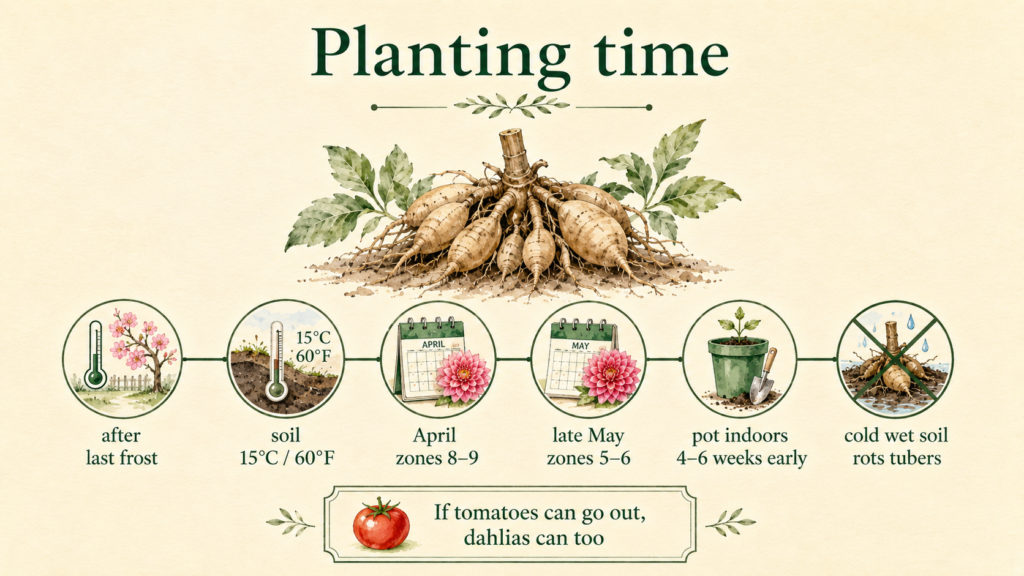
Plant dahlia tubers outdoors after your last frost date, once soil temperature has reached at least 15°C (60°F). In most of the UK this means mid-May; in the US, timing depends on your USDA zone — typically April in zones 8–9 and late May in zones 5–6.
🌡️ Quick rule: If tomatoes can go outside in your area, so can dahlia tubers. Cold, waterlogged soil is the number one killer of newly planted tubers.
For an earlier start, pot up tubers indoors 4–6 weeks before your last frost. Place pots in a bright, frost-free spot and keep the compost barely moist. This gives plants a head start and produces flowers several weeks sooner.
How to Plant Dahlia Tubers: Step by Step
Choosing healthy tubers is the first step toward a great dahlia season. Look for firm, plump tubers with at least one visible growing eye near the crown (where the tuber meets the old stem). Avoid any that are soft, shrivelled, or show signs of mould.
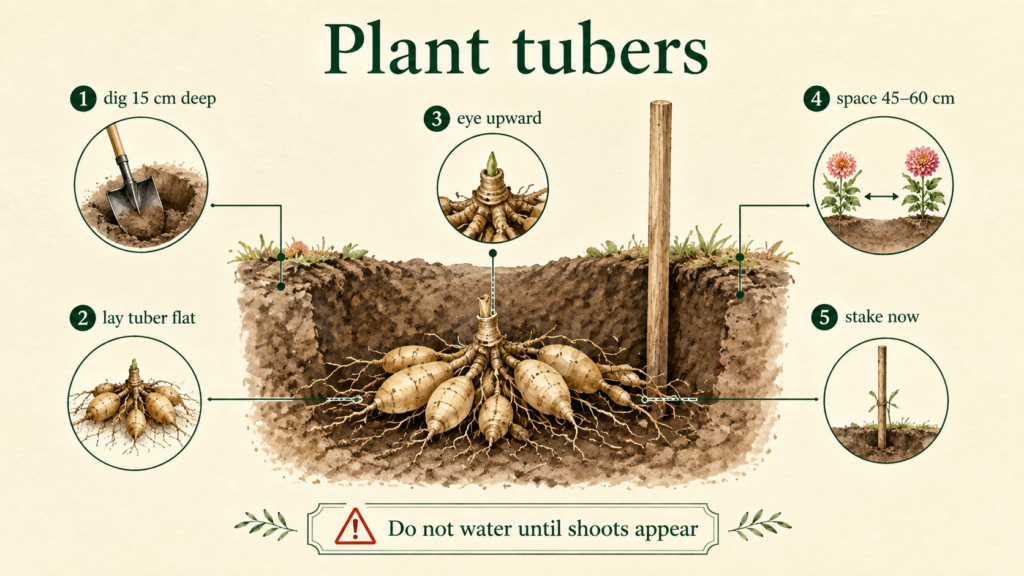
- Dig a hole 15 cm (6 in) deep and wide enough to lay the tuber flat.
- Place the tuber horizontally with the growing eye pointing upward.
- Cover with soil so the eye sits about 5 cm (2 in) below the surface.
- Space tubers 45–60 cm apart for medium varieties, 90 cm for dinner-plates.
- Insert a support stake now — adding one later risks damaging the tuber.
⚠️ Important: Do NOT water immediately after planting dormant tubers. Wait until green shoots emerge above the soil — watering cold, dormant tubers in wet ground is the most common cause of rot.
Watering, Feeding & Soil Requirements
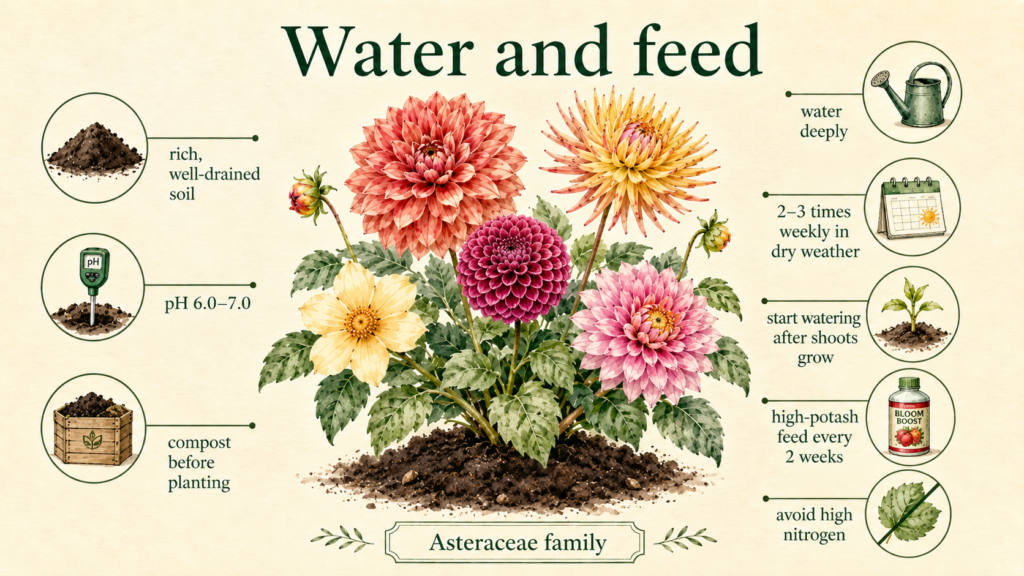
Dahlias thrive in rich, well-drained soil with a slightly acidic to neutral pH (6.0–7.0). Before planting, work in plenty of garden compost or well-rotted manure to improve drainage and fertility. Avoid heavy clay that holds water around the tubers.
Once shoots are actively growing (roughly 15 cm tall), begin watering deeply 2–3 times per week in dry weather. Dahlias are thirsty plants during summer — a good soak at ground level is far better than light overhead sprinkling, which encourages mildew.
Feed every two weeks with a high-potash liquid fertiliser (such as tomato feed) once buds appear. Avoid high-nitrogen feeds which promote lush foliage at the expense of flowers. A monthly handful of bone meal also supports strong tuber development for next year.
Pinching & Staking for Bushier Plants
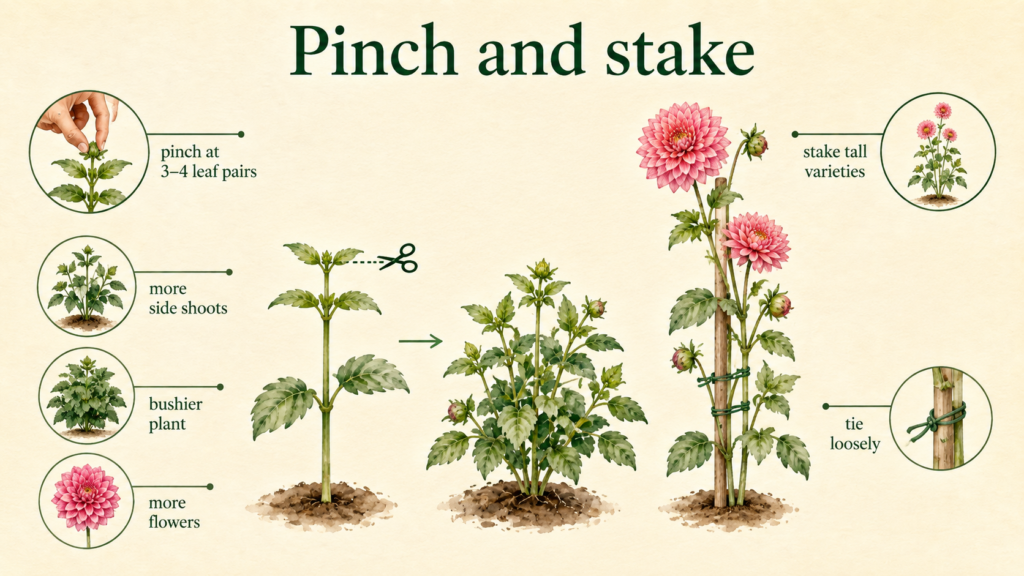
When your dahlia has 3–4 pairs of leaves, pinch out the central growing tip just above the top pair. This encourages side shoots, resulting in a bushier plant with significantly more flowers. You may sacrifice the earliest bloom by a week, but the payoff is dozens more stems.
Tall varieties (over 90 cm) need support to prevent wind damage. Use a sturdy stake at least 1.5 m tall, inserted at planting time, and tie stems loosely with soft twine as they grow. For a neater look, use a grow-through ring placed over the stake at 60 cm height.
Deadheading for Continuous Blooms
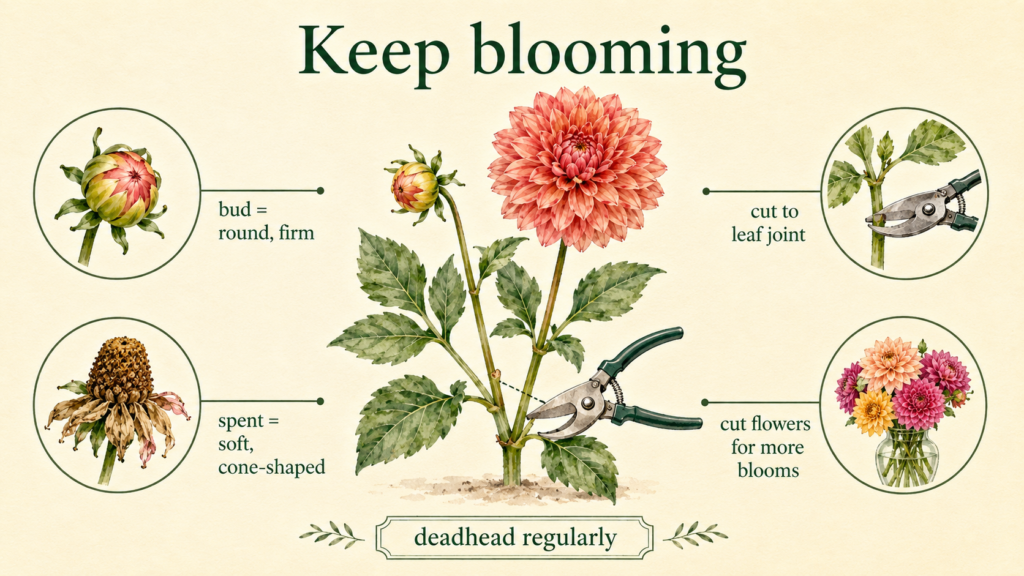
Regular deadheading is the single best thing you can do to keep dahlias flowering from July through October. Once a flower fades, the plant puts energy into forming seed — deadheading redirects that energy into producing new buds instead.
How to tell spent from unspent: a spent dahlia head feels soft and looks cone-shaped (like an inverted V), while an unopened bud is round and firm. Cut spent stems back to a leaf joint or side shoot. Better yet, cut flowers regularly for indoor vases — it’s the most enjoyable form of deadheading.
Growing Dahlias in Containers
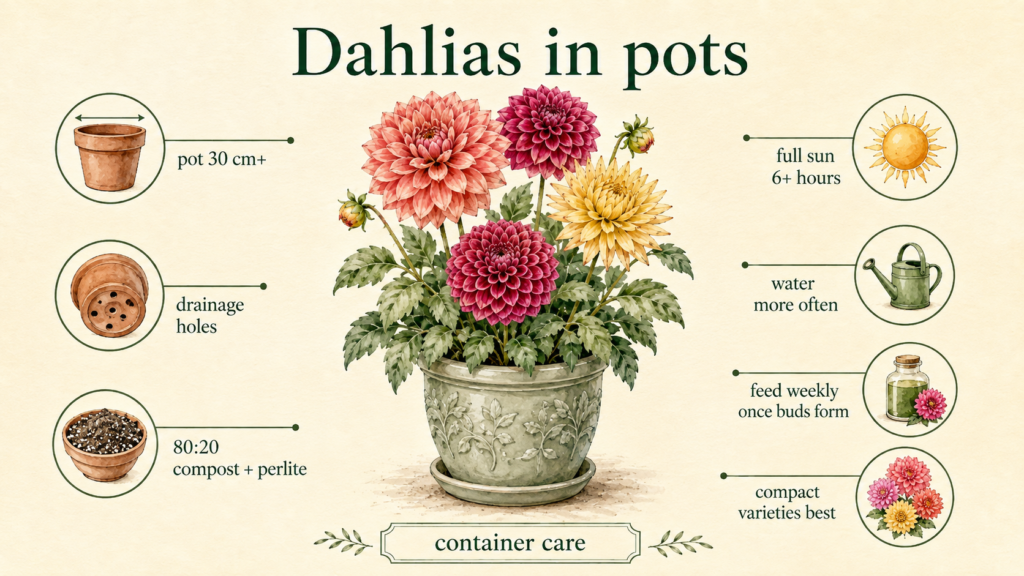
Dahlias make excellent container plants, especially compact varieties under 60 cm. Choose a pot at least 30 cm wide and deep, with drainage holes. Use a mix of multipurpose compost and perlite (80:20) to ensure good drainage while retaining moisture.
Container dahlias need more frequent watering than those in the ground — daily in hot weather. Feed weekly with liquid tomato fertiliser once buds form. Position in full sun (6+ hours) and rotate the pot occasionally for even growth. Varieties like ‘Gallery’ and ‘Topmix’ series are bred specifically for pots.
Common Dahlia Problems & Solutions
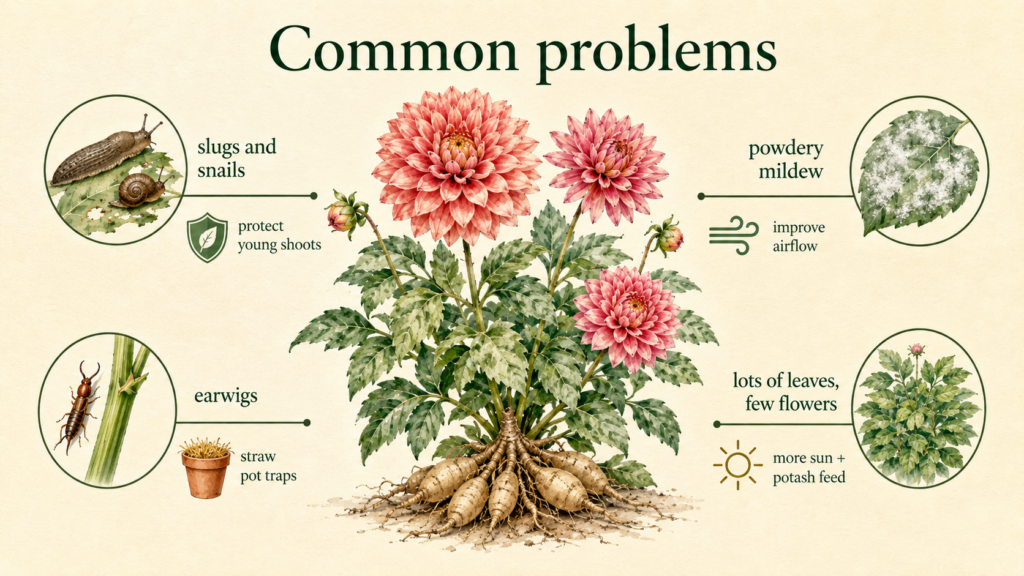
Slugs and snails are the biggest threat to young dahlia shoots in spring. Protect emerging growth with copper tape, organic slug pellets, or beer traps. Once stems are robust and above 30 cm, slug damage becomes minimal.
Powdery mildew appears as white patches on leaves, usually in late summer when air circulation is poor. Improve spacing, water at ground level rather than overhead, and remove badly affected leaves. Earwigs can damage petals — trap them overnight in upturned straw-filled pots on canes.
If your dahlia produces lots of foliage but few flowers, the likely causes are too much nitrogen fertiliser, insufficient sunlight (less than 6 hours daily), or failure to deadhead spent blooms. Switch to a potash-rich feed and move to a sunnier position if possible.
Winter Storage & Dividing Tubers
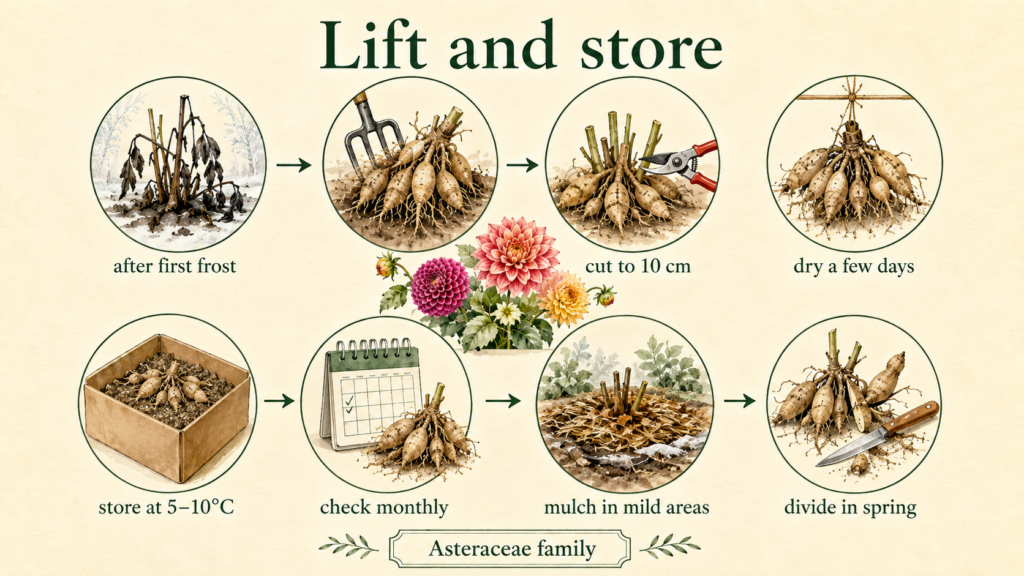
In areas where the ground freezes (USDA zones 7 and below, most of the UK), dahlia tubers should be lifted after the first frost blackens the foliage. Cut stems back to 10 cm, carefully dig up the clump, and wash off excess soil. Allow tubers to dry upside-down for a few days.
Store tubers in a cool, dark, frost-free place (5–10°C) over winter. Pack them in dry compost, vermiculite, or wood shavings inside a cardboard box. Check monthly for rot or shrivelling — mist lightly if tubers look overly dry.
In mild areas (zone 8+ or sheltered UK gardens), tubers can often survive in the ground with a thick mulch of bark or straw for insulation. Divide large clumps in spring: use a clean knife to separate tubers, ensuring each piece has at least one growing eye attached to a portion of the crown.
Frequently Asked Questions
Do dahlias come back every year?
Yes — dahlias are perennials that return from their tubers each year. In cold climates you must lift and store tubers over winter, but in mild regions they can stay in the ground with protective mulch.
How much sun do dahlias need?
Dahlias need a minimum of 6 hours of direct sunlight per day — ideally 8 or more. They will grow in partial shade but produce fewer, smaller flowers and weaker stems.
Are dahlias grown from bulbs or tubers?
Tubers — not bulbs. Although garden centres sometimes label them as bulbs, dahlias grow from fleshy tuberous roots similar to sweet potatoes. Each tuber needs a visible growing eye (bud) to produce a new plant.
Why is my dahlia not blooming?
The most common reasons are insufficient sunlight, too much nitrogen fertiliser (which promotes leaves over flowers), failure to deadhead, or planting too late in the season. Switch to a high-potash feed and ensure at least 6 hours of sun.