
Everything you need to know about planting, caring for, and enjoying Echinacea in your garden.
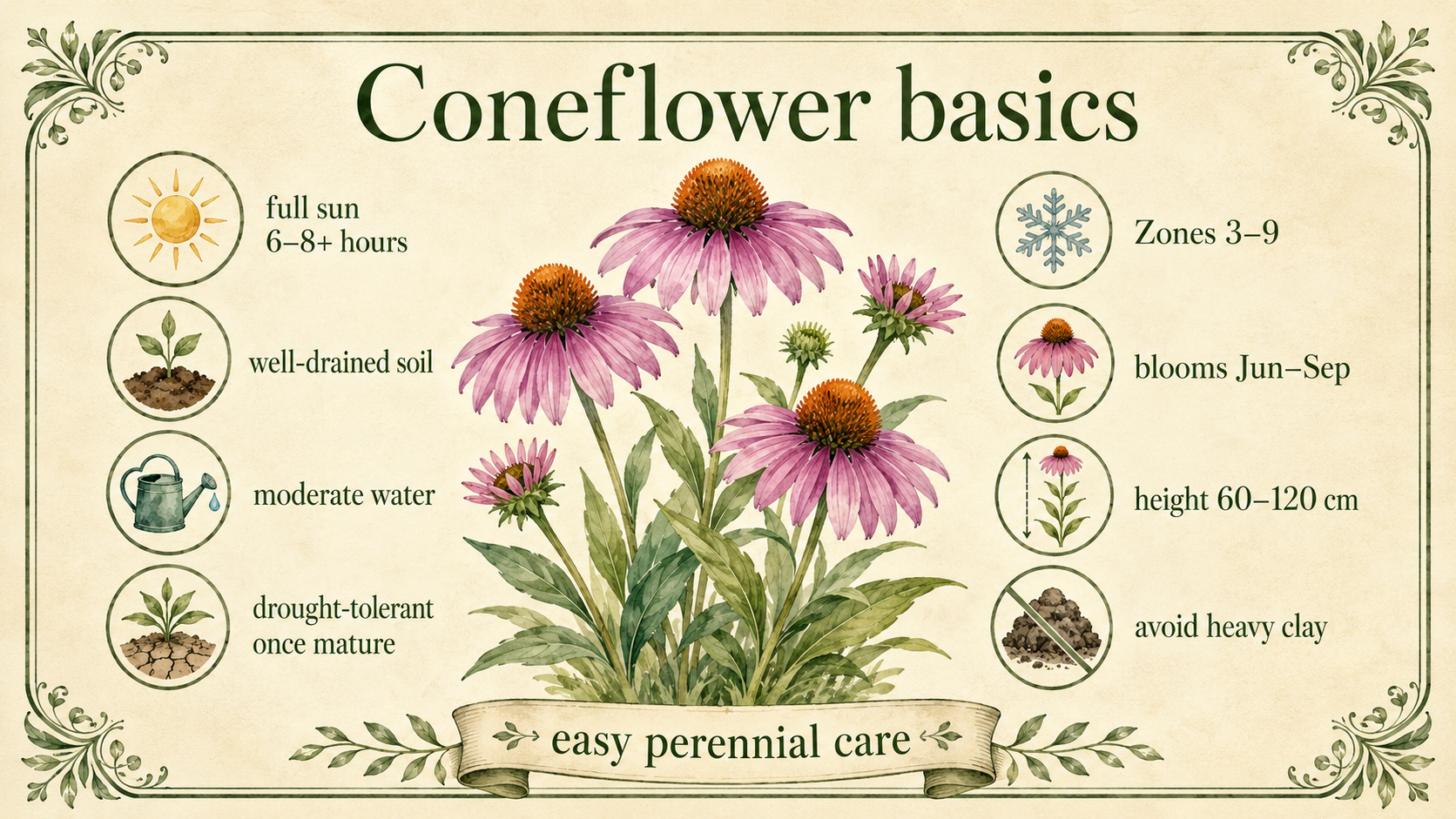
Coneflower Care at a Glance
- Sunlight: Full sun (6–8+ hours daily)
- Soil: Well-drained, average to lean — avoid heavy clay
- Water: Moderate while establishing; drought-tolerant once mature
- Hardiness: USDA Zones 3–9
- Bloom Time: June through September
- Height: 60–120 cm (2–4 ft) depending on variety
What Are Coneflowers?
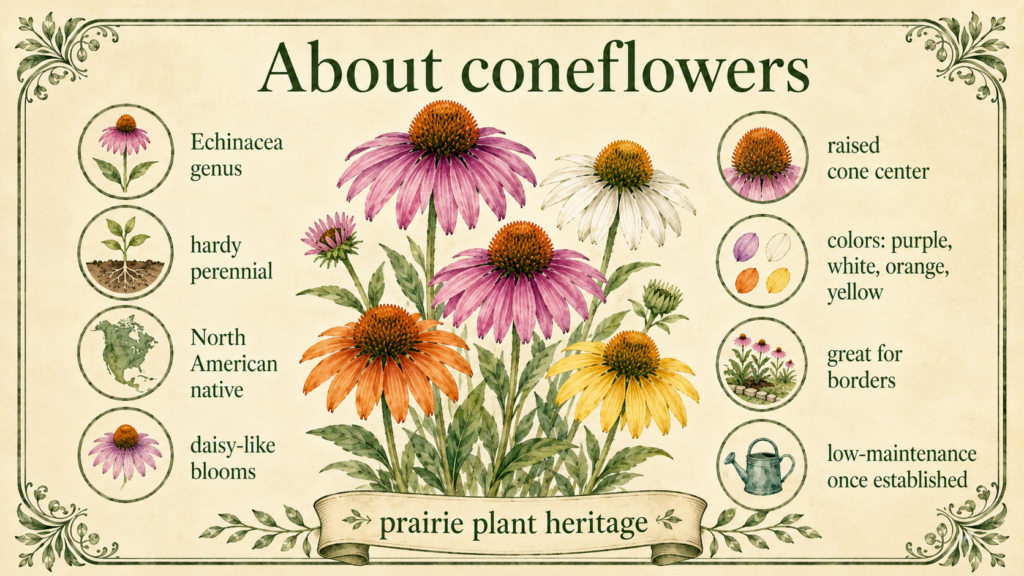
Coneflower is the common name for plants in the Echinacea genus — hardy North American perennials prized for their bold, daisy-like blooms and prominent central cones. The most widely grown species is Echinacea purpurea, the purple coneflower, though modern breeding has introduced whites, oranges, yellows, and bicolour forms.
Native to prairies and open woodlands, coneflowers evolved to thrive in full sun, lean soils, and dry summers. This tough heritage makes them exceptionally low-maintenance garden plants once established — a key reason they remain one of the most popular choices for pollinator-friendly borders.
When & How to Plant Coneflowers
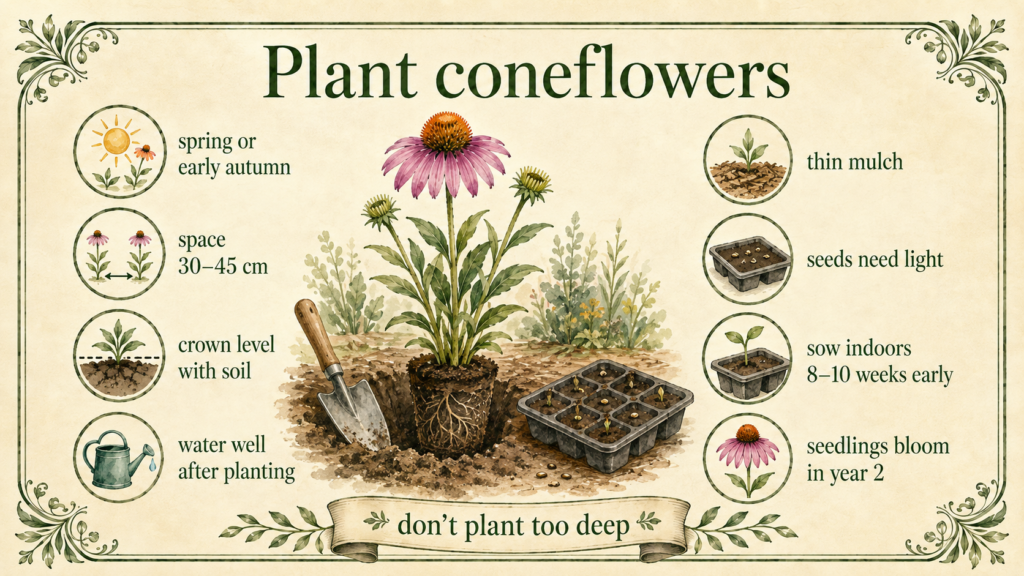
Plant coneflowers in spring after the last frost or in early autumn while the soil is still warm. Space plants 30–45 cm (12–18 in) apart. Dig a hole just deep enough to keep the crown level with the soil surface — planting too deeply invites rot. Water well after planting and add a thin mulch to retain moisture while roots establish.
If growing from seed, sow indoors 8–10 weeks before your last frost date, or direct-sow outdoors in autumn for natural cold stratification. Seeds need light to germinate, so press them onto the surface without covering. Expect seedlings to flower in their second year.
Sunlight & Soil Requirements
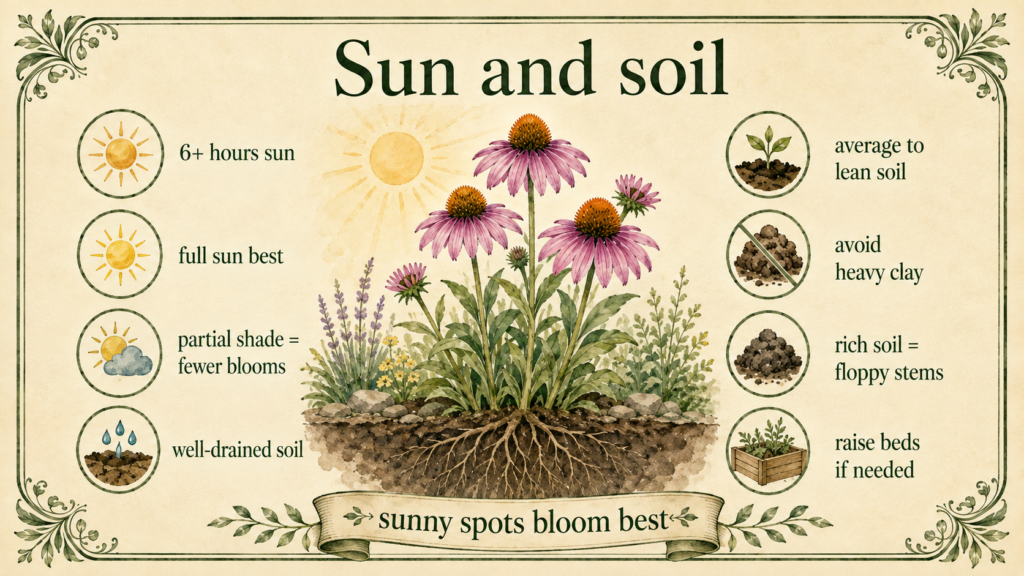
Coneflowers perform best with at least six hours of direct sunlight per day. In partial shade they tend to stretch toward the light, produce fewer blooms, and become more vulnerable to powdery mildew. Choose the sunniest spot in your garden for the strongest, most floriferous plants.
Well-drained soil is essential. Heavy, waterlogged clay can cause crown rot over winter. If your soil is dense, raise the bed or amend with coarse grit. Coneflowers actually prefer average to lean soil — overly rich or fertilised ground encourages floppy stems and fewer flowers.
Watering & Feeding
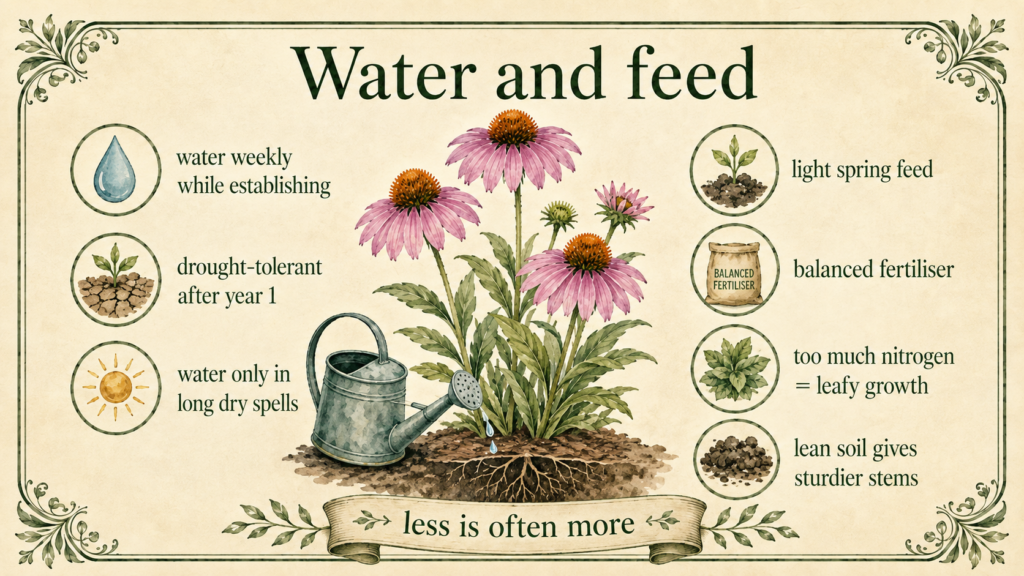
Water new plants regularly for the first growing season — roughly once a week during dry spells — to help roots establish deeply. After that first year, coneflowers are remarkably drought-tolerant and typically need watering only during prolonged dry periods.
Avoid over-feeding. A light application of balanced fertiliser in early spring is enough; too much nitrogen pushes leafy growth at the expense of flowers. In lean soil, coneflowers actually produce sturdier stems and more compact growth.
Deadheading & Pruning
Regular deadheading — removing spent flower heads — encourages coneflowers to produce new blooms through summer and into early autumn. Cut the stem back to the next set of leaves or lateral bud. This keeps the plant tidy and extends the flowering season considerably.
Later in autumn, stop deadheading and leave the remaining seed heads standing. The dried cones provide food for goldfinches and other birds through winter, and the standing stems protect the crown from freezing moisture.
Why Pollinators Love Coneflowers
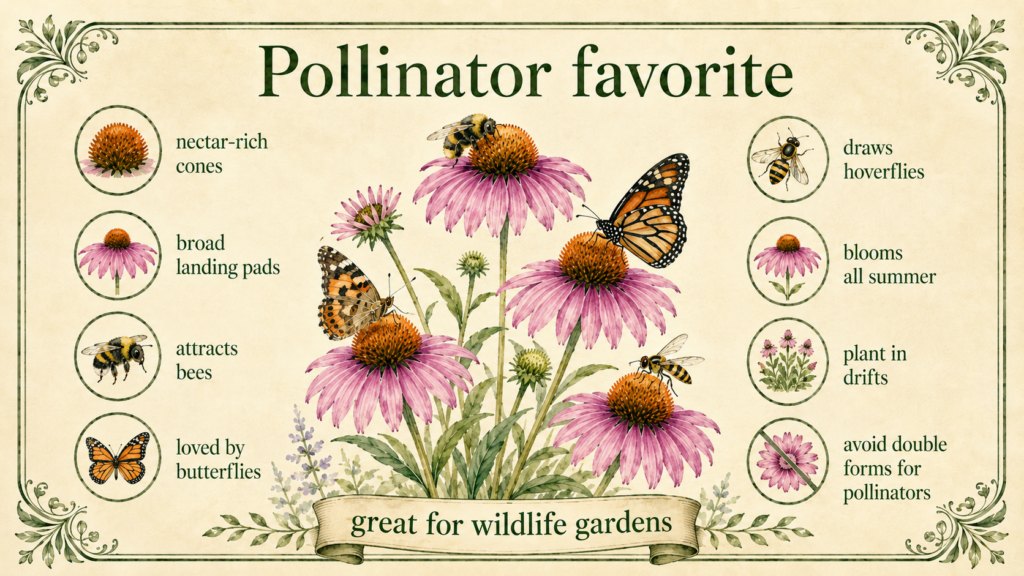
Coneflowers are among the most effective pollinator plants you can grow. Their broad, flat landing pads and nectar-rich central cones attract bees, butterflies, hover flies, and other beneficial insects from early summer onwards. Planting a drift of coneflowers creates a reliable refuelling stop for pollinators throughout their active season.
For maximum impact, combine coneflowers with other native perennials like black-eyed Susan, bee balm, and ornamental grasses. Avoid double-flowered cultivars if pollinator support is your goal — the extra petals can block access to nectar.
Propagation & Division
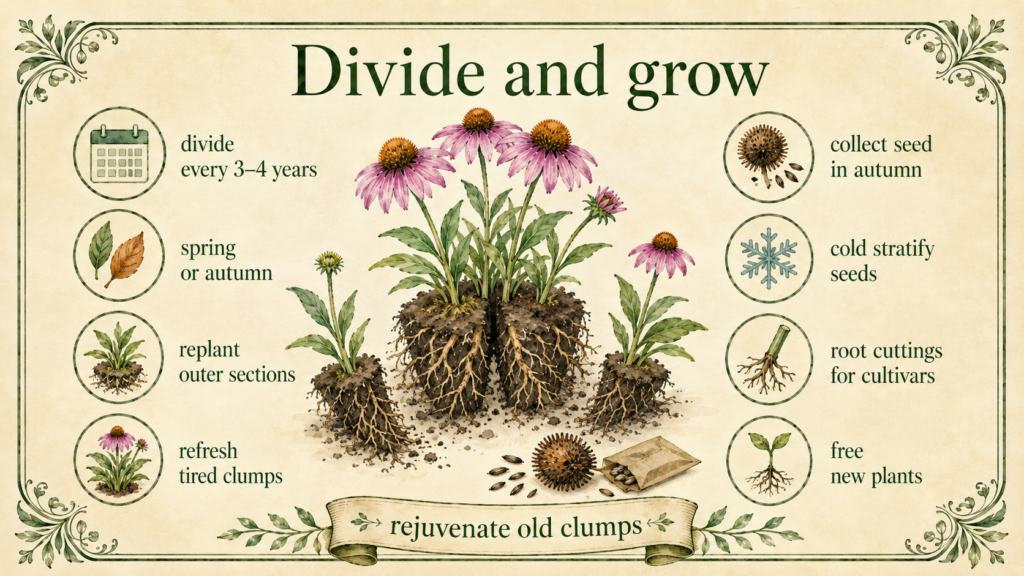
After three to four years, established coneflower clumps benefit from division. Lift the plant in early spring or autumn, separate the outer sections with healthy roots, and replant immediately. This rejuvenates tired plants and gives you free new stock for other areas of the garden.
You can also propagate from seed collected in autumn — simply snip a dried seed head, crumble it into a labelled envelope, and sow the following spring after a few weeks of cold stratification in the fridge. Root cuttings taken in late autumn are another option for named cultivars that won’t come true from seed.
Autumn & Winter Care
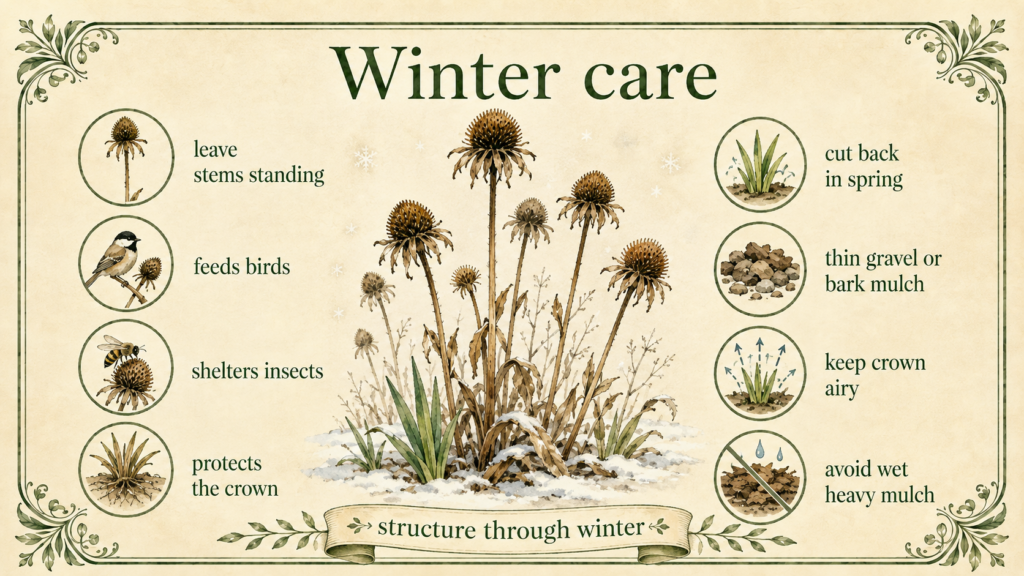
Leave coneflower stems standing over winter. The dried seed heads feed birds, the hollow stems shelter overwintering insects, and the structure protects the crown from sitting in cold, wet soil. Cut the old stems back to ground level in early spring once new basal growth appears.
In very cold or wet climates, a thin layer of gravel or bark mulch around (not over) the crown helps prevent rot. Avoid heavy organic mulch that holds moisture against the stem base — good air circulation at soil level is more important than insulation for most Echinacea.
Common Problems & Solutions
Powdery mildew is the most frequent issue, usually caused by poor air circulation or overhead watering. Space plants generously and water at soil level. Slugs can damage young seedlings — use organic pellets or copper tape in spring. Aster yellows, a phytoplasma disease spread by leafhoppers, causes distorted green flowers; remove and destroy affected plants promptly.
If your coneflower isn’t blooming, the most common causes are too much shade, over-fertilising, or the plant being too young (seed-grown Echinacea typically flowers from its second year). Move it to a sunnier spot if needed, and be patient with first-year seedlings.
Key Takeaway
Coneflowers thrive on neglect. Give them full sun and well-drained soil, water sparingly once established, and they will reward you with months of vibrant blooms and a garden full of pollinators — year after year.
Frequently Asked Questions
Do coneflowers need full sun?
Yes. Give coneflowers at least six hours of direct sunlight daily for the strongest stems and most abundant blooms. They can tolerate light shade, but flowering may be reduced.
How often should I water coneflowers?
Water new plants about once a week during dry spells while their roots establish. Mature coneflowers are drought-tolerant and usually need water only during extended hot, dry weather.
When is the best time to cut back coneflowers?
Leave the stems and seed heads standing through winter for birds and beneficial insects. Cut them to the ground in early spring when fresh basal growth begins to appear.
How do I keep coneflowers blooming all summer?
Plant in full sun, avoid excess nitrogen, and deadhead spent flowers regularly through summer. Stop deadheading in autumn if you want to provide winter food for birds.