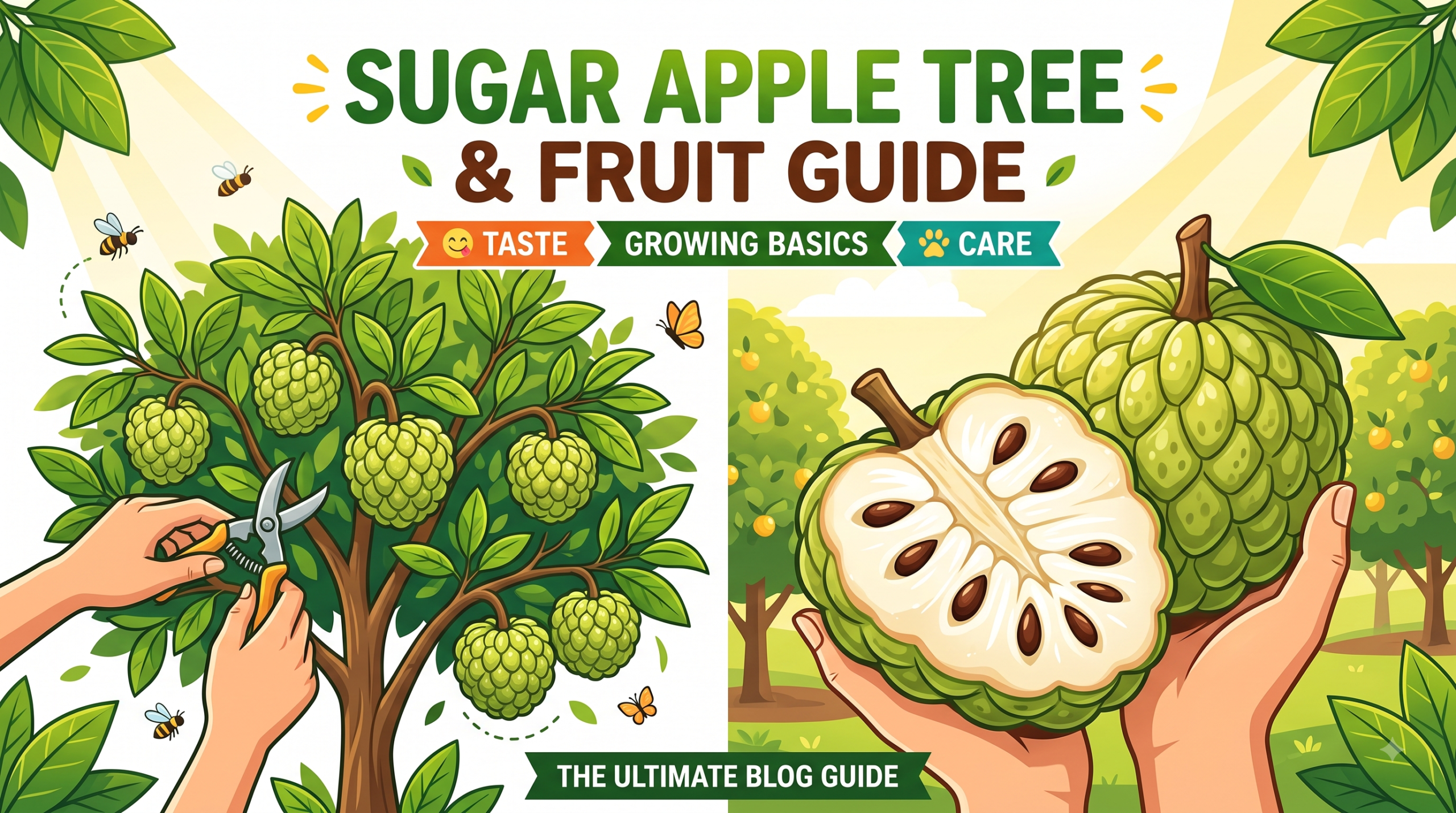

Sugar apple is a sweet tropical fruit with creamy flesh and a distinctive segmented green skin. Learn how to identify Annona squamosa, grow the tree, support fruit set, and know when fruit is ready to eat.
Sugar apple is Annona squamosa: a frost-sensitive tropical fruit tree valued for exceptionally sweet, creamy flesh.
Give a sugar apple tree warmth, sun, well-drained soil, and attentive watering while it establishes. Fruit set can vary with weather and pollination, and ripe fruit should be eaten around, not including, the hard dark seeds.
Sugar apple quick-care guide
Use this as a practical starting point, then adjust care for your cultivar, soil, rainfall, tree age, and local growing conditions.
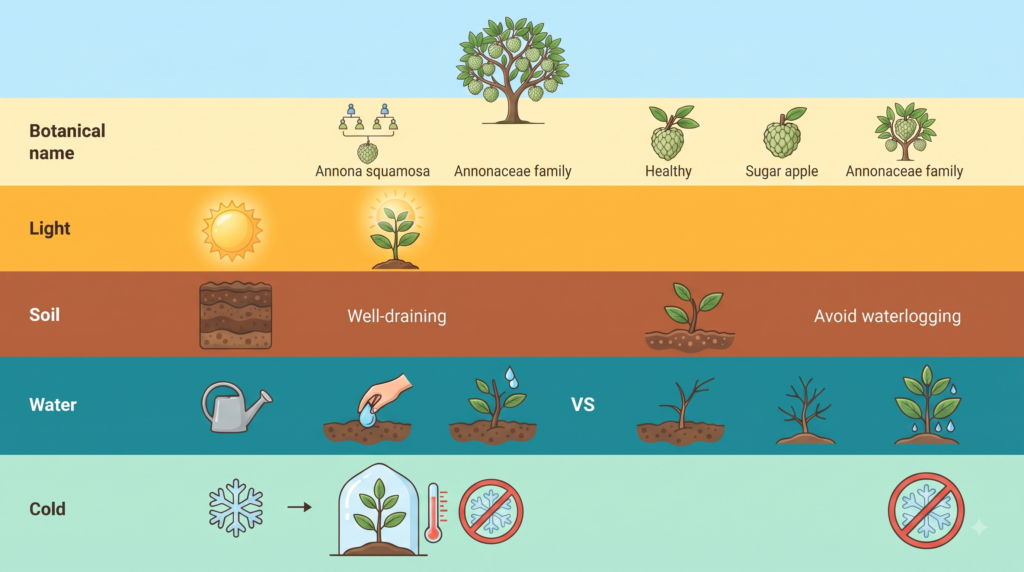
| Growing factor | Sugar apple preference |
|---|---|
| Botanical name | Annona squamosa, a tropical fruit tree in the Annonaceae family. |
| Light | Full sun is generally best for steady growth and fruit production. |
| Soil | Well-draining soil; avoid sites that stay waterlogged after rain or irrigation. |
| Water | Regular moisture during active growth, with less frequent watering when growth slows. Do not keep roots constantly wet. |
| Cold | Frost-sensitive. Protect young trees early when cold weather is possible. |
What does sugar apple taste like?
A ripe sugar apple is notably sweet, soft, and creamy. The pale flesh separates into tender segments around dark seeds and often has a lightly grainy, custard-like texture.
Flavor varies by cultivar and ripeness, but people commonly describe notes of vanilla, pear, pineapple, or tropical custard. An underripe fruit can taste less aromatic and feel firmer, while an overripe fruit may become very soft.
Sugar apple vs custard apple, cherimoya, and atemoya
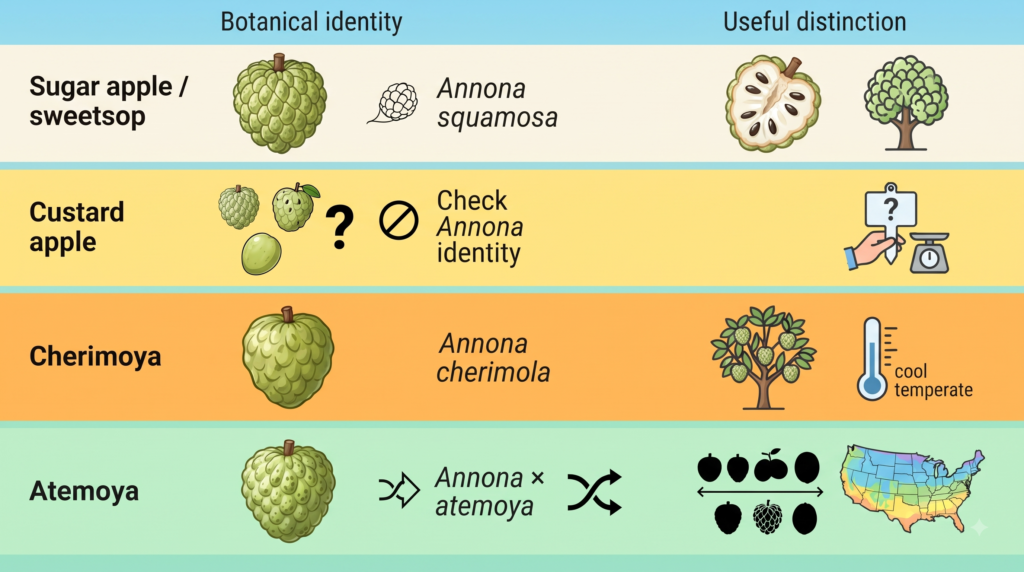
Common names are not consistent from one country to another. When plant identity matters, use the botanical name rather than relying on “custard apple” alone.
| Common name | Botanical identity | Useful distinction |
|---|---|---|
| Sugar apple / sweetsop | Annona squamosa | The species covered here; usually has pronounced separated segments on its skin. |
| Custard apple | A regional common name that may refer to different Annona fruits | Check a nursery label or scientific name before comparing care or fruit traits. |
| Cherimoya | Annona cherimola | A related species often better suited to milder subtropical conditions than sugar apple. |
| Atemoya | Annona × atemoya | A hybrid of sugar apple and cherimoya; fruit and climate tolerance can differ by cultivar. |
Sugar apple growing conditions
Sugar apple is most at home in tropical to warm subtropical settings. A sheltered, sunny site and good drainage are more valuable than a complicated routine.
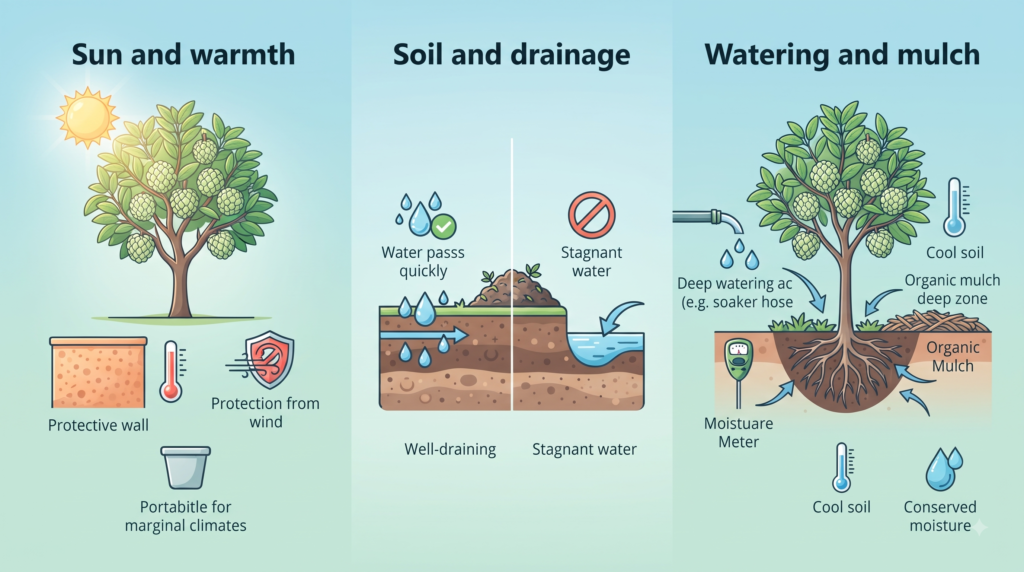
Sun and warmth
Choose a site with strong sun and protection from persistent cold wind. In marginal climates, a warm wall, protected courtyard, or container that can be moved may improve the odds of success.
Soil and drainage
The tree benefits from soil that drains freely but does not dry out immediately. Improve heavy ground with organic matter and avoid planting in a low spot where water collects.
Watering and mulch
Water newly planted trees deeply enough to moisten the root zone, then let surface soil begin to dry before watering again. Mulch can moderate soil temperature and conserve moisture, but keep it away from the trunk.
How to plant a sugar apple tree
Plant during reliably warm weather so roots can establish before cool conditions arrive. Handle the root ball gently, especially with young nursery trees.
- Pick a sunny, well-drained site with enough room for the mature canopy and easy access for harvest.
- Dig a hole no deeper than the root ball and wider than the existing roots so they can grow outward.
- Set the tree at the same depth it grew in its pot, backfill, and water thoroughly to settle the soil.
- Add a mulch ring, leave space around the trunk, and monitor moisture closely through the first warm growing season.
Can sugar apple grow in a pot?
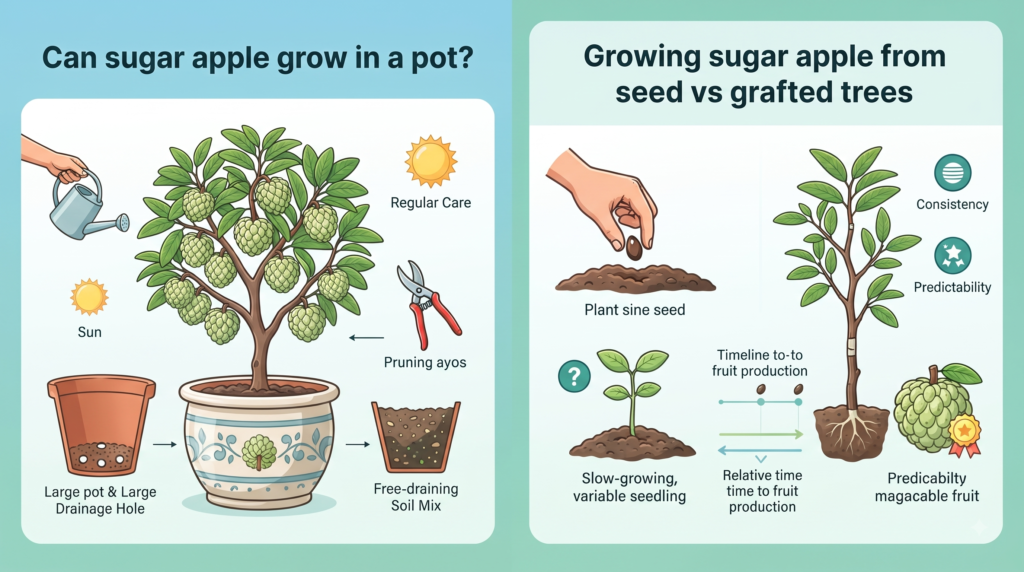
Yes, a container-grown sugar apple can grow and may fruit when it receives ample warmth and sun. Use a large container with drainage holes, a free-draining mix, and regular monitoring because pots dry out and become root-bound faster than garden soil. Prune thoughtfully to keep the canopy manageable.
Growing sugar apple from seed vs grafted trees
Fresh seed can germinate in warm conditions, and seed-grown plants can be rewarding experiments. However, seedlings may not match the parent fruit in quality, size, or productivity.
A named grafted tree is often the more predictable option when fruit quality matters. Time to fruit is variable for both types and depends on cultivar, climate, care, sun exposure, pollination, and overall tree health.
Sugar apple flowers and pollination
Sugar apple flowers change function as they open, which can make pollination less straightforward than it is for many common fruit trees. Natural pollinators may provide enough fruit set in some gardens, but results can vary with local insects and weather.
Hand pollination may improve fruit set in some situations, especially where flowering is good but fruit is scarce. It is not automatically necessary for every home tree; first check that the tree has enough warmth, sun, water balance, and healthy growth.
How to tell when a sugar apple is ripe
Harvest timing affects flavor more than almost any other eating decision. Check fruit frequently as it approaches maturity, because it can soften quickly once ripe.
- Look for the individual skin segments to begin spreading slightly apart rather than staying tightly packed.
- A ripe fruit usually yields gently to careful pressure and may develop a sweeter aroma.
- Pick fruit when it is mature and starting to soften, then let it finish ripening at room temperature if needed.
Important: do not eat the seeds
Sugar apple seeds are hard and dark. Eat only the soft fruit flesh and discard the seeds; do not chew or swallow them.
Common sugar apple tree problems
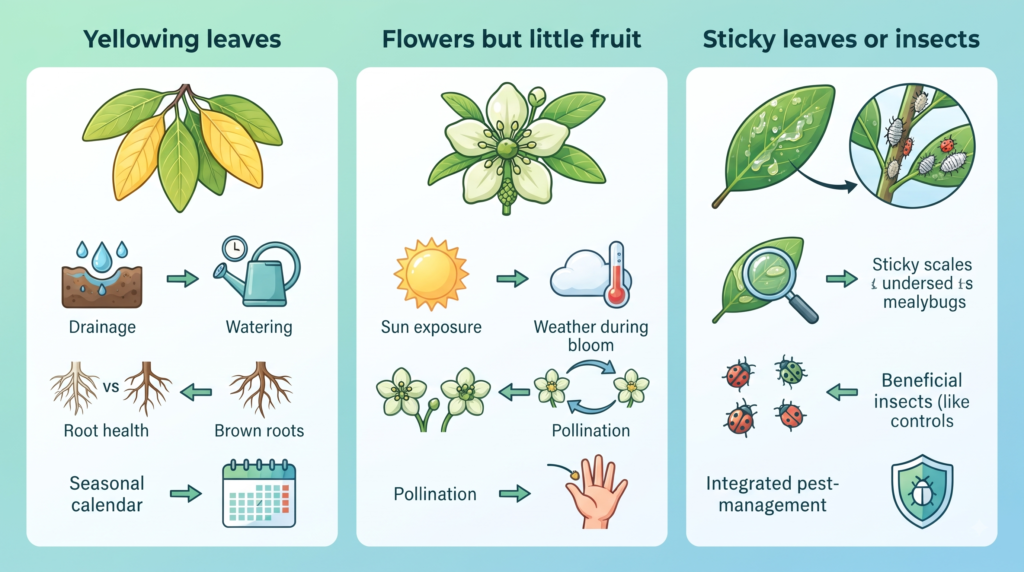
Start troubleshooting with the basics: sun, drainage, watering pattern, temperature, and visible pests. Local extension services can help identify regional problems and suitable controls.
| What you see | What to check first |
|---|---|
| Yellowing leaves | Check drainage, watering frequency, root health, and whether the tree is actively growing or responding to seasonal change before adding fertilizer. |
| Flowers but little fruit | Review sun exposure, weather during bloom, tree vigor, and pollination. Hand pollination may be worth testing after basic conditions are addressed. |
| Sticky leaves or insects | Inspect stems and leaf undersides for scale, mealybugs, or other pests. Use locally appropriate integrated pest-management guidance before applying any treatment. |
Sugar apple FAQ
Is sugar apple the same as custard apple?
Not always. In many places, sugar apple means Annona squamosa, but “custard apple” can refer to sugar apple, atemoya, cherimoya, or another related fruit depending on the region. Use scientific names when accuracy matters.
How long does a sugar apple tree take to fruit?
There is no single guaranteed timeline. A grafted tree may fruit earlier than a seedling, but cultivar, climate, pollination, nutrition, planting conditions, and tree health all affect when fruiting begins.
Do sugar apple trees need hand pollination?
Not in every garden. Natural fruit set can be adequate where appropriate pollinators are active, but hand pollination may improve results in some locations. Treat it as a useful technique, not a universal requirement.