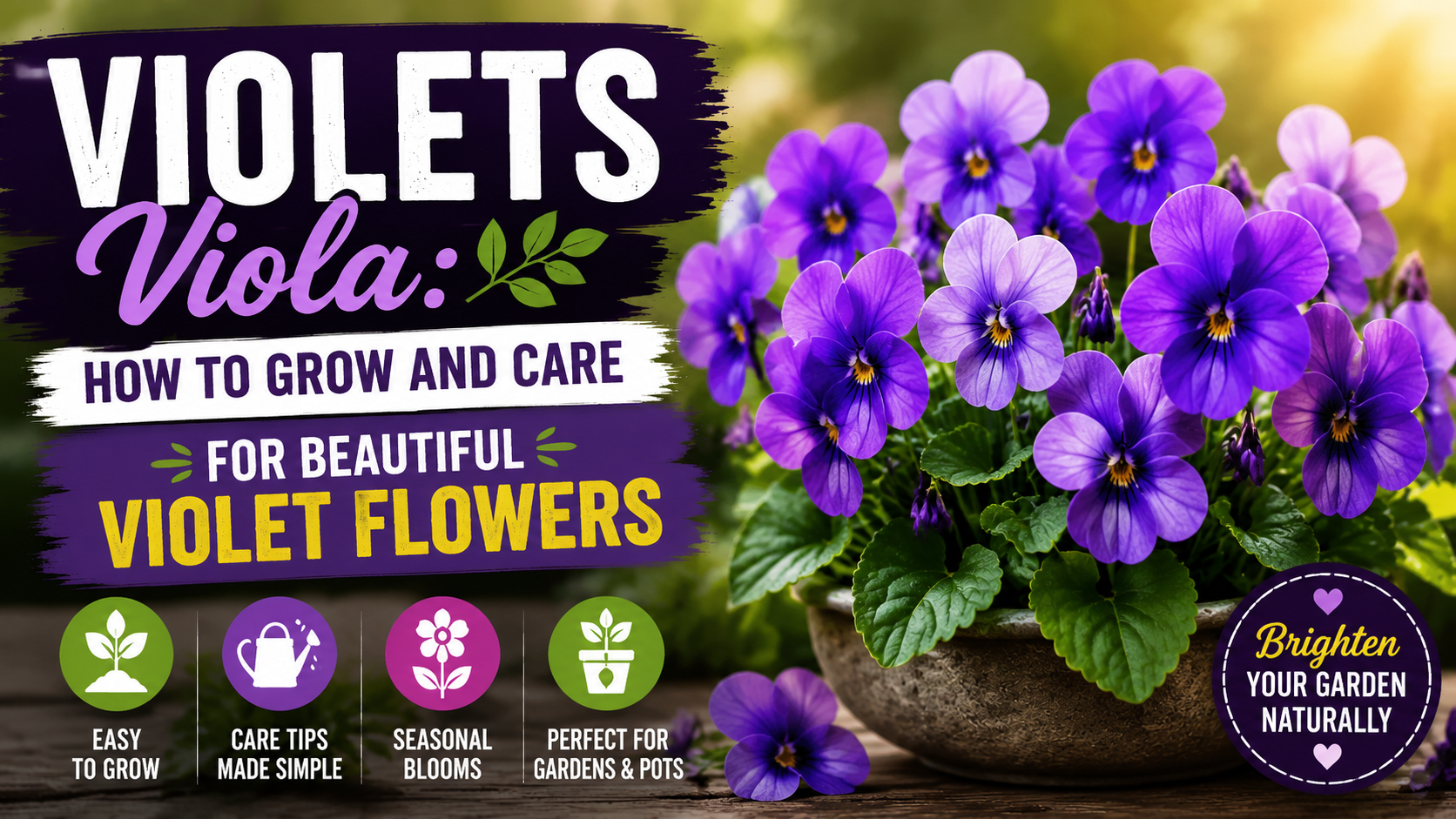

A complete beginner’s guide to growing healthy violet flowers at home — from planting and watering to solving common problems. Whether you spell it v i o l e t or simply love violet flowers, this guide has you covered.
Violets are among the most beloved flowering plants in the world — cherished for their delicate purple blooms, sweet fragrance, and remarkable ease of care. The genus Viola includes over 500 species, making violet flowers a versatile choice for gardens of every size.
In this guide, we cover everything a beginner gardener needs to know about growing violets successfully. You’ll learn ideal planting conditions, seasonal care routines, propagation methods, and how to troubleshoot common problems. The term violet affleck has recently appeared in online searches — while it refers to a public figure rather than a plant variety, this article focuses entirely on the botanical world of violets and viola species to give you expert-backed, trustworthy gardening advice.
What Are Violets (Viola)?

Violets belong to the genus Viola in the family Violaceae. They are herbaceous perennial plants found across temperate regions of the Northern Hemisphere. Most violet flowers feature five petals in shades of purple, blue, white, or yellow. The heart-shaped leaves and low-growing habit make violets ideal as ground cover, border plants, or container specimens.
Popular varieties include Viola odorata (sweet violet) prized for its fragrance, Viola tricolor (heartsease or wild pansy), and Viola sororia (common blue violet) native to North America. Garden pansies — technically Viola × wittrockiana — are cultivated hybrids bred for larger, showier blooms. All share the same basic care requirements, making violets one of the most beginner-friendly flowering plants you can grow.
How to Grow Violet Flowers Successfully
Choose a location with partial shade — violets perform best with gentle morning sunlight followed by afternoon shade. Full sun is tolerable in cooler climates, but hot afternoon sun can scorch leaves and reduce blooming. Many gardeners find that planting beneath deciduous trees or along north-facing borders provides ideal dappled light conditions.
Prepare the soil by incorporating organic matter such as compost or well-rotted leaf mould. Violets prefer moist, well-drained soil with a slightly acidic to neutral pH (5.5–7.0). Avoid heavy clay that retains standing water — raised beds or containers with drainage holes are excellent alternatives if your garden soil is poorly drained.
Plant violet seedlings or divisions in early spring or autumn when temperatures are cool. Space plants 15–20 cm apart to allow natural spreading. Water thoroughly after planting and apply a thin layer of organic mulch to retain moisture and suppress weeds. Violets establish quickly and often self-seed, creating a lush carpet of colour within one or two growing seasons.
Violet Plant Care Essentials

Sunlight Requirements
Partial shade is ideal — 3 to 6 hours of filtered morning light. In hot climates, protect violets from intense afternoon sun. Indoor violets thrive near east-facing windows where they receive bright indirect light without scorching.
Watering & Moisture
Keep soil consistently moist but never waterlogged. Water at the base of the plant to avoid wetting leaves, which can encourage fungal disease. During dry spells, water deeply once or twice per week rather than lightly every day.
Feeding & Fertiliser
Apply a balanced liquid fertiliser (10-10-10) every 4–6 weeks during the growing season. Avoid over-feeding — excessive nitrogen produces lush foliage at the expense of violet flowers. A top-dressing of compost in spring provides gentle, slow-release nutrition.
Pruning & Deadheading
Remove spent blooms regularly to encourage continuous flowering. In late autumn, trim back yellowing foliage to ground level. This prevents disease overwintering in dead leaves and gives violets a fresh start when spring arrives.
Common Violet Growing Problems and Solutions
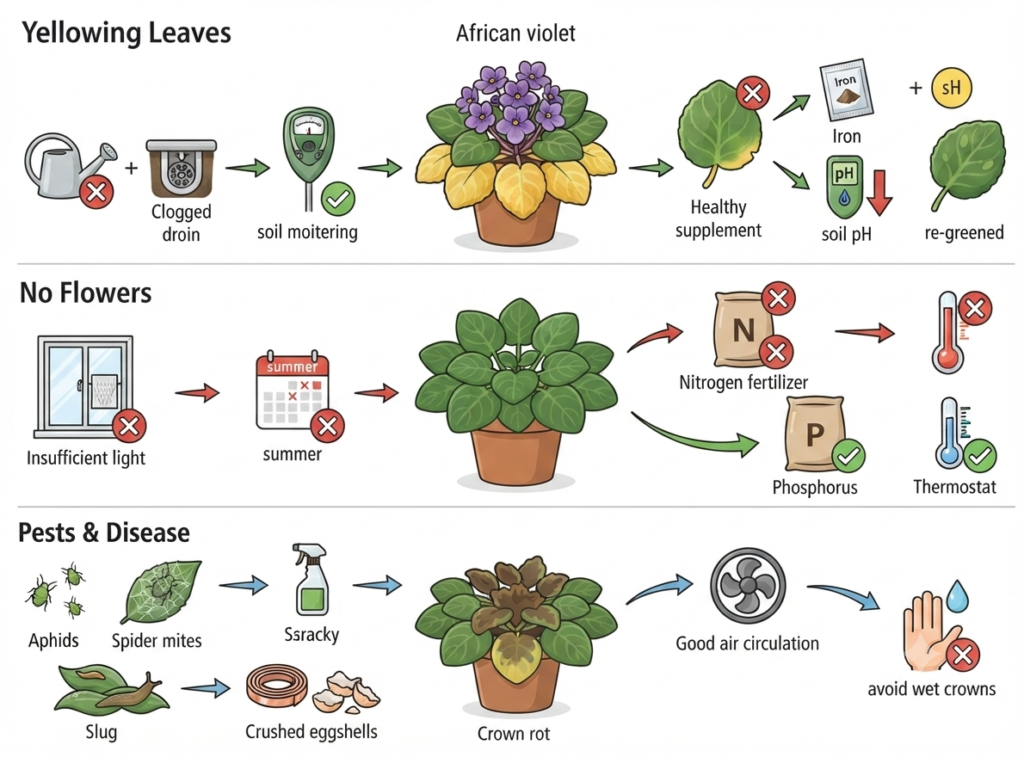
Yellow leaves usually indicate overwatering or poor drainage. Check soil moisture before watering and ensure containers have adequate drainage holes. If leaves yellow from the edges inward, the plant may need iron — apply chelated iron supplement or lower soil pH with sulphur.
No flowers? The most common causes are insufficient light, over-fertilisation with nitrogen, or planting in too-warm a location. Move violets to a cooler spot with better morning light and switch to a phosphorus-rich fertiliser to promote blooming. Violets naturally reduce flowering during hot summer months and resume in cooler weather.
Pests such as aphids, spider mites, and slugs can affect violets. Treat aphids with a strong water spray or insecticidal soap. Slugs are deterred by copper tape or crushed eggshells around plants. Crown rot (caused by overwatering) is the most serious disease — prevent it by ensuring good air circulation and avoiding wet crowns.
How to Propagate Violets
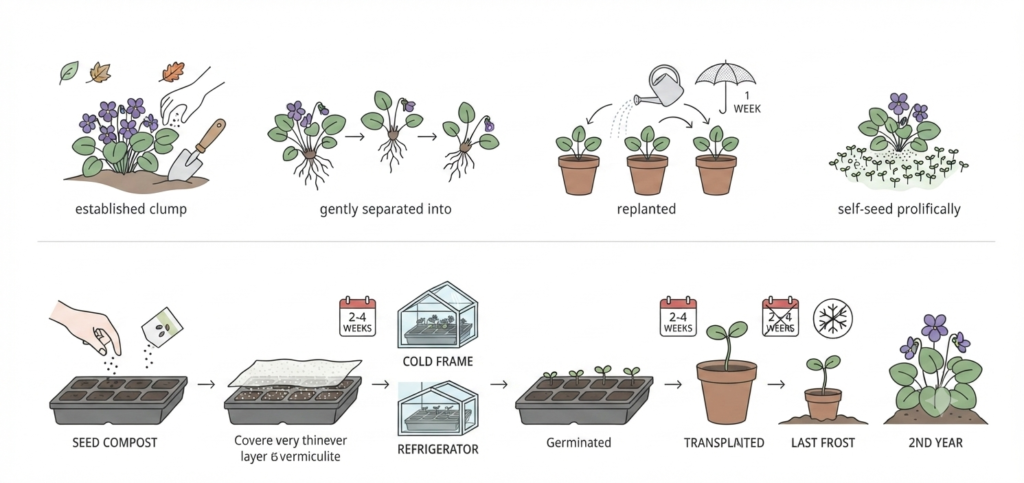
Division is the easiest propagation method. In early spring or autumn, lift an established clump, gently separate it into sections (each with roots and several leaves), and replant immediately. Water well and keep shaded for a week while roots re-establish. Most violets also self-seed prolifically — you’ll find seedlings appearing near parent plants each spring.
Growing from seed requires patience. Sow seeds on the surface of moist compost in late winter, cover lightly, and place in a cold frame or refrigerator for 2–4 weeks (cold stratification breaks dormancy). Germination takes 2–4 weeks after stratification. Transplant seedlings outdoors after the last frost. Expect flowering in the second year from seed-grown plants.
Are Violets Good Garden Plants?
Absolutely. Violets offer colour from early spring through autumn, attract pollinators including bees and butterflies, and provide natural ground cover that suppresses weeds. Their sweet fragrance adds sensory appeal to borders, paths, and woodland gardens. Many species are edible — violet flowers make beautiful garnishes for salads, cakes, and cocktails.
For beginners, violets are forgiving plants that tolerate neglect, spread naturally without becoming invasive (in most climates), and require minimal maintenance once established. They’re equally suited to outdoor beds, containers on patios, hanging baskets, and even indoor windowsill growing — making them one of the most versatile flowering plants available.
Can Violets Grow Indoors?
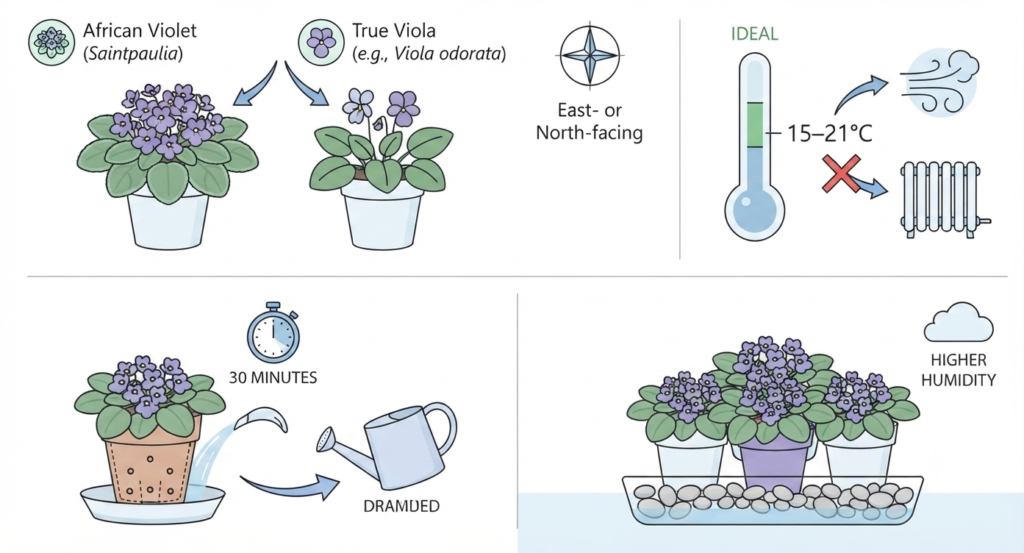
Yes — many violet species thrive indoors with proper care. African violets (Saintpaulia, now classified under Streptocarpus) are the most popular indoor variety, prized for their compact size and continuous blooming. True Viola species can also be grown indoors in bright, cool rooms with good air circulation.
Place indoor violets near an east- or north-facing window for bright indirect light. Maintain temperatures between 15–21°C and avoid cold drafts or hot radiators. Water from below by placing pots in a saucer of water for 30 minutes, then draining. Indoor violets benefit from higher humidity — group plants together or use a pebble tray.
Frequently Asked Questions About Violets
How long do violets bloom?
Most outdoor violets bloom for 4–8 weeks in spring and again in autumn when temperatures cool. With deadheading and proper care, some varieties produce sporadic flowers throughout summer. Indoor African violets can bloom continuously year-round under the right conditions.
Do violets come back every year?
Yes. Most violets are hardy perennials that return year after year in USDA zones 3–9. They die back in winter and re-emerge in spring. In addition, violets self-seed readily, so you’ll often find new plants appearing near the original clump each growing season.
Can violets grow in full sun?
Violets tolerate full sun in cooler climates (zones 3–6) but prefer partial shade in warmer regions. Hot afternoon sun causes leaf scorch and reduces flowering. If you only have a sunny spot, provide afternoon shade with taller companion plants or a shade cloth.
How much water do violet flowers need?
Keep soil consistently moist but not soggy. Water deeply once or twice per week depending on weather and soil type. Violets dislike drought but are equally intolerant of waterlogged roots. Mulching helps retain moisture between waterings.
What does violet affleck refer to?
Violet Affleck is the name of a public figure — not a plant variety. The name has become a popular search term, but it is unrelated to violet flower gardening. This article focuses exclusively on the Viola genus and how to grow healthy, beautiful violets at home.