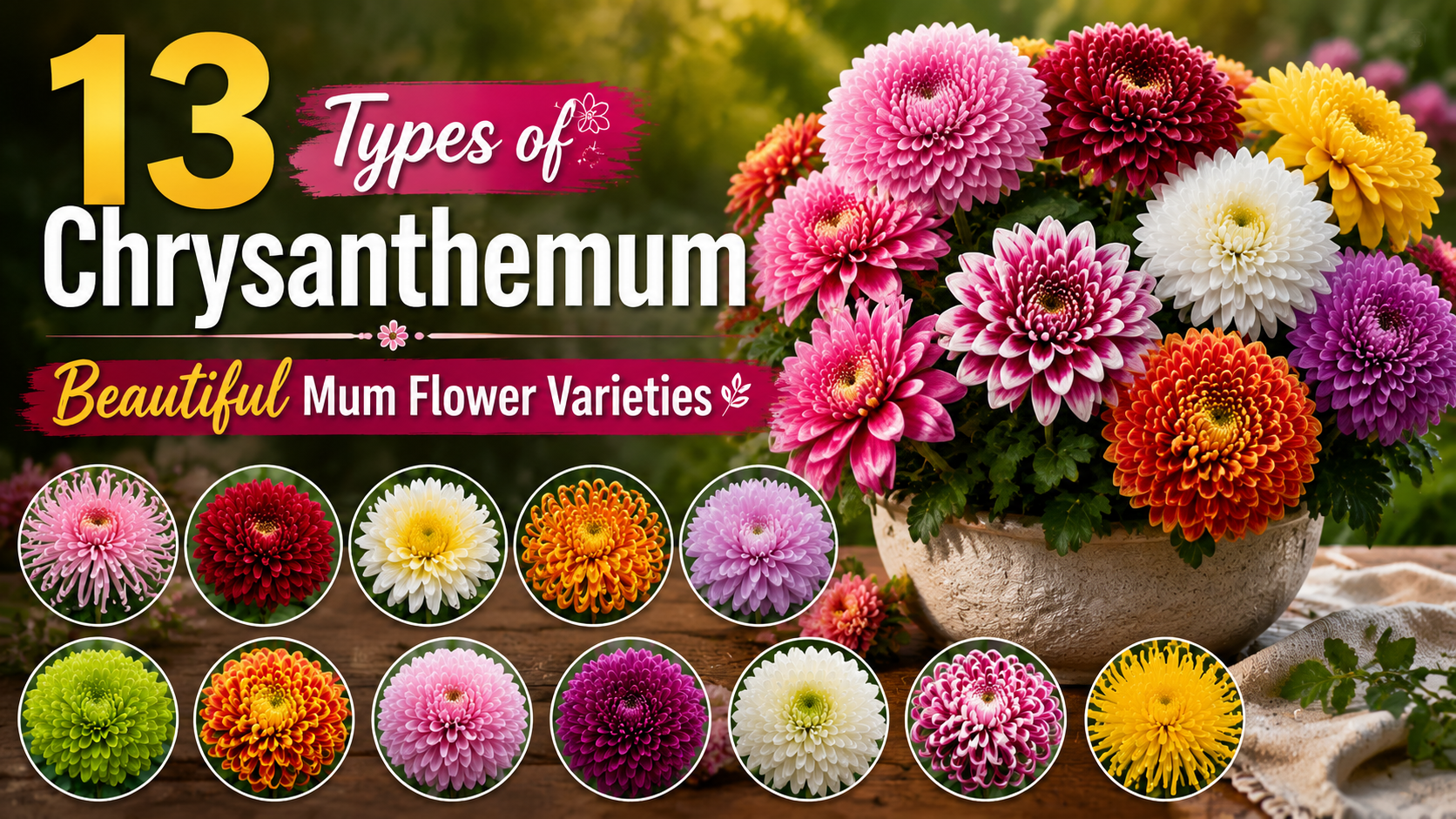

Chrysanthemums come in a stunning range of shapes, sizes and colors. This friendly, beginner-focused guide walks through 13 popular mum flower varieties, plus simple growing tips and an interactive finder to help you choose the right one.
The short answer: chrysanthemums are grouped into around 13 recognized flower forms — from tight pompons and round cushion mums to shaggy spiders and giant football blooms — each with a distinct petal shape, ideal use and level of care.
Chrysanthemums, affectionately called ‘mums’, are one of the most popular garden and cut flowers in the world — and for good reason. They bloom generously in late summer and autumn, come in nearly every color except true blue, and range from tiny button-sized blooms to dinner-plate giants. If you’ve ever felt overwhelmed choosing between mum varieties at the garden center, this guide is for you. We’ll explain what chrysanthemums are, walk through 13 popular types with clear descriptions, cover practical growing and care basics, share which mums do best in containers and bouquets, note an important pet-safety point, and finish with a quick finder and the questions gardeners ask most.
What Are Chrysanthemums (Mum Flowers)?
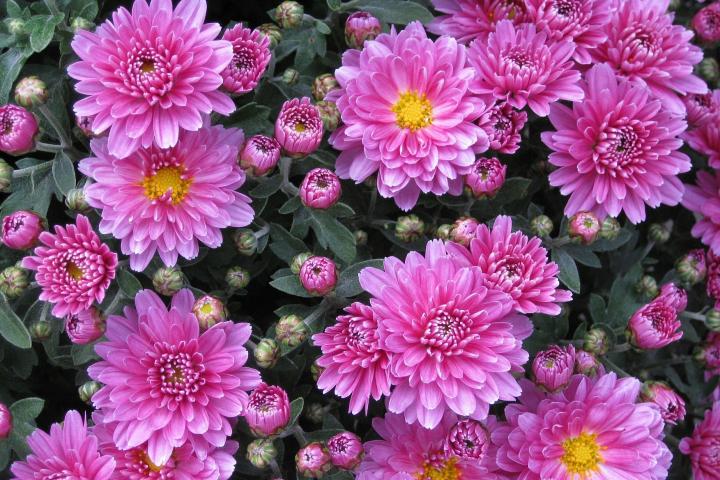
Chrysanthemums belong to the genus Chrysanthemum in the daisy family (Asteraceae) and are native to East Asia, especially China, where they’ve been cultivated for more than 2,500 years. What looks like a single mum flower is actually a composite ‘head’ made up of many tiny florets. Over centuries of breeding, growers have created a huge diversity of forms — which is why chrysanthemums are officially sorted into distinct classes based on petal shape and arrangement. Many garden mums sold in autumn are perennials in milder climates but are often grown as annuals in colder regions. Understanding the main mum flower types makes it far easier to pick a variety that suits your space, climate and style.
A Brief History of the Chrysanthemum
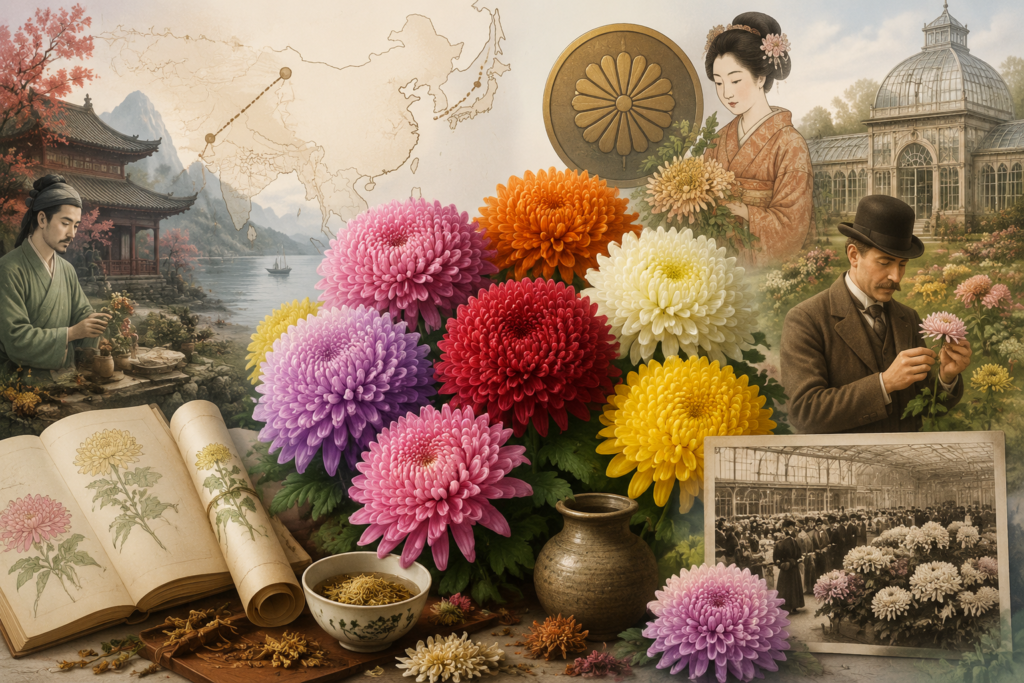
The chrysanthemum was first cultivated in China as a flowering herb, valued in cooking and medicine before it became a prized ornamental. By the 8th century it had traveled to Japan, where it became so revered that it appears on the Imperial Seal and lends its name to the annual Festival of Happiness. Chrysanthemums reached Europe in the 17th and 18th centuries and North America soon after, where breeders expanded the color range and flower forms we enjoy today. Modern horticultural societies, such as the National Chrysanthemum Society, formally classify mums into recognized bloom types — a system that helps gardeners and exhibitors describe and compare varieties with confidence.
13 Types of Chrysanthemum for Your Garden
Horticultural groups classify chrysanthemums by their flower form. Here are 13 popular types, what each looks like, and where it shines — so you can pick the perfect mum for your garden, patio or vase.
1. Pompon
Small, round, ball-shaped
Dense, perfectly rounded little blooms packed with short petals. Pompons are neat, long-lasting and wonderful for edging beds, containers and tidy bouquets.
2. Cushion (Garden Mum)
Low, mounding, many blooms
The classic fall garden mum: a compact, dome-shaped plant covered in masses of small-to-medium flowers. Easy to grow and the go-to choice for autumn beds and porch pots.
3. Decorative
Full, flat double blooms
Rounded, fully double flowers with short, overlapping petals. These are the mums you most often see from florists — reliable, showy and excellent as cut flowers.
4. Anemone
Daisy petals, raised center
A ring of flat petals surrounds a raised, cushion-like center of tiny tubular florets. The two-tone effect adds charming texture to borders and mixed containers.
5. Single & Semi-Double
Daisy-like, open center
One or a few rows of petals around a visible open center, much like a daisy. Cheerful and beloved by pollinators, they suit cottage gardens and relaxed plantings.
6. Spider
Long, curling tubular petals
Long, thin, tube-like petals that curl and hook at the tips, giving a wild, spidery look. Dramatic and eye-catching — a favorite for statement bouquets and displays.
7. Quill
Straight tubular petals
Straight, tube-shaped petals that are open or spoon-tipped at the ends, radiating outward. Elegant and architectural, quills make sophisticated cut flowers.
8. Spoon
Tubes with spoon tips
Similar to quills but each petal flares into a small, spoon-shaped cup at the tip. The playful texture adds interest to arrangements and mixed borders.
9. Reflex
Curved, downward petals
Full blooms whose petals curve outward and downward, overlapping like feathers on a mop-head. They create a soft, rounded dome that’s stunning in beds and shows.
10. Irregular Incurve (Football Mum)
Huge globe blooms
The giants of the mum world — large, loosely incurving petals form a full globe, sometimes called football mums. Grow them for show-stopping statement pots and exhibitions.
11. Regular Incurve
Neat, tight globe
Smaller and tidier than football mums, with petals that curve neatly inward to form a smooth, symmetrical ball. A refined choice prized by exhibitors and collectors.
12. Brush & Thistle
Fine, brush-like petals
Unusual novelty mums with fine, tubular petals that resemble an artist’s brush or a soft thistle. Rare and quirky — perfect for gardeners who love the unexpected.
13. Korean (Hardy) Mum
Tough, perennial daisy-type
Bred for cold-hardiness, these single or semi-double mums overwinter reliably in many temperate zones and return each year. The best pick for a lasting perennial mum bed.
How to Grow & Care for Chrysanthemums
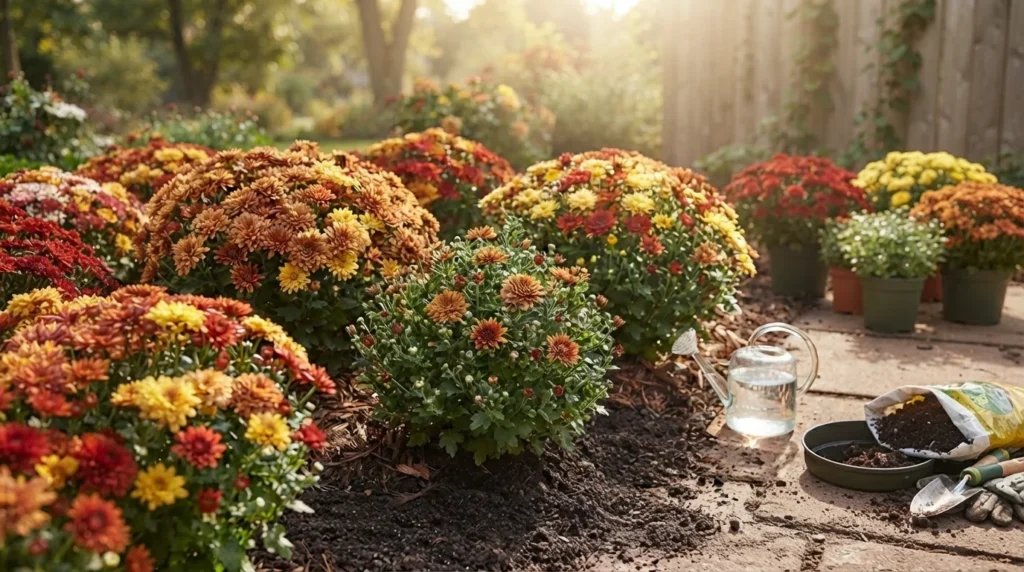
The good news for beginners: mums are among the most forgiving flowers you can grow. Give them plenty of sun, steady moisture and free-draining soil, and they’ll reward you with a generous autumn show. Pinch back the growing tips in early summer to encourage bushier plants with more blooms, and deadhead spent flowers to keep the display tidy. In colder regions, plant hardy varieties in spring rather than fall so their roots have time to establish before winter. Here are the four care essentials at a glance.
Sunlight
Mums love full sun — aim for at least 6 hours of direct light a day for strong stems and abundant blooms.
Watering
Keep the soil evenly moist but never soggy. Water at the base in the morning and check pots often, as they dry out quickly.
Soil
Plant in rich, well-draining soil that’s slightly acidic to neutral. Good drainage helps prevent root rot.
Bloom Time
Most mums flower from late summer into autumn as days shorten — the classic burst of fall garden color.
Best Chrysanthemums for Containers & Patios
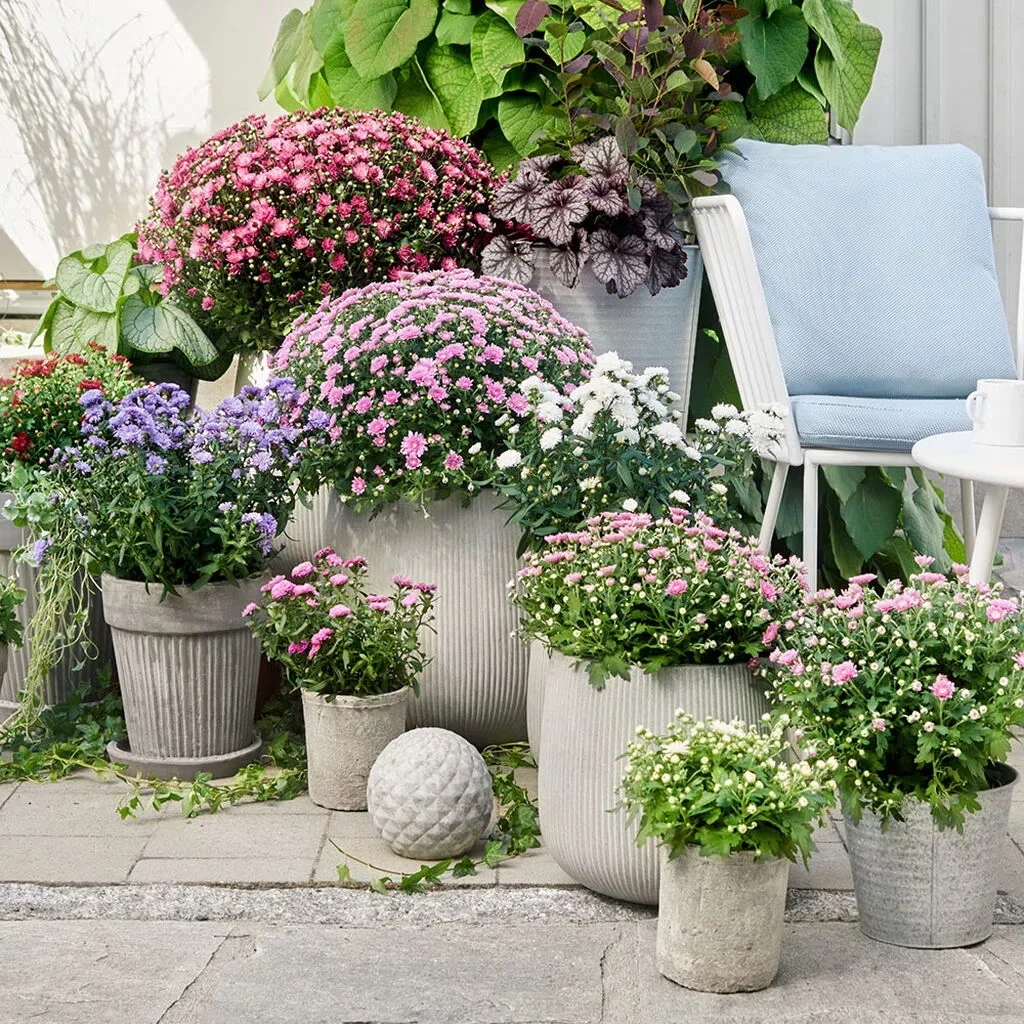
If you garden on a balcony, patio or small space, compact cushion (garden) mums and neat pompon varieties are ideal for pots. Choose a container with drainage holes, fill it with quality potting mix, and place it where it gets plenty of sun. Container mums dry out faster than those in the ground, so check the soil daily and water whenever the top inch feels dry. Grouping a few pots of different colors together makes an instant, welcoming autumn display by a door or on steps.
Best Mums for Cut-Flower Arrangements
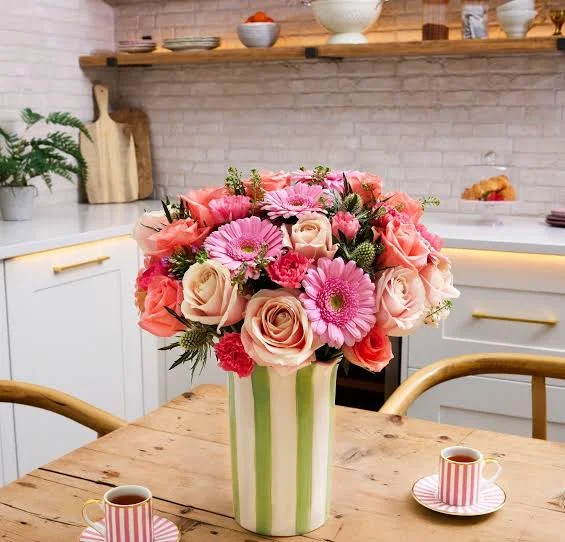
Chrysanthemums are one of the longest-lasting cut flowers, often staying fresh in a vase for two weeks or more. Decorative types offer full, rounded blooms, while spider, spoon and quill varieties bring dramatic texture to bouquets. For the best vase life, cut stems in the cool of the morning, remove any leaves that would sit below the water line, and refresh the water every couple of days. A few stems of mums instantly warm up a table with rich autumn color.
Are Chrysanthemums Safe for Pets?
Important: chrysanthemums are considered toxic to cats, dogs and horses. According to the ASPCA, they contain compounds that can cause vomiting, drooling, loss of coordination and skin irritation if eaten. Keep mums out of reach of curious pets, and if you suspect your animal has nibbled a plant, contact your veterinarian or a pet poison helpline right away. If you share your home with animals, consider pet-safe alternatives for areas they can access.
Chrysanthemum Types at a Glance
A quick side-by-side look at each mum type, its flower form and where it works best.
| Type | Flower Form | Best For |
|---|---|---|
| Pompon | Small round balls | Edging & tidy bouquets |
| Cushion (Garden) | Mounded, many blooms | Fall beds & pots |
| Decorative | Full double blooms | Cut flowers |
| Anemone | Raised center + petals | Borders & containers |
| Single & Semi-Double | Daisy-like, open center | Pollinators & cottage gardens |
| Spider | Long curling tubes | Dramatic arrangements |
| Quill | Straight tubular petals | Elegant cut flowers |
| Spoon | Tubes with spoon tips | Texture & bouquets |
| Reflex | Downward-curving petals | Beds & shows |
| Irregular Incurve (Football) | Huge globe blooms | Statement pots & exhibitions |
| Regular Incurve | Neat, tight globe | Exhibition & collectors |
| Brush & Thistle | Fine brush-like petals | Novelty & unusual displays |
| Korean (Hardy) | Tough perennial daisy-type | Cold-climate perennial beds |
Classifications follow the flower forms recognized by horticultural groups such as the National Chrysanthemum Society. Some varieties blur the lines between types, and names can vary by country.
A Quick Note on Choosing the Right Mum
There’s no single ‘best’ chrysanthemum — the right choice depends on your climate, space and how you’ll enjoy the flowers. Beginners often start with easy-going cushion (garden) mums, while gardeners in cold regions benefit from hardy Korean types that return each year. Always match a variety to your zone, and when in doubt, ask your local garden center for kinds proven to thrive in your area.
Frequently Asked Questions About Chrysanthemums
What are the main types of chrysanthemums?
Chrysanthemums are grouped by flower form. Popular types include pompon, cushion (garden), decorative, anemone, single/semi-double, spider, quill, spoon, reflex, irregular incurve (football), regular incurve, brush & thistle, and hardy Korean mums — 13 in all covered in this guide.
Are chrysanthemums annual or perennial?
It depends on the variety and climate. Many are tender perennials treated as annuals in cold regions, while hardy Korean mums reliably return year after year in milder zones, especially when planted in spring and mulched for winter.
Which chrysanthemums are easiest to grow?
Cushion (garden) mums are the most beginner-friendly. They’re compact, bloom heavily, and adapt well to both beds and containers with just full sun, steady water and well-draining soil.
What colors do mum flowers come in?
Chrysanthemums come in nearly every color — white, yellow, gold, orange, bronze, red, pink, purple and green — as well as bi-colors. The one color you won’t find naturally is true blue.
When do chrysanthemums bloom?
Most mums are ‘short-day’ plants that flower as days shorten in late summer and autumn, making them a classic source of fall color. Bloom timing varies slightly by variety and region.
How much sun and water do mums need?
Give chrysanthemums at least 6 hours of full sun daily and keep the soil evenly moist but never waterlogged. Container mums dry out faster, so check them daily during warm weather.
Are chrysanthemums safe for pets?
No — mums are toxic to cats, dogs and horses and can cause vomiting, drooling and irritation if eaten. Keep them away from pets and contact your vet immediately if you suspect ingestion.
Which varieties are best for cut-flower arrangements?
Decorative mums offer full, rounded blooms, while spider, spoon and quill types add dramatic texture. All are long-lasting in a vase — cut stems in the morning and change the water regularly for the best results.
Find Your Perfect Chrysanthemum
Use the mum finder above to discover which chrysanthemum types suit your space and style, then head to your local garden center with confidence.
🌼 Start with your gardening goal🪴 Match the mum to your climate