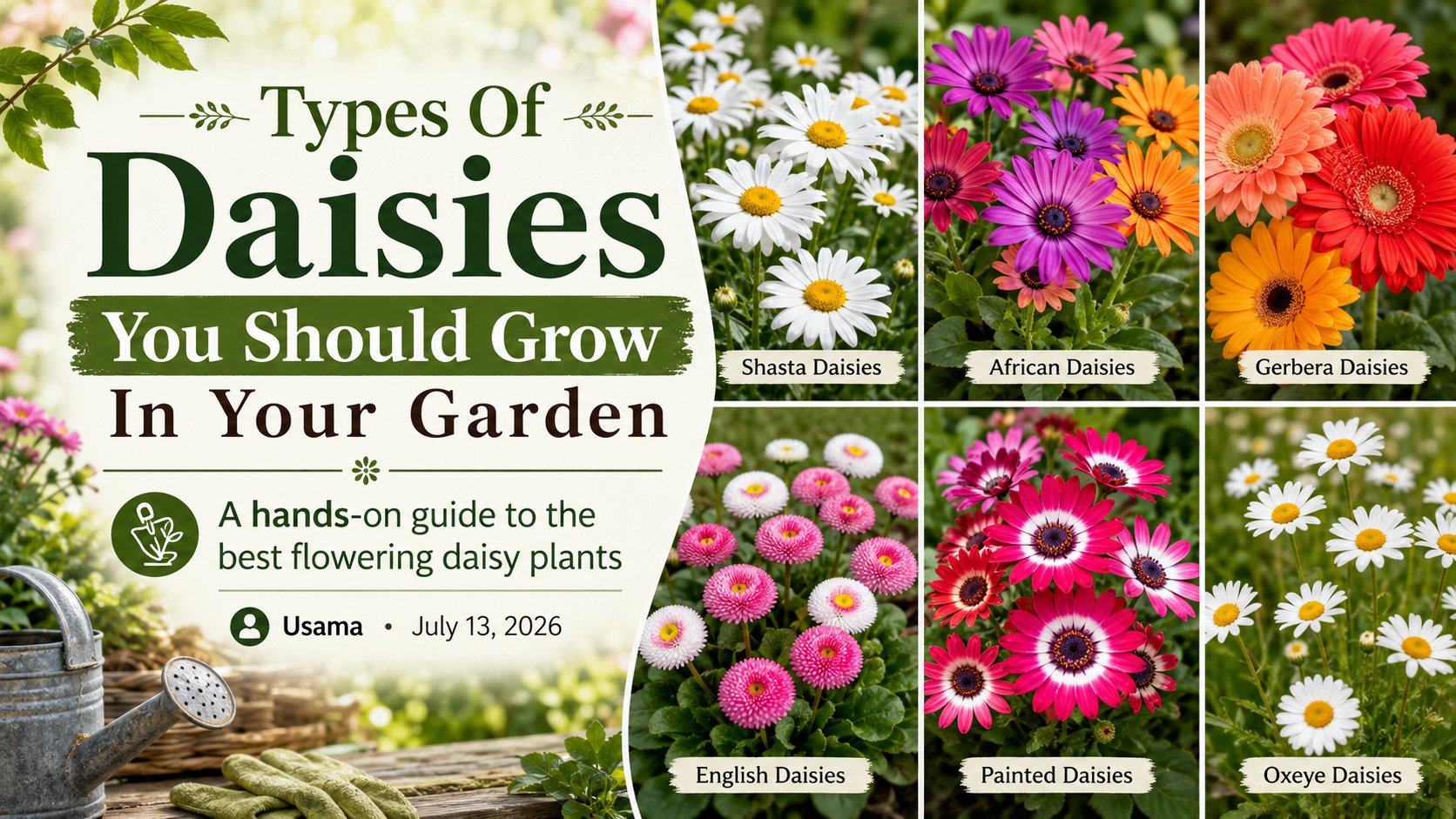

A hands-on guide to the best flowering daisy plants — from classic white daisies to vibrant Gerberas — based on 12 years of growing experience.
Whether you call them daisies, daisy flowers, or flowering daisy plants — these cheerful blooms deserve a place in every garden. The daisy family (Asteraceae) is one of the largest plant families on earth, and the varieties available to home gardeners range from tiny ground-cover English daisies to show-stopping Gerbera daisy flowers in every colour imaginable. Below, I share six types of daisies I’ve personally grown, with honest growing tips from my own garden beds.
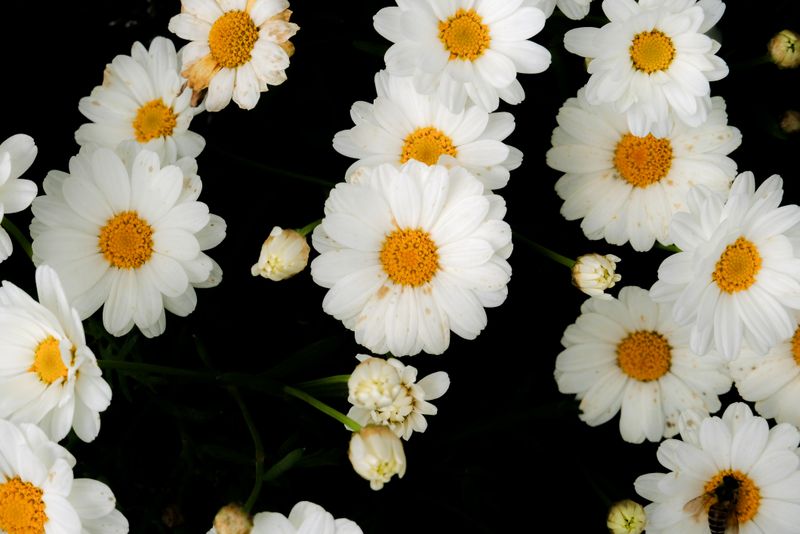
1. Shasta Daisy (Leucanthemum × superbum)
The Shasta daisy is probably what most people picture when they hear ‘daisy flower.’ These classic white daisies with golden centres are perennial workhorses in zones 5–9. I planted my first clump in 2014, and they’ve come back reliably every spring with zero winter protection. They bloom from early summer well into autumn if you deadhead regularly.
My Growing Tips
Full sun, well-drained soil, divide every 3 years to keep vigour. I feed mine with a balanced 10-10-10 once in early spring. Stake taller cultivars like ‘Becky’ before they flop.
2. African Daisy (Osteospermum)
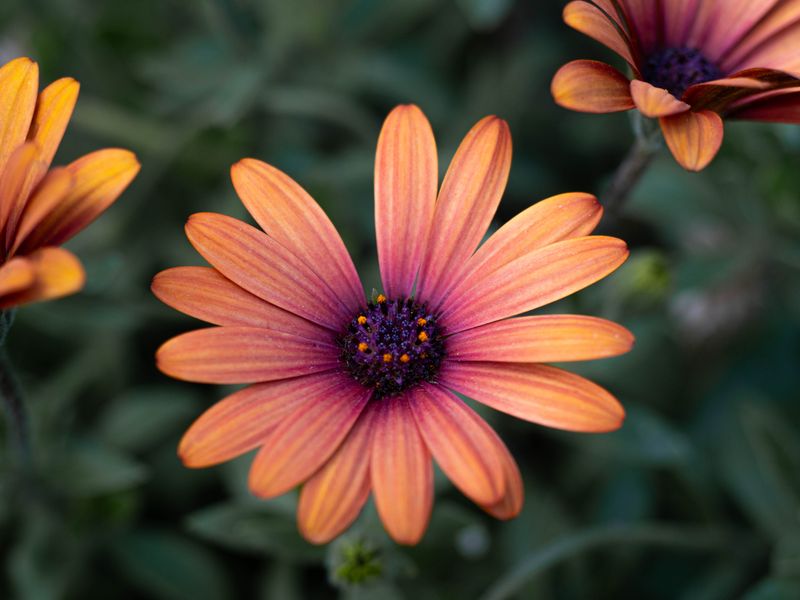
African daisies bring electric purples, fiery oranges, and bicolour patterns that no other daisy flower can match. These flowering daisy plants are tender perennials — I grow them as annuals in my zone-7 garden, though they overwinter beautifully in containers brought indoors. Their petals famously close on cloudy days, which I find charming rather than frustrating.
My Growing Tips
Needs full sun to stay open. Excellent in containers and raised beds. Water moderately — they’re drought-tolerant once established. Pinch tips in spring for bushier growth.
3. Gerbera Daisy (Gerbera jamesonii)
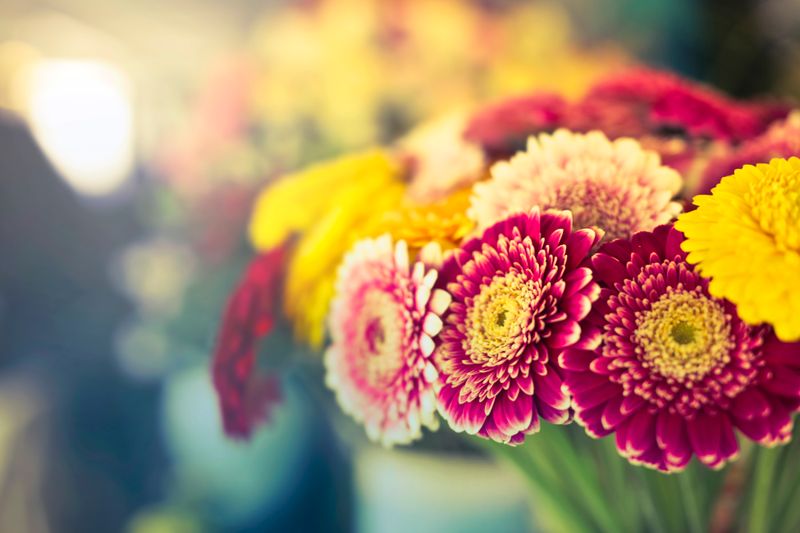
Gerbera daisies are the divas of the daisy world — bold, dramatic, and available in nearly every colour. These daisies flowers are equally popular as cut flowers and bedding plants. In my experience, they’re slightly fussier than other varieties, preferring morning sun with afternoon shade in hot climates.
My Growing Tips
Plant crown slightly above soil level to prevent rot. Morning sun, afternoon shade in zones 8+. Feed fortnightly during bloom season. Remove spent blooms at the base to encourage continuous flowering.
4. English Daisy (Bellis perennis)
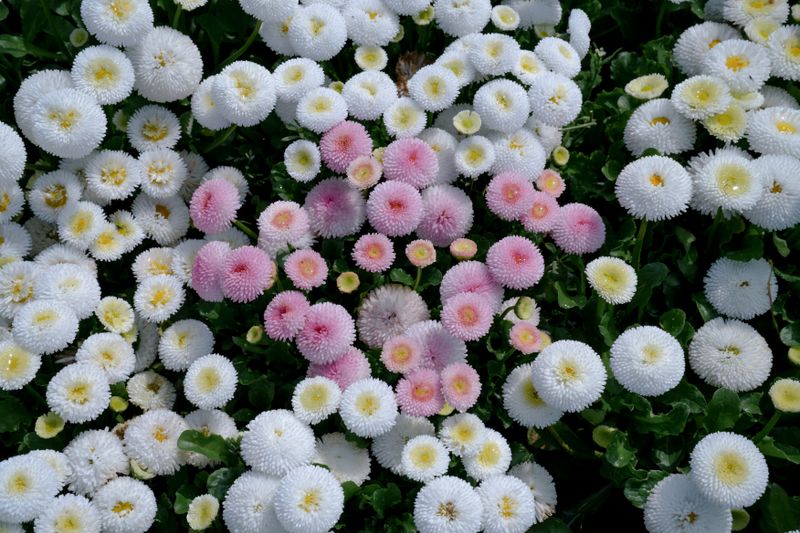
The dainty English daisy is the one you’d find dotting cottage lawns across the UK. These small daisys (often just 3–6 inches tall) bloom in white, pink, and red. I use them as edging plants along my garden paths — they naturalise beautifully and self-seed without becoming invasive.
My Growing Tips
Part shade to full sun. Keep soil consistently moist. Treat as biennial in warmer zones. Perfect for container gardens and fairy gardens. Deadhead to extend blooming.
5. Painted Daisy (Tanacetum coccineum)
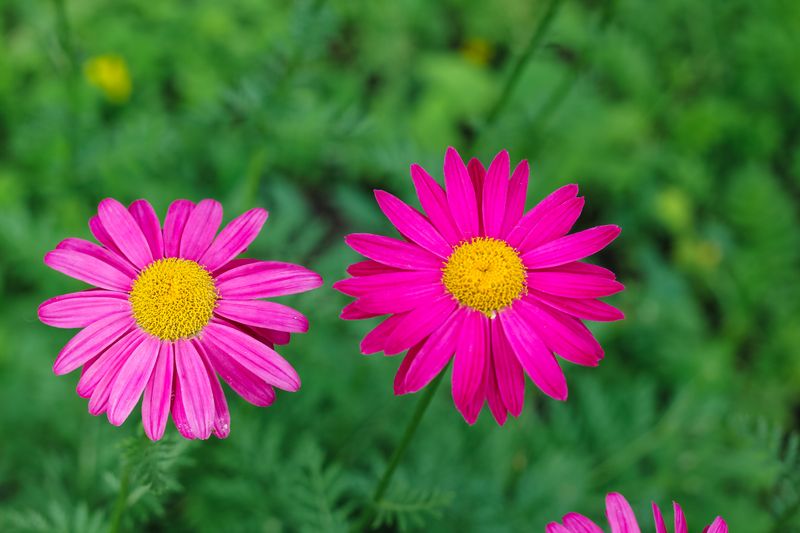
Painted daisies bring rich magentas, crimsons, and pinks that feel almost tropical. As a bonus, these daisy flowers contain natural pyrethrin — a compound that repels many garden pests. I grow a row of them alongside my vegetable beds as a beautiful, functional pest deterrent.
My Growing Tips
Full sun, lean soil (too much fertiliser reduces blooms). Cut back hard after first flush for a second bloom in autumn. Hardy to zone 3 — extremely cold-tolerant.
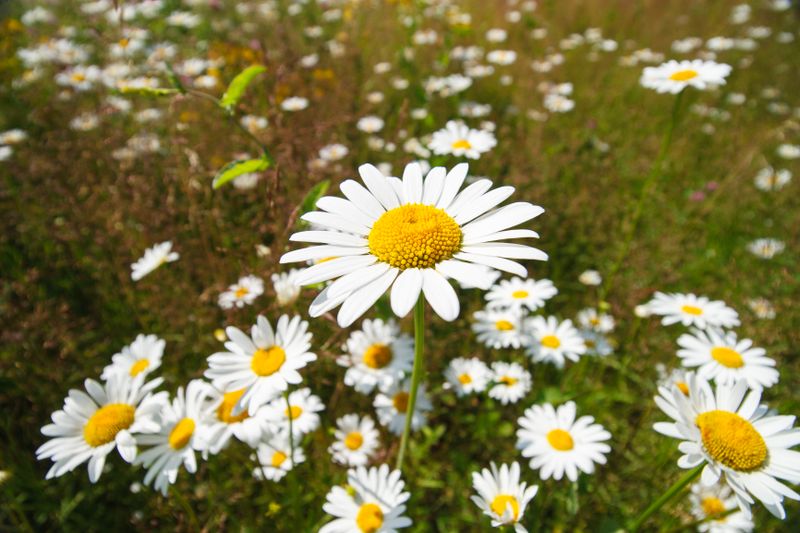
6. Oxeye Daisy (Leucanthemum vulgare)
The oxeye daisy is the wildflower you see carpeting meadows and roadsides. If you want a low-maintenance, naturalistic look, these daisies are unbeatable. I scattered seed in my wildflower meadow strip three years ago and now have a stunning June display that supports pollinators all season long.
My Growing Tips
Thrives in poor soil — don’t fertilise. Scatter seed in autumn for spring germination. Can spread aggressively, so plant where you want naturalistic coverage. Mow once after seed-set in late summer.
Frequently Asked Questions About Growing Daisies
Are daisies easy to grow for beginners?
Yes! Most daisy varieties — especially Shasta daisies and oxeye daisies — are extremely forgiving. They tolerate a range of soil types and need minimal care once established. I always recommend daisies as a first perennial for new gardeners.
When is the best time to plant daisy flowers?
Spring (after last frost) or early autumn. Planting in autumn gives roots time to establish before winter dormancy, leading to stronger blooms the following summer. I’ve had best results with September plantings in my zone-7 garden.
Do daisies come back every year?
Most flowering daisy plants are perennial (Shasta, oxeye, painted daisy) and return reliably each year. Gerbera daisies and African daisies are tender perennials — they return in warm zones but are grown as annuals in cooler climates.