
Quick Summary
- Best for: Cut flowers, borders, containers, exhibition
- Difficulty: Beginner-friendly (moderate for overwintering)
- Time to Bloom: 8–12 weeks from planting tubers
- Climate: USDA Zones 3–11 (lift tubers below Zone 8)
- Benefits: Prolific blooms, incredible color range, attracts pollinators
- Bloom Season: Midsummer through first frost
Dahlia At A Glance
Botanical Name
Dahlia spp.
Family
Asteraceae
Hardiness
Zones 8–1- perennial
Height
1–6 ft (30–180 cm)
Bloom Time
July–October
Sun
Full sun (6–8 hrs)
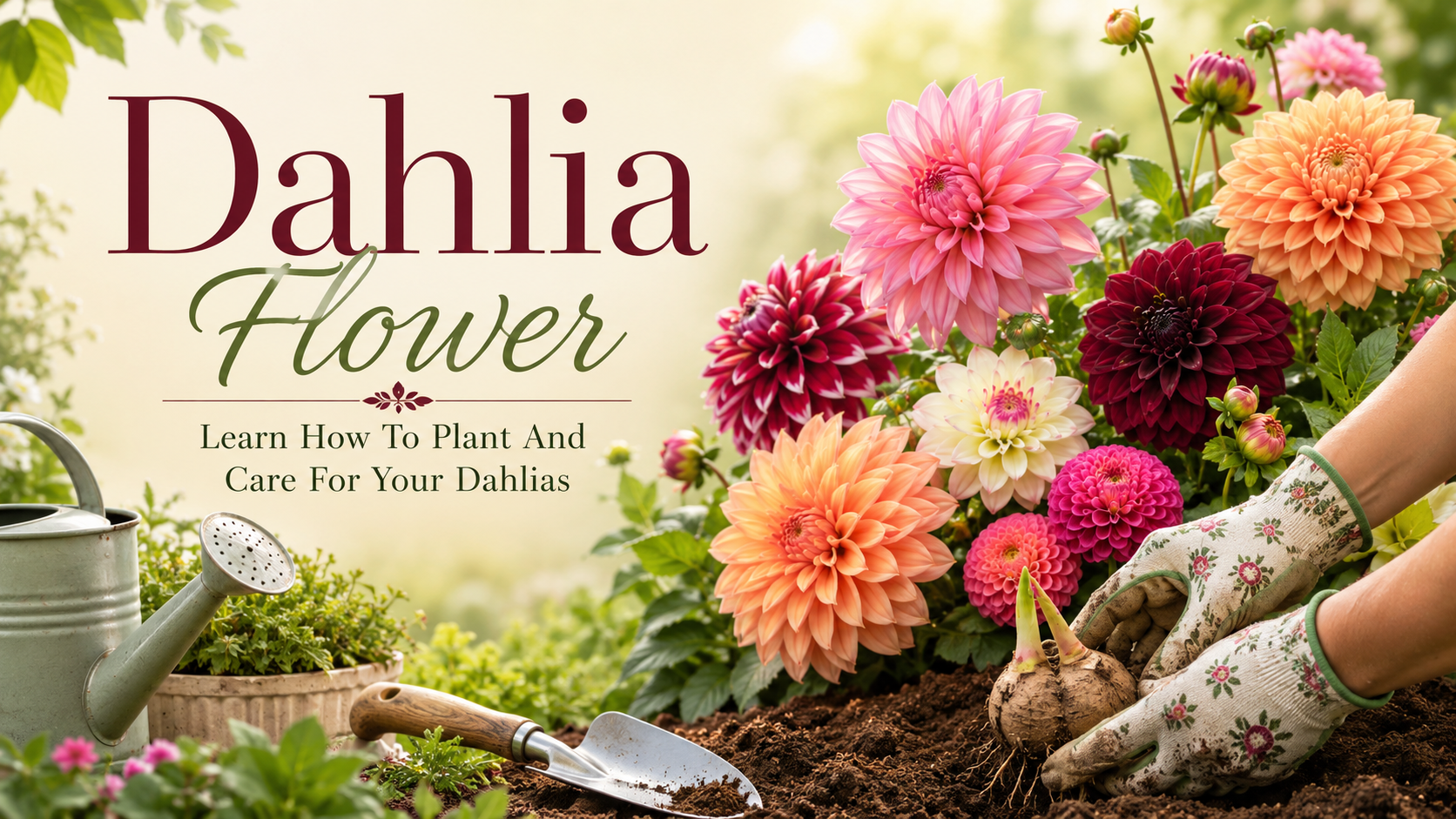
Few flowers deliver the jaw-dropping impact of a dahlia in full stride. From palm-sized dinnerplate blooms to tight little pompons no bigger than a golf ball, dahlias reward gardeners with an almost absurd generosity — one healthy tuber can produce 20 to 30 cut stems in a single season.
Originally cultivated by the Aztecs in the highlands of Mexico, the dahlia has evolved from a food crop (the tubers are edible) into one of the most hybridized ornamental flowers on earth. The American Dahlia Society recognizes over 57,000 named cultivars in 14 distinct bloom forms and virtually every color except true blue.
This guide distills 15 years of hands-on dahlia growing into practical steps you can follow whether you’re planting your first three tubers or expanding to a full cut-flower patch. We’ll cover variety selection, planting technique, seasonal care, pest management, and the critical art of overwintering your tubers.
Choosing the Right Dahlia Varieties
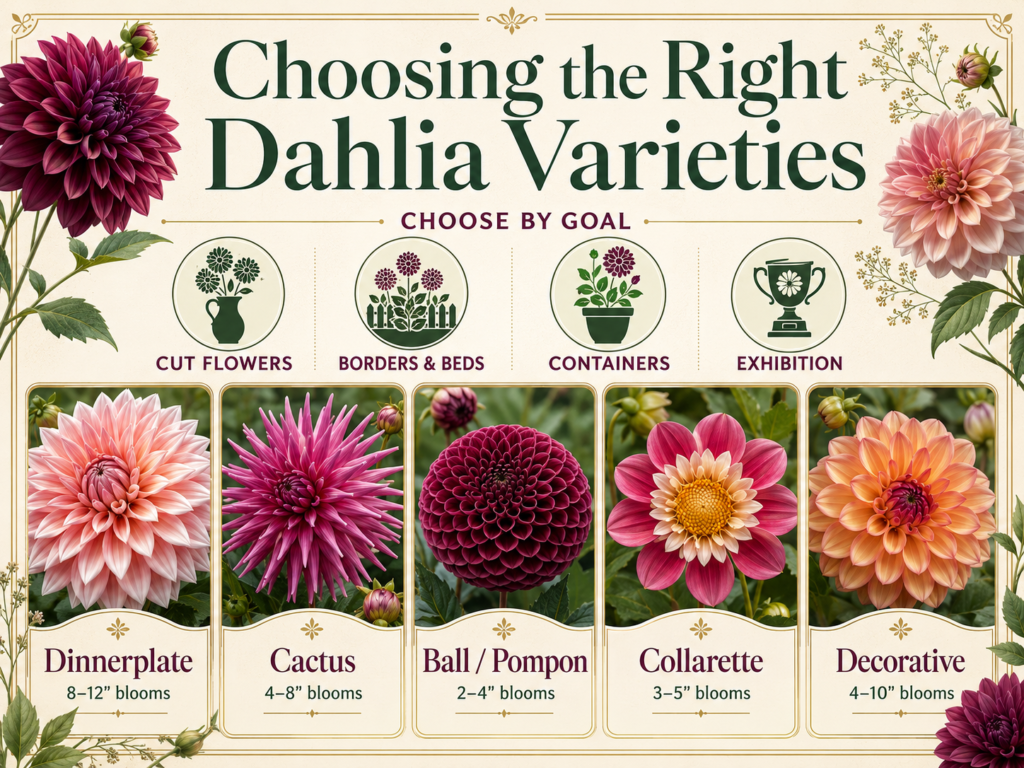
The sheer diversity of dahlias can overwhelm first-time buyers. Start by deciding your primary goal: long-stemmed cut flowers, compact border color, container growing, or exhibition blooms. Each purpose narrows the field dramatically.
For cut flowers, prioritize varieties with stems at least 18 inches long and blooms that hold well in a vase — decorative and cactus types excel here. For borders and beds, look at ball dahlias and shorter decorative forms that won’t flop without heavy staking.
| Type | Size | Best For | Example |
|---|---|---|---|
| Dinnerplate | 8–12″ blooms | Focal arrangements, exhibition | Café au Lait, Kelvin Floodlight |
| Cactus | 4–8″ blooms | Cut flowers, texture | Karma Choc, Nuit d’Été |
| Ball / Pompon | 2–4″ blooms | Borders, bouquet filler | Jomanda, Wizard of Oz |
| Collarette | 3–5″ blooms | Pollinator gardens, charm | Night Butterfly, Pooh |
| Decorative | 4–10″ blooms | Versatile — beds & vases | Thomas Edison, Labyrinth |
🌱 Beginner Tip
Start with 3–5 varieties in different bloom forms. This gives you a long cutting season and helps you discover which types thrive in your specific microclimate.
When & Where To Plant Dahlia Tubers
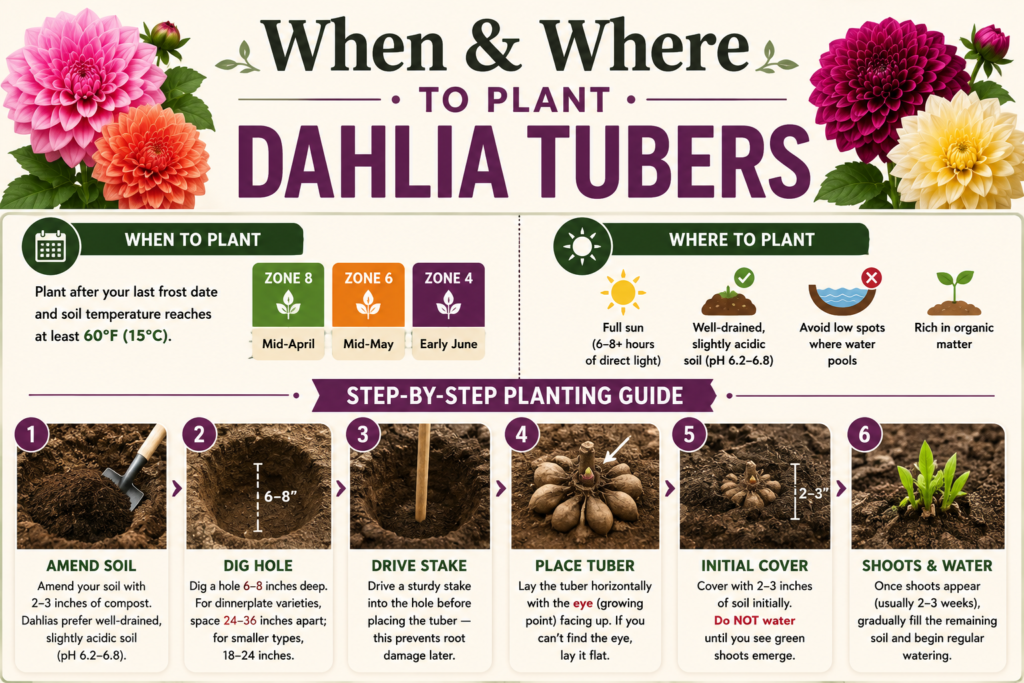
Timing is everything. Plant dahlia tubers outdoors only after your last frost date has passed and soil temperature reaches at least 60°F (15°C). In most of the US, that means mid-April in Zone 8, mid-May in Zone 6, and early June in Zone 4.
Choose a site with full sun — dahlias need a minimum of 6 hours of direct light, but 8 hours produces significantly more blooms. Avoid low-lying areas where water pools; dahlias rot quickly in waterlogged soil.
Step-by-Step Planting Guide
- Amend your soil with 2–3 inches of compost. Dahlias prefer well-drained, slightly acidic soil (pH 6.2–6.8).
- Dig a hole 6–8 inches deep. For dinnerplate varieties, space holes 24–36 inches apart; for smaller types, 18–24 inches.
- Drive a sturdy stake into the hole before placing the tuber — this prevents root damage later.
- Lay the tuber horizontally with the eye (growing point) facing up. If you can’t find the eye, lay it flat.
- Cover with 2–3 inches of soil initially. Do NOT water until you see green shoots emerge (usually 2–3 weeks).
- Once shoots appear, gradually fill the remaining soil and begin regular watering.
⚠️ Common Mistake
Watering tubers before they sprout is the #1 killer. Dormant tubers sitting in wet soil will rot within days. Wait for green growth before turning on the hose.
Watering, Feeding & Ongoing Care
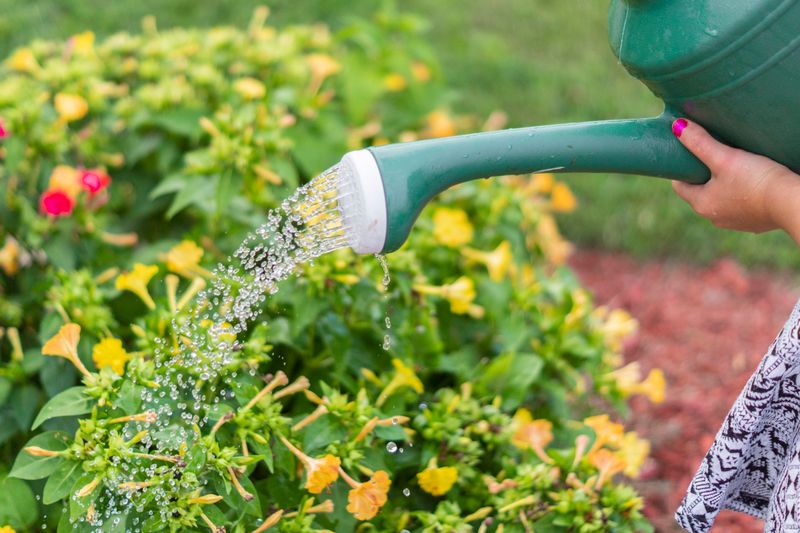
Once established, dahlias are surprisingly thirsty. A mature plant in peak bloom can consume 1–2 gallons of water per day during hot weather. Deep, infrequent watering beats daily light sprinkling — aim for 1–2 inches per week through drip irrigation or soaker hose.
Feed every 3–4 weeks with a low-nitrogen fertilizer (5-10-10 or similar). High nitrogen pushes foliage at the expense of blooms. Switch to a bloom-booster formula once buds appear in midsummer.
💬 Expert Advice
“I tell every new dahlia grower: pinch your plants when they reach 12 inches tall. Remove the center shoot above the third set of leaves. It feels brutal, but it forces side branching and doubles your bloom count.” — James Hartwell, Gardener Haven
| Task | Frequency | Notes |
|---|---|---|
| Deep watering | 2–3× per week | More in heat waves; less if rainy |
| Fertilizing | Every 3–4 weeks | Low-nitrogen; switch to bloom-booster mid-July |
| Deadheading | Every 2–3 days | Cut spent blooms back to a lateral bud |
| Staking / tying | As needed | Tie loosely with soft twine; check after storms |
Pests & Diseases: Identification & Organic Solutions
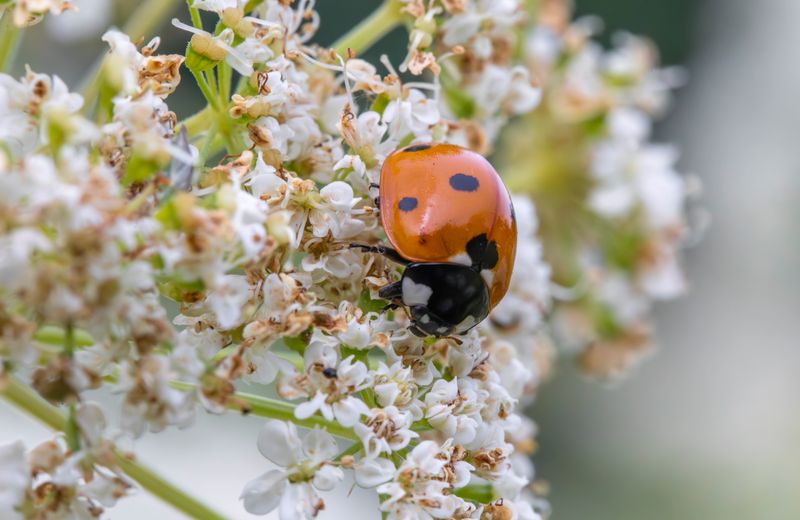
Dahlias are relatively robust, but a few pests and diseases show up consistently. Early identification and organic intervention keep most problems manageable without resorting to harsh chemicals.
| Pest/Disease | Signs | Organic Solution |
|---|---|---|
| Slugs & Snails | Ragged holes in young foliage, slime trails | Iron phosphate bait, copper tape, beer traps |
| Aphids | Sticky residue, curled new growth, ants | Strong water spray, neem oil, ladybugs |
| Powdery Mildew | White powdery coating on leaves, late season | Improve airflow, remove affected leaves, potassium bicarbonate spray |
| Spider Mites | Stippled/bronzed leaves, fine webbing underneath | Mist foliage regularly, insecticidal soap, predatory mites |
🐞 Did You Know?
A single ladybug can consume up to 5,000 aphids in its lifetime. Encouraging ladybug habitat near your dahlia patch — with plants like dill, fennel, and yarrow — is one of the most effective organic pest controls available.
Overwintering Dahlia Tubers
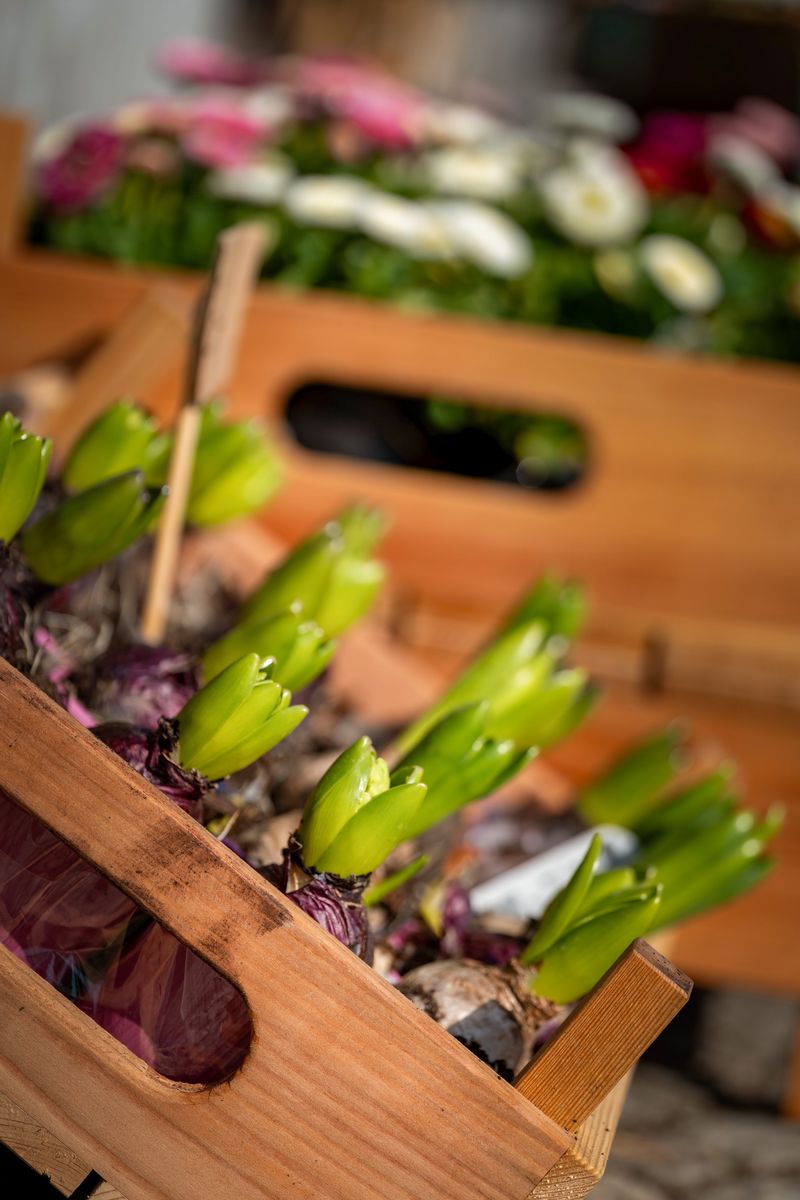
In USDA Zones 8 and warmer, dahlias can often stay in the ground year-round with a thick mulch layer. Everywhere else, you’ll need to dig and store tubers after the first killing frost blackens the foliage.
Proper storage is the difference between a garage full of viable tubers in spring and a bucket of mush. The goal: keep tubers cool (40–50°F), slightly moist, and dormant until planting time returns.
How To Store Dahlia Tubers (5 Steps)
- Wait 1–2 weeks after frost kills the tops. This allows tubers to “cure” and develop thicker skin.
- Cut stems to 4–6 inches. Carefully dig a wide circle around the clump to avoid nicking tubers.
- Rinse off soil gently with a hose. Let tubers dry in a shaded, frost-free spot for 24–48 hours.
- Pack in barely-damp vermiculite, peat moss, or wood shavings inside a cardboard box or plastic crate with ventilation holes.
- Store at 40–50°F (a basement, unheated garage, or root cellar works). Check monthly — mist lightly if tubers look shriveled; discard any with soft rot.
💡 Pro Tip
Label every clump before storing. By spring you will absolutely forget which variety is which. A simple masking-tape tag with a permanent marker saves hours of confusion.
Frequently Asked Questions
When should I plant dahlia tubers?
Plant after your last frost date when soil reaches 60°F. In most US regions this is mid-April to early June depending on your zone.
Do dahlias come back every year?
In Zones 8–11 they’re perennial and return on their own. In colder zones you must dig and store tubers over winter, then replant in spring.
How often should I water dahlias?
Established plants need 1–2 inches of water per week — typically 2–3 deep waterings. Increase during heat waves. Never water dormant tubers before sprouts appear.
Should I pinch my dahlia plants?
Yes. When plants reach about 12 inches tall, pinch out the center growing tip above the third leaf pair. This encourages branching and significantly increases bloom production.
What is the best fertilizer for dahlias?
Use a low-nitrogen formula like 5-10-10 every 3–4 weeks. High nitrogen produces lush foliage but fewer flowers. Switch to a bloom-booster once buds form.
Can I grow dahlias in pots?
Absolutely. Choose compact varieties (under 3 feet) and use a container at least 12–14 inches wide with excellent drainage. Potted dahlias need more frequent watering and feeding.
Why are my dahlia leaves turning yellow?
Common causes include overwatering, nutrient deficiency (especially nitrogen early in the season), or spider mite damage. Check soil moisture first, then inspect leaf undersides for pests.
How do I get bigger dahlia blooms?
Disbud — remove the two side buds flanking each central bud. This directs all energy into one large flower. Combined with consistent feeding and deep watering, you’ll see noticeably larger blooms.
Key Takeaways
- ✓Plant tubers after last frost in full sun — don’t water until shoots emerge.
- ✓Pinch at 12 inches tall for bushier plants and double the blooms.
- ✓Feed low-nitrogen every 3–4 weeks; switch to bloom-booster mid-season.
- ✓Deadhead every 2–3 days to keep flowers coming until frost.
- ✓Dig and store tubers at 40–50°F in Zones 7 and colder.