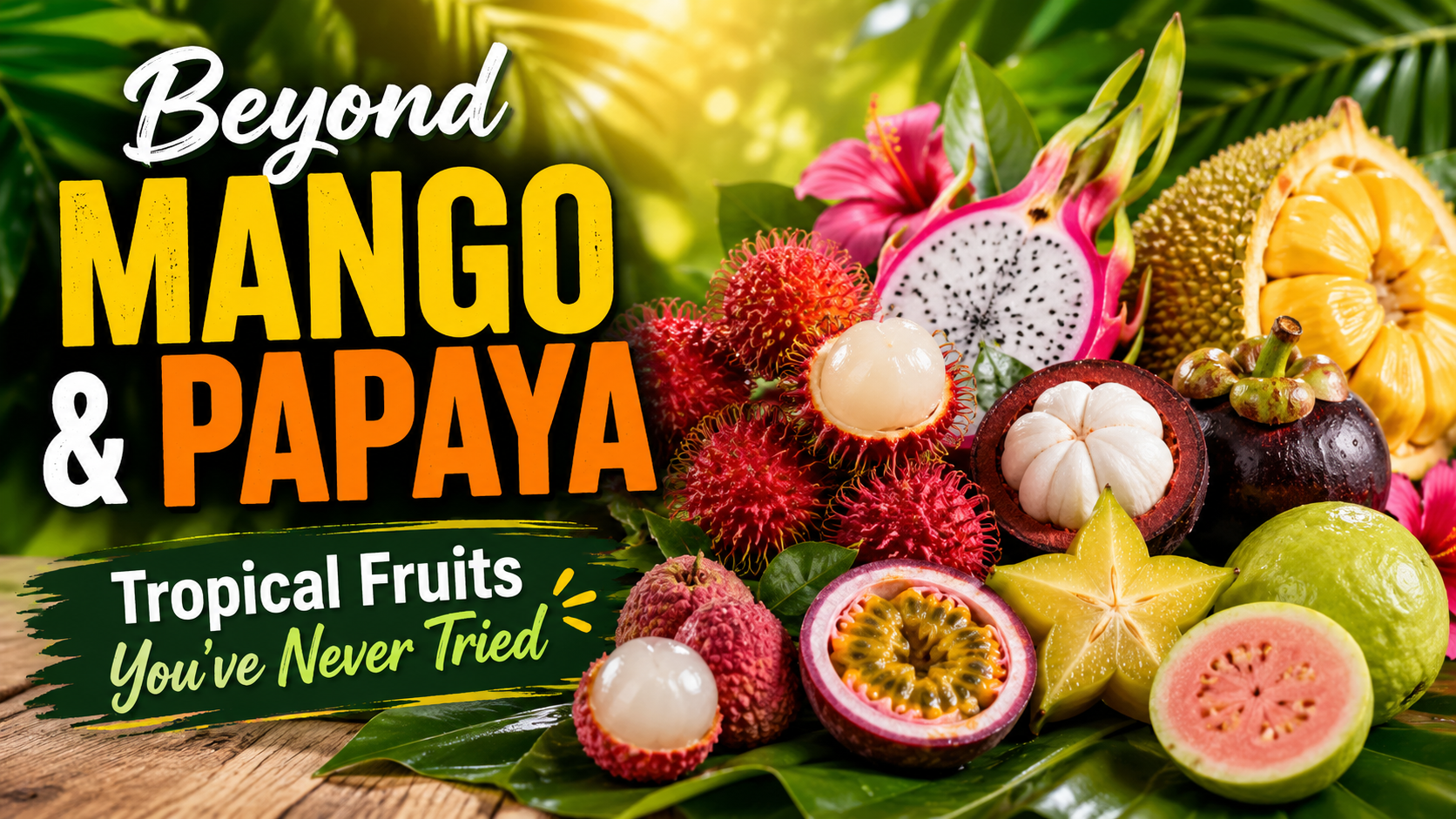

Six tropical fruits worth seeking out—what they taste like, how to choose them, and the easiest ways to eat them without wasting your market find.
A better first bite starts with a little context.
The world of tropical fruits is far wider than mango, pineapple, and papaya. At Asian, Latin American, African, and international grocers, the unfamiliar shapes can be part of the fun—and part of the hesitation. A scaly brown fruit, a crimson hairy shell, or a green fruit with soft bumps can be delicious, but only if you know when it is ripe and which parts to leave behind.
This guide is intentionally practical. Flavor comparisons are only a starting point because varieties and ripeness change the experience. Ask a produce manager when the fruit arrived, begin with one or two pieces, and treat a first tasting as a small adventure rather than a bulk purchase.
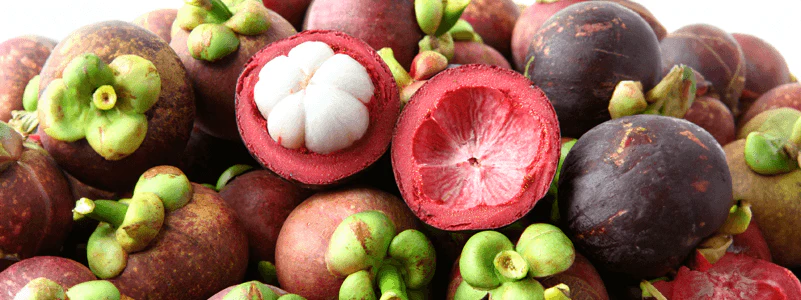
Mangosteen · Garcinia mangostana
Often called the “queen of fruits” in parts of Southeast Asia, mangosteen has a thick purple rind surrounding bright white segments. Its appeal is its gentle, perfumed sweetness rather than an intense tropical punch.
Origin
Southeast Asia; now cultivated in tropical regions worldwide.
Taste & texture
Soft, juicy segments with a sweet-tart flavor that may recall peach, citrus, and strawberry.
Buying note
Choose a fruit whose shell gives slightly under pressure. A rock-hard rind may be dry inside.
How to eat
Score or gently twist the rind, then lift out the white flesh. Do not eat the hard purple rind; discard any seed.
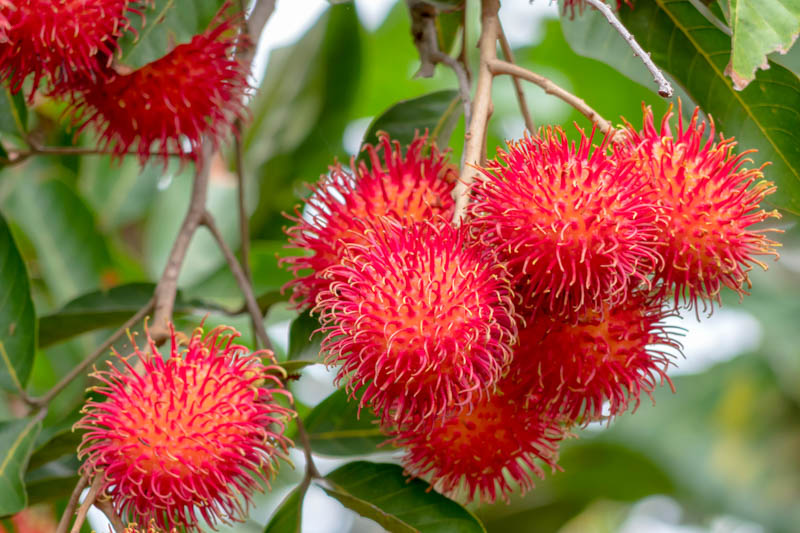
Rambutan · Nephelium lappaceum
Rambutan looks dramatic, but it is one of the friendliest exotic fruits for beginners. Its soft “hairs” are not sharp, and the fruit inside is closely related to lychee and longan.
Origin
Native to Southeast Asia and popular across tropical Asia and beyond.
Taste & texture
Juicy, floral, and lightly grape-like. The flesh is tender and translucent around a central seed.
How to eat
Make a shallow cut around the skin and peel it away. Eat the pale flesh, but do not chew or swallow the seed.
Buying note
Look for vivid red or red-yellow shells with fresh-looking spines. Brown, brittle hairs signal age, not danger.
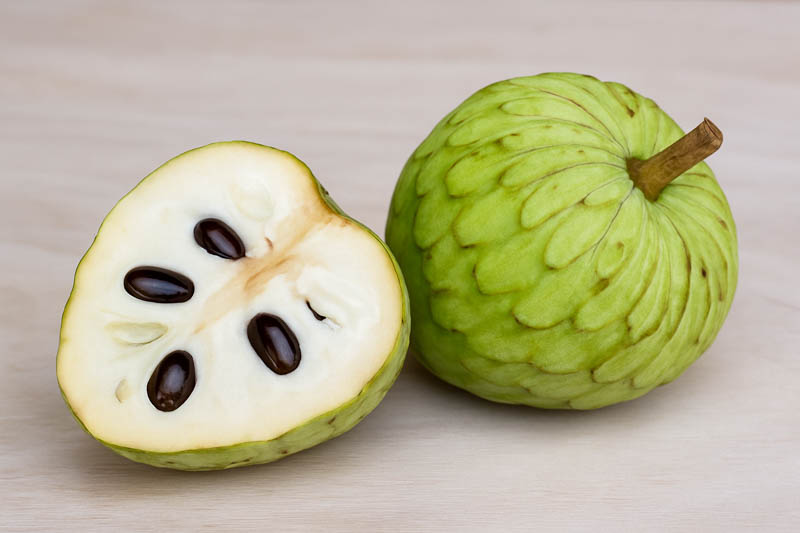
Cherimoya · Annona cherimola
Cherimoya is sometimes called custard apple for good reason: ripe flesh is plush, spoonable, and unusually creamy. It is a memorable dessert fruit when fully ripe.
Origin
Andean valleys of South America; cultivated in subtropical growing regions.
Taste & texture
Creamy and sweet, with notes commonly compared to banana, pear, pineapple, and vanilla.
How to eat
Wait until it yields like a ripe avocado, halve it, and scoop out the flesh. Discard skin and glossy black seeds; do not crush or eat the seeds.
Buying note
A firm fruit can ripen on the counter. Once soft, refrigerate and eat promptly before the flesh becomes overly fermented.
Dragon fruit · Selenicereus species
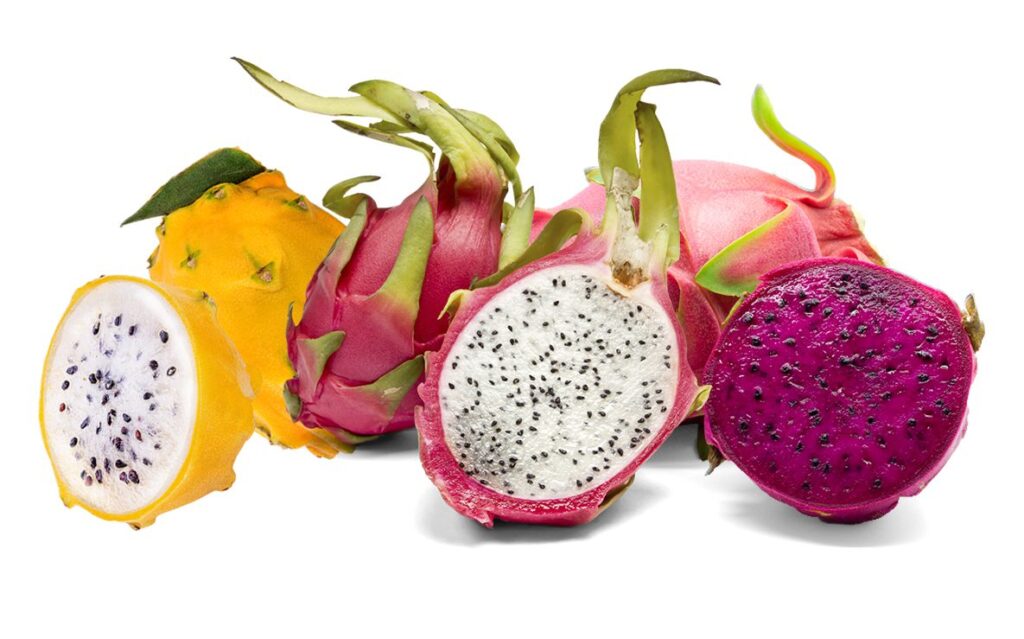
The neon pink skin makes dragon fruit feel more intimidating than it is. It is one of the easiest tropical fruits to cut, and its mild flavor is especially approachable chilled.
Origin
Native to Mexico and Central America; widely grown across Southeast Asia and other warm regions.
Taste & texture
Mildly sweet and refreshing, with a texture similar to kiwi because of its tiny edible seeds. Red-fleshed varieties can taste richer.
How to eat
Slice in half and scoop out the flesh, or peel back the skin and cut it into cubes. The seeds are edible; the peel is not usually eaten.
Buying note
Choose bright, evenly colored skin with only a little dryness at the leafy tips. Chill before serving for a cleaner flavor.
Longan · Dimocarpus longan
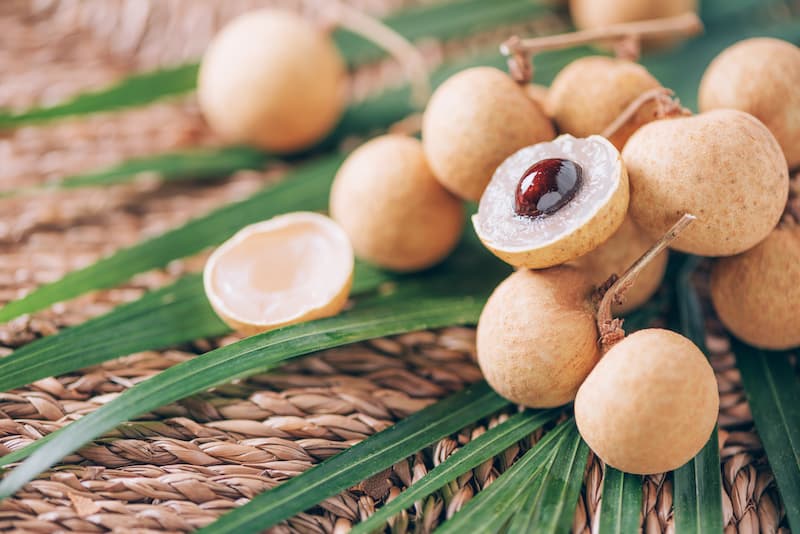
Longan means “dragon eye” in Chinese, a reference to its translucent flesh and dark seed. It is small, snackable, and less perfumed than lychee.
Origin
Southern China and Southeast Asia; also cultivated in other tropical and subtropical areas.
Taste & texture
Sweet, juicy, and gently musky, often compared with lychee, melon, or a very floral grape.
How to eat
Crack the thin brown shell with your fingers, eat the clear flesh, and discard the large dark seed.
Sapodilla · Manilkara zapota
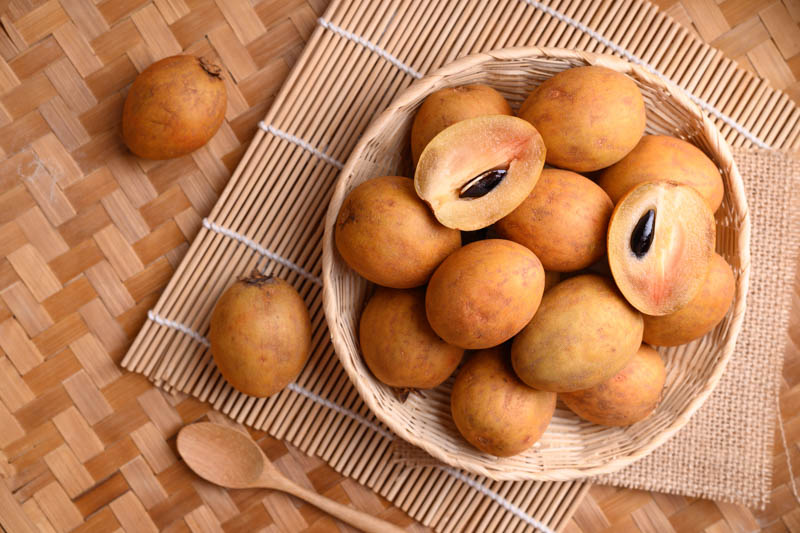
Sapodilla has a plain brown exterior, but its ripe interior is one of the most distinctive tropical treats: soft, grainy, and deeply sweet. It deserves patience because an unripe fruit can be astringent.
Origin
Southern Mexico, Central America, and the Caribbean; now grown widely in the tropics.
Taste & texture
Brown-sugar sweet, with flavor comparisons ranging from pear and date to caramel. Ripe flesh is soft and slightly grainy.
How to eat
Let it soften fully, cut it open, spoon out the flesh, and remove the shiny black seeds. Avoid eating unripe fruit.
Buying note
It should feel very soft—almost like a ripe pear—before eating. Keep firm fruit at room temperature until it gives to gentle pressure.
Fresh fruit is food—not a cure, and not every part is edible.
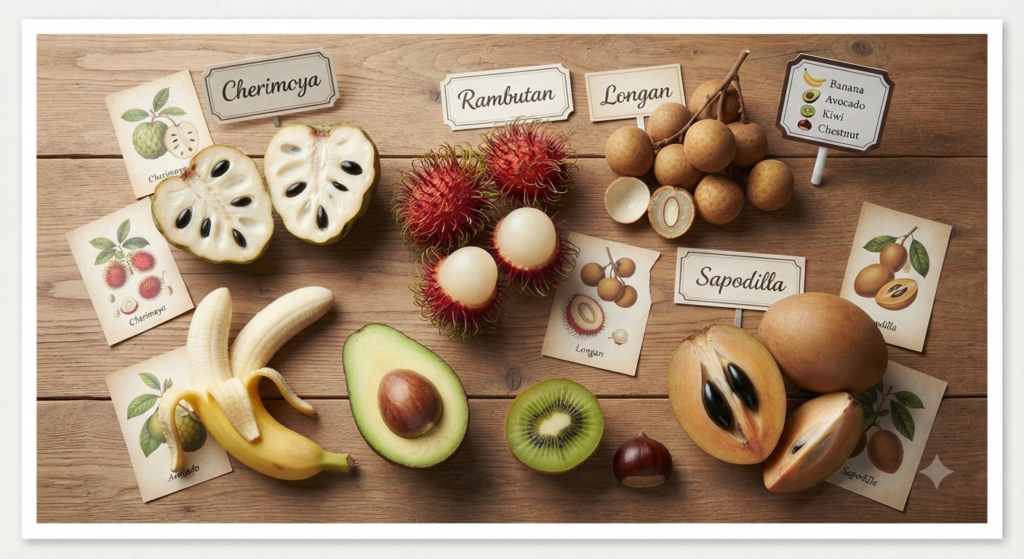
For unfamiliar fruits, eat only the commonly consumed ripe flesh unless a reliable source says otherwise. Cherimoya, rambutan, longan, and sapodilla seeds should be discarded. People with a latex allergy can sometimes react to foods including banana, avocado, kiwi, or chestnut; discuss new foods with a qualified clinician if you have known food allergies, are pregnant, or are managing a medical condition.
Tropical fruits can contribute fiber, vitamin C, and other micronutrients, but their exact nutrition varies by fruit, variety, and serving size. Enjoy them as part of an overall varied eating pattern rather than relying on claims that a single food can prevent or treat disease.
Tropical fruit FAQs
Where can I buy unusual tropical fruits?
Try Asian, Latin American, African, and international grocery stores, farmers’ markets, or reputable specialty produce sellers. Availability varies by season and region, so calling ahead can help avoid a wasted trip.
How do I know when a tropical fruit is ripe?
Ripeness depends on the fruit. Look for a gentle give, fresh-looking skin, a fragrant aroma, or a color change, while avoiding leaking, moldy, or badly bruised produce. Use the fruit-specific notes in this guide and ask the seller when it arrived.
Are tropical fruit seeds and skins safe to eat?
Not always. Some skins are discarded and several fruits in this guide have seeds that should not be chewed or swallowed. Eat only the commonly consumed ripe flesh unless a reliable agricultural or health source says otherwise.
Are tropical fruits especially nutritious?
Many tropical fruits provide fiber, vitamin C, and other micronutrients, but nutrition varies by fruit, variety, and serving size. Enjoy tropical fruit as part of a varied eating pattern rather than treating any single food as a cure or treatment.