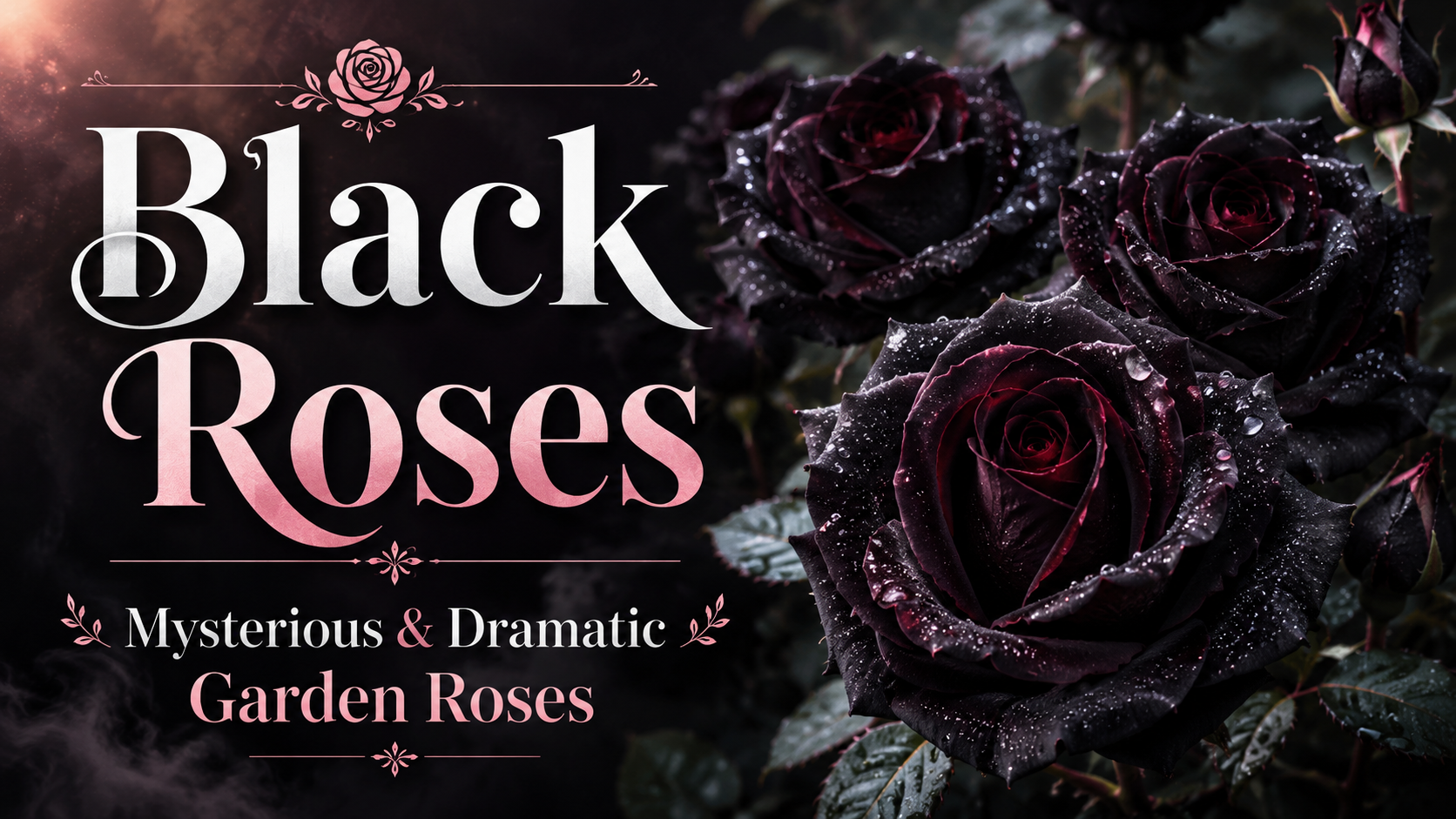

The truth about the black rose, the darkest cultivars worth growing, and how to create a garden with real depth, drama, and romance.
Do true black roses exist?
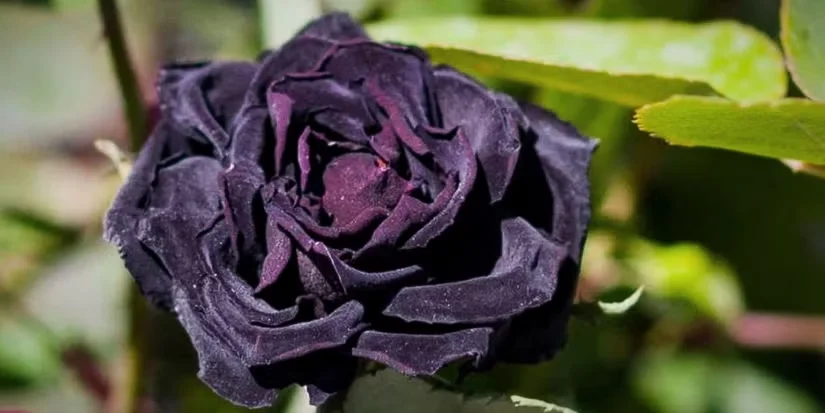
A naturally jet-black garden rose is not commercially available. What gardeners call a black rose is usually an exceptionally dark red, maroon, burgundy, or purple cultivar. In a tight bud, under cloud cover, or against deep foliage, those tones can read as nearly black—and that is part of their appeal.
Rose pigments do not produce the dense black appearance promised in many heavily edited product images. Still, a rose with black-looking petals can be very real as an effect of variety, light, weather, and flower maturity. The most satisfying choice is a named cultivar sold by a reputable nursery, not a vague listing promising impossible color.
Know the difference
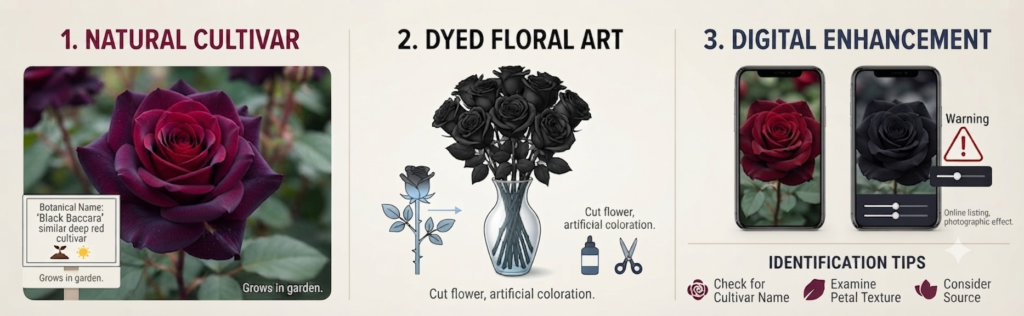
Natural dark roses, dyed flowers, and edited photos are not the same thing.
Living dark roses open in shades of red, plum, or purple. Florists can create black cut roses by dyeing pale flowers, while online images may be digitally darkened. If a listing shows a perfectly matte-black bloom but does not name a cultivar, treat it as a warning sign rather than a rare botanical discovery.
Three dark roses with genuine garden presence
Exact performance varies with climate, rootstock, and local disease pressure. These varieties are commonly sought for their dramatic depth of color, but blooms will still reveal red, wine, or purple tones in daylight.
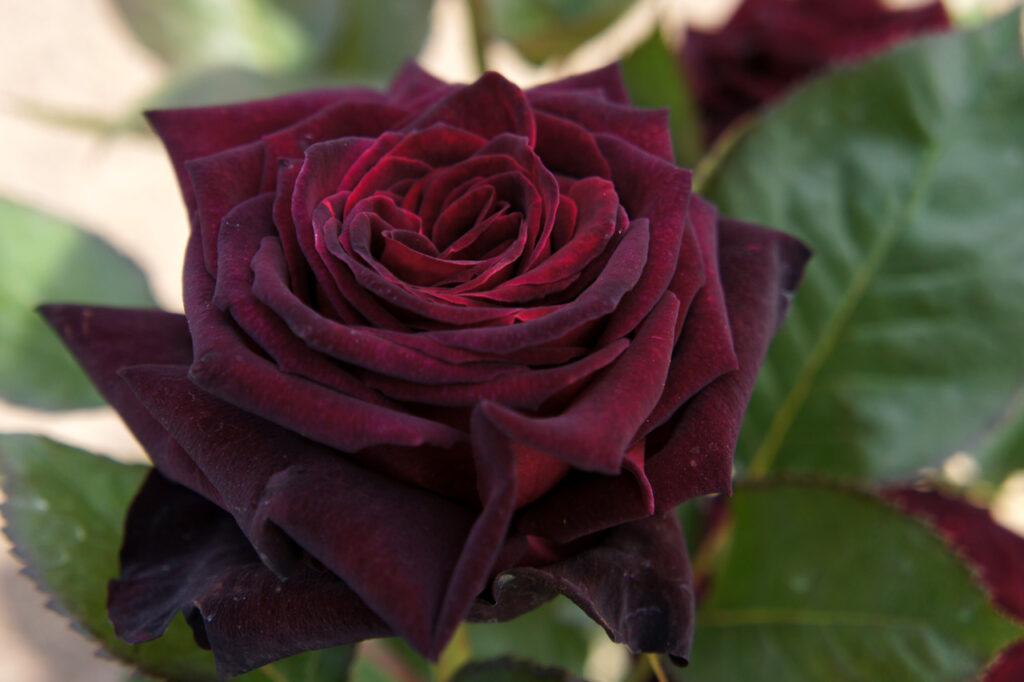
Black Baccara · deep velvet red
Black Baccara is a hybrid tea rose valued for its very dark, velvety red buds and long, elegant stems. The blooms are typically darkest before they fully open, making this a striking option for cutting gardens and dramatic borders.
Rose type
Hybrid tea; usually repeat flowering in season.
Mature size
Often around 3–5 ft tall and 2–3 ft wide, depending on climate and pruning.
Best use
Cut flowers, formal beds, and high-contrast garden schemes; fragrance is usually light.
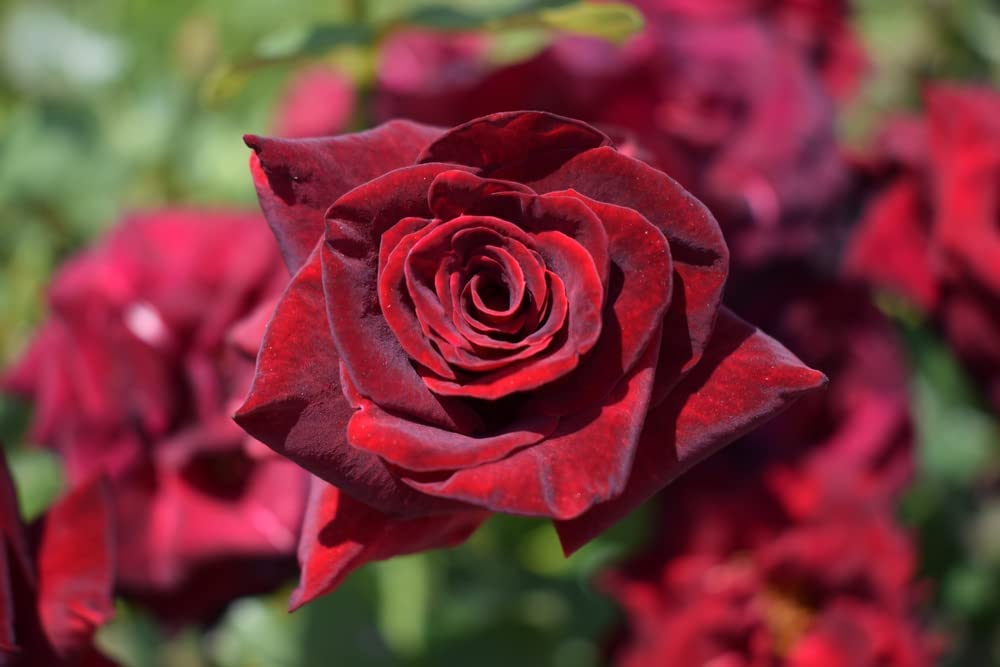
Black Magic · rich burgundy red
Black Magic is another hybrid tea with dark red blooms that often look nearly black in the center or in low light. It is popular for floral design because the buds are refined, the stems can be long, and the deep color reads clearly from a distance.
Rose type
Hybrid tea with large, classically shaped blooms.
Mature size
Commonly 4–6 ft tall and 2–3 ft wide in favorable conditions.
Best use
Cutting gardens, bouquets, and a bold focal point in a sunny border.
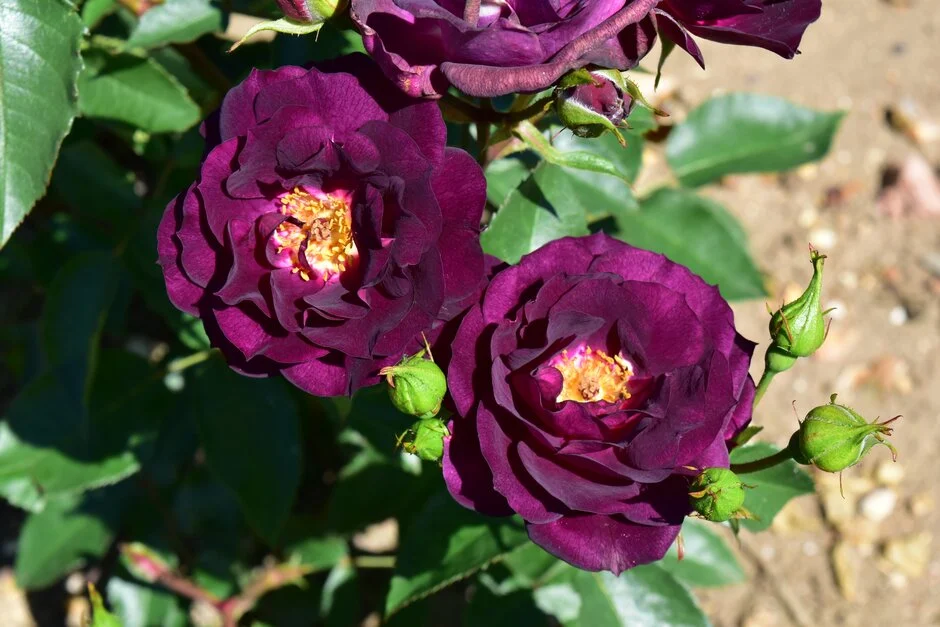
Midnight Blue · smoky purple plum
Midnight Blue brings the purple-black side of the palette: smoky violet petals, a pale reverse, and a strong clove-like fragrance. It does not look truly black, but it can create an especially gothic effect when planted with silver foliage or dark-leaved companions.
Rose type
Floribunda or shrub-style rose, with clustered repeat blooms.
Mature size
Usually about 3–4 ft tall and 2–3 ft wide.
Best use
Fragrant borders, containers, gothic planting palettes, and informal bouquets.
Why a dark rose can look black one day and red the next
Cool weather often deepens red and purple pigments, while intense heat and strong sun can make outer petals appear brighter or more faded. Buds may look blackest just before opening; as petals expand and catch more light, their burgundy or crimson undertones become easier to see.
To judge a rose fairly, look at photos taken outdoors in natural light and expect variation across the season. A named dark rose is still a beautiful choice even when it is visibly red—it is the shifting, layered color that gives these cultivars their drama.
How to grow a black rose plant successfully
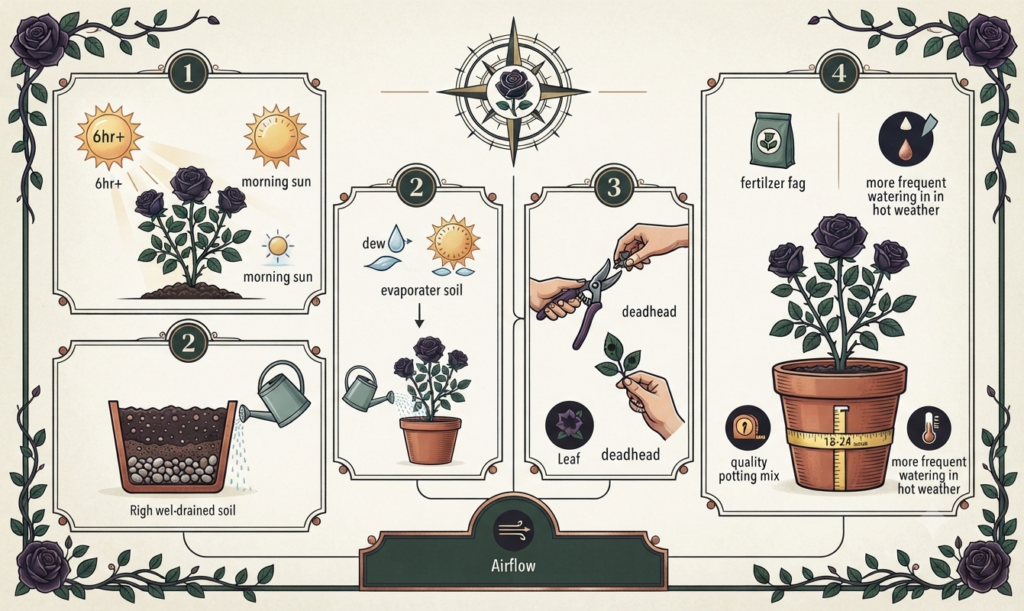
Dark roses do not need unusual care. They need the same dependable basics as other modern garden roses, plus enough airflow to reduce black spot and powdery mildew pressure.
- Give plants at least 6 hours of direct sun daily; morning sun is especially useful for drying foliage after dew.
- Plant in fertile, well-drained soil and water deeply at the base instead of wetting leaves frequently.
- Feed according to local rose guidance, deadhead repeat-blooming varieties, and remove diseased leaves promptly.
- For containers, choose a pot with drainage that is at least 18–24 inches wide, use quality potting mix, and water more often during hot weather.
Be cautious with “black rose seeds”
Rose seedlings do not reliably come true to the parent plant, so even seed collected from a dark rose is unlikely to produce an identical bloom. A listing that promises easy-to-grow, pure black roses from seed without a cultivar name is especially unreliable.
For predictable color and performance, buy a named grafted plant or bare-root rose from a specialist nursery, established garden center, or recognized breeder. Check the stated hardiness range, mature size, disease notes, and return policy before ordering.
Black rose meaning: mystery, change, and unconventional romance
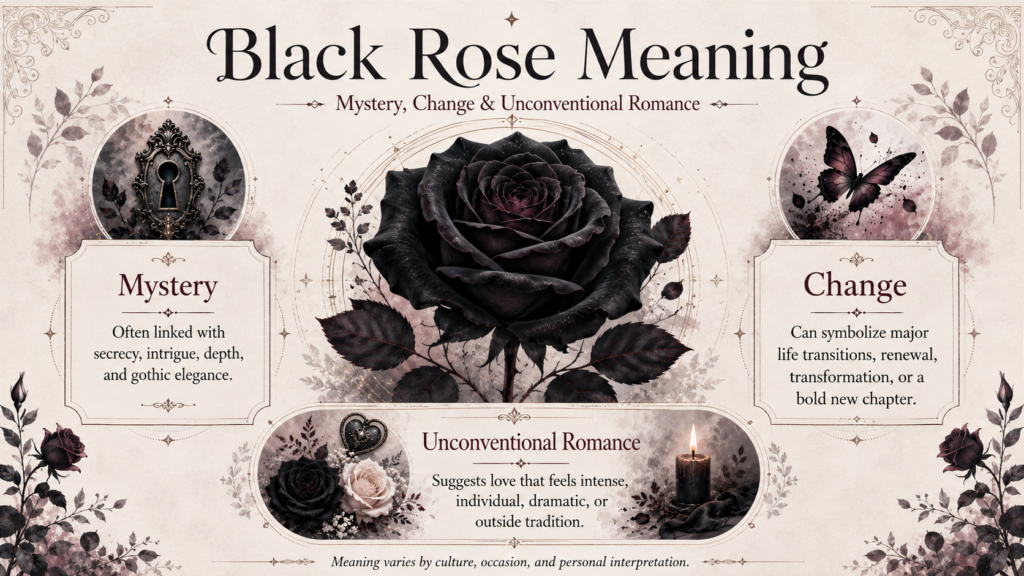
Black roses are often associated with mystery, farewell, major change, renewal, and rebellion. In gothic design, they add theatrical contrast; in romantic settings, they can signal a love that feels individual, intense, or slightly unconventional.
Symbolism is personal and cultural rather than fixed. For a wedding, memorial, anniversary, or gift, pairing a dark rose with a thoughtful note or lighter flowers can make the intended message feel clear and generous.
Black rose FAQs
Are black roses real?
Naturally jet-black roses are not available as living garden plants. Real dark roses are usually very deep red, burgundy, maroon, or purple and can appear nearly black in certain light.
Which rose is closest to black?
Black Baccara and Black Magic are often chosen for very dark red buds, while Midnight Blue gives a deep smoky-purple effect. The closest-looking choice depends on your local weather and the time of day.
Can dark roses grow in pots?
Yes. Choose a compact or medium-sized cultivar, a large container with drainage, and a sunny position. Container roses need closer attention to watering, feeding, and winter protection than roses planted in the ground.
Why is my black rose blooming red?
That is usually normal. Dark rose color changes with temperature, sunlight, bloom age, and cultivar genetics. The flower may look deepest in bud, during cool weather, or in shade, then reveal more red as it opens.
Are black rose seeds genuine?
Many listings are misleading, especially if they show pure black flowers but provide no botanical name or nursery information. Seed-grown roses are variable, so purchase named plants when exact color matters.
Do dark roses need special disease care?
No special care is required because of their color. Use standard rose prevention: sun, airflow, clean-up of fallen leaves, deep watering at soil level, and cultivar-specific disease guidance from a trusted local nursery or extension service.