

Cherries are not a practical dog treat. Pit-free flesh is not the main concern, but pits, stems, and leaves can create toxic and physical risks—so whole cherries are best kept out of reach.
Can dogs eat cherries?
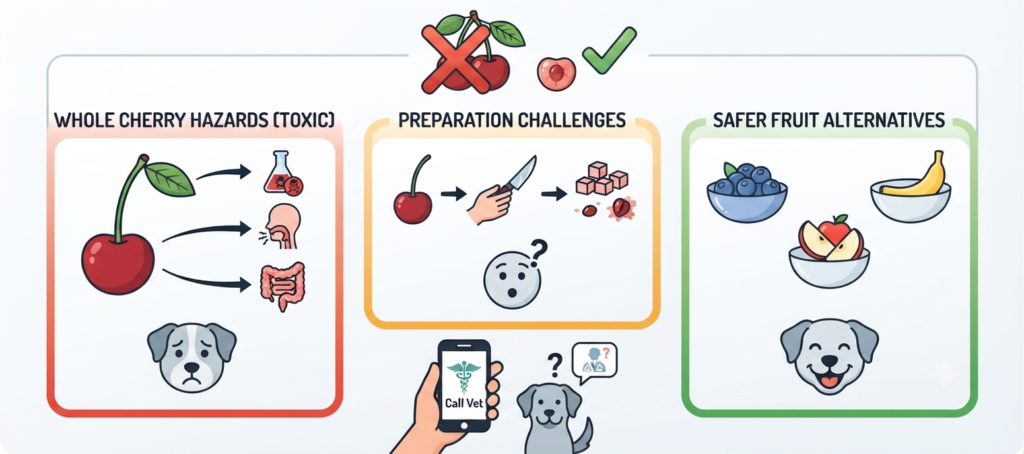
Dogs should not be offered whole cherries. Cherry pits, stems, and leaves contain cyanogenic compounds, and a swallowed pit can also become a choking or intestinal-blockage hazard. Those risks make cherries an inconvenient choice compared with easier, safer fruit treats.
A small bite of plain, fresh cherry flesh with every pit, stem, and leaf completely removed is unlikely to be the same emergency as a chewed pit. Even so, it is not a recommended routine snack: preparation is easy to get wrong, and the fruit is sugary. If your dog has eaten whole cherries or you are unsure what was swallowed, call your veterinarian for individualized advice.
Which parts of a cherry are dangerous for dogs?
The pit (seed), stem, and leaves are the parts to take most seriously. ASPCA identifies these cherry parts as containing cyanogenic compounds. When plant material or a seed is chewed or damaged, compounds can be released that may contribute to cyanide toxicity.
Risk is not identical in every situation. A dog’s size, health, the number of cherries involved, and whether pits were chewed all matter. A single intact pit does not automatically mean poisoning, but it can still be a physical obstruction concern—especially for a puppy, small dog, or dog that gulps food.
What happens if a dog eats a cherry pit?
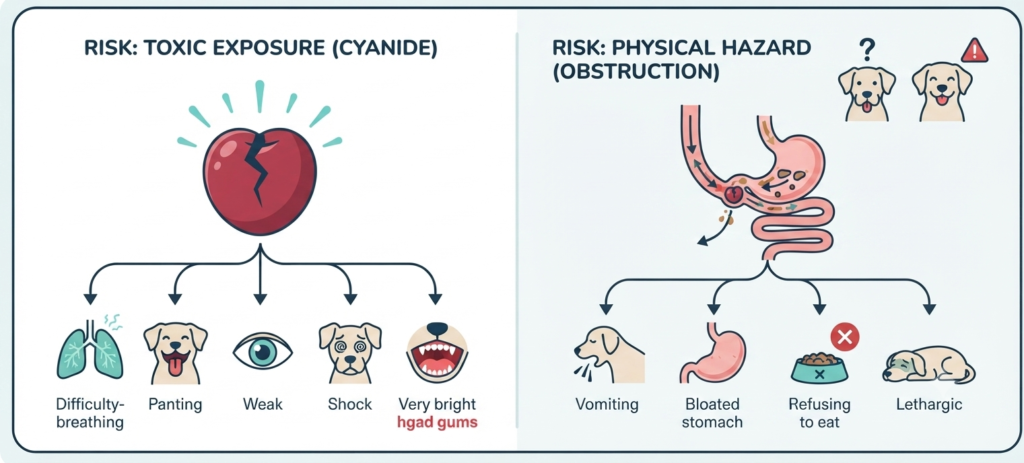
If a dog chews a pit, the damaged seed may expose the dog to more cyanogenic material. Signs associated with cyanide exposure can develop quickly and may include breathing difficulty, panting, weakness, dilated pupils, shock, or unusually bright red gums or mucous membranes.
If a pit is swallowed whole, toxic exposure may be less likely than with a crushed pit, but the physical hazard remains. A pit can lodge in the digestive tract and cause obstruction. Obstruction signs may develop later, so an initially normal-looking dog is not a guarantee that there is no problem.
Signs that need veterinary assessment
Symptoms cannot confirm the cause at home. Use these signs as a reason to contact a veterinarian promptly, particularly after a known pit, stem, or leaf exposure.
Breathing or collapse
Trouble breathing, heavy panting, collapse, sudden weakness, or shock needs emergency care.
Unusual mouth color
Very bright red, bluish, pale, or otherwise unusual gums should be treated as urgent.
Digestive distress
Repeated vomiting, inability to keep water down, a painful belly, or marked loss of appetite can be compatible with many problems, including obstruction.
Behavior changes
Severe lethargy, restlessness, confusion, or a sudden change from your dog’s normal behavior deserves veterinary advice.
What to do if your dog ate cherries
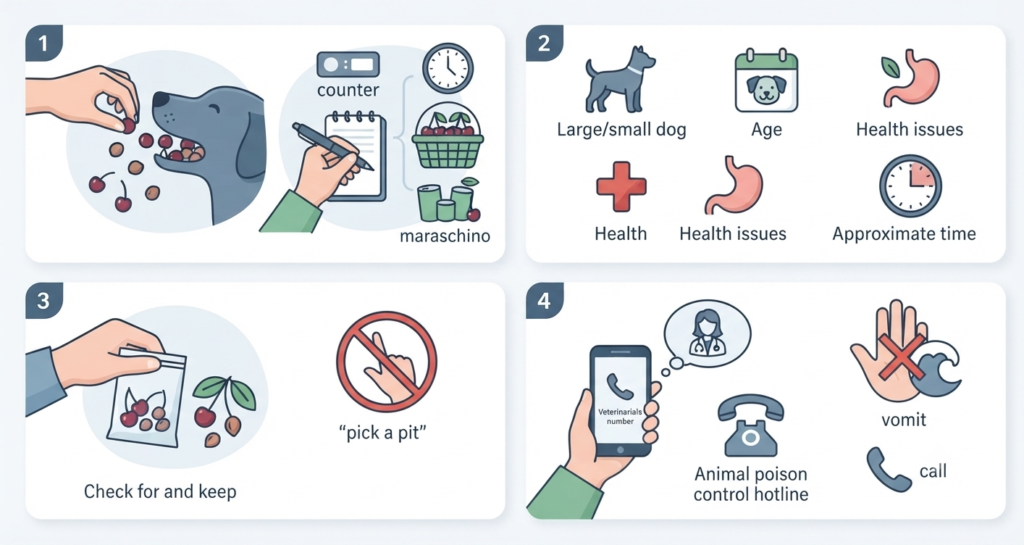
Remove any remaining cherries and gather the useful details before you call. Your veterinarian may use the information below to decide whether monitoring, an exam, or emergency treatment is appropriate.
- Estimate how many cherries were eaten and whether they were whole, pitted, chewed, fresh, dried, canned, or maraschino.
- Note your dog’s size, age, current health issues, and the approximate time of exposure.
- Check for stems, leaves, pits, or a damaged pit. Keep packaging or a sample available if it can be done safely.
- Call your veterinarian or an animal poison service for guidance; do not induce vomiting unless they direct you to do so.
Are dried, canned, frozen, or maraschino cherries safe?
Preparation can change texture and sugar content, but it does not turn cherries into an ideal dog snack. Always consider pits and added ingredients.
Frozen cherries
They still need to be completely pitted and plain. Frozen pieces can also be a choking concern if served whole.
Dried or canned cherries
These may be concentrated in sugar or packed in syrup. Check for pits and avoid products with unfamiliar sweeteners or added ingredients.
Maraschino cherries
These are high in added sugar and are not a suitable dog treat. Avoid offering them intentionally.
Safer fruit alternatives for dogs
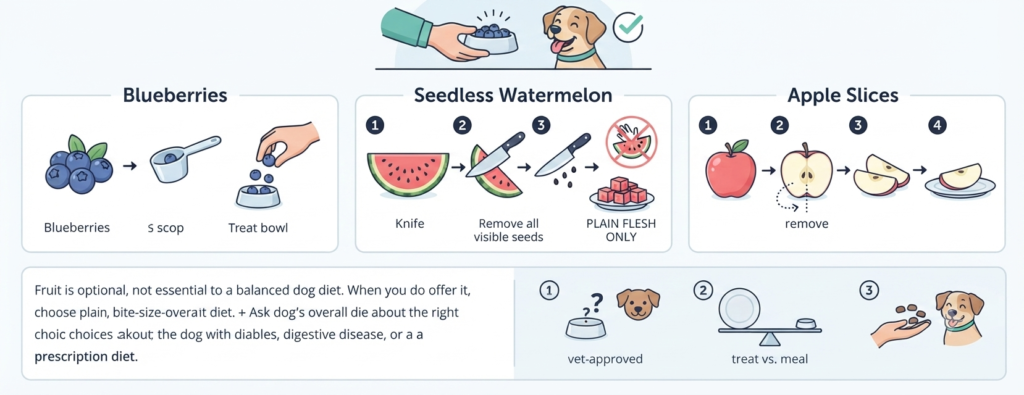
Fruit is optional, not essential to a balanced dog diet. When you do offer it, choose plain, bite-size pieces and account for treats in your dog’s overall diet. Ask your veterinarian about the right choices for a dog with diabetes, digestive disease, or a prescription diet.
- Blueberries: small, easy to portion, and generally convenient as an occasional treat.
- Seedless watermelon: offer plain flesh only, with rind and seeds removed.
- Apple slices: remove the core and seeds, then serve a small plain slice.
Can dogs have cherries? FAQs
Can dogs eat cherries without pits?
A very small amount of plain, fresh pit-free flesh is less concerning than a whole cherry, but cherries are still not a recommended regular treat. Every pit, stem, and leaf must be removed, and safer fruits are easier to prepare.
My dog swallowed one cherry pit. Is that dangerous?
It can be, especially for a small dog or if the pit was chewed. The concern includes both potential cyanogenic exposure and the chance of choking or intestinal blockage. Call your veterinarian to discuss your dog’s size, the timing, and whether the pit was damaged.
How many cherries are too many for a dog?
There is no universal number that is safe for every dog. Risk depends on body size, whether pits were chewed, the amount eaten, and a dog’s health. Multiple whole cherries, any stems or leaves, or an unknown amount are good reasons to contact a veterinary professional.
Should I wait for symptoms after my dog eats cherries?
Do not wait for symptoms if your dog chewed pits, ate stems or leaves, ate multiple whole cherries, is medically vulnerable, or has urgent signs. Cyanide-related signs may occur quickly, while obstruction signs can develop later. Professional advice is the safer next step.