
A practical, expert-backed guide to choosing the right rose bushes, understanding sunlight rose requirements, and keeping your garden blooming beautifully all season long.
Rose bushes are among the most rewarding plants you can grow at home — and with the right guidance, even complete beginners can enjoy stunning, fragrant blooms year after year.
Whether you have a spacious backyard or a sunny balcony, rose bushes offer something for every gardener. From classic hybrid teas to low-maintenance shrub varieties, these versatile plants reward proper care with an abundance of colour and fragrance that few other garden plants can match.
This guide covers everything you need to know: what rose bushes are, how much sunlight rose plants truly need, how to plant and maintain them, and how to solve the most common problems. By the end, you will feel confident growing healthy, vibrant rose bushes in your own outdoor space.
What Are Rose Bushes?
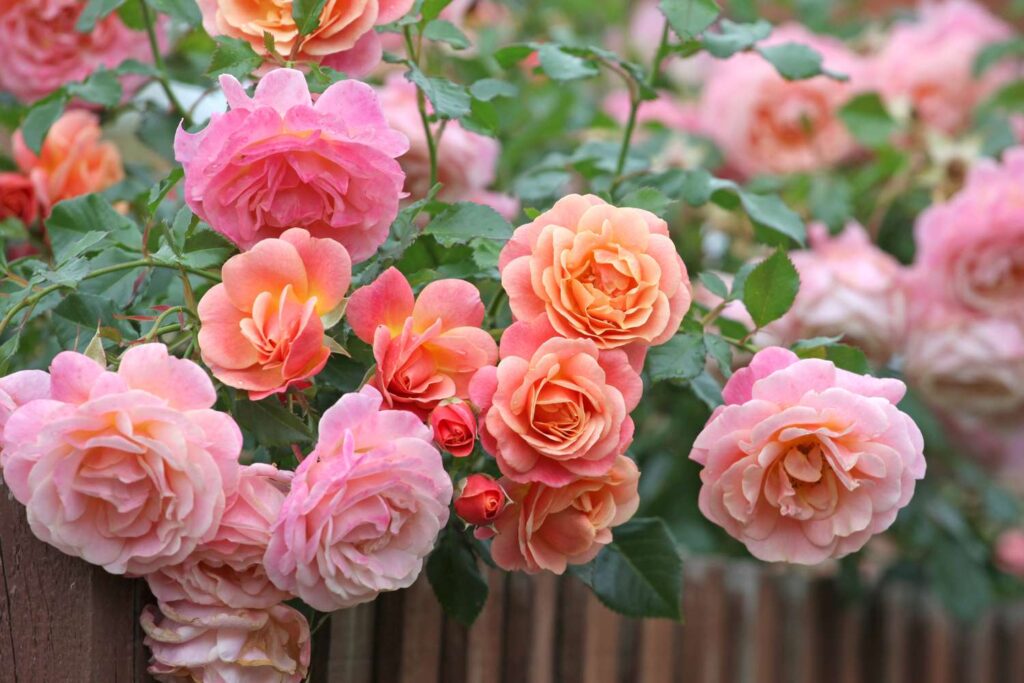
Rose bushes are woody perennial shrubs belonging to the genus Rosa, a plant family with over 300 species and thousands of cultivated varieties. Unlike climbing or rambling roses, bush varieties grow as self-supporting shrubs ranging from 60 cm to 2 metres tall, making them ideal for garden borders, beds, and containers.
Gardeners love rose bushes for their classic layered blooms, wide colour range (red, pink, white, yellow, orange, lavender, and bi-colours), and the fragrance many varieties produce. Modern rose bushes have been bred for improved disease resistance and repeat flowering, making them far easier to grow than their reputation suggests.
Rose bushes produce flowers on new growth each season. After blooming, they can form rose hips — small, vitamin-C-rich fruits used in teas and skincare. Understanding this growth habit helps you make better pruning and feeding decisions that directly affect how many flowers your rose bushes produce.
How Much Sunlight Do Rose Bushes Need?
Sunlight rose requirements are straightforward: most rose bushes perform best with 6–8 hours of direct sunlight daily. This is the single most important factor determining how many flowers your rose bushes will produce. Insufficient sunlight is the number one reason rose bushes fail to bloom well.
Morning sunlight is especially beneficial for rose bushes. It dries dew from leaves quickly, reducing the risk of fungal diseases like black spot and powdery mildew. If your garden receives sunlight at different times, prioritise a spot with strong morning light. In hot climates (zones 9–11), light afternoon shade actually helps protect blooms from scorching and extends flower life.
Signs your rose bushes are not getting enough sunlight include leggy, stretched growth; few or no flowers; pale or sparse foliage; and increased susceptibility to disease. If you notice these symptoms, consider relocating the bush or removing nearby structures or plants that cast shade. Even one extra hour of sunlight rose plants receive can noticeably improve blooming.
Best Conditions for Growing Healthy Rose Bushes
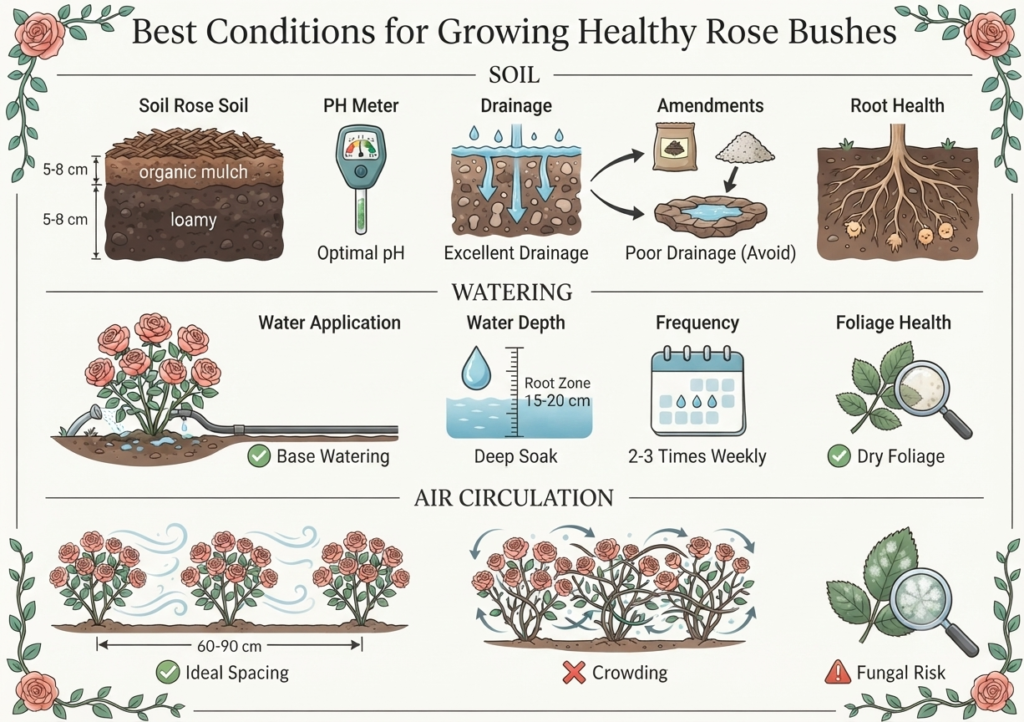
Soil: Rose bushes thrive in well-drained, loamy soil with a slightly acidic pH between 6.0 and 6.5. Before planting, amend heavy clay with compost and grit for drainage. Sandy soil benefits from added organic matter to retain moisture. Good drainage is non-negotiable — waterlogged roots kill rose bushes faster than almost any other problem.
Watering: Deep watering 2–3 times per week is far better than daily shallow sprinkles. Soak the root zone to a depth of 15–20 cm each time. Always water at the base of rose bushes to keep foliage dry and prevent fungal issues. A 5–8 cm layer of organic mulch helps retain moisture and keeps roots cool.
Air circulation: Avoid planting rose bushes too close together. Poor air circulation dramatically increases the risk of fungal diseases. Space bush varieties at least 60–90 cm apart. This allows airflow between plants and gives each bush room to develop its natural shape without crowding.
Popular Types of Rose Bushes for Home Gardens
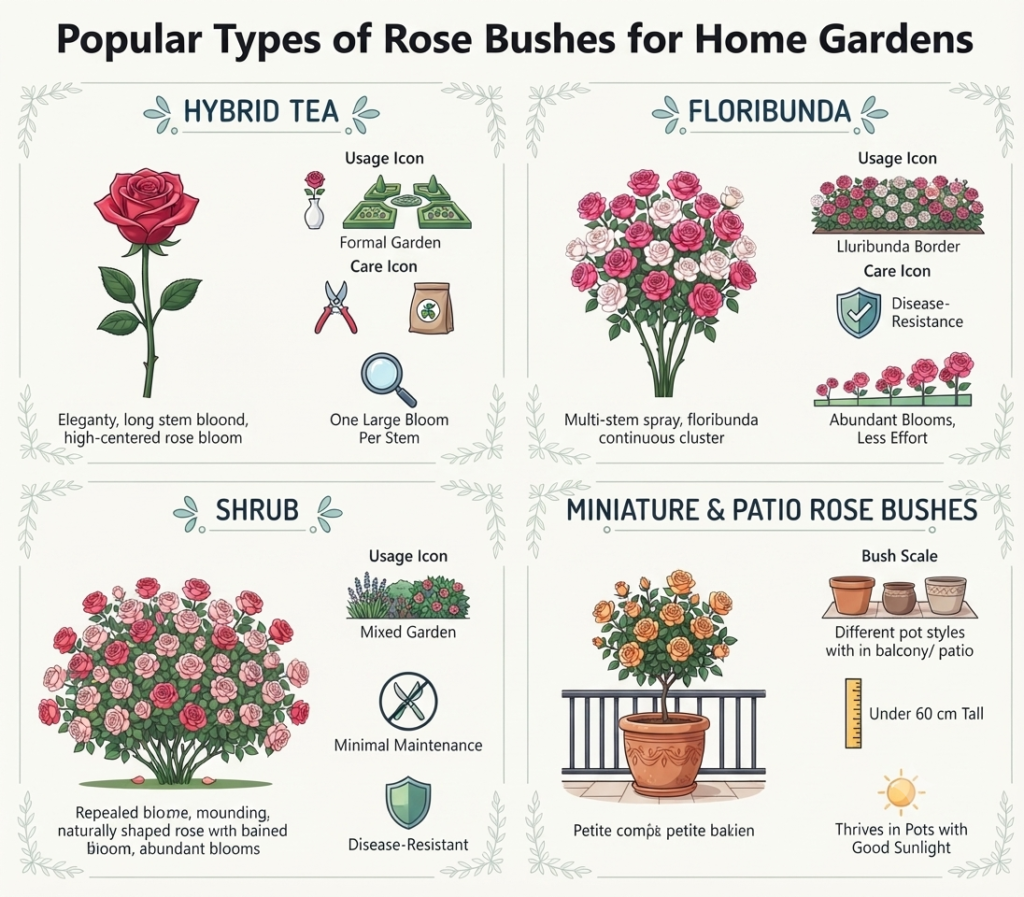
Hybrid Tea Rose Bushes
The classic long-stemmed rose bush with one large, elegant bloom per stem. Perfect for cutting gardens and formal beds. Requires regular pruning and feeding but rewards with beautifully shaped flowers throughout the growing season.
Floribunda Rose Bushes
These rose bushes produce clusters of smaller flowers creating continuous masses of colour. More disease-resistant than hybrid teas and excellent for borders. A great choice for beginner gardeners wanting abundant blooms with less effort.
Shrub Rose Bushes
The easiest rose bushes to grow. Naturally disease-resistant, require minimal pruning, and bloom repeatedly. Knock Out and David Austin varieties are ideal for garden borders and mixed plantings where low maintenance is a priority.
Miniature & Patio Rose Bushes
Compact rose bushes that stay under 60 cm tall, perfect for containers, balconies, and small gardens. Varieties like ‘Sweet Dream’ and ‘Top Marks’ produce full-sized blooms on petite plants that thrive in pots with good sunlight.
How to Plant Rose Bushes Successfully
Choose a location that receives at least 6 hours of direct sunlight daily — morning sunlight rose bushes receive is particularly valuable. Avoid planting near large trees whose roots compete for water and nutrients. A spot with good air circulation helps prevent disease.
Dig a hole twice as wide and just as deep as the root ball. Mix the removed soil with compost and a handful of bone meal. Place the rose bush so the bud union (the swollen area where stems meet roots) sits at soil level in warm climates, or 5 cm below in cold regions for frost protection.
Backfill the hole, firming the soil gently to eliminate air pockets. Water deeply immediately after planting — soak the entire root zone. Apply a 5–8 cm layer of mulch around the base, keeping it a few centimetres away from the stems to prevent rot.
Space rose bushes 60–90 cm apart depending on the variety’s mature size. Crowded rose bushes compete for sunlight, water, and nutrients, and poor air circulation between plants invites fungal disease. When planting multiple rose bushes, stagger them rather than planting in a straight line for a more natural look.
Rose Bush Care Tips for More Flowers
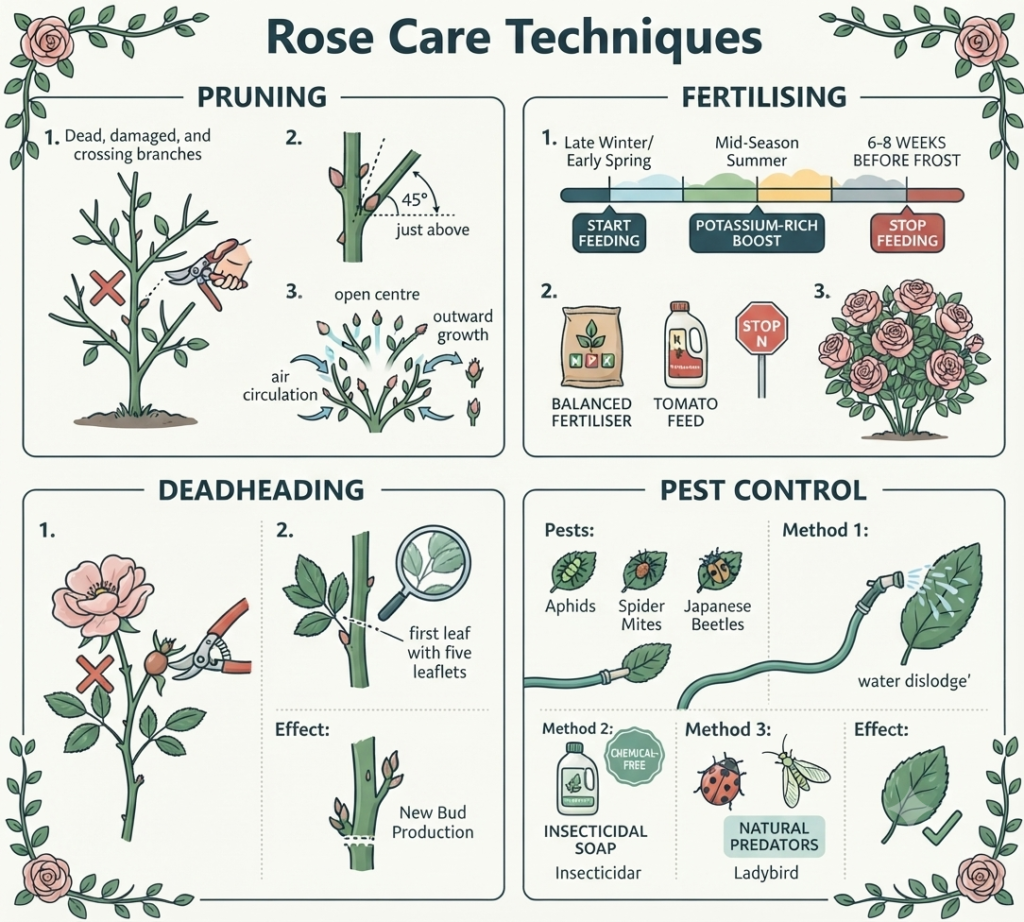
Pruning:
Prune rose bushes in late winter or early spring when buds begin to swell. Remove dead, damaged, and crossing branches first. Then reduce remaining stems by one-third, cutting at a 45-degree angle just above an outward-facing bud. This opens the centre for air circulation and encourages outward, healthy growth.
Fertilising:
Feed rose bushes every 4–6 weeks during the growing season with a balanced rose fertiliser. Start in early spring when new growth appears and stop feeding 6–8 weeks before the first expected frost. A potassium-rich feed mid-season encourages more flower buds on your rose bushes.
Deadheading:
Removing spent flowers before they form seed hips signals rose bushes to produce new buds rather than directing energy into seed production. Cut the stem back to just above the first leaf with five leaflets. Consistent deadheading is the single most effective technique for keeping rose bushes blooming continuously.
Pest control:
Inspect rose bushes regularly for aphids, spider mites, and Japanese beetles. A strong spray of water dislodges most aphids. For persistent problems, insecticidal soap provides chemical-free control. Encouraging ladybirds and lacewings in your garden creates natural pest management for your rose bushes.
Common Rose Bush Problems and Solutions
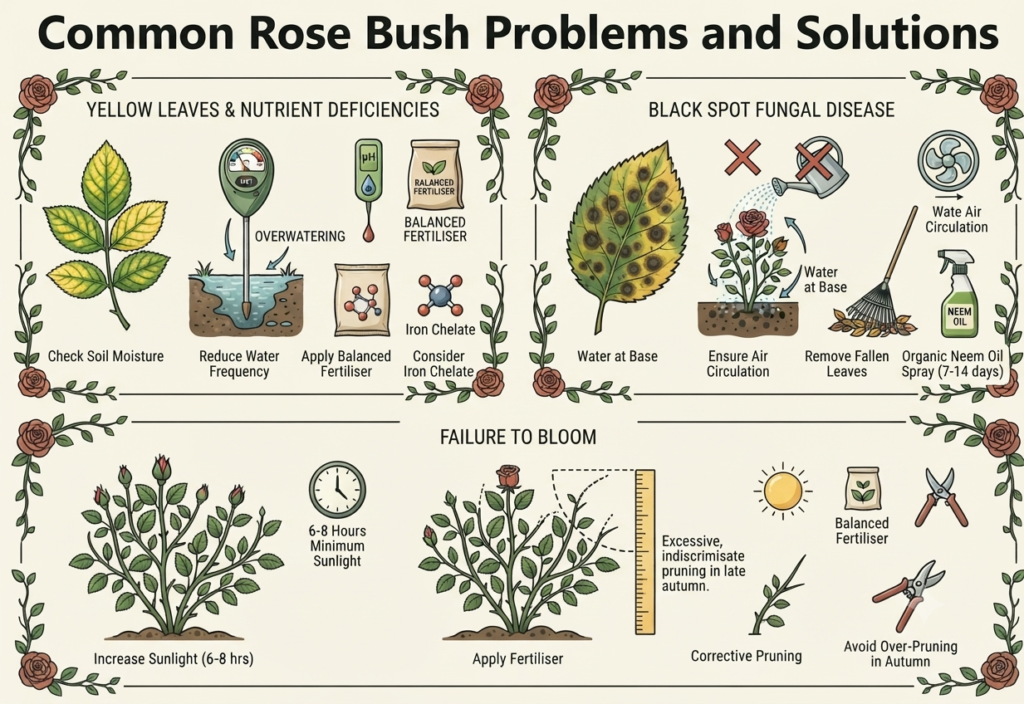
Yellow leaves on rose bushes usually indicate overwatering, nutrient deficiency (especially iron or nitrogen), or sudden temperature changes. Check soil moisture first — if the soil is soggy, reduce watering frequency. For nutrient issues, apply a balanced fertiliser and consider iron chelate if leaves yellow between green veins.
Black spot is the most common fungal disease affecting rose bushes. It appears as dark circular spots on leaves, eventually causing leaf drop. Prevention is easier than cure: water at the base rather than overhead, ensure good air circulation, and remove fallen leaves promptly. Organic neem oil spray applied every 7–14 days helps prevent outbreaks.
Rose bushes that fail to bloom often need more sunlight (remember the 6–8 hour minimum for sunlight rose requirements), more fertiliser, or corrective pruning. Over-pruning in autumn can also remove next season’s flower buds on some varieties. If your rose bushes produce foliage but no flowers, assess whether nearby trees have grown and now cast shade.
Frequently Asked Questions About Rose Bushes
How much sunlight do rose bushes need?
Rose bushes need a minimum of 6–8 hours of direct sunlight daily for optimal blooming. Morning sunlight is especially beneficial because it dries moisture from leaves and reduces fungal problems. In very hot climates, light afternoon shade can help protect blooms from scorching without reducing flower production.
How often should I water rose bushes?
Water rose bushes deeply 2–3 times per week rather than lightly every day. Each watering should soak the root zone to a depth of 15–20 cm. In hot weather, rose bushes may need more frequent watering. Always water at the base to keep foliage dry and prevent fungal diseases.
Can rose bushes grow in partial shade?
Some rose bushes tolerate partial shade (4–5 hours of sunlight), but they will produce significantly fewer flowers. Shrub varieties and some floribundas cope better with less sun than hybrid teas. For best results, always give your rose bushes the sunniest spot available in your garden.
What are the best rose bushes for beginners?
Shrub rose bushes like Knock Out, Flower Carpet, and Drift series are the most forgiving for beginners. They require minimal pruning, resist common diseases, and bloom repeatedly without deadheading. These low-maintenance rose bushes are nearly foolproof for garden borders, mixed beds, and containers.
Why are my rose bushes not blooming?
The most common reasons rose bushes fail to bloom are insufficient sunlight (less than 6 hours daily), lack of fertiliser, overcrowding, or incorrect pruning. Check that your rose bushes are not shaded by growing trees. Feed every 4–6 weeks during the growing season and remove spent flowers to redirect energy into new blooms.
When is the best time to plant rose bushes?
The best time to plant rose bushes is early spring (after the last frost) or autumn (6 weeks before the first frost). Bare-root rose bushes are best planted in late winter to early spring while dormant. Container-grown rose bushes can be planted almost any time during the growing season as long as you water consistently.