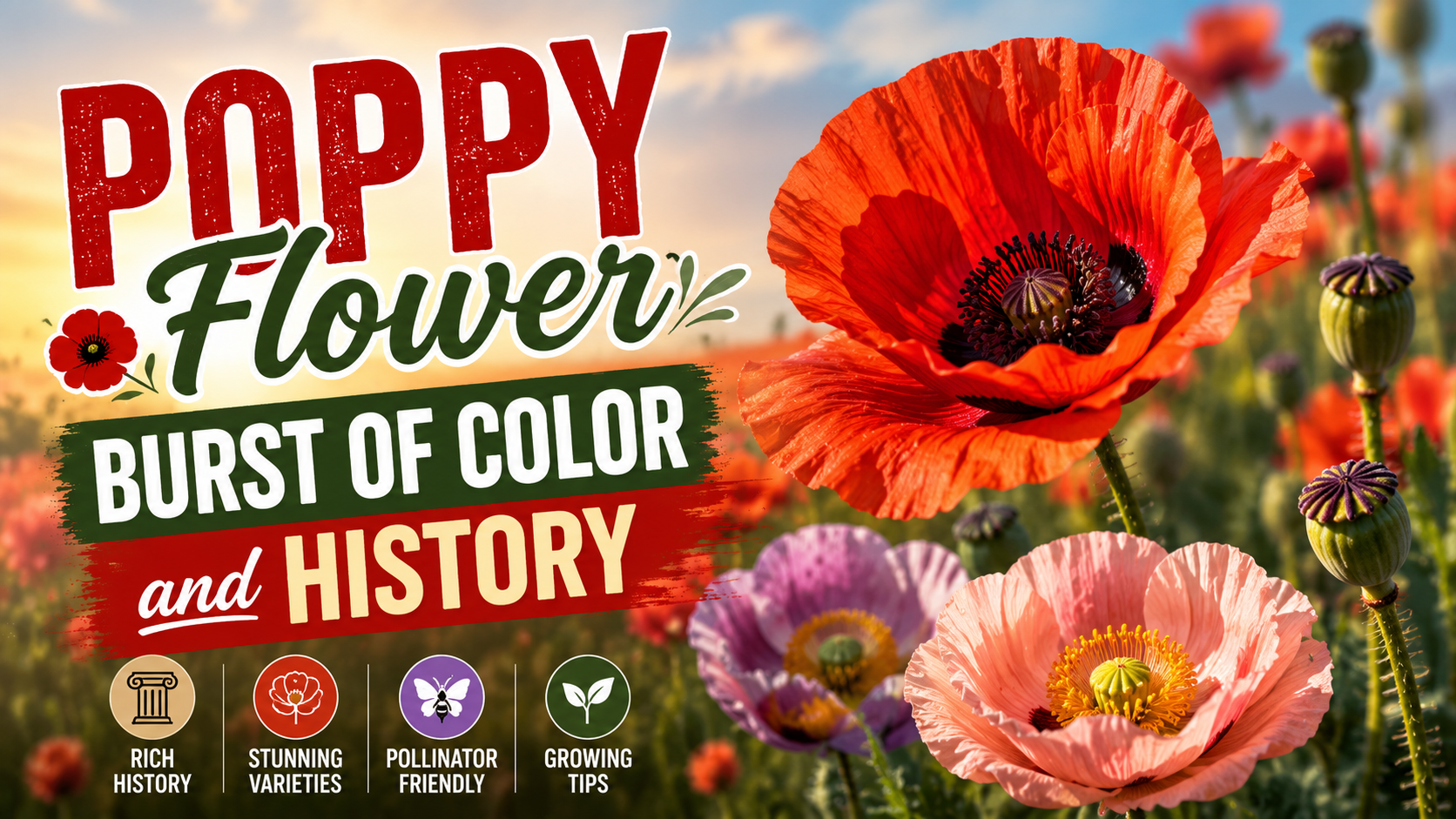

From ancient symbolism to your garden bed — discover the vibrant world of poppy flowers, their varieties, history, and how to grow them successfully.
Few flowers command attention quite like the poppy flower. With paper-thin petals that seem to glow from within, poppies have enchanted gardeners, artists, and poets for thousands of years. Whether blanketing a wild meadow in scarlet or standing tall in a cottage border, poppy flowers bring an unmatched burst of color to any landscape.
In this comprehensive guide, you’ll learn what makes the poppy flower so special — from its fascinating botanical characteristics and rich cultural history to practical, experience-based advice on growing healthy poppy flowers in your own garden. Whether you’re a beginner or a seasoned grower, there’s something here for every flower lover.
What Is a Poppy Flower?
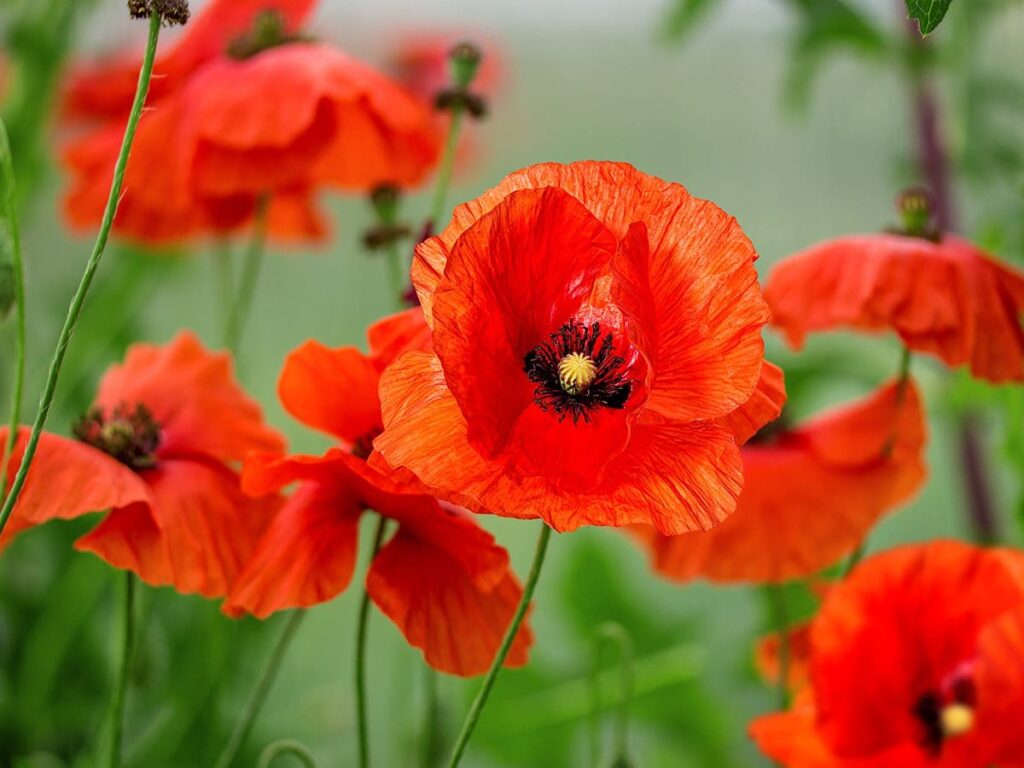
The poppy flower belongs primarily to the genus Papaver, a group of over 70 species in the family Papaveraceae. Native to temperate regions across Europe, Asia, and North America, poppies are recognized by their distinctive cup-shaped blooms, delicate crepe-like petals, and prominent central seed capsule. Most species produce four to six petals in vivid shades of red, orange, pink, purple, white, or yellow.
Poppy flowers range from compact annuals reaching 30 cm to stately perennials growing over a metre tall. They typically bloom in late spring through early summer, though the exact timing depends on species and climate. One of their most charming traits is ephemeral blooms — individual flowers may last only a day or two, but plants produce successive buds over several weeks, ensuring a prolonged display of colour in the garden.
History and Symbolism of the Poppy Flower
Poppies have been intertwined with human civilization for over 5,000 years. Ancient Sumerians called them the ‘joy plant,’ while Egyptians placed poppy flowers in tombs as offerings. Greek and Roman mythology associated poppies with Hypnos (Sleep) and Demeter (Harvest), linking the flower to rest, dreams, and agricultural abundance.
The most powerful modern association is remembrance. After World War I, red corn poppies (Papaver rhoeas) bloomed across the devastated battlefields of Flanders, inspiring Lieutenant Colonel John McCrae’s poem ‘In Flanders Fields.’ Since then, the red poppy flower has become an international symbol of sacrifice and remembrance, worn on Remembrance Day across Commonwealth nations.
Color symbolism varies: red poppies represent remembrance and consolation; white poppies stand for peace; orange and yellow poppies symbolize joy, success, and wealth in many Asian cultures; purple poppies honour animals lost in conflict. This rich tapestry of meaning makes the poppy flower one of the most culturally significant blooms in the world.
Different Types of Poppy Flowers
With dozens of species and hundreds of cultivars, choosing the right poppy flowers for your garden starts with understanding the major types. Here are the most popular varieties grown worldwide.
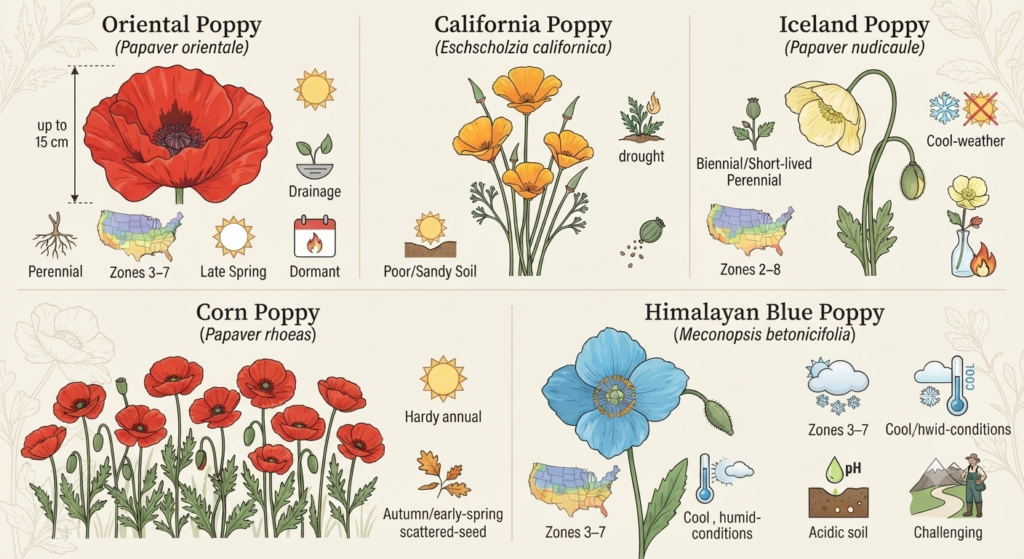
Oriental Poppy (Papaver orientale)
The showstopper of perennial borders. Produces enormous blooms up to 15 cm across in fiery orange, scarlet, salmon, and white. Hardy in USDA Zones 3–7, it blooms in late spring and goes dormant in summer heat. Height: 60–90 cm. Plant in full sun with excellent drainage. Once established, Oriental poppies return reliably for decades.
California Poppy (Eschscholzia californica)
Technically not a true Papaver, but universally called a poppy. This drought-tolerant annual (perennial in mild climates) produces golden-orange flowers from spring through autumn. Height: 20–40 cm. Thrives in poor, sandy soil and full sun — perfect for Mediterranean and arid-climate gardens. Self-seeds freely.
Iceland Poppy (Papaver nudicaule)
Delicate, nodding blooms in pastel shades of yellow, cream, orange, and pink on wiry stems. Treated as a biennial or short-lived perennial (Zones 2–8). Blooms in cool weather, making it ideal for early spring colour. Height: 30–45 cm. Excellent as a cut flower — sear stem ends with a flame for longer vase life.
Corn Poppy (Papaver rhoeas)
The classic red field poppy of remembrance. A hardy annual reaching 60 cm, it blooms prolifically in early summer. Easy to grow from scattered seed in autumn or early spring. Himalayan Blue Poppy (Meconopsis betonicifolia) — The holy grail of poppy growers, producing stunning sky-blue flowers. Requires cool, humid conditions (Zones 3–7) with acidic, humus-rich soil — challenging but deeply rewarding for experienced gardeners.
How to Grow Poppy Flowers
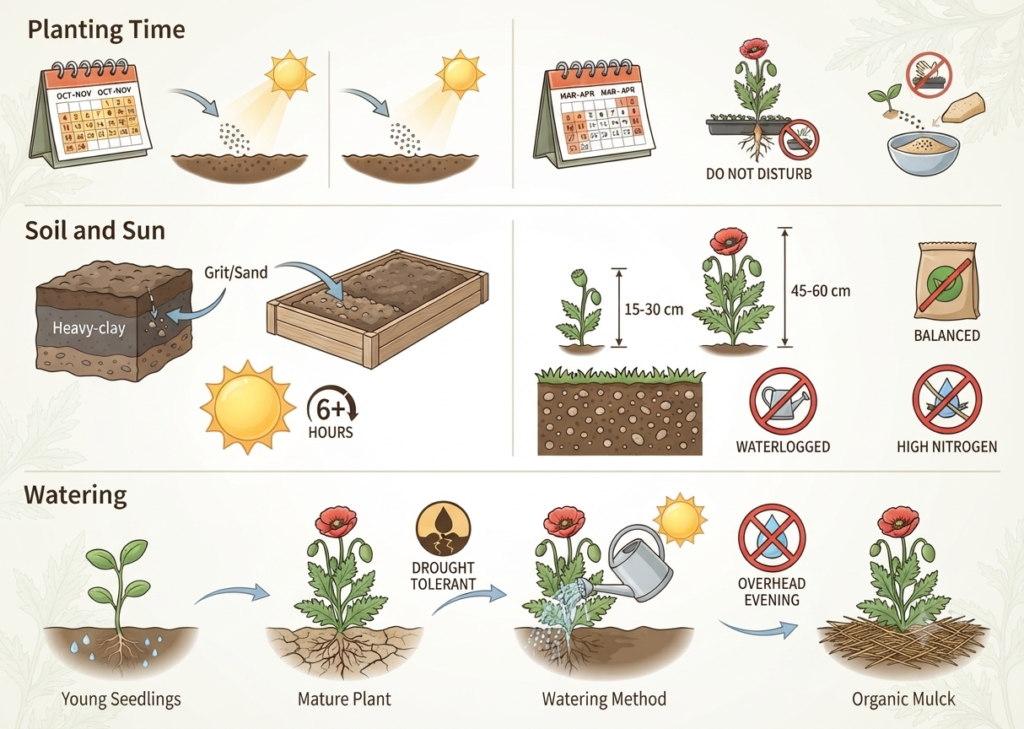
Planting time: Sow annual poppy seeds directly outdoors in autumn (for spring blooms) or very early spring while soil is still cool. Poppy flowers dislike transplanting — their delicate taproots resent disturbance. Scatter seeds on the soil surface and press lightly; they need light to germinate. Mix tiny seeds with sand for even distribution.
Soil and sun: Most poppy flowers demand full sun (6+ hours daily) and well-drained soil. Waterlogged roots are their biggest enemy. If your soil is heavy clay, amend with grit or grow in raised beds. Fertile but not overly rich soil produces the best blooms — too much nitrogen encourages foliage at the expense of flowers. Spacing varies by species: 15–30 cm for annuals, 45–60 cm for Oriental types.
Watering: Water sparingly once established. Young seedlings need consistent moisture, but mature poppies are remarkably drought-tolerant. Overwatering is the most common mistake I see beginners make — it leads to root rot and fungal problems. Water at the base in the morning, never overhead in the evening. In hot climates, a thin organic mulch conserves moisture without trapping it against stems.
Poppy Flower Care Tips
Deadheading spent blooms encourages continued flowering in annual species. For seed collection, leave a few pods to mature — they’ll rattle when ready. Cut perennial Oriental poppies back to ground level after foliage yellows in summer; fresh leaves emerge in autumn. Apply a light mulch of compost in autumn for perennial types.
Poppies rarely need fertiliser. A single application of balanced organic feed in early spring is sufficient for perennials. Avoid high-nitrogen feeds. Staking is seldom necessary except for tall Oriental varieties in windy sites — use discreet ring supports placed early in the season before stems lean.
Common Problems and Solutions
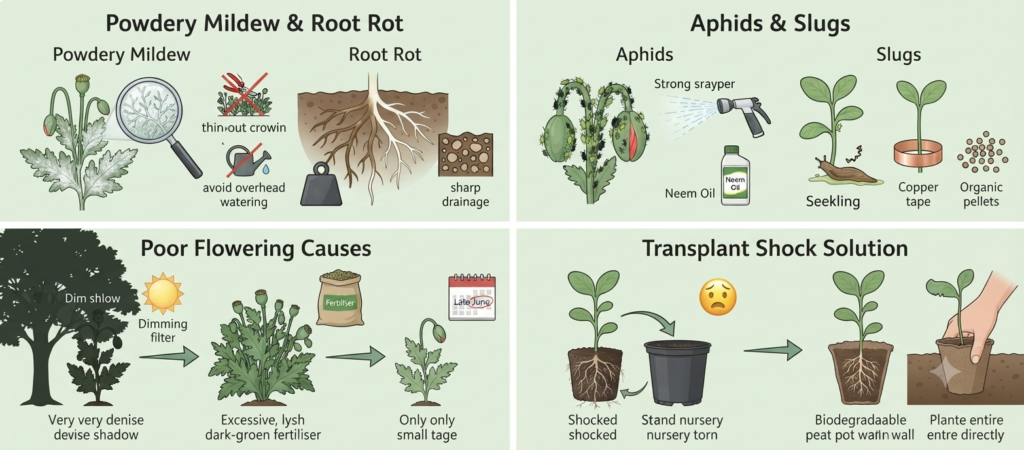
Powdery mildew: White coating on leaves in humid conditions. Improve air circulation by thinning crowded plantings and avoiding overhead watering. Root rot: The #1 killer — always ensure sharp drainage. Aphids may cluster on buds in spring; a strong water spray or neem oil resolves minor infestations. Slugs target young seedlings — use copper tape or organic pellets.
Poor flowering often results from too much shade, over-fertilisation, or sowing too late in the season. Transplant shock is common because poppies dislike root disturbance — always direct-sow where possible. If you must start indoors, use biodegradable pots that can be planted whole without disturbing roots.
Poppies in Garden Design
Poppy flowers shine in cottage gardens alongside lavender, foxgloves, and hardy geraniums. Scatter corn poppies through a wildflower meadow for effortless naturalistic beauty. California poppies make superb ground cover on dry banks and gravel gardens. Oriental poppies provide dramatic focal points in mixed borders — pair them with later-blooming perennials that fill the gap when poppies go dormant.
Container gardening: California poppies and Iceland poppies grow well in large pots with gritty compost. Ensure drainage holes are clear. Place containers in the sunniest spot available. For pollinator gardens, poppies are outstanding — bees are particularly attracted to their open, pollen-rich centres. A patch of mixed poppy flowers will buzz with activity from dawn.
Benefits of Growing Poppy Flowers
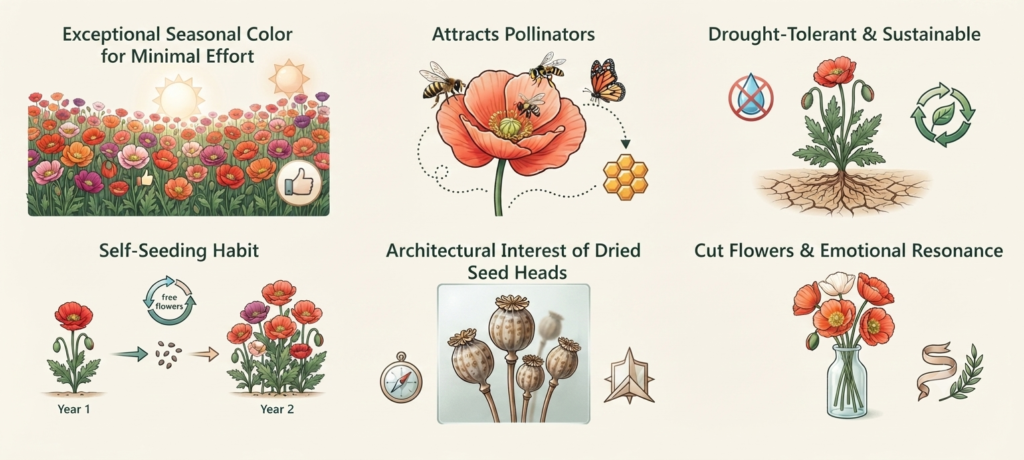
Poppy flowers offer exceptional seasonal colour for minimal effort. They attract bees, hoverflies, and butterflies, supporting local pollinator populations. Most species are drought-tolerant once established, making them water-wise choices for sustainable gardens. Their self-seeding habit means one planting can provide years of free flowers.
Dried poppy seed heads add architectural interest to winter arrangements. Iceland poppies make charming, if short-lived, cut flowers. Beyond the garden, poppies carry deep emotional resonance — growing them connects you to thousands of years of human history and remembrance.
Frequently Asked Questions
Are poppies annual or perennial?
It depends on the species. Corn poppies and California poppies are annuals (though California poppies behave as perennials in mild climates). Oriental poppies and some Iceland poppies are true perennials that return year after year. Check the specific species before purchasing.
Can poppies grow in pots?
Yes — California poppies and Iceland poppies perform well in containers. Use a large pot (at least 30 cm diameter) with excellent drainage and gritty compost. Oriental poppies are less suited to pots due to their deep taproots and dormancy cycle.
Do poppies come back every year?
Perennial species (Oriental, some Iceland types) return reliably. Annual poppies die after setting seed but often self-sow prolifically, giving the appearance of returning. Allow seed pods to mature and scatter naturally for future generations.
Are poppies toxic to pets?
Most Papaver species contain alkaloids that can be harmful to cats and dogs if ingested in significant quantities. Symptoms include lethargy, loss of appetite, and sedation. Plant poppies in areas pets don’t access, or choose California poppies (Eschscholzia), which have lower toxicity.
What month do poppies bloom?
Most poppy flowers bloom between May and July in the Northern Hemisphere. California poppies can flower from March through October in mild climates. Iceland poppies bloom earliest (April–June), while Oriental poppies peak in late May to mid-June.
Do poppies attract bees?
Absolutely. Poppy flowers are excellent pollinator plants. Their open, bowl-shaped blooms provide easy access to abundant pollen. Bumblebees, honeybees, and solitary bees visit poppies enthusiastically, often arriving at dawn when flowers first open.
Why are red poppies used for remembrance?
Red corn poppies (Papaver rhoeas) were among the first flowers to bloom on the churned, war-torn soil of World War I battlefields in France and Belgium. Their appearance amidst devastation inspired the poem ‘In Flanders Fields’ by John McCrae (1915), establishing the red poppy as a lasting symbol of sacrifice and remembrance.