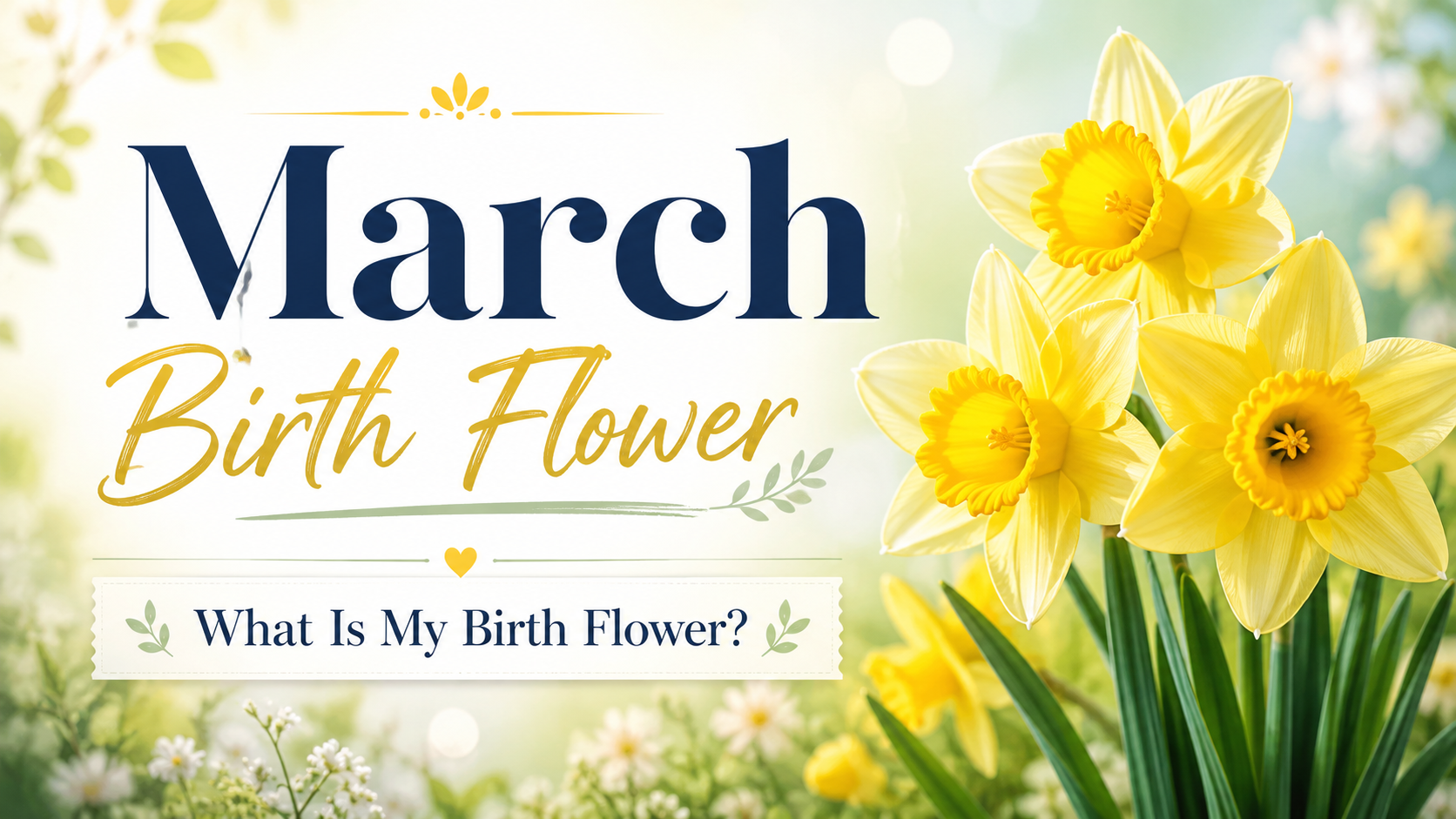

The March birth flower is most commonly the daffodil—a bright sign of renewal, hope, and the first true feeling of spring. Explore its meaning, history, colors, related jonquils, thoughtful gifting ideas, and simple growing guidance.
For most modern birth-flower lists, the daffodil is the flower for March. Jonquils are a related kind of narcissus, which is why some traditions name both.
What does the March birth flower mean?
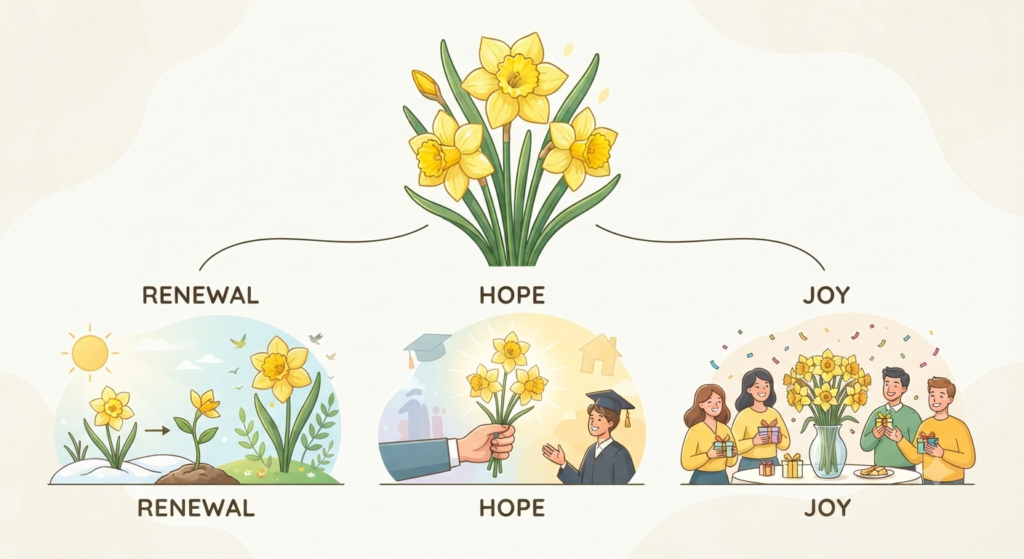
Daffodils bloom as winter loosens its grip, so it is easy to see why they became linked with fresh starts. In birthday traditions, they are often given to celebrate a new chapter, encourage a loved one, or simply bring the optimism of early spring indoors.
Their message is gentle rather than grand: brighter days are returning. That makes the flower especially fitting for a March birthday, a graduation, a housewarming, or any milestone that deserves a hopeful note. In a bouquet, even a few stems can feel sunny, unfussy, and full of possibility.
Renewal
A familiar symbol of spring returning after winter, and of making room for a fresh beginning.
Hope
Often chosen to send an uplifting, forward-looking message during a season of change.
Joy
Their sunny color makes them a naturally celebratory flower for birthdays and small everyday wins.
Daffodil vs. jonquil: are they the same?
Not exactly. “Daffodil” is a broad everyday name for many flowers in the Narcissus genus. A jonquil is a particular type of narcissus, generally recognised for its reed-like foliage and fragrant clusters of smaller blooms.
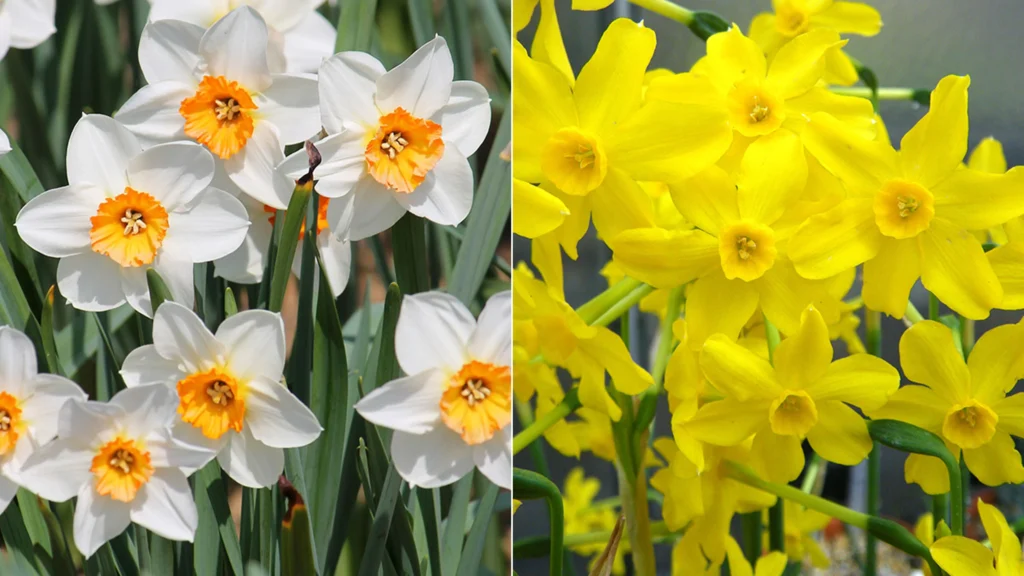
In ordinary conversation, the words are often used interchangeably, especially when a florist or gift guide is speaking broadly about cheerful spring narcissus. For a March birthday message, either name can be meaningful; daffodil is simply the more familiar choice on most birth-flower lists.
| Feature | Daffodil | Jonquil |
|---|---|---|
| Botanical use | A broad common name for many Narcissus varieties. | A specific group within the Narcissus genus. |
| Leaves | Shape varies by variety. | Usually narrow, rounded, reed-like leaves. |
| Flowers | Often one bloom per stem. | Often several fragrant blooms per stem. |
| March tradition | The most widely named March birth flower. | Frequently included as a related March birth flower. |
A short history behind the narcissus name
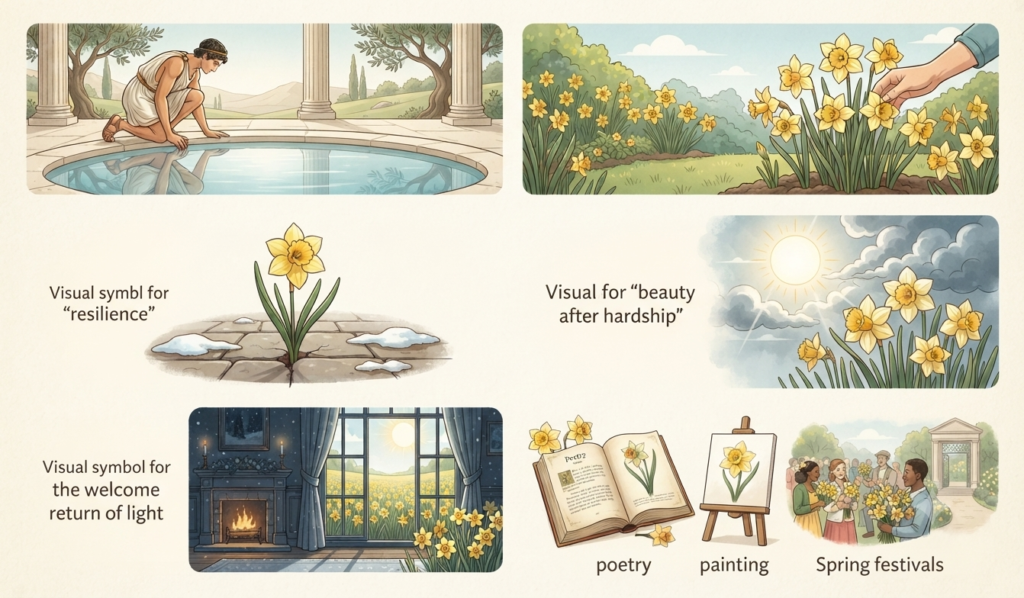
The name Narcissus reaches back to classical Greek mythology, where the story of Narcissus became associated with reflection and self-regard. Over time, however, the living flower gathered far warmer associations in gardens and seasonal traditions: resilience, beauty after hardship, and the welcome return of light.
Daffodils have been cultivated for centuries and appear in poems, paintings, public gardens, and spring festivals around the world. Their early bloom gives them a dependable role in the visual language of spring. That long cultural history is one reason a simple bunch of daffodils can feel more meaningful than its modest price suggests.
What do daffodil colors say?
Yellow is the classic March birth-flower color. It is commonly associated with warmth, happiness, friendship, and the bright energy of a new season. A yellow daffodil bouquet is a natural choice when you want a gift to feel cheerful, casual, and encouraging.
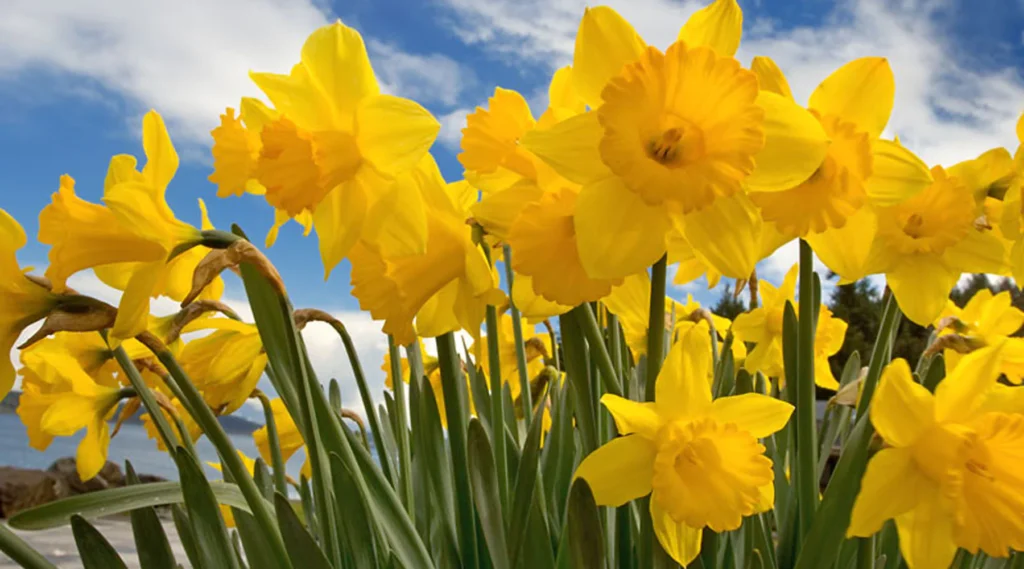
White and cream narcissus varieties can create a quieter, more elegant feeling, while blooms that mix white petals with golden centers offer both freshness and brightness. If you are choosing flowers for a particular person, let their style guide you: vivid yellow for exuberance, soft white for calm, and a mixed bunch for a little of both.
Thoughtful March birth-flower gift ideas
The best March birthday gift reflects the recipient as much as the flower. A cheerful bouquet works beautifully for a host or friend, while a small piece of botanical jewelry or a framed illustration makes the birth-flower connection feel personal for years to come.
To make a gift feel considered, add a note about why you chose daffodils: their link with renewal, hope, and early spring. For someone who loves to garden, bulbs or a potted narcissus can turn the gesture into a small seasonal ritual they can enjoy again next year.
For a fresh birthday: a cheerful bunch of yellow daffodils with a handwritten note.
For a lasting keepsake: a botanical print, pressed-flower pendant, or custom illustration.
For a gardener: potted narcissus or bulbs selected for their growing region.
Can you grow March birth flowers at home?
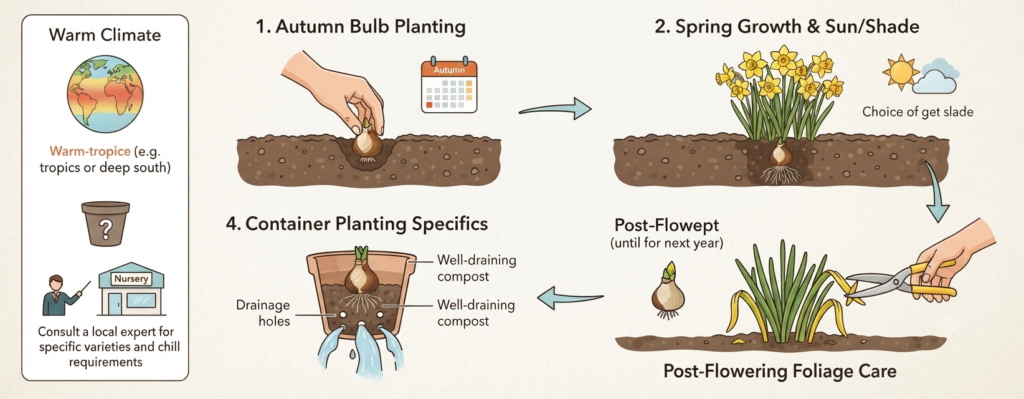
Yes. Daffodils are usually planted as bulbs in autumn for spring flowers. Choose a spot with sun or light shade and well-drained soil. After flowering, let the foliage yellow naturally before removing it; the leaves help feed next year’s bloom.
For containers, use a pot with drainage holes and avoid letting bulbs sit in waterlogged compost. If your climate is very warm, consult a local nursery about varieties and planting timing, because many narcissus types need a period of winter chill before they flower well.
March birth flower FAQs
Is the daffodil the only March birth flower?
It is the most common answer, but some birth-flower lists also mention jonquils. The two are closely related because both belong to the Narcissus genus, so the difference is usually more botanical than sentimental.
What color represents a March birthday?
Sunny yellow is the classic color because it is strongly associated with daffodils. White, cream, and yellow-and-white narcissus varieties are also lovely March-inspired choices.
Are daffodils good birthday flowers?
They are a thoughtful choice for a March birthday, especially for someone who enjoys spring, gardening, or meaningful floral traditions. Add a note explaining the renewal symbolism to make the gesture more personal.
How long do cut daffodils last in a vase?
Freshly cut daffodils often last around five to seven days, depending on variety and room temperature. Keep them in clean water, trim the stems when arranging them, and place the vase away from direct heat or strong sun.