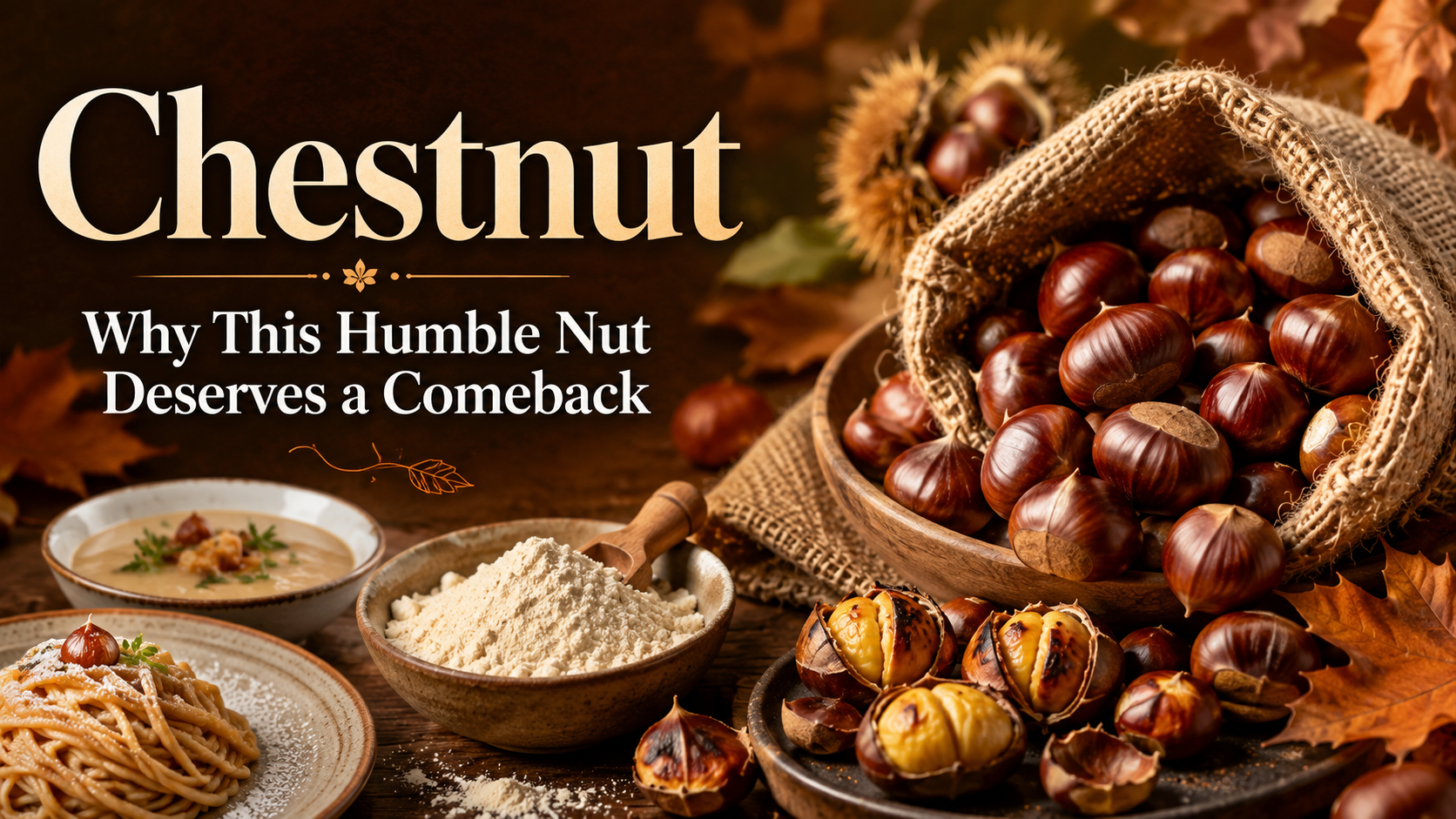

A practical guide to the sweet, starchy, and surprisingly versatile chestnut—from safe roasting to everyday cooking.
Roasted chestnuts have a way of making a street corner feel like autumn. Yet beyond their nostalgic aroma, chestnuts offer something genuinely different from the almonds, walnuts, and cashews that fill most pantry shelves.
Edible chestnuts are softer, moister, and starchier than most culinary nuts. They are not a miracle food or a replacement for every other nut, but their mild sweetness, useful nutrients, and ability to work in both sweet and savory dishes make them well worth rediscovering.
What Is a Chestnut—and What Does It Taste Like?
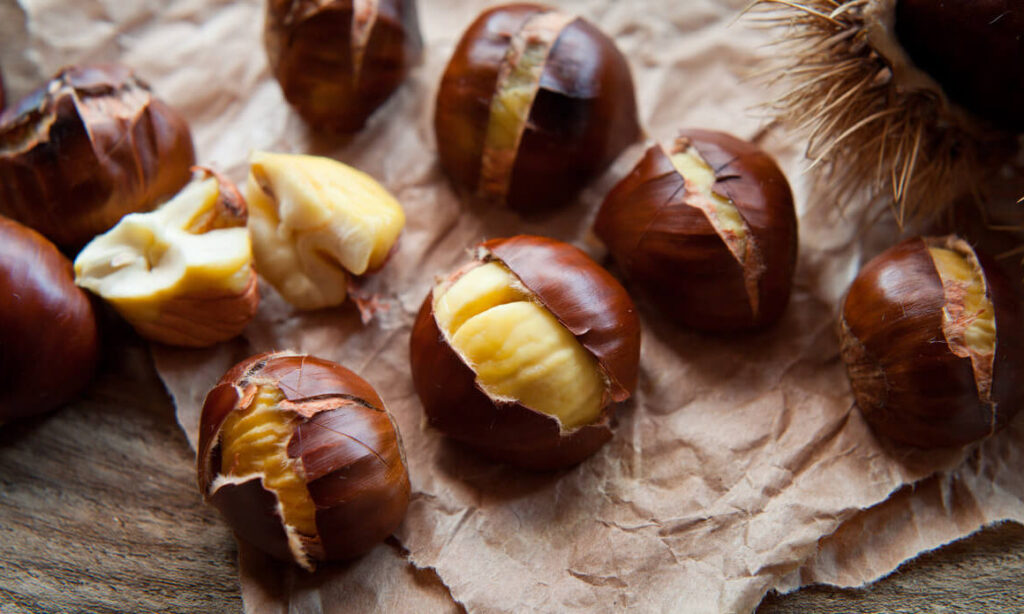
A chestnut is the edible seed of a tree in the genus Castanea. Common edible types include American chestnut (Castanea dentata), European chestnut (Castanea sativa), Chinese chestnut (Castanea mollissima), and Japanese chestnut (Castanea crenata). The nuts sit inside a very prickly burr, then develop a glossy brown shell.
Once cooked, chestnuts taste mildly sweet, earthy, and almost buttery. Their texture is closer to a tender potato or a dense sweet potato than to a crisp almond. That high-moisture, starchy character is exactly what makes chestnuts so good in soups, stuffings, purées, baking, and simple winter snacks.
Chestnut Nutrition: Different, Not Better
Chestnuts are generally lower in fat and higher in carbohydrate and moisture than familiar tree nuts. They can contribute fiber, potassium, B vitamins, and some vitamin C, particularly when compared with most other nuts. Their exact nutrition varies by species, serving size, and whether they are raw, boiled, or roasted.
| Typical trait | Chestnuts | Almonds | Walnuts |
|---|---|---|---|
| Fat | Relatively low | High | High |
| Carbohydrate | Relatively high; mostly starch | Lower | Lower |
| Moisture and texture | High moisture; soft when cooked | Low moisture; crunchy | Low moisture; crisp and rich |
| Storage needs | More perishable; refrigerate fresh nuts | Keeps well when cool and dry | Keeps best chilled or frozen |
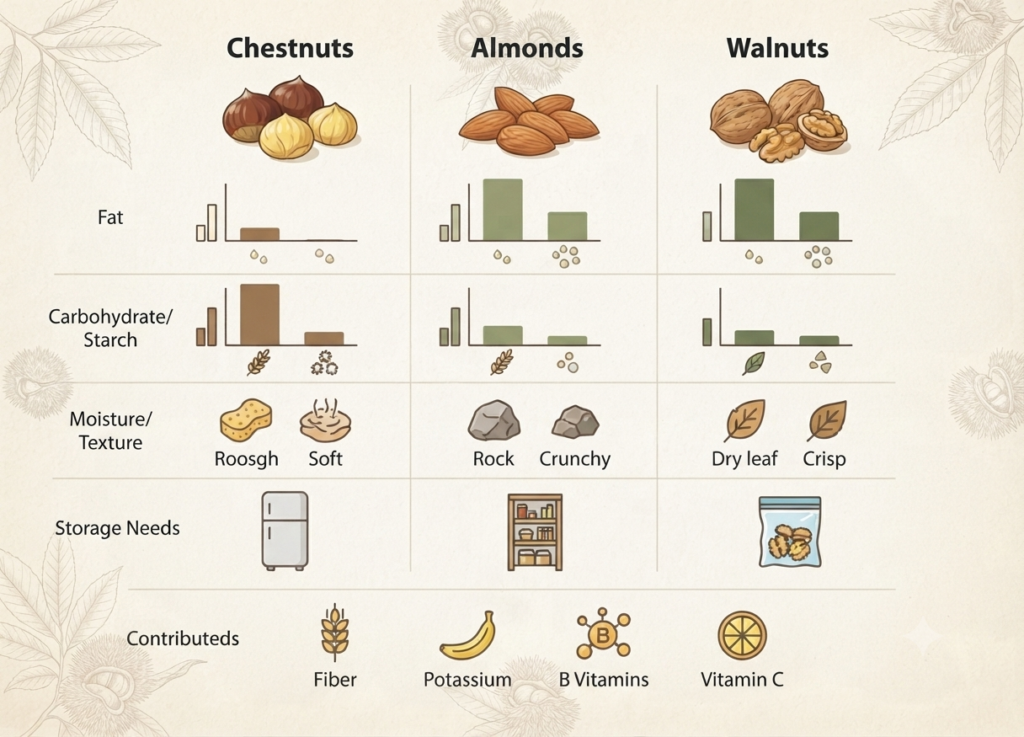
Context matters: calories and nutrients differ substantially by product and preparation. For a precise comparison, use the label on the chestnuts you buy or a national food-composition database.
Edible chestnuts come from Castanea trees. Horse chestnuts, often called conkers, come from a different genus, Aesculus, and are not safe to eat. Water chestnuts are different again: they are aquatic vegetables, not tree nuts. Never eat an unidentified wild nut. Discard chestnuts that are moldy, badly insect-damaged, or smell unpleasant. Chestnuts are also a choking risk for young children when served whole. People with tree-nut allergies should not assume chestnuts are safe; allergy risk is individual, so ask an allergist or qualified healthcare professional for guidance.
How to Roast Chestnuts Safely
- Heat the oven to 425°F (220°C). Rinse fresh chestnuts and dry them well.
- Use a small sharp knife to cut a clear X through the rounded side of every shell. This lets steam escape and helps prevent the shells from bursting.
- Arrange the scored chestnuts in one layer on a baking tray. Roast for about 20 to 30 minutes, until the cuts open and the shells darken slightly.
- Transfer them to a clean kitchen towel or covered bowl for 10 minutes. The trapped steam loosens the shell and the papery inner skin.
- Peel while the chestnuts are still comfortably warm, removing both the outer shell and inner skin. Eat promptly or use in a recipe.
Kitchen-tested detail: peeling is usually much easier while chestnuts are warm. Once they cool, the inner skin can cling tightly. Work in small batches and keep the rest covered to retain warmth.
Four Easy Ways to Cook With Chestnuts
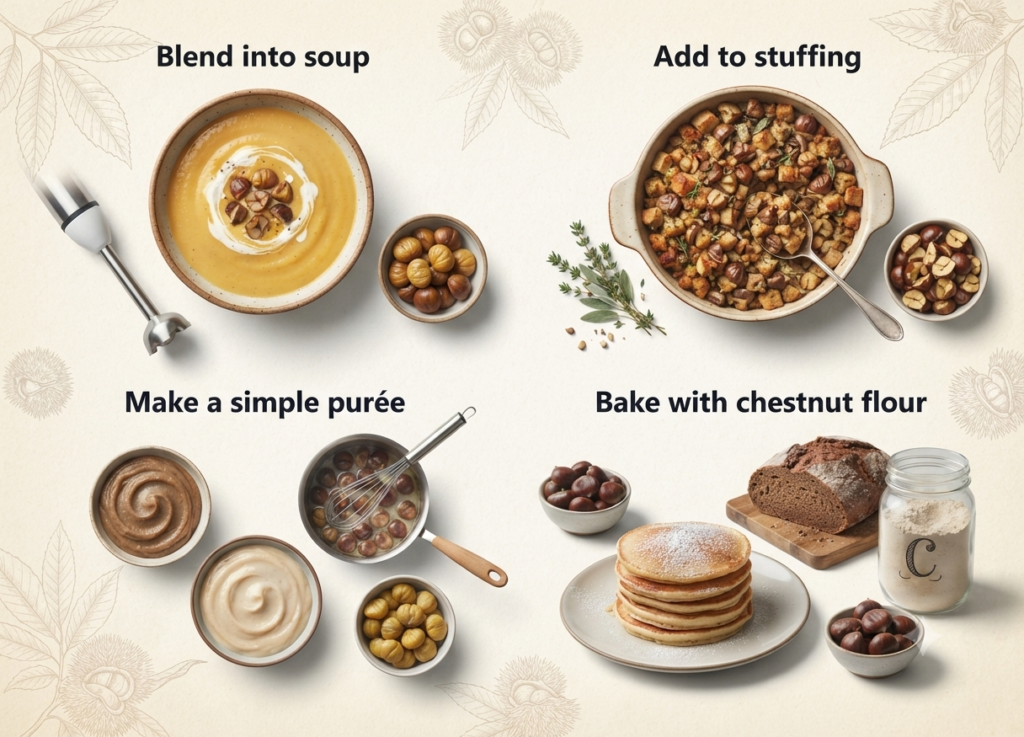
Blend into soup
Stir cooked chestnuts into vegetable, mushroom, or squash soup, then blend for a naturally creamy texture without relying on much dairy.
Add to stuffing
Fold roughly chopped chestnuts into a bread, grain, or plant-based stuffing with herbs, onion, celery, and mushrooms.
Make a simple purée
Simmer peeled chestnuts until tender, then purée with stock for savory dishes or with milk and a little sweetener for desserts.
Bake with chestnut flour
Chestnut flour is naturally gluten-free and subtly sweet. It works especially well in pancakes, cakes, and rustic breads, but its flavor and texture can change a recipe.
How to Choose and Store Chestnuts
Choose fresh chestnuts that feel heavy for their size, with firm glossy shells and no visible mold, holes, or excessive rattling. Because fresh chestnuts hold more moisture than most nuts, they spoil more quickly and should not be left in a warm cupboard for long.
| Chestnut type | Practical storage guidance |
|---|---|
| Fresh, unpeeled | Refrigerate in a breathable bag and use within a few weeks; inspect regularly and discard spoiled nuts. |
| Cooked and peeled | Cool promptly, refrigerate in a covered container, and use within several days. |
| Frozen | Freeze peeled cooked chestnuts in an airtight container or freezer bag for longer keeping. |
| Vacuum-packed or canned | Store unopened as directed on the package. After opening, refrigerate and follow the use-by instructions. |
Why Chestnuts Deserve a Comeback
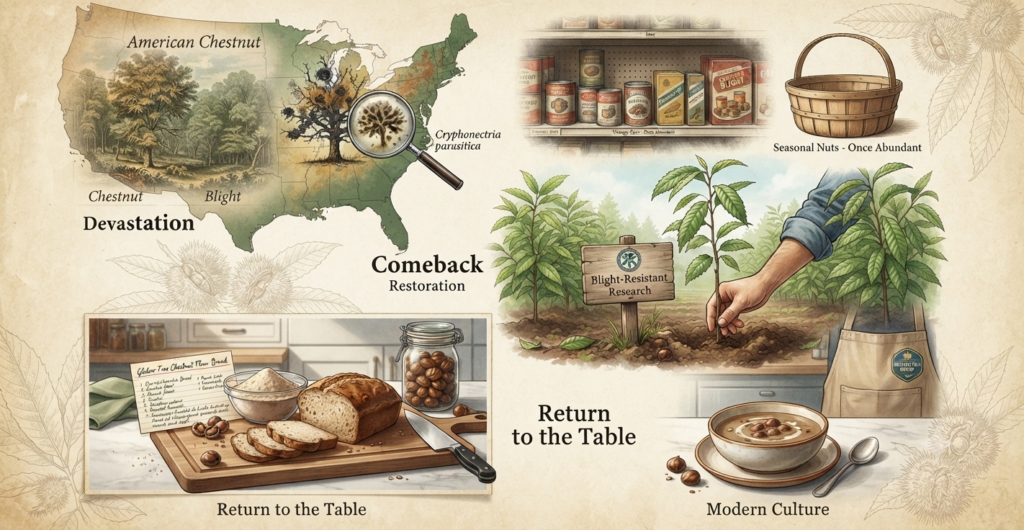
Chestnuts were once a significant food in parts of Europe, Asia, and North America. In the United States, the American chestnut was devastated by chestnut blight in the early twentieth century, transforming forests and regional food traditions. Changing diets and industrial food systems also made shelf-stable staples easier to find than fresh seasonal nuts.
Today, growers, chefs, and restoration groups are renewing interest in chestnuts. Their return connects seasonal cooking with traditional food culture, gluten-free baking, tree-crop agriculture, and efforts to restore chestnut trees. The best case for a comeback is not that chestnuts beat every other nut—it is that they bring a distinct flavor, texture, and history back to the table.
Frequently Asked Questions
Can you eat chestnuts raw?
Edible chestnuts can technically be eaten raw, but they are usually cooked for a softer texture, easier peeling, and more appealing flavor. Do not eat unidentified wild nuts, and never eat horse chestnuts.
Are chestnuts gluten-free?
Plain chestnuts and chestnut flour are naturally gluten-free. If you have celiac disease or a gluten-related disorder, check packaged products for cross-contact statements and ingredient additions.
Are chestnuts safe for people with tree-nut allergies?
Not automatically. Chestnuts are botanically and nutritionally distinct from some common tree nuts, but they can still cause allergic reactions. An allergist can provide individualized advice and testing where appropriate.
Do chestnuts need to be refrigerated?
Fresh chestnuts are best refrigerated because of their moisture content. This helps slow drying, mold, and spoilage. Follow package guidance for vacuum-packed, canned, and frozen chestnuts.
Are water chestnuts real chestnuts?
No. Water chestnuts are the edible corms of an aquatic plant. They are crisp and commonly used in stir-fries, while edible tree chestnuts are seeds from Castanea trees.