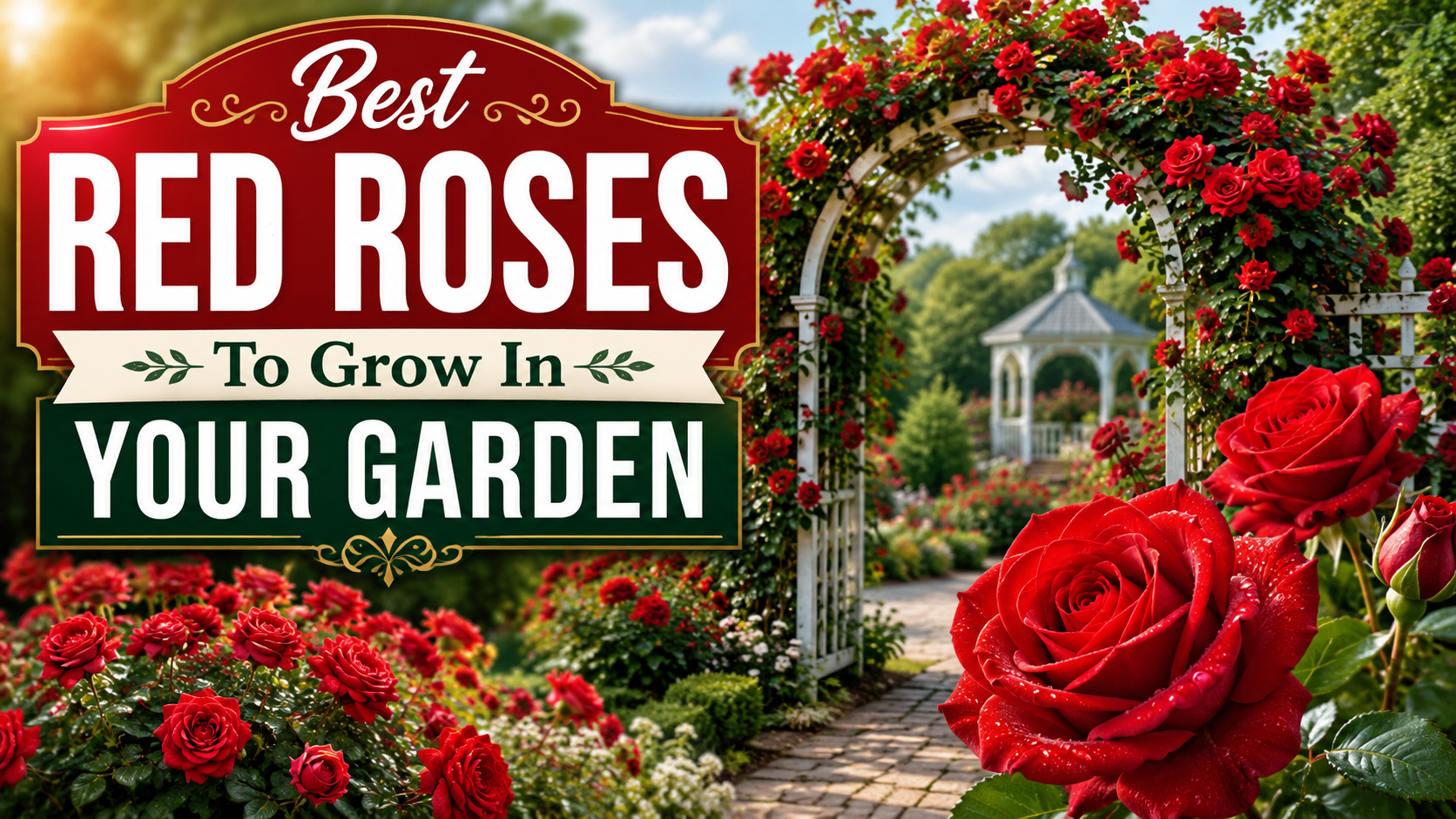

Find a red rose that suits your garden, whether you want fragrance, cut flowers, a climbing display, or easy-care color from late spring into autumn.
The best red rose is the one that matches your garden. For dependable borders, choose a repeat-flowering shrub or floribunda; for an arch, select a climber; for cutting, choose a hybrid tea; and for a patio, look for a compact patio rose. Start with a healthy plant suited to your local hardiness zone, give it at least six hours of sun, and avoid assuming any rose is completely disease-proof.
How to choose the right red rose
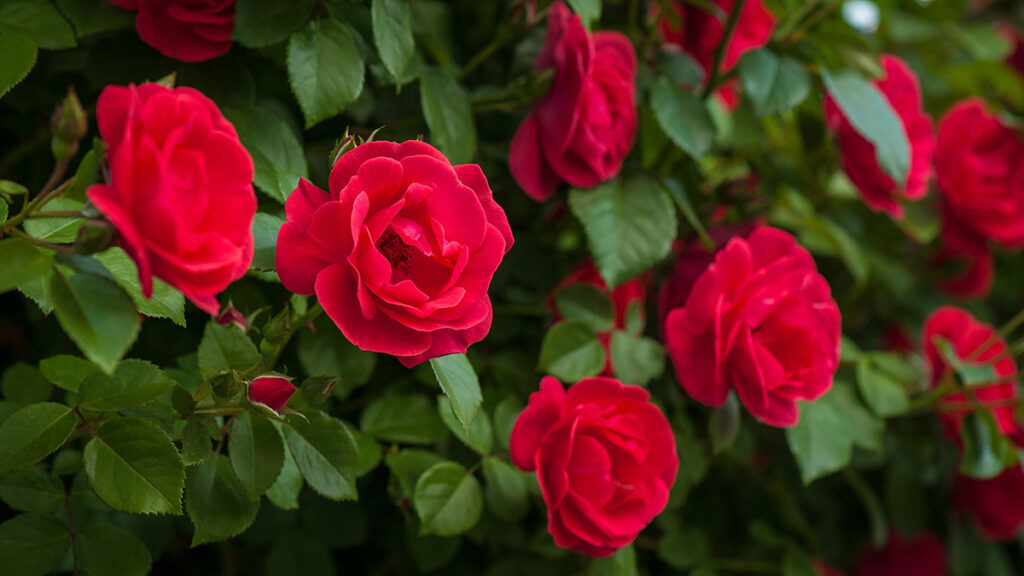
A red rose has long symbolized love, courage, respect, and celebration, but garden performance matters more than a perfect nursery photo. Before buying, decide where the rose will live and what job it needs to do. A vigorous climber can overwhelm a small fence, while a compact patio rose may look lost at the back of a deep border.
Check the mature height and spread, not only the pot label. Also compare fragrance, repeat flowering, winter hardiness, and disease performance in your region. Rose color can shift with heat, light, soil, and bloom age, so “red” may range from bright scarlet to deep velvet crimson.
For easy borders: shrub or floribunda roses
These make rounded, flower-filled plants and are usually the best starting point for beginners. They suit mixed borders, hedges, mass planting, and relaxed cottage-style gardens.
For height: climbing roses
Climbers need strong support and regular tying-in, but they reward a wall, arch, pergola, or fence with dramatic vertical color. Choose a repeat-flowering variety for a longer display.
Best red roses by garden use
Best low-maintenance red shrub rose: ‘Knock Out’
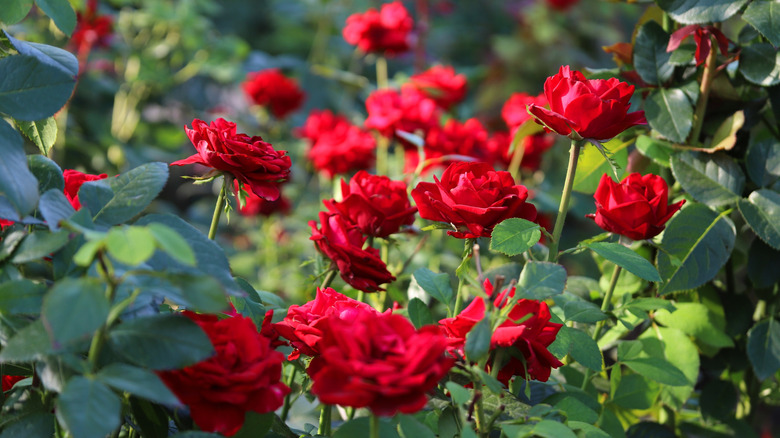
‘Knock Out’ is widely grown for its long flowering season, rounded habit, and comparatively strong disease resistance in many climates. It grows roughly 3–4 feet tall and wide, making it useful for sunny borders and informal hedges. Its flowers are single rather than the classic high-centered florist shape, and fragrance is light, but it is a practical choice when reliable color is the priority.
Shrub roses are a strong choice for gardeners who want a fuller plant and repeat color rather than a single specimen bloom.
Best red climbing rose: ‘Don Juan’
‘Don Juan’ is valued for its deep red, full flowers and noticeable old-rose fragrance. It can reach about 8–12 feet tall with support, making it a good fit for a sunny wall, trellis, or arch. Give it airflow, train the long canes as horizontally as practical, and expect disease pressure to vary with humidity and local black spot prevalence.
A climber needs its support installed before planting, plus room for mature canes and airflow behind the foliage.
Best red rose for cutting: ‘Mister Lincoln’
For a classic long-stemmed red rose with powerful fragrance, ‘Mister Lincoln’ remains a favorite hybrid tea. Its tall, elegant buds open into velvety red blooms that are beautiful in a vase. Plan on roughly 3–5 feet tall and 2–3 feet wide. It is best for gardeners happy to monitor foliage and provide good spacing, because hybrid teas can need more attentive disease management than modern landscape shrubs.
For the longest vase life, cut roses early in the morning when buds are beginning to open and place stems in water promptly.
Best compact red rose for pots: ‘Red Drift’
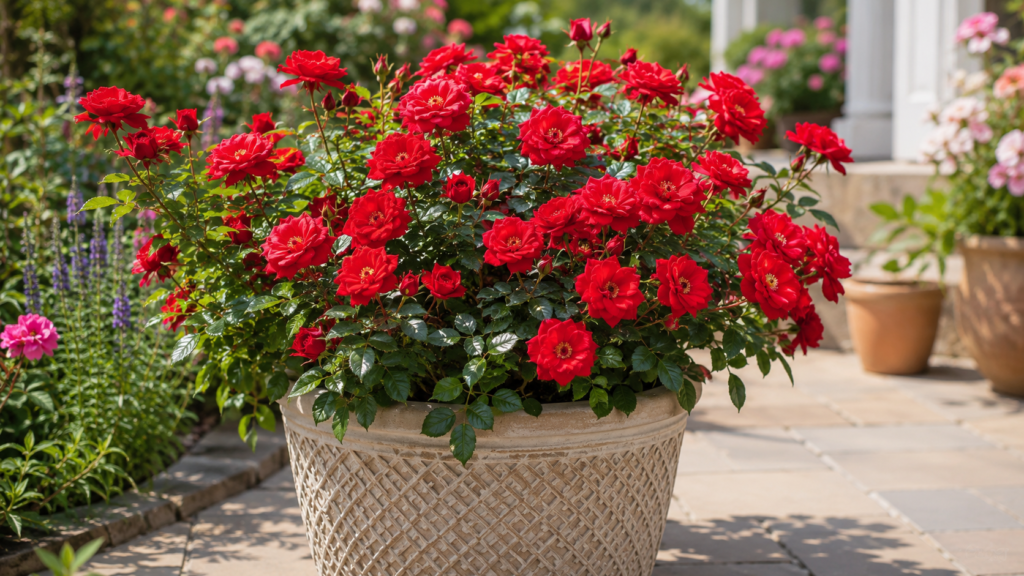
‘Red Drift’ is a compact groundcover-style rose that generally reaches around 1½–2 feet tall and 2–3 feet wide. Its repeat flowers and spreading shape suit a large patio pot, sunny front border, or low edging. Use a container with drainage holes, choose a quality potting mix, and water more consistently than you would a rose planted in the ground.
Container roses need generous root room, regular watering in warm weather, and winter protection in colder regions.
Red rose comparison table
These ranges are typical mature sizes under good growing conditions. Check a local nursery, breeder listing, or regional rose society for the most relevant hardiness and disease information before buying.
| Cultivar | Rose type | Mature size | Flowering & traits | Best use |
|---|---|---|---|---|
| ‘Knock Out’ | Shrub | 3–4 ft H × 3–4 ft W | Light fragrance; repeat flowering; generally strong disease resistance. | Easy-care borders and hedging. |
| ‘Don Juan’ | Climber | 8–12 ft H × 3–6 ft W | Strong fragrance; repeat flowering; monitor for fungal disease in humid areas. | Arches, walls, fences, and trellises. |
| ‘Mister Lincoln’ | Hybrid tea | 3–5 ft H × 2–3 ft W | Very fragrant; repeat flowering; classic long-stemmed blooms. | Cut flowers and formal beds. |
| ‘Red Drift’ | Groundcover / patio | 1½–2 ft H × 2–3 ft W | Light fragrance; repeat flowering; compact, spreading habit. | Pots, edging, and small spaces. |
| ‘L. D. Braithwaite’ | English shrub | 3–4 ft H × 3–4 ft W | Strong fragrance; repeat flowering; rich crimson-red rosettes. | Fragrant mixed borders. |
Hardiness commonly varies by cultivar and source; many of these roses are often listed for approximately USDA Zones 5–9, but local winter protection, summer heat, and humidity can change results.
Planting and care for healthy red roses
Most red roses are not difficult when their basic needs are met consistently. Aim for a sunny site, soil that drains well but does not dry out instantly, and a simple routine of watering, feeding, pruning, and observation.
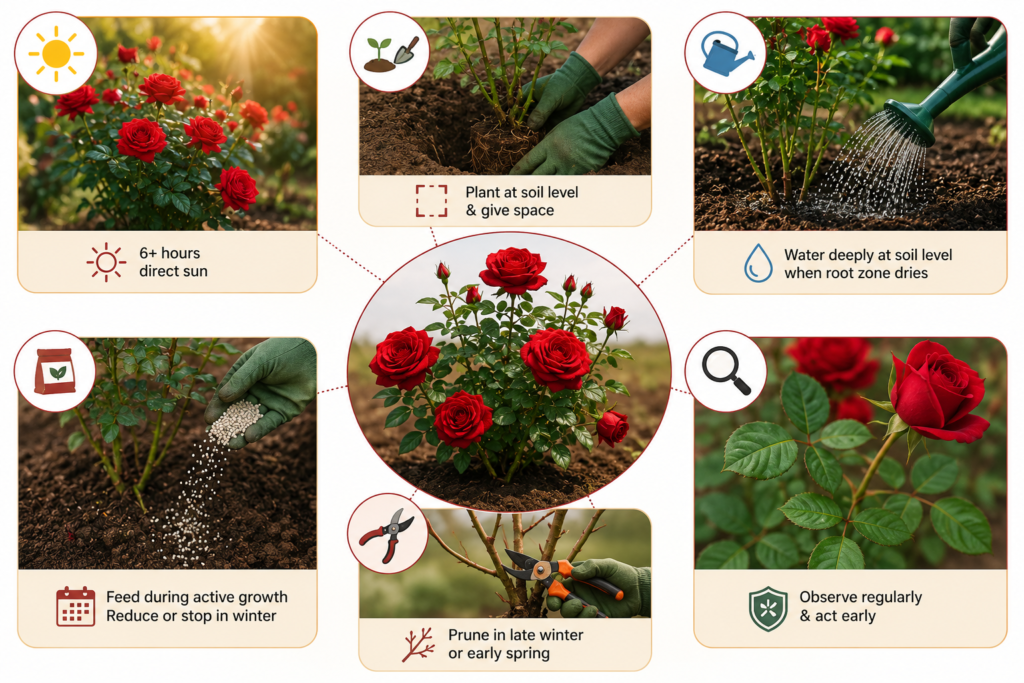
- Sun: give roses at least six hours of direct sun daily. In very hot climates, gentle late-afternoon shade can reduce stress, but too much shade means fewer flowers and slower drying foliage.
- Planting: set the plant at its nursery soil level, water it in thoroughly, and leave enough space for its mature width so air can move around leaves.
- Watering: water deeply at soil level when the root zone begins to dry. Avoid frequent shallow splashes and try not to wet leaves late in the day.
- Feeding: use a balanced rose fertilizer according to its label during active growth. Stop or reduce feeding as the plant heads toward winter dormancy.
- Pruning: remove dead, damaged, or crossing stems in late winter or early spring according to your region. Climbers are trained and pruned differently from shrub roses, so keep their main framework canes.
Black spot, mildew, and pests: prevention first
Reduce fungal disease pressure
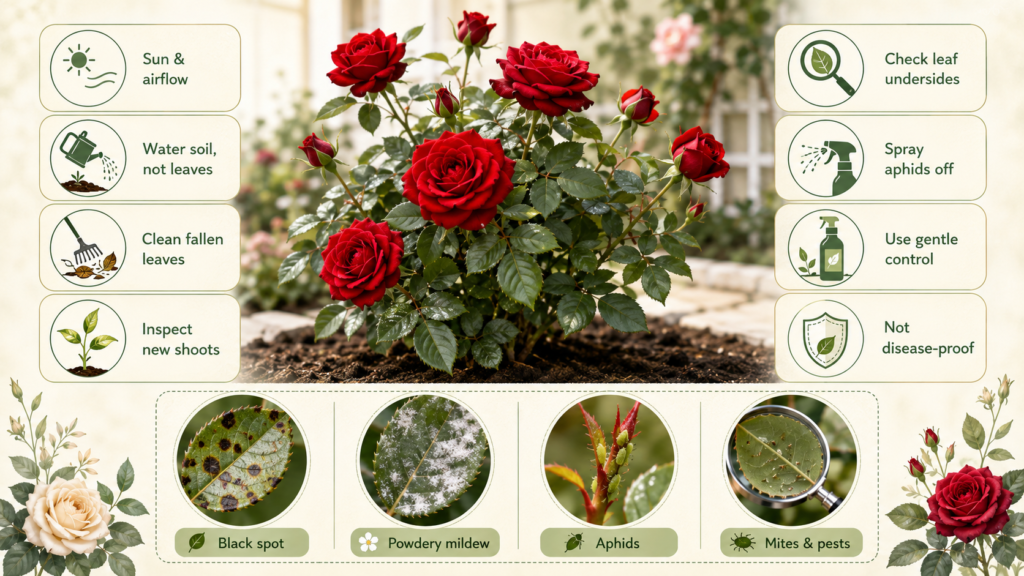
Black spot and powdery mildew are more likely when foliage stays wet, plants are crowded, or the cultivar is poorly suited to local conditions. Choose varieties with good trial records where possible, plant in sun, clean up fallen leaves, water the soil rather than foliage, and prune for airflow. If treatment is needed, select a product appropriate for roses and follow its label and local guidance.
Inspect before treating pests
Aphids, spider mites, Japanese beetles, and rose slugs can appear depending on your region. Look closely at new shoots and leaf undersides. Small aphid colonies can often be removed with a firm spray of water; for persistent problems, use the least disruptive suitable control and avoid spraying open flowers when pollinators are active.
A realistic note on disease resistance
Disease-resistant does not mean disease-proof. A rose that stays clean in a dry climate may struggle in a rainy or humid garden. Use breeder claims and rose trial results as useful starting points, then prioritize advice from local rose societies, university extension services, and experienced growers in your area.
Frequently asked questions
What is the best red rose for beginners?
A repeat-flowering shrub rose such as ‘Knock Out’ is often a practical beginner choice because it is compact, blooms over a long season, and is generally more forgiving than a fussy hybrid tea. Still, the best option is one that performs well in your local climate and fits your available space.
Which red rose has the strongest fragrance?
‘Mister Lincoln’ is famous for strong, classic rose perfume, while ‘Don Juan’ and ‘L. D. Braithwaite’ are also valued for fragrance. Scent changes with weather, time of day, bloom age, and individual plant health, so smelling a rose in person is worthwhile when possible.
Can red roses grow in pots?
Yes. Choose a compact cultivar, a large frost-resistant pot with drainage holes, and a sunny position. Container roses dry out faster than in-ground plants, so check moisture often during warm weather. In cold-winter areas, protect the pot and roots from severe freezing.