
Kiwi fruit is a nutrient-dense choice that provides vitamin C, fiber, potassium, vitamin K, folate, and plant compounds. This guide explains what current evidence reasonably supports—and how to enjoy kiwi as part of a balanced diet.
Kiwi fruit is a healthy whole-food option. Its fiber, vitamin C, and other nutrients may support digestion, normal immune function, and overall diet quality, but kiwi is not a cure or a substitute for medical care.
If you are looking for a fruit that is easy to add to breakfast, snacks, and desserts, kiwi is a practical choice. It is naturally sweet, refreshing, and nutrient-dense for its size. The strongest take-away is simple: regularly eating a variety of fruits, including kiwi fruit if you enjoy it, can help you build a more nutrient-rich eating pattern.
What is kiwi fruit?
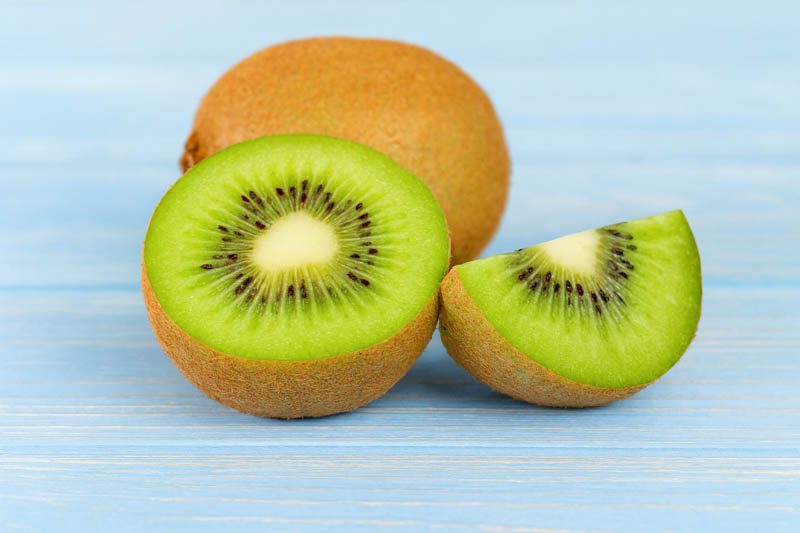
Kiwi fruit, also called kiwifruit, is the edible berry of a vine in the Actinidia family. The familiar green variety has fuzzy brown skin, vivid green flesh, and a ring of tiny black seeds. Gold kiwi varieties have smoother skin and sweeter yellow flesh.
Nutrition values vary with fruit size and variety. For a useful everyday reference, one medium green kiwi (about 70 grams) provides roughly 40 calories, 10 grams of carbohydrate, and around 2 grams of fiber, according to food-composition databases.
What one medium green kiwi can contribute
Values are approximate and depend on variety, ripeness, fruit size, and the database used.
Vitamin C
Kiwi is notably rich in vitamin C, a nutrient that supports normal immune function and normal collagen formation.
Dietary fiber
Fiber supports normal digestive function and helps fruit contribute to a filling, plant-forward eating pattern.
Potassium & folate
Kiwi supplies modest amounts of potassium and folate alongside its natural carbohydrate and water content.
Plant compounds
Like other colorful fruits, kiwi contains antioxidant plant compounds, though no single fruit replaces an overall varied diet.
Top evidence-based kiwi benefits
The benefits of kiwi fruit are best understood as nutrient functions and dietary contributions—not promises that one food will prevent disease. Human studies suggest kiwi may be particularly useful for some aspects of digestive comfort, but individual results vary.
Digestive support
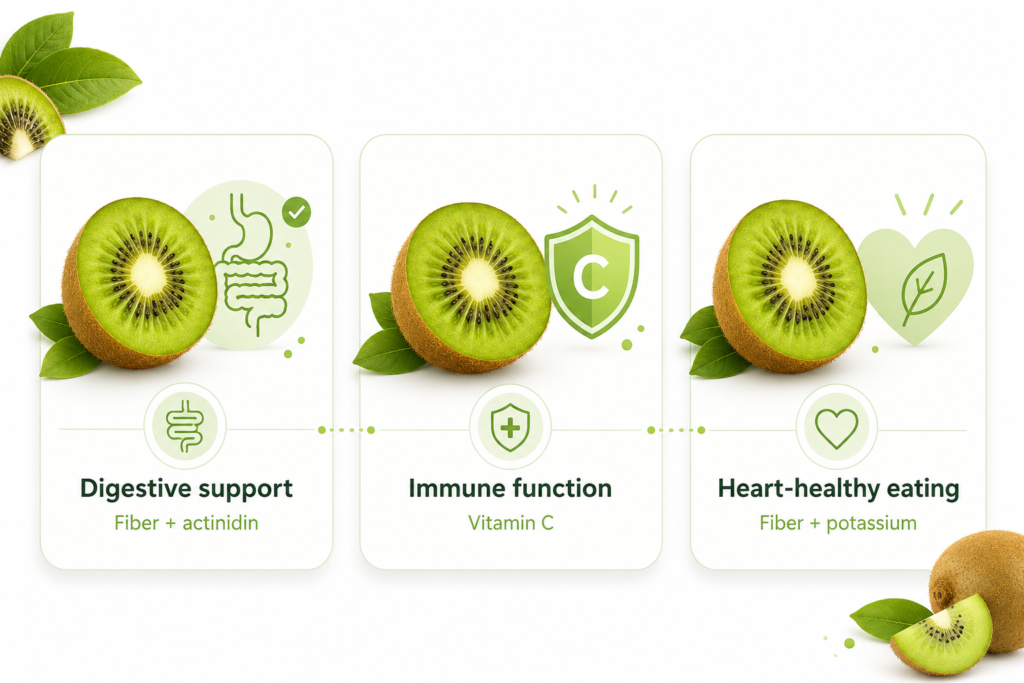
Kiwi provides fiber and contains actinidin, an enzyme that may help some people digest protein. Small human studies also suggest kiwi can support bowel regularity in some adults.
Normal immune function
Vitamin C contributes to normal immune function. Eating kiwi helps meet nutrient needs, but it does not guarantee protection from colds or infections.
Heart-healthy eating
Fruit intake can support an overall heart-healthy dietary pattern. Kiwi is one easy way to add fiber, potassium, and naturally sweet fruit to meals.
Kiwi and skin health: keep expectations realistic
Vitamin C is needed for normal collagen formation, which is important for skin and other tissues. That does not mean eating kiwi produces immediate cosmetic changes or replaces sun protection, skincare, or clinical treatment. Think of kiwi as one food that can help support adequate nutrient intake.
What research says about kiwi and sleep
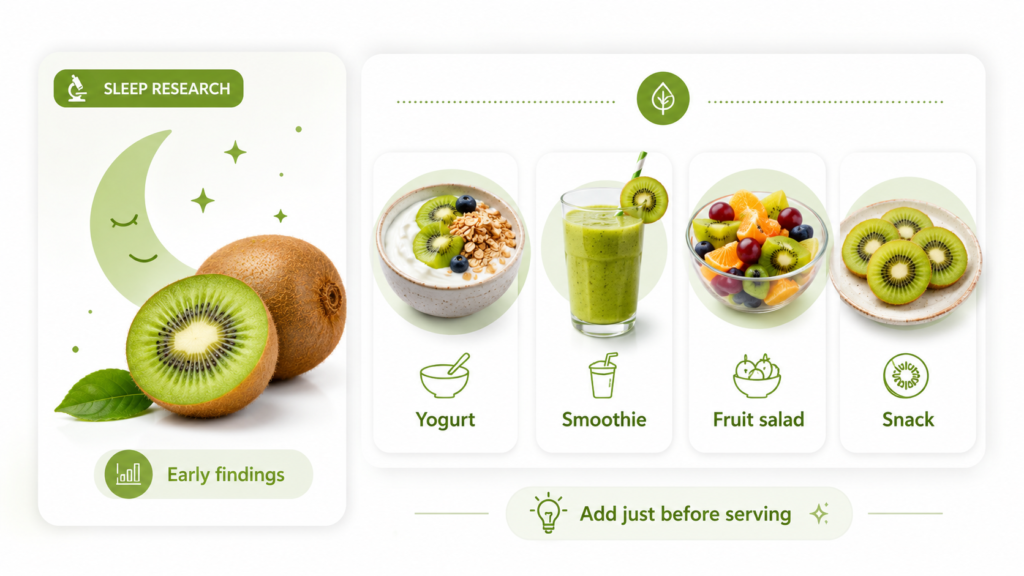
A few small studies have explored whether kiwi eaten before bed may be linked with better sleep measures. This is interesting but preliminary: the studies are limited, and kiwi should not be treated as a sleep treatment. Consistent routines, light exposure, stress management, and qualified advice for persistent sleep problems matter more.
Easy ways to add kiwi to your day
- Slice kiwi over yogurt, oatmeal, or a breakfast bowl.
- Add it to a smoothie with yogurt or milk for a tangy note.
- Pair with berries, citrus, melon, or banana in a fruit salad.
- Serve chilled as a simple snack or alongside a post-workout meal.
Practical tip: add kiwi just before serving yogurt or gelatin desserts. Its actinidin enzyme can soften some foods if left sitting for a long time.
Green kiwi versus gold kiwi
Both green and gold kiwi fruit can be nutritious choices. The best one is often the variety you enjoy and can use regularly. Their flavor, texture, and some nutrient values differ, so they do not need to compete.
Can you eat kiwi skin?
Yes, kiwi skin is edible after washing the fruit well. The skin adds fiber, but its fuzzy texture is not for everyone. You can rub off some fuzz under running water, slice the fruit with the skin on, or simply scoop out the flesh with a spoon. If you have an oral allergy or find the skin irritating, skip it.
How much kiwi should you eat?
For many people, one or two kiwi fruit can fit comfortably into a day that includes other fruits and vegetables. There is no universal requirement to eat kiwi daily. Let your hunger, preferences, digestive comfort, budget, and any clinician-provided dietary guidance shape your portion.
Kiwi allergy and safety considerations
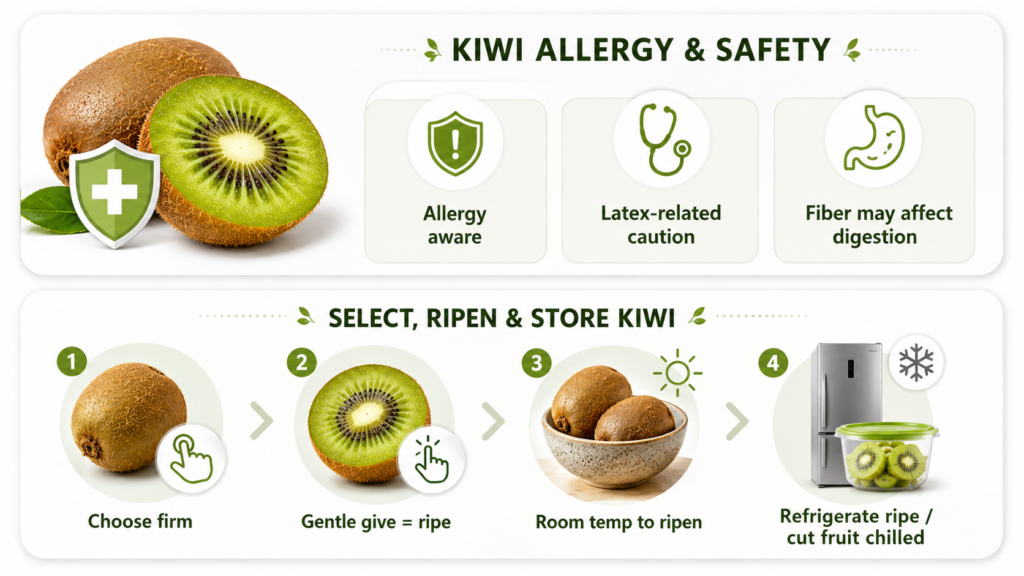
Kiwi can trigger allergic reactions in some people, ranging from mouth itching to more serious symptoms. People with known kiwi allergy, latex-related allergy, or certain fruit allergies should be careful and ask a qualified clinician or allergy professional for individual advice. Digestive responses also vary, especially when you increase fiber quickly.
How to select, ripen, and store kiwi
Choose kiwi that feels firm but not rock hard and has unbroken skin. A ripe kiwi gives slightly when gently pressed, much like a ripe avocado but with less softness. Keep firm fruit at room temperature to ripen; once ripe, refrigerate it to slow further softening. Cut kiwi should be covered and chilled, then used within a few days.
Frequently asked questions
Is Kiwi fruit high in vitamin C?
Yes. Kiwi is a notably rich source of vitamin C for its size. The exact amount differs by variety and fruit size, but a medium kiwi can make a meaningful contribution toward daily vitamin C needs.
Can Kiwi help with constipation?
Some human studies suggest green kiwi may support bowel regularity for some people, likely because of its fiber, water, and other components. It is not a universal treatment. Ongoing constipation, pain, bleeding, or a sudden change in bowel habits deserves medical advice.
Can children and pregnant people eat Kiwi?
Kiwi can generally fit into family meals and pregnancy diets when it is washed and tolerated, but allergies and individual medical needs matter. For a child trying kiwi for the first time, use an age-appropriate serving and watch for any reaction. Ask a clinician for personal dietary guidance when needed.