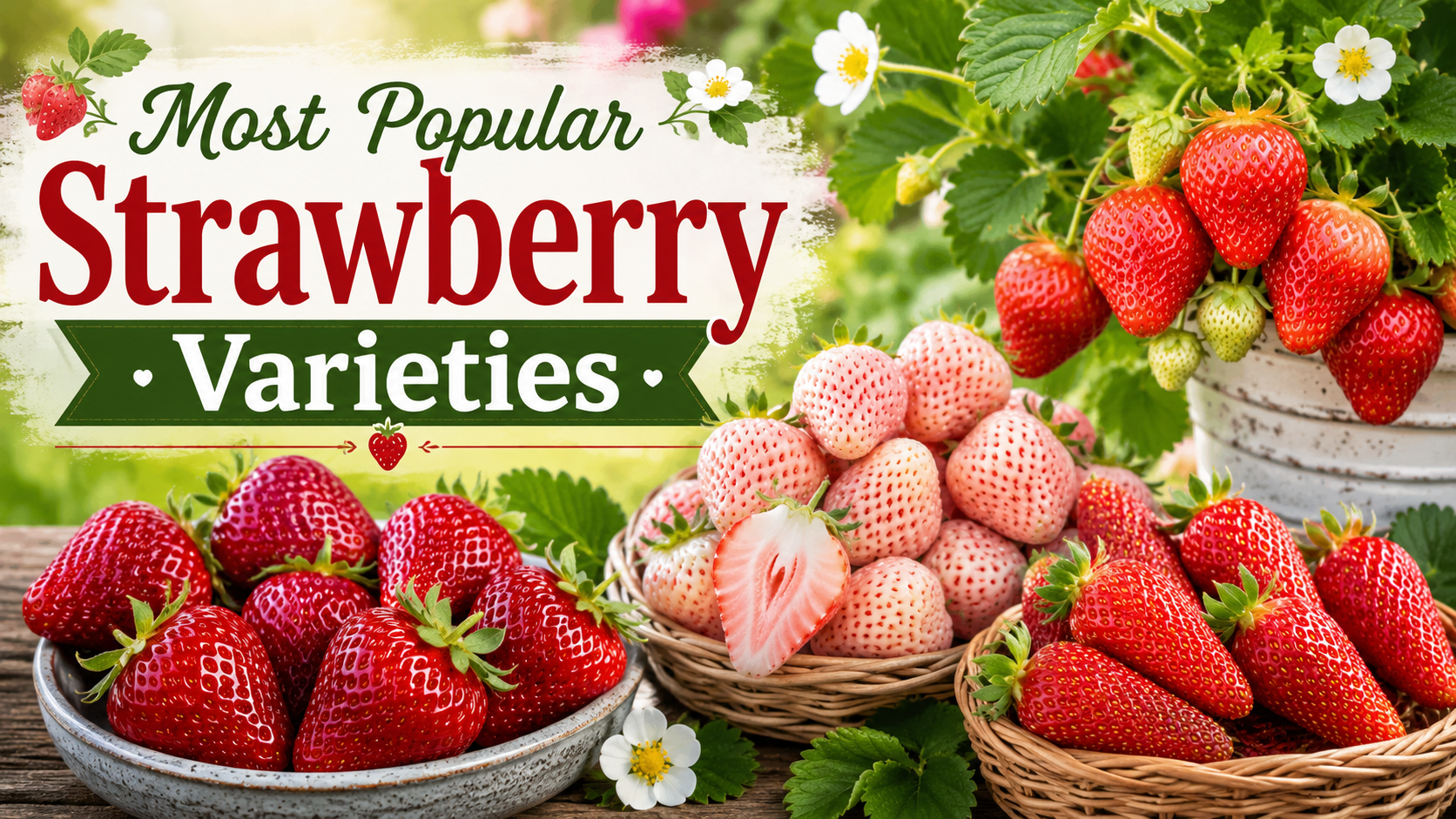

Find the strawberry plants that fit your garden, patio, climate, and taste. This practical guide compares popular cultivars by flavor, harvest season, fruit size, and growing style.
The best strawberry is not always the biggest or the sweetest one in a catalog. For home gardens, the winning choice is usually the cultivar that matches your winter temperatures, summer heat, available room, and preferred harvest pattern. All strawberries need sun, fertile well-drained soil, and steady moisture; their performance can still vary from one garden to the next.
Quick comparison: six popular strawberry varieties
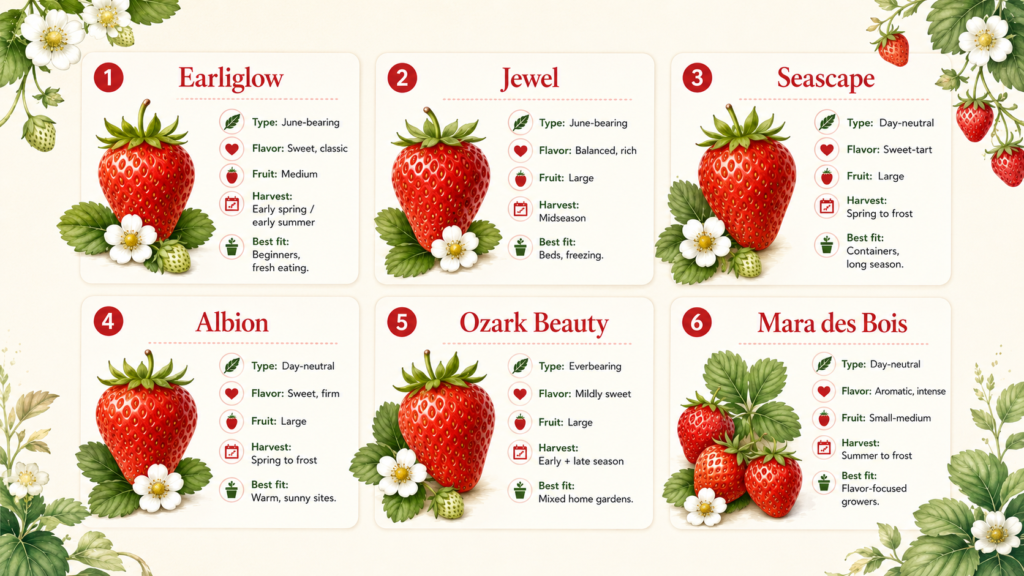
Harvest timing is approximate and shifts with local weather, latitude, and planting date.
| Variety | Type | Flavor | Fruit | Harvest | Best fit |
|---|---|---|---|---|---|
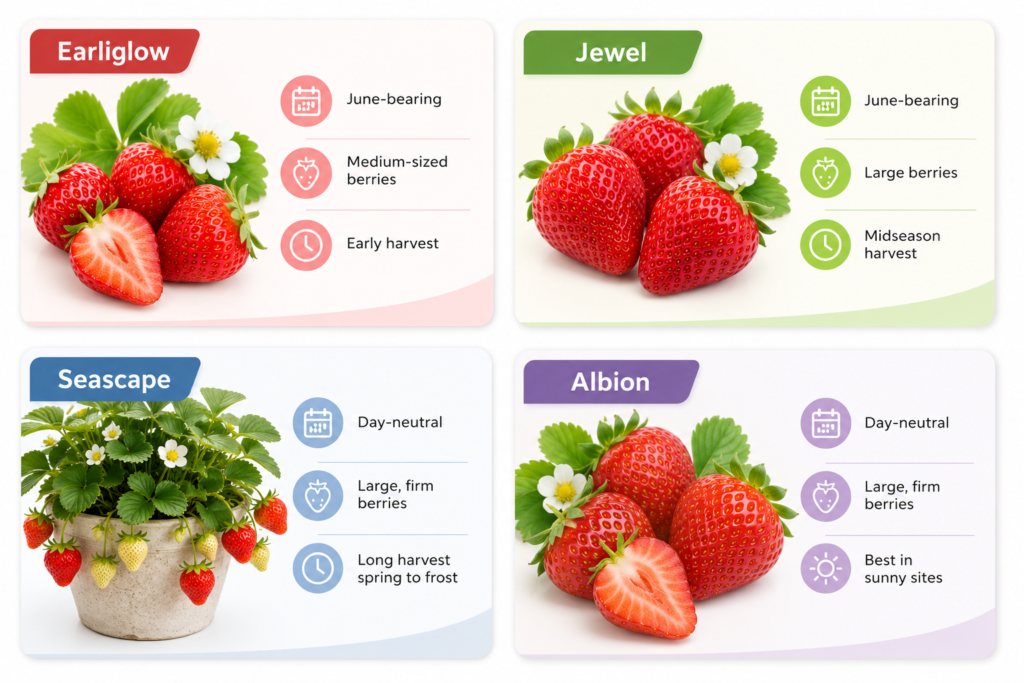
| Earliglow | June-bearing | Sweet, classic | Medium | Early spring/early summer | Beginners, fresh eating |
| Jewel | June-bearing | Balanced, rich | Large | Midseason | Beds, freezing |
| Seascape | Day-neutral | Sweet-tart | Large | Spring to frost | Containers, long season |
| Albion | Day-neutral | Sweet, firm | Large | Spring to frost | Warm, sunny sites |
| Ozark Beauty | Everbearing | Mildly sweet | Large | Early + late season | Mixed home gardens |
| Mara des Bois | Day-neutral | Aromatic, intense | Small-medium | Summer to frost | Flavor-focused growers |
Know the strawberry types before you buy
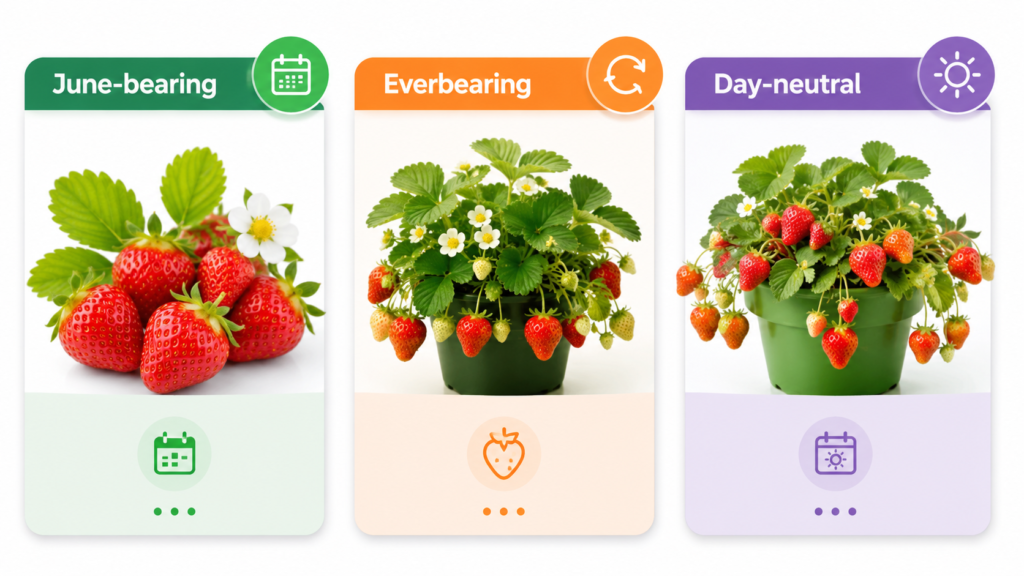
June-bearing
Produces one concentrated crop over roughly two to three weeks. Ideal if you want enough berries at once for jam, freezing, or big desserts.
Everbearing
Usually gives a spring crop and another later in the season, with lighter fruiting in between. It does not necessarily fruit continuously.
Day-neutral
Flowers across a broad range of day lengths, often producing from late spring until frost where summer heat is moderate.
Popular varieties, with practical trade-offs
Earliglow — dependable early flavor
A widely recommended June-bearing strawberry for its reliably sweet, old-fashioned flavor and early harvest. Fruit is medium rather than huge, but often excellent for fresh eating.
Jewel — a classic for a big midseason crop
Jewel is valued for attractive, large berries with balanced flavor and a concentrated midseason harvest. It is a strong candidate when you want fruit for fresh eating and preserving.
Seascape — long harvests in small spaces
A popular day-neutral strawberry with large, firm berries and a long picking window. It is often chosen for raised beds, patio pots, and gardeners who prefer smaller harvests over months.
Albion — firm, large fruit for sunny gardens
Albion is a day-neutral cultivar known for large, firm berries and sweet flavor when grown with ample sun. Its shape and firmness make it a favorite for fresh eating and short-term storage.
Consider Albion for bright sites with dependable irrigation. Good airflow helps reduce fungal trouble, especially where humidity is high. Its long-season habit makes it useful for gardeners who would rather snack regularly than process one large crop.
Ozark Beauty — the familiar everbearing choice
This long-standing everbearing variety offers a spring crop and a later crop, making it appealing to households that want strawberries at more than one point in the season.
Often a friendly starting point for a mixed garden, though yields and fruit size can vary with weather. Keep crowns at soil level when planting and remove many runners if the goal is fruit production rather than new plants.
Mara des Bois — the flavor-first pick
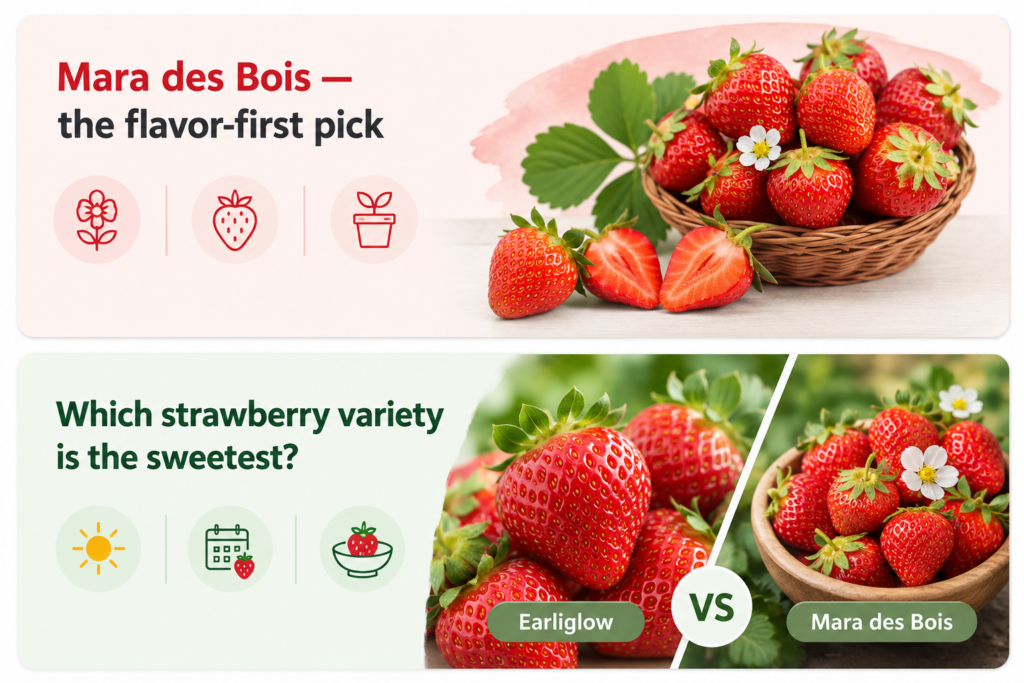
This day-neutral French cultivar is prized for its notably aromatic, wild-strawberry-like character. Berries are usually smaller than commercial-style cultivars, but the flavor is the point.
Choose this variety if exceptional flavor matters more than very large berries. It can be rewarding in a raised bed or roomy container with attentive watering. Buy from a reputable supplier and check local availability, as named cultivars differ by market.
Which strawberry variety is the sweetest?
There is no universal sweetest cultivar because flavor changes with sunlight, ripeness, temperature, soil health, and harvest timing. For a classic sweet berry, Earliglow is a frequent home-garden favorite. For perfume-like, intense flavor, Mara des Bois is often the more memorable choice. Harvest berries fully red and eat them soon after picking for their best sweetness.
Cold winters, hot summers, and disease pressure
Hardiness zone labels help with winter survival, but they do not tell the whole story. Summer humidity, heat waves, soil drainage, and local fungal diseases can matter just as much. June-bearing plants such as Earliglow and Jewel are frequently grown in colder regions with appropriate winter protection. In hot climates, long-season day-neutral plants may need afternoon shade and especially consistent watering. Ask local growers which cultivars perform well nearby before ordering bare-root strawberry plants.
Frequently asked questions
When is the best time to plant strawberries?
Spring or fall are ideal for bare-root plants. In mild climates, fall planting is often preferred because plants have time to establish roots before summer heat. Spring planting works well in cold regions. Container-grown plants can go in the ground during a wider window, as long as they are watered regularly until established.
How long do strawberry plants live?
Most strawberry plants produce well for three to four years, though some gardeners refresh their patches every two years for higher yields and healthier plants. After their peak years, productivity drops and disease pressure can increase. Plan on replanting or renewing your bed as older plants decline.
Do I need more than one variety for pollination?
No. All the popular cultivars described in this guide are self-fertile and do not require another variety to set fruit. That said, having multiple varieties can extend your harvest season and provide a wider range of flavors. Bees and other pollinators will visit your patch regardless of how many varieties you grow.
Can I grow strawberries indoors?
Strawberries need six to eight hours of direct sunlight per day for good fruiting. Indoors, a sunny windowsill or grow light can work in a pinch, but outdoor container gardening is usually more successful. If growing indoors, ensure good air circulation and water carefully to avoid fungal issues.
What is the difference between runners and fruiting?
Strawberry runners are shoots that spread along the ground and form new plantlets. If your goal is fruit production rather than propagation, remove most runners to direct energy into berries. If you are expanding your patch, allow runners to root and establish. The choice depends on your strategy and available space.