

Peonies are long-lived, generous perennials once their planting depth, sunlight, and drainage are right. Use this practical guide to help your peony plant settle in and flower beautifully for years.
The large, romantic peony flower can look high-maintenance, but most peonies are straightforward when their basic needs are met. The important exception is planting depth: bury a herbaceous peony crown too deeply and it may grow healthy leaves without producing flowers. Care also differs slightly between herbaceous, tree, and intersectional peonies, so identify your plant before making major changes.
Peony care at a glance
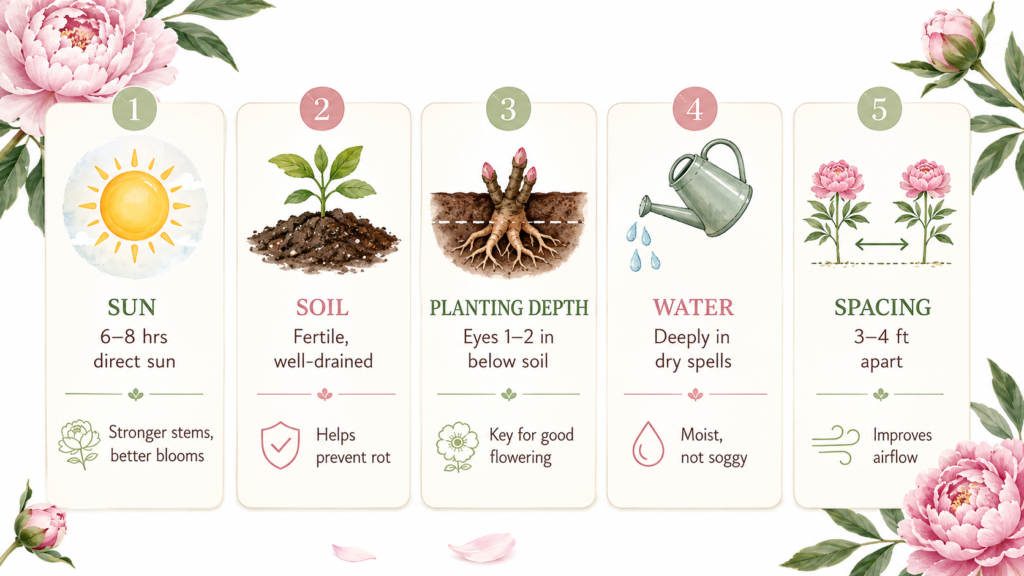
| Care point | What peonies need | Why it matters |
|---|---|---|
| Sun | About 6–8 hours of direct sun | More light generally means stronger stems and better flowering. |
| Soil | Fertile, well-drained soil | Avoid low, waterlogged sites that can weaken or rot roots. |
| Planting depth | Eyes 1–2 inches below soil | This is especially important for herbaceous peonies. |
| Water | Deeply during dry spells | Newly planted peonies need steady moisture, not soggy ground. |
| Spacing | About 3–4 feet apart | Airflow helps foliage dry and reduces fungal disease pressure. |
Three kinds of peony plants
Herbaceous
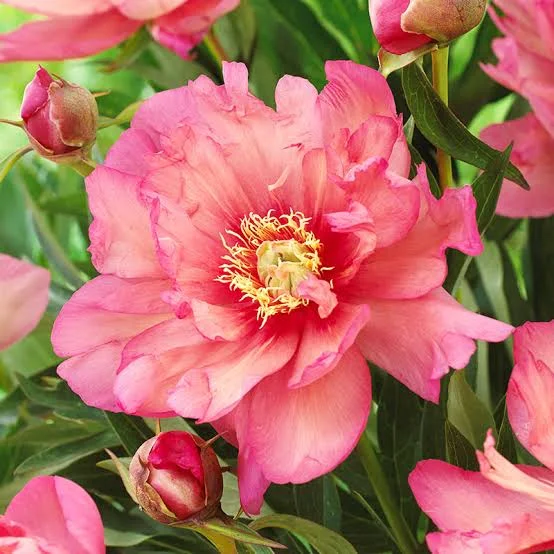
The classic garden peony. Its stems die back to the ground each autumn and regrow from a crown of buds, often called eyes, in spring.
Tree peony
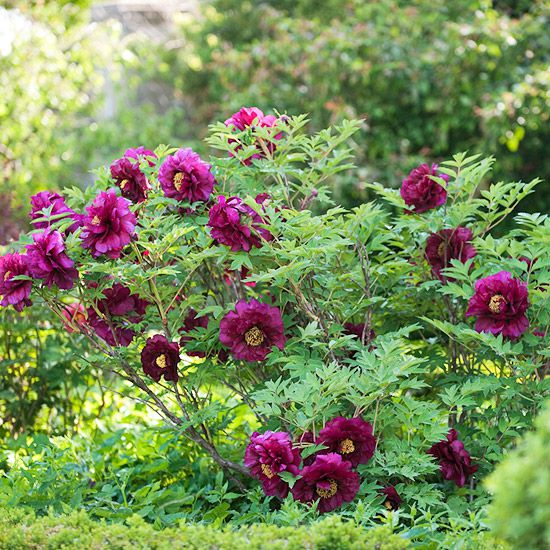
A woody shrub with stems that remain above ground through winter. Tree peonies have different graft and planting-depth needs from herbaceous types.
Intersectional
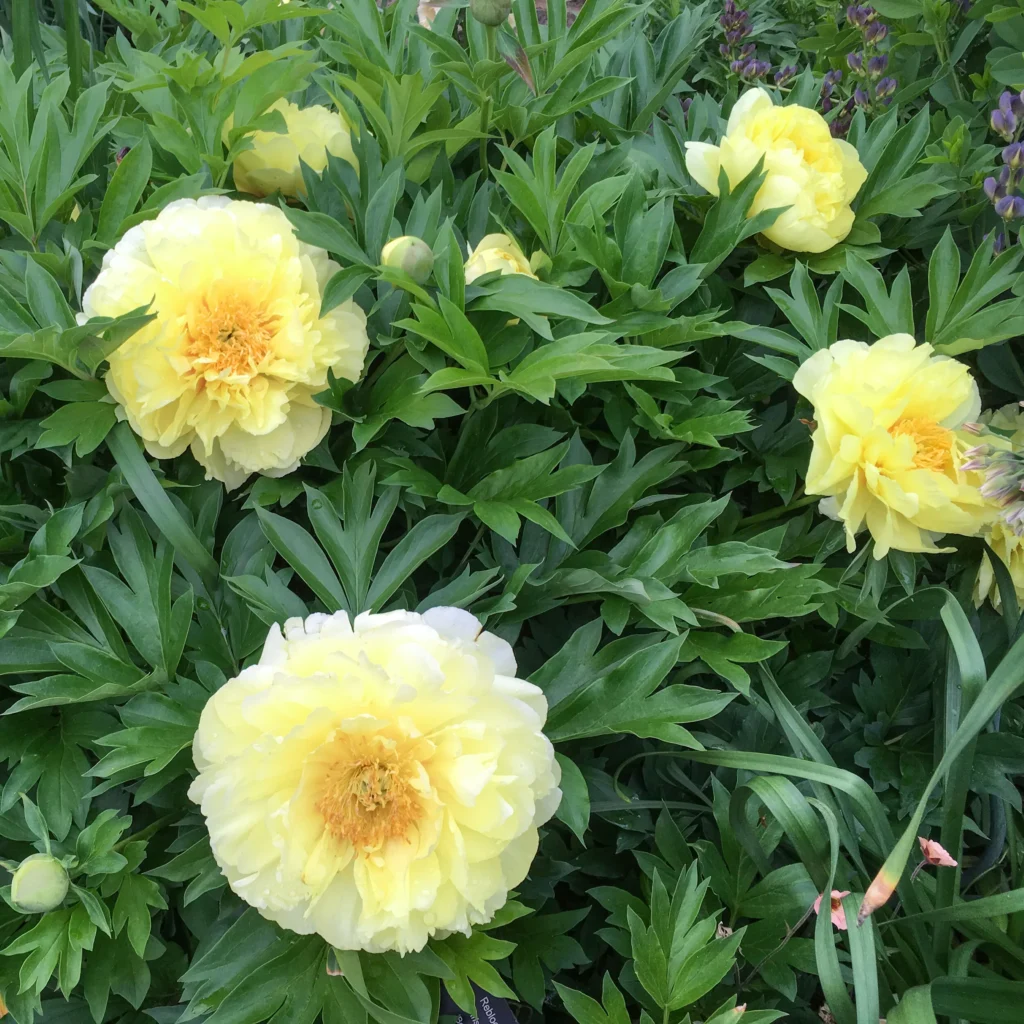
A cross between herbaceous and tree peonies. Itoh peonies die back in winter but often combine sturdy growth with large, long-lasting flowers.
The peony crown rule: keep the eyes shallow
On a bare-root herbaceous peony, the eyes are the small pink, red, or whitish buds at the top of the crown. In a cold-winter climate, position them about 1–2 inches below the finished soil level. In milder areas, plant even more shallowly. A crown planted too deep is one of the most common reasons a peony makes leaves but no flowers.
Support peony flowers before they open
Many double-flowered peonies carry heavy blooms that can bend or collapse after wind and rain. Put a ring support or discreet grid over emerging shoots in early spring, before stems lengthen. By flowering time, foliage will soften the look of the support while it holds blooms above wet soil.
Ants on unopened buds are usually visitors, not a reason for concern. They are attracted to nectar; peony flowers do not need ants to open.
Simple seasonal care
Spring: support and observe
Install supports as shoots emerge. Water if spring is unusually dry and watch for dark, wilted shoots that may signal botrytis blight.
Summer: deadhead and maintain
Remove faded flowers to tidy the plant, but leave healthy foliage in place. The leaves feed next year’s flower buds through the growing season.
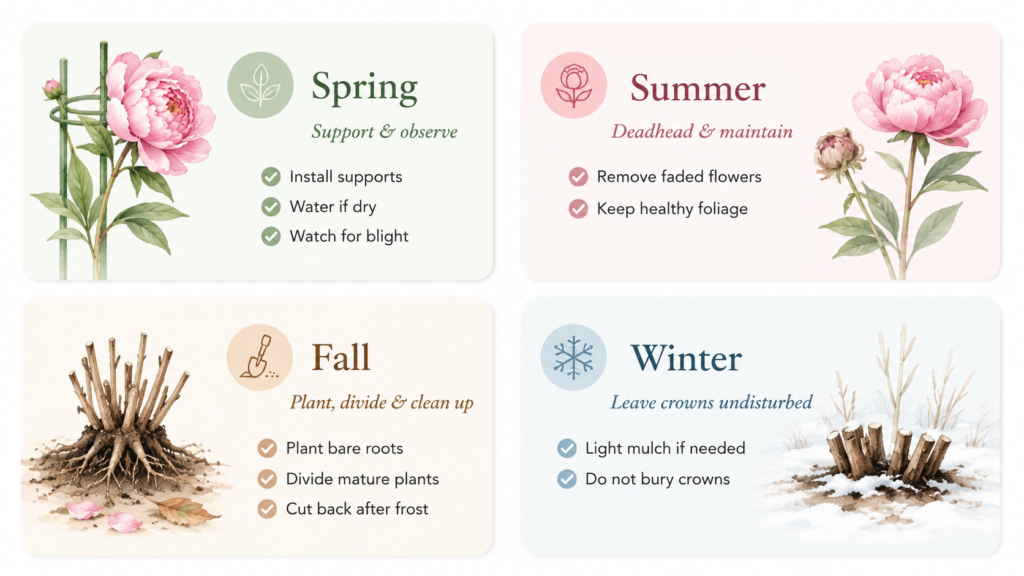
Fall: plant, divide, and clean up
This is the usual time to plant bare roots or divide mature herbaceous peonies. After frost, cut diseased or browned foliage to ground level and remove it.
Winter: leave crowns undisturbed
Established herbaceous peonies are hardy in suitable climates. Use only a light winter mulch where needed and pull it back in spring so crowns are not buried.
Why is my peony not blooming?
My peony has leaves but no flowers
First check planting depth and sunlight. A crown planted too deeply, a site with too much shade, recent transplanting, or immature roots can all delay flowering. Newly planted peonies may take two to three growing seasons to bloom well. Avoid moving a healthy plant unless necessary.
Buds turn brown or shoots wilt in spring
Botrytis blight is a common fungal disease in wet spring weather. Improve airflow, remove affected stems promptly, avoid overhead watering, and dispose of diseased debris rather than composting it. Ask a local extension service about confirmed diagnosis and treatment options in your area.
Flowers flop after rain
Large double blooms can be heavier than their stems, especially after rain. Use a peony ring or grow-through support installed early in spring. You can also cut a few partly opened stems for a vase before a heavy storm.
Can I divide or transplant an old peony?
Yes, but expect a pause in flowering. Divide herbaceous peonies in early fall when foliage is declining. Lift the plant carefully, rinse or brush away enough soil to see the crown, and cut divisions with several healthy eyes and substantial roots. Replant immediately at the correct shallow depth.
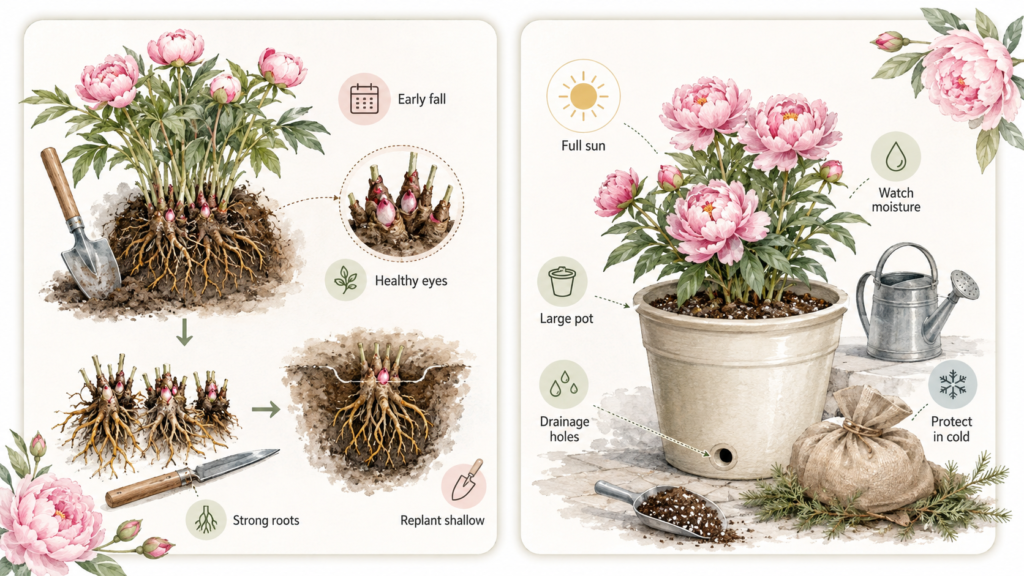
Can peonies grow in containers?
A compact herbaceous or Itoh peony can grow in a large container, but garden beds are usually easier for long-term success. Choose a frost-resistant pot with drainage holes, use a generous volume of quality potting mix, and place it in full sun. Containers dry out and heat up faster than soil, so monitor moisture closely. In cold climates, protect the pot from repeated freeze-thaw cycles.
Frequently asked questions
Do peonies need fertilizer?
Not always. Start with a soil test or local guidance instead of assuming every peony needs feeding. In average garden soil, a light application of compost or a balanced, low-nitrogen fertilizer in spring may be enough. Too much nitrogen can encourage lush foliage at the expense of flowers.
When should I cut back peony foliage?
For herbaceous peonies, wait until foliage has yellowed or been killed by frost in autumn, then cut stems near ground level and clear away the debris. Do not cut tree peony woody stems back like herbaceous peonies.
How often should I water a new peony plant?
Water deeply after planting, then keep soil evenly moist through the first growing season when rain is scarce. Once established, peonies are reasonably drought tolerant, but they benefit from a deep soaking during extended dry periods—especially while buds are forming.
Are peonies safe around ants?
Yes. Ants commonly feed on sugary nectar around peony buds. They do not harm the plant, and removing them is not necessary for flowers to open. If cutting blooms for indoors, gently shake or rinse stems outside first.