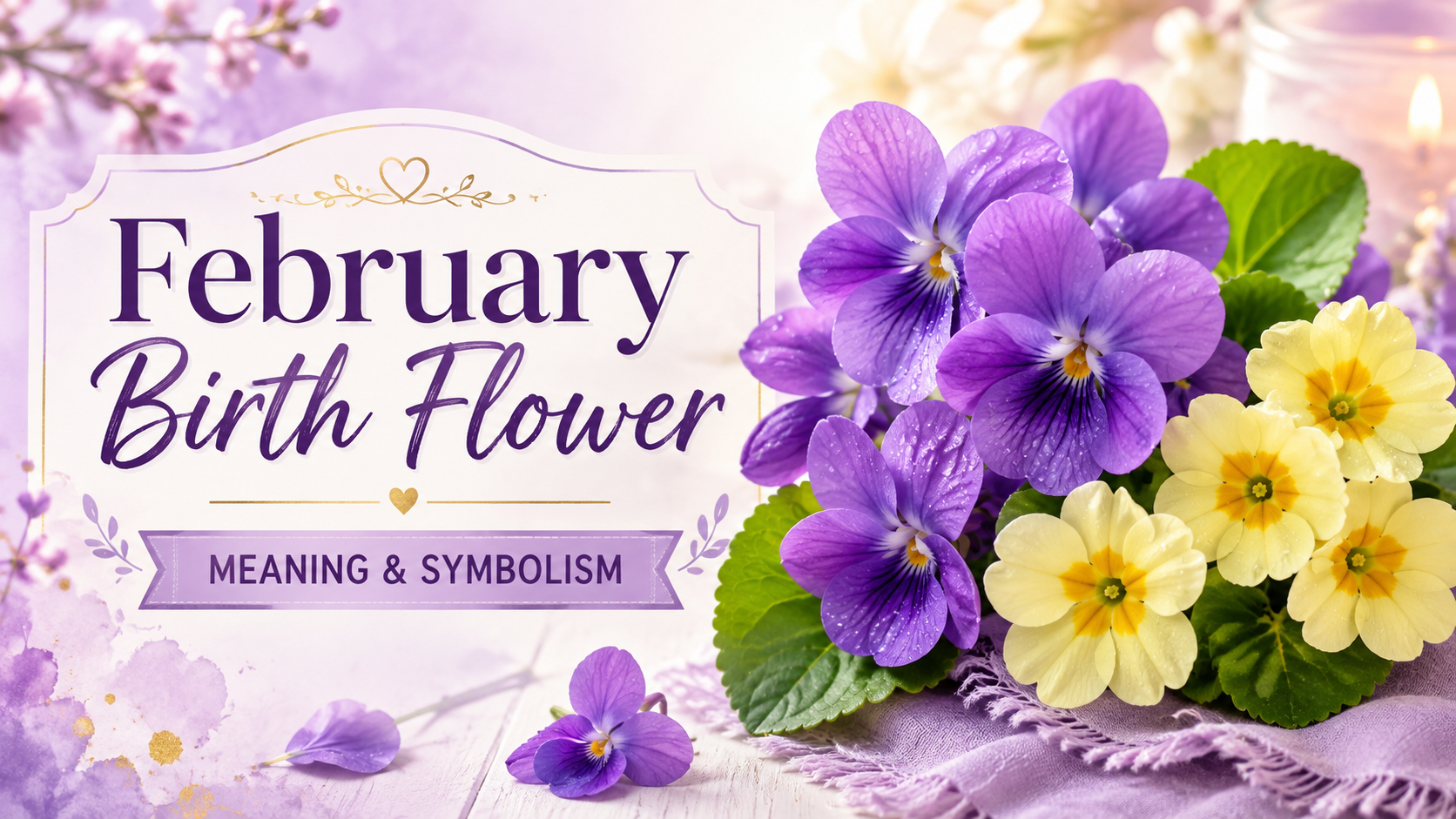

This guide explains the February birth flower, the meanings linked with violets and primroses, and how to choose, gift, or grow them for a February birthday.
The violet is most commonly recognized as the February birth flower. The primrose is also associated with February in some modern birth-flower traditions.
If you have found different answers while searching for a february birth flower, you are not alone. Birth-flower calendars are cultural traditions, not a single scientific standard, so lists can vary by country, publisher, and period. For a birthday gift, that gives you a useful choice: lead with the classic violet, add a cheerful primrose, or combine both.
The violet is the primary February birth flower
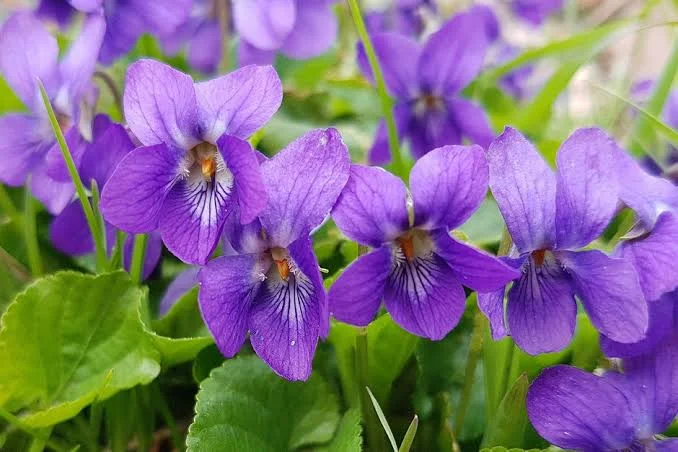
The common violet usually refers to flowers in the Viola genus, a large group that includes many garden and woodland species. Sweet violet, Viola odorata, is one familiar species often connected with traditional flower symbolism. Its low-growing habit, heart-shaped leaves, and delicate blooms make it feel personal rather than showy.
A note for gift shoppers: African violets are not botanical violets. They are commonly sold as indoor flowering plants, but belong to a different plant group and need different care. A florist or nursery can help you choose whether you want a true outdoor Viola or an easy-to-display indoor flowering plant.
Symbolism, with context
What does the February birth flower mean?
Violets are commonly associated with modesty, loyalty, faithfulness, affection, and young love. Primroses are often linked with hope and new beginnings. These meanings come from changing cultural, literary, and gift-giving traditions; they are not fixed botanical facts.
Modesty
A traditional violet association that suits a quiet, thoughtful gift.
Loyalty
A fitting sentiment for close friends, family members, and partners.
Hope
Often connected with primroses and the return of spring.
Why is the primrose also linked with February?
The primrose is widely included as a secondary February flower in contemporary birth-flower lists. Primroses belong to the Primula genus and are often valued for their early blooms in shades of yellow, pink, purple, red, and white. Their seasonal timing makes them a natural match for February celebrations, especially where late-winter garden color is welcome.
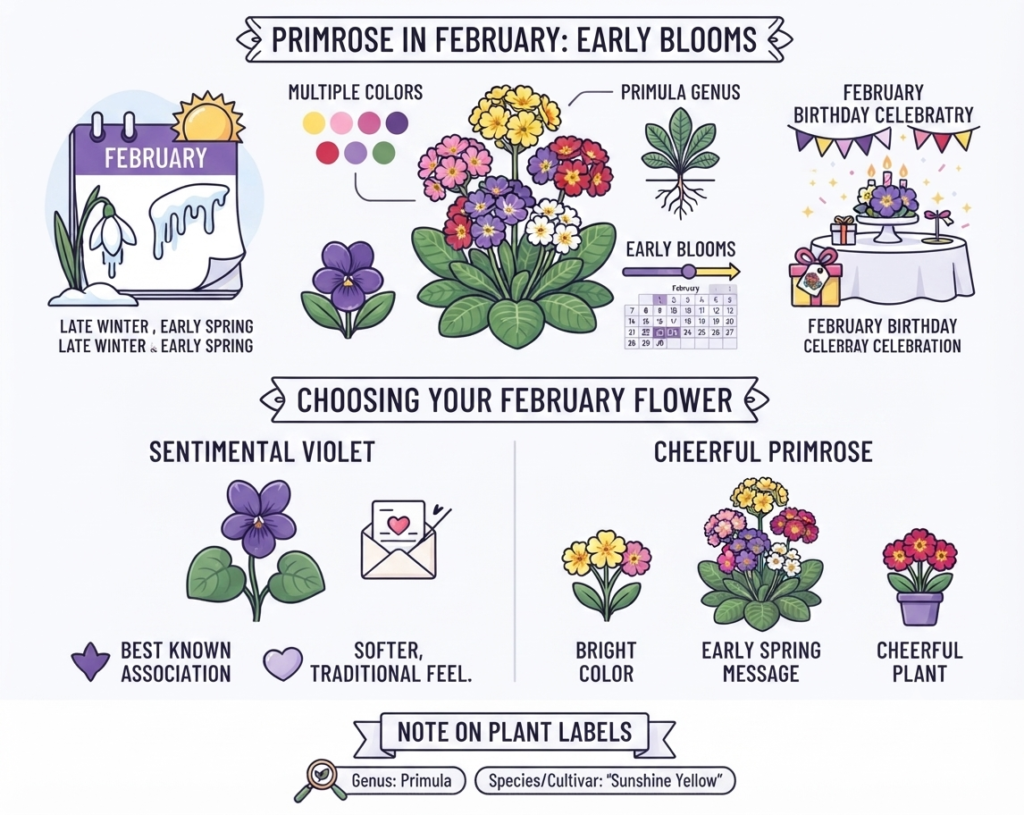
A helpful way to choose
Choose violets when you want the best-known February association or a softer, sentimental feel. Choose primroses when the recipient loves bright color, early spring, or a more cheerful flowering plant. A mixed violet-and-primrose arrangement acknowledges both traditions without needing to declare one list universally correct.
Botanical note: plant labels should identify the genus and, ideally, the species or cultivar. Care varies by the exact plant, your climate, and whether it is grown indoors or outdoors.
February birth flower colors and their feeling
Flower-color meanings vary among cultures and are best used as a personal design language rather than a rulebook. For a birthday bouquet, think about the recipient’s favorite colors and the mood you want the gift to carry.
Purple and blue
Classic violet tones feel reflective, creative, and quietly romantic.
White
A clean, gentle choice for a minimalist arrangement or sympathy-aware gift.
Yellow
Sunny primroses bring an optimistic, friendly early-spring feeling.
Meaningful February birthday gift ideas
In practice, a healthy plant is often more memorable than a bouquet for someone who enjoys gardening. Look for sturdy leaves, firm stems, buds alongside open blooms, and soil that is moist but not waterlogged. For a cut arrangement, ask the florist to include a water source and keep it away from heat and direct sun.
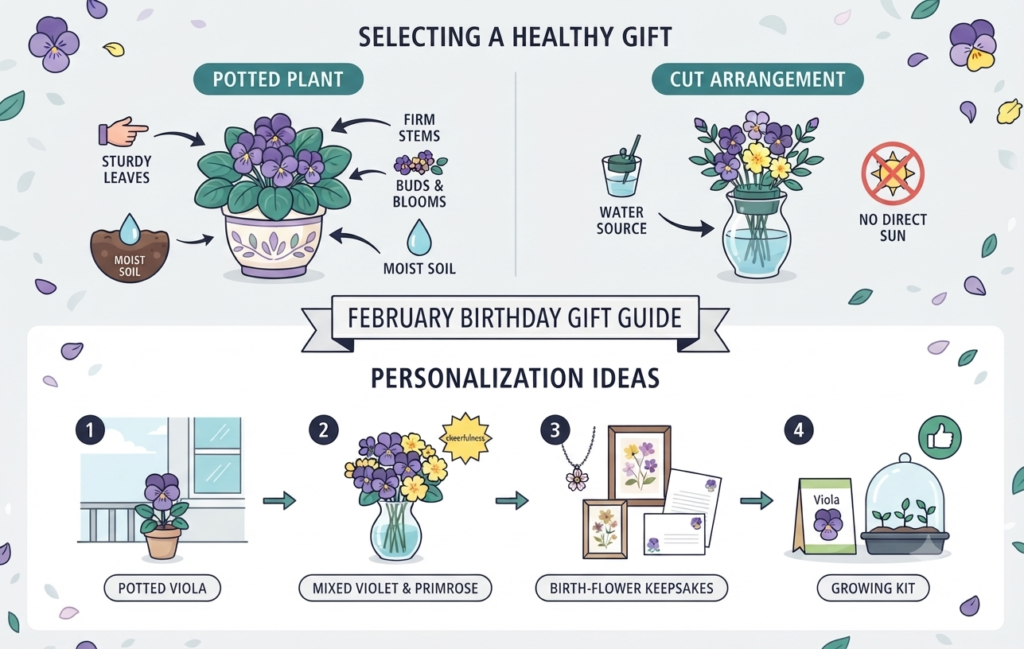
Four easy ways to personalize the gift
- Give a small potted viola for a recipient with a balcony, patio, or bright cool spot.
- Pair purple violets with yellow primroses for a cheerful mixed birthday arrangement.
- Choose birth-flower jewelry, a pressed-flower print, or personalized stationery for a lasting keepsake.
- Add seeds or a growing kit only if the recipient has suitable growing space and enjoys tending plants.
A birthday card message to borrow
“Like February violets, you bring warmth and color to the quieter days. Wishing you a birthday full of small, beautiful surprises.”
Can you grow February birth flowers at home?
Yes, but use the plant tag as your starting point. True violas are often cool-season outdoor plants, while African violets are typically grown indoors. Primroses also differ by species, but many types appreciate cool conditions and consistent moisture. Local climate, soil drainage, and indoor light all matter.
Beginner care checklist for outdoor violas and primroses
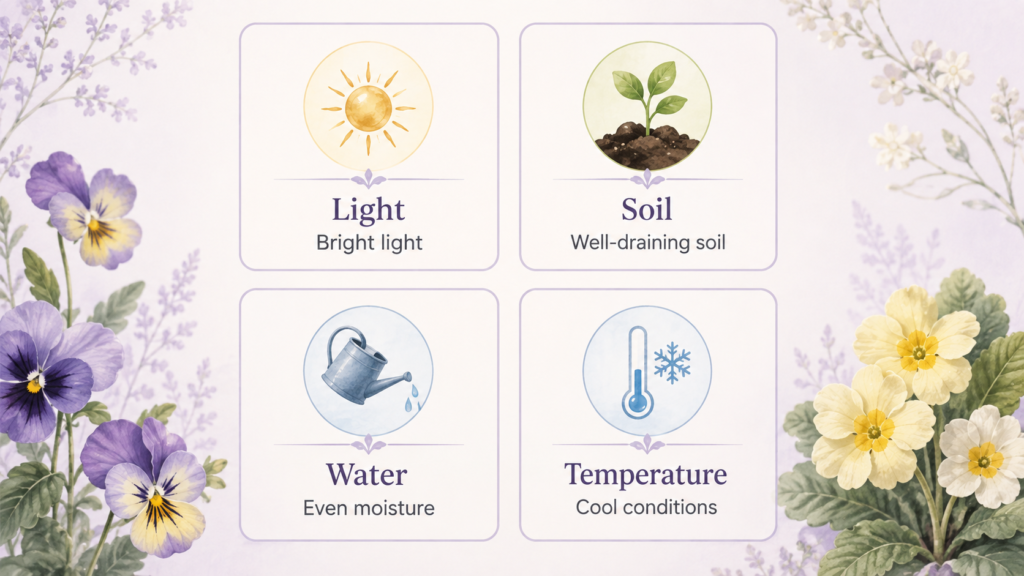
Light:
Most prefer bright light and can benefit from morning sun, with protection from harsh heat.
Soil:
Use fertile, well-draining soil enriched with organic matter where appropriate.
Water:
Keep soil evenly moist, not soggy. Containers usually dry out faster than garden beds.
Temperature:
Cool weather is generally kinder than hot, dry conditions for many garden varieties.
Frequently asked questions
Is the February birth flower violet or primrose?
Both can be correct depending on the list you consult. Violet is the most commonly cited February birth flower, while primrose appears as an additional February flower in many modern and regional traditions.
Is an African violet a good February Birthday gift?
It can be an excellent indoor gift, especially for someone who enjoys houseplants. Just remember that African violets are not true Viola violets, and their indoor care needs differ from outdoor garden violas.
Is iris also associated with February?
Some birth-flower calendars include iris in connection with February, but it is less consistently listed than violet or primrose. If iris has personal meaning for the recipient, it can still make a thoughtful floral choice.