
Learn how to grow a healthy blueberry bush with practical guidance on choosing varieties, preparing acidic soil, planting, watering, fertilizing, pruning, and helping blueberry flowers become a dependable harvest.
Blueberries thrive when their shallow roots stay cool, moist, and comfortably acidic.
For reliable fruit, give your blueberry bushes full sun, well-draining acidic soil, a generous organic mulch, and even moisture. Choose a cultivar suited to your winter chill and summer heat, then prune patiently in dormancy. Blueberries are shrubs, not true blueberry trees, and they reward steady care rather than quick fixes.
What is a blueberry bush?
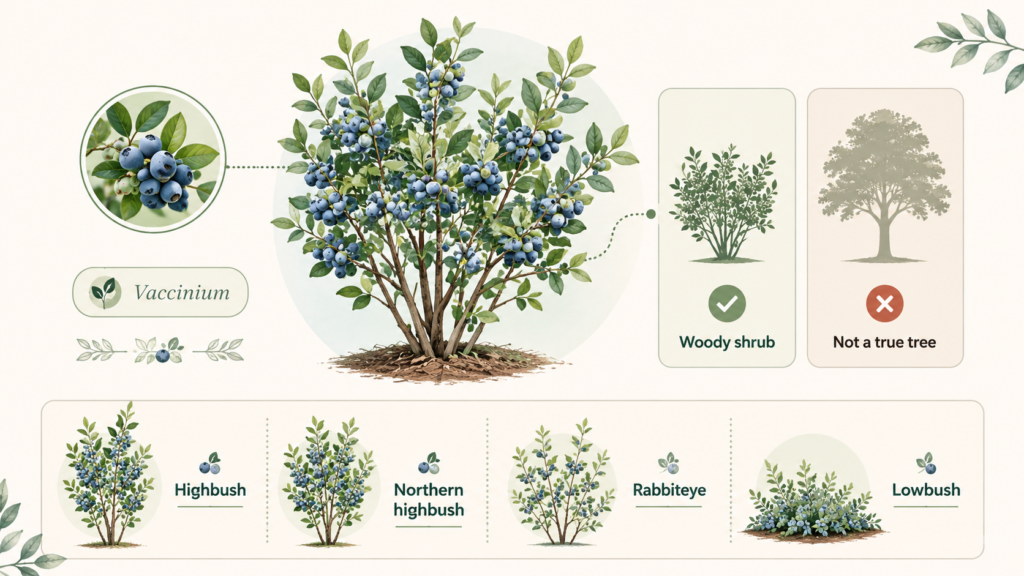
Blueberries grow on perennial shrubs in the genus Vaccinium. They are often called blueberry bushes because their growth is woody and multi-stemmed, rather than tree-like. Although searches for blueberry trees are common, a blueberry plant is not a true tree.
The garden blueberries most home growers know include highbush blueberry types, especially northern highbush blueberry plants such as Vaccinium corymbosum. Other groups, including southern highbush, rabbiteye, and lowbush blueberries, have different chill-hour, heat, spacing, and soil-management needs.
Blueberry bush care at a glance
Exact needs vary by species, cultivar, weather, and soil. Use this table as a dependable starting point, then fine-tune care with local Extension recommendations and a soil test.
| Care factor | Blueberry bush preference |
|---|---|
| Light | Full sun for best flowering and fruit production; aim for at least 6 hours where possible. |
| Soil | Acidic, organic-rich, well-draining soil; commonly around pH 4.5–5.5 depending on type and region. |
| Water | Consistently moist but never waterlogged. Mulch helps protect shallow roots from drying out. |
| Fertilizer | Use a labeled fertilizer for acid-loving plants only when needed; avoid heavy feeding and follow the product label. |
| Pruning & pollination | Prune established plants during dormancy. Compatible cultivars nearby can improve berry size and yield. |
When, where, and how to plant blueberry bushes
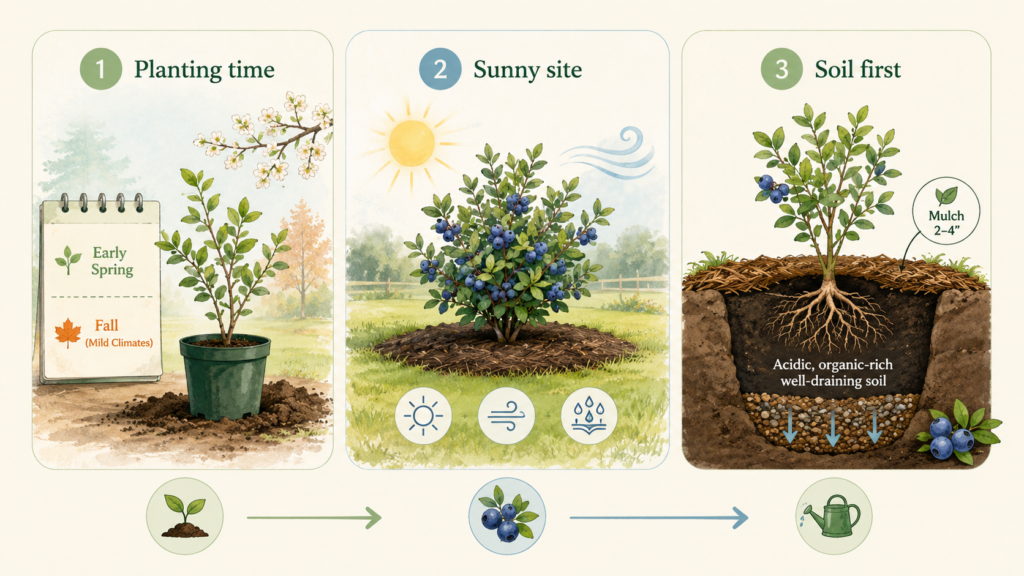
Planting blueberry bushes correctly is one of the strongest predictors of future fruiting. Do the soil preparation first: blueberries struggle when placed directly into alkaline, compacted, or poorly drained garden soil.
When to plant blueberry bushes
In colder climates, early spring planting is often preferred so roots can establish through the growing season. In regions with mild winters and reliable rainfall, fall planting may also work well. Your local nursery or Extension service can help confirm the best planting window for your area and cultivar.
Where to plant blueberry bushes
Choose a sunny site with good air circulation and dependable drainage. Avoid low frost pockets, places where roof runoff collects, and areas near thirsty tree roots. Give bushes room for their mature spread; spacing varies by blueberry plant variety, so read the label instead of assuming every shrub needs the same distance.
How to plant blueberries step by step
- Test the soil first. Confirm pH and drainage before adding amendments or fertilizer.
- Dig a broad planting hole, loosen the surrounding soil, and set the bush at roughly the depth it grew in its nursery container.
- Backfill with suitable acidic planting material only as recommended by your soil test or local gardening authority, then water thoroughly to settle soil around the roots.
- Apply a 2- to 4-inch layer of organic mulch, keeping it away from the stems. Wood chips, pine bark, pine needles, or other locally suitable materials can help conserve moisture.
Blueberry soil is the make-or-break detail
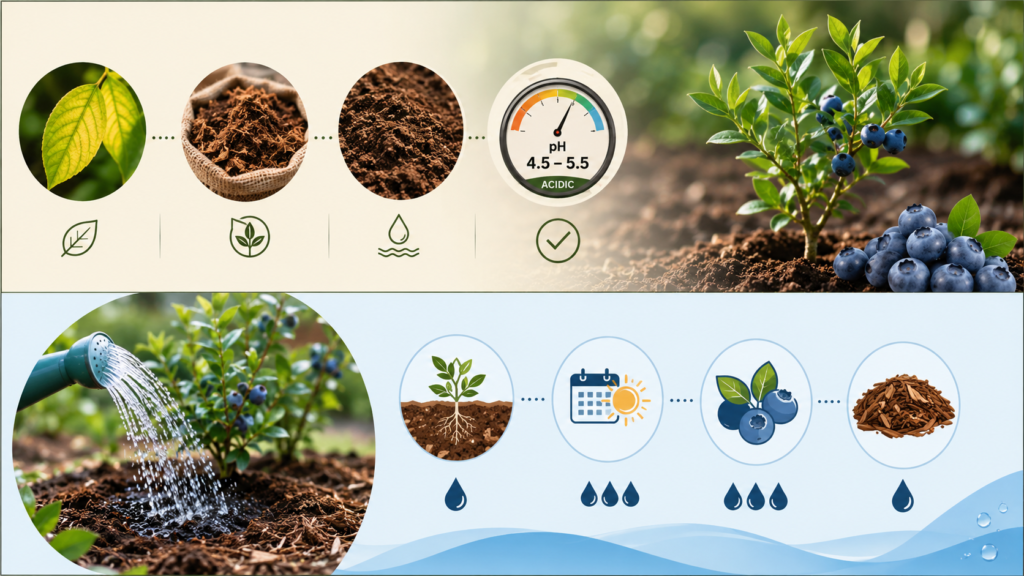
Blueberries absorb nutrients poorly when soil is not acidic enough, even if fertilizer is present. Yellow leaves with greener veins can be a sign of nutrient lockout in alkaline soil. Peat moss for blueberry bushes is sometimes used as one acidic organic component, but it is not mandatory and should not replace soil testing, drainage work, or locally appropriate amendments.
How often to water blueberries
Blueberry bushes have fine, shallow roots and benefit from even moisture. Water deeply when the upper soil begins to dry, especially during establishment, hot weather, fruit development, and container growing. The goal is moist soil, not a saturated root zone. Check below the mulch before watering and adjust for rainfall, heat, container size, and drainage.
Blueberry fertilizer: when and how to use it
The best fertilizer for blueberries is one suited to acid-loving plants and used according to its label and your soil test. Many blueberry recommendations favor ammonium-based nitrogen sources over nitrate-heavy formulas, but regional guidance matters. Fertilize in the active growing period as advised locally, keep product away from stems, water it in, and never assume more fertilizer means more berries. Excess salts can burn shallow roots.
When and how to prune blueberry plants
When to prune blueberry bushes depends on climate and plant age, but established shrubs are commonly pruned during dormancy before spring growth begins. Young plants need only light shaping at first. As bushes mature, pruning improves light penetration, removes unproductive wood, and supports a balanced supply of vigorous canes.
- Remove dead, damaged, diseased, crossing, or very weak branches first with clean, sharp tools.
- Thin some of the oldest, least productive canes from the base rather than shearing the entire bush into a tight ball.
- Keep a mix of healthy younger and mature canes. If you are unsure how much to remove, prune conservatively and follow cultivar-specific Extension guidance.
Blueberry flowers, pollination, and fruit development
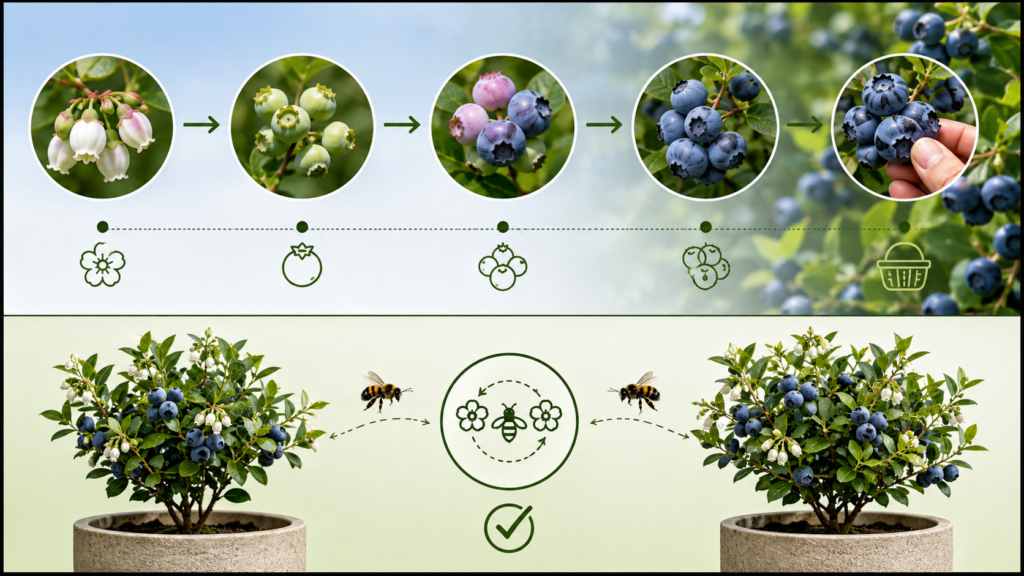
In spring, blueberry flowers open as small bell-shaped blooms. After pollination, they develop into green berries that gradually color as they ripen. Harvest only when berries are fully colored and release easily with a gentle roll. Newly planted blueberry plants may produce a small crop, but full production depends on plant age, cultivar, climate, pruning, pollination, and overall health.
Do you need two blueberry bushes?
Many blueberry cultivars are self-fertile, so one blueberry bush can produce fruit. However, growing two compatible cultivars that bloom at similar times often improves pollination, berry size, and total yield. Check labels carefully: compatibility, bloom time, and chill requirements vary across highbush blueberries and other groups.
Popular blueberry plant varieties and types
Choosing the right blueberry bush is not only about flavor. Match plant type to winter cold, summer heat, soil, disease pressure, and expected harvest season. Ask a local nursery or Extension resource which cultivars perform well nearby.
Northern highbush blueberry
Northern highbush blueberry plants, commonly associated with Vaccinium corymbosum, are widely grown in colder temperate climates. They typically need substantial winter chill and are valued for large berries and productive home-garden cultivars.
Southern highbush blueberry
Southern highbush types are bred for lower winter chill than northern selections. They can be a better fit for mild-winter regions, but site conditions and local cultivar recommendations are still essential.
Rabbiteye blueberry
Rabbiteye blueberries are often grown in warmer regions and can become larger shrubs than many highbush types. They frequently benefit from more than one compatible cultivar for effective cross-pollination.
Duke blueberry
Duke blueberry is a widely known northern highbush cultivar valued for early-season fruit in suitable climates. Like all cultivars, it should be selected for local hardiness, disease considerations, and pollination timing rather than name recognition alone.
Planting blueberry plants in pots
Growing blueberries in containers can be an excellent choice where native soil is alkaline or drainage is poor. Use a large container with drainage holes, a purpose-made acidic potting mix, and a cultivar suited to container culture. Pots dry faster than garden soil, so check moisture often. In cold climates, protect exposed roots over winter because containers do not insulate them as well as the ground.
Common blueberry bush problems
Most blueberry plant care problems trace back to soil pH, poor drainage, inconsistent water, unsuitable cultivars, low sunlight, or nutrient misuse. Diagnose the growing conditions before applying more fertilizer or pesticide.
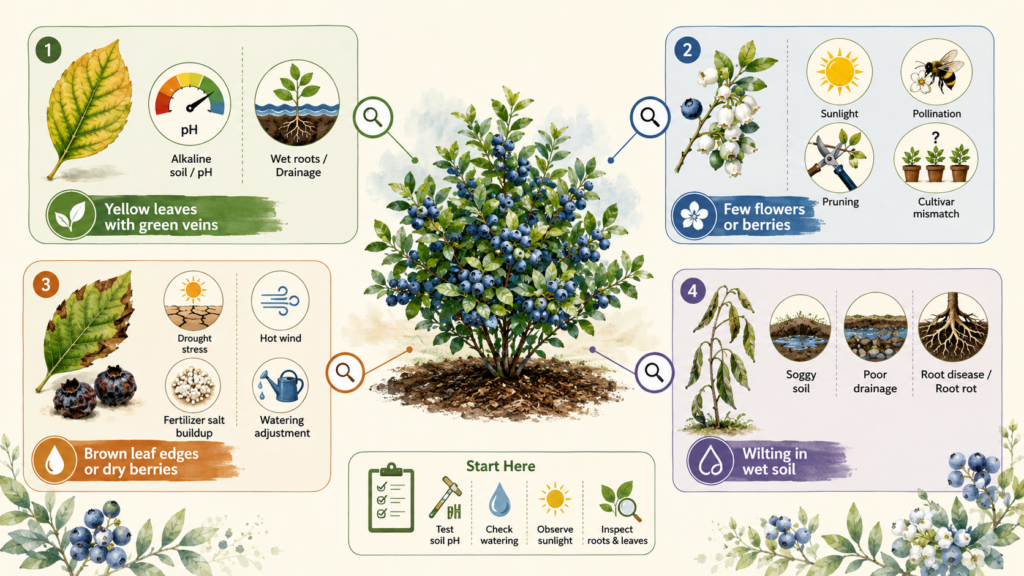
| What you see | What to check first |
|---|---|
| Yellow leaves with green veins | Test soil pH. Blueberries may be unable to access iron and other nutrients in soil that is too alkaline. Also check wet roots and drainage. |
| Few flowers or berries | Check sunlight, cultivar chill needs, plant maturity, frost damage, pruning, pollinator activity, and whether a compatible cultivar would help. |
| Brown leaf edges or dry berries | Look for drought stress, hot wind, salt buildup from fertilizer, container drying, or root competition. Refresh mulch and correct watering gradually. |
| Wilting in wet soil | Poor drainage or root disease may be involved. Avoid adding water, inspect drainage, and consult a local horticultural professional if decline continues. |
Blueberry bush FAQ
How do I make soil acidic enough for blueberries?
Start with a soil test instead of guessing. Acidification methods depend on your starting pH, soil texture, rainfall, and the size of the planting area. In strongly alkaline soil, raised beds or containers filled with a suitable acidic medium may be more practical than trying to change the entire garden bed.
How long does a blueberry bush take to produce fruit?
A plant may carry a few berries soon after planting, but dependable harvests develop as the shrub establishes a healthy root system and productive framework of canes. Timing varies with plant age at purchase, cultivar, local climate, pruning, and overall care.
Can I grow a blueberry bush from a blueberry?
Blueberry seeds can be started, but seedlings may not grow true to the parent fruit and take much longer to become productive. For most home gardens, named blueberry plants from reputable nurseries are the simplest route because their variety, climate suitability, and expected growth habit are known.