

Everything you need to know about growing and caring for snake plants (Sansevieria trifasciata) — from choosing the right variety to mastering watering schedules.
What Makes Snake Plants Special
Snake plants (Sansevieria trifasciata) are among the most resilient houseplants you can grow. Originally from West Africa, these architectural beauties thrive on neglect — making them perfect for beginners and busy plant parents alike. I’ve personally kept snake plants alive through month-long vacations without a single wilted leaf.
Beyond their low-maintenance reputation, snake plants are NASA-proven air purifiers that convert CO₂ to oxygen at night — one of very few plants that do so. This makes them ideal bedroom companions. After growing over 200 cultivars in my home greenhouse, I can confidently say no other genus offers this combination of beauty, hardiness, and health benefits.
Best Snake Plant Varieties for Your Home
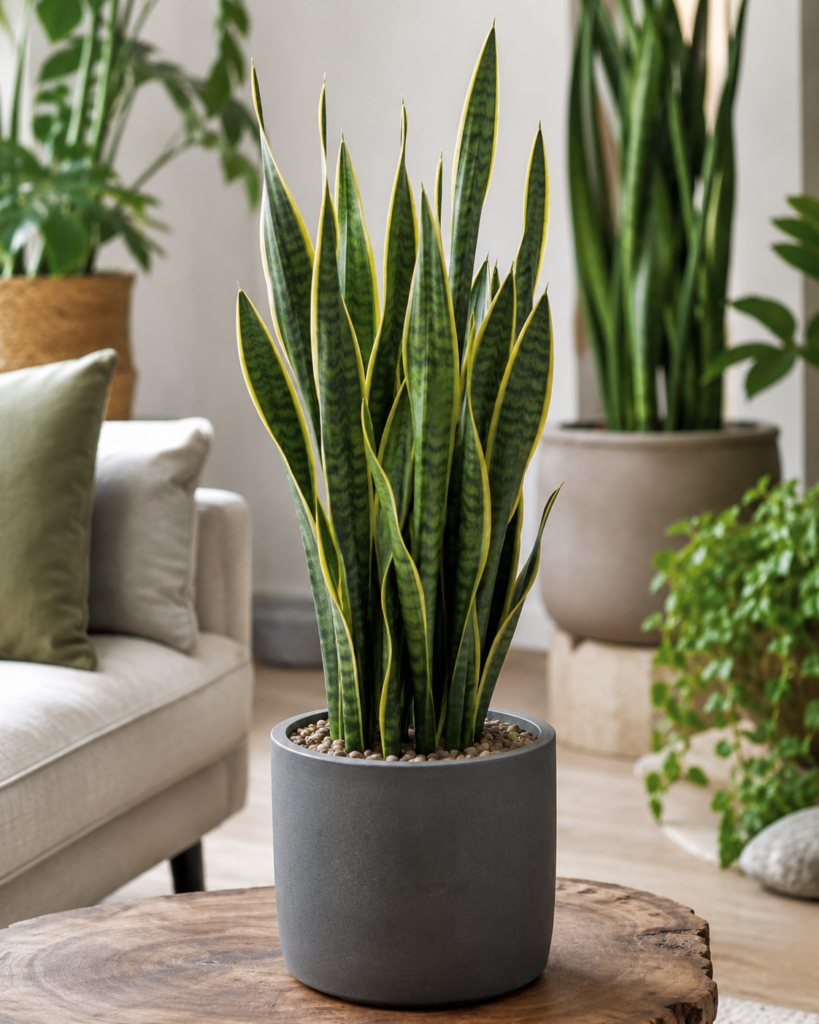
Sansevieria trifasciata ‘Laurentii’
The classic golden-edged variety. Striking yellow margins frame deep green centers. Grows 2–4 feet tall. Best for bright indirect light.
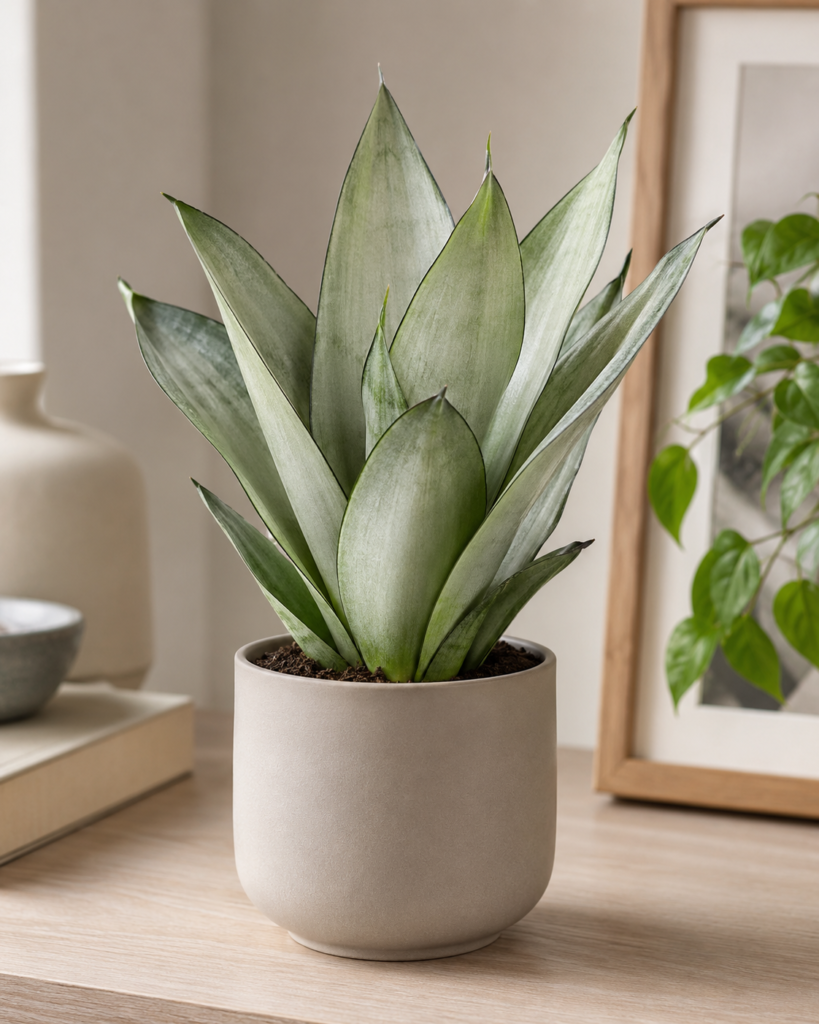
Sansevieria ‘Moonshine’
Silvery-green leaves with a subtle shimmer. Compact growth habit makes it perfect for desks and shelves. Tolerates low light exceptionally well.
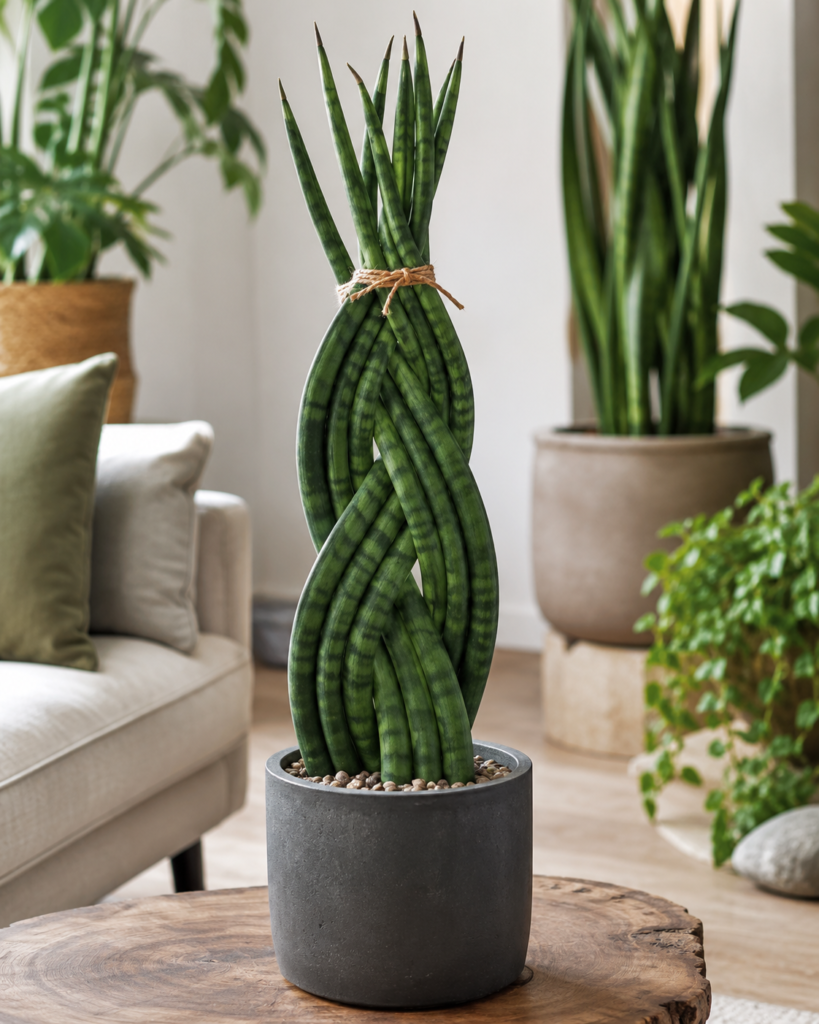
Sansevieria cylindrica
Unique round, spear-shaped leaves that can be braided. A sculptural statement piece. Extremely drought-tolerant — water once monthly.
Complete Snake Plant Care Guide
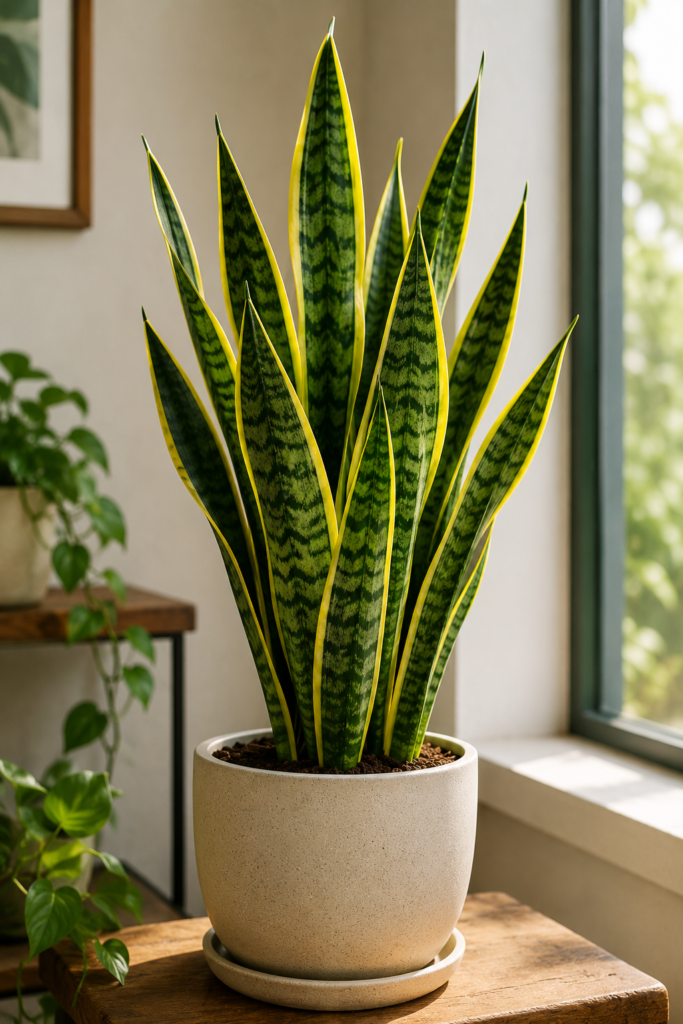
Watering: Less Is More
The number-one killer of snake plants is overwatering. Allow the soil to dry completely between waterings — typically every 2–6 weeks depending on season and humidity. In winter, once a month is often enough. I use the ‘finger test’: if the top 2 inches of soil feel dry, it’s time to water. Always use a pot with drainage holes and discard excess water from the saucer.
Light Requirements
Snake plants tolerate everything from low light to bright indirect sun. For fastest growth and most vibrant variegation, place in bright indirect light. Direct afternoon sun can scorch leaves, particularly on lighter varieties like Moonshine. In my experience, a north or east-facing window produces the healthiest growth year-round.
Soil & Potting
Use a well-draining mix — I recommend 2 parts standard potting soil to 1 part perlite and 1 part coarse sand. Alternatively, a cactus/succulent mix works perfectly. Repot only when roots circle the pot (every 2–3 years). Snake plants actually bloom more readily when slightly root-bound.
Propagation Methods
Division is the easiest method: separate pups from the mother plant during repotting. For leaf cuttings, cut a healthy leaf into 3-inch segments, let them callous for 24 hours, then place cut-end down in moist perlite. Roots appear in 4–8 weeks. Note: leaf-cutting propagation of variegated varieties like Laurentii will revert to solid green.
Frequently Asked Questions
Are snake plants toxic to pets?
Yes, snake plants contain saponins that are mildly toxic to cats and dogs if ingested. Symptoms include nausea and vomiting. Place them on high shelves or in rooms pets don’t access.
Why are my snake plant leaves turning yellow?
Yellow leaves almost always indicate overwatering or poor drainage. Check your soil moisture and ensure the pot drains freely. Remove affected leaves at the base with a clean, sharp knife.
How fast do snake plants grow?
Snake plants are slow growers — expect 2–4 new leaves per year in average conditions. With bright indirect light and warm temperatures (65–85°F), growth accelerates. They can reach 3–4 feet over several years.