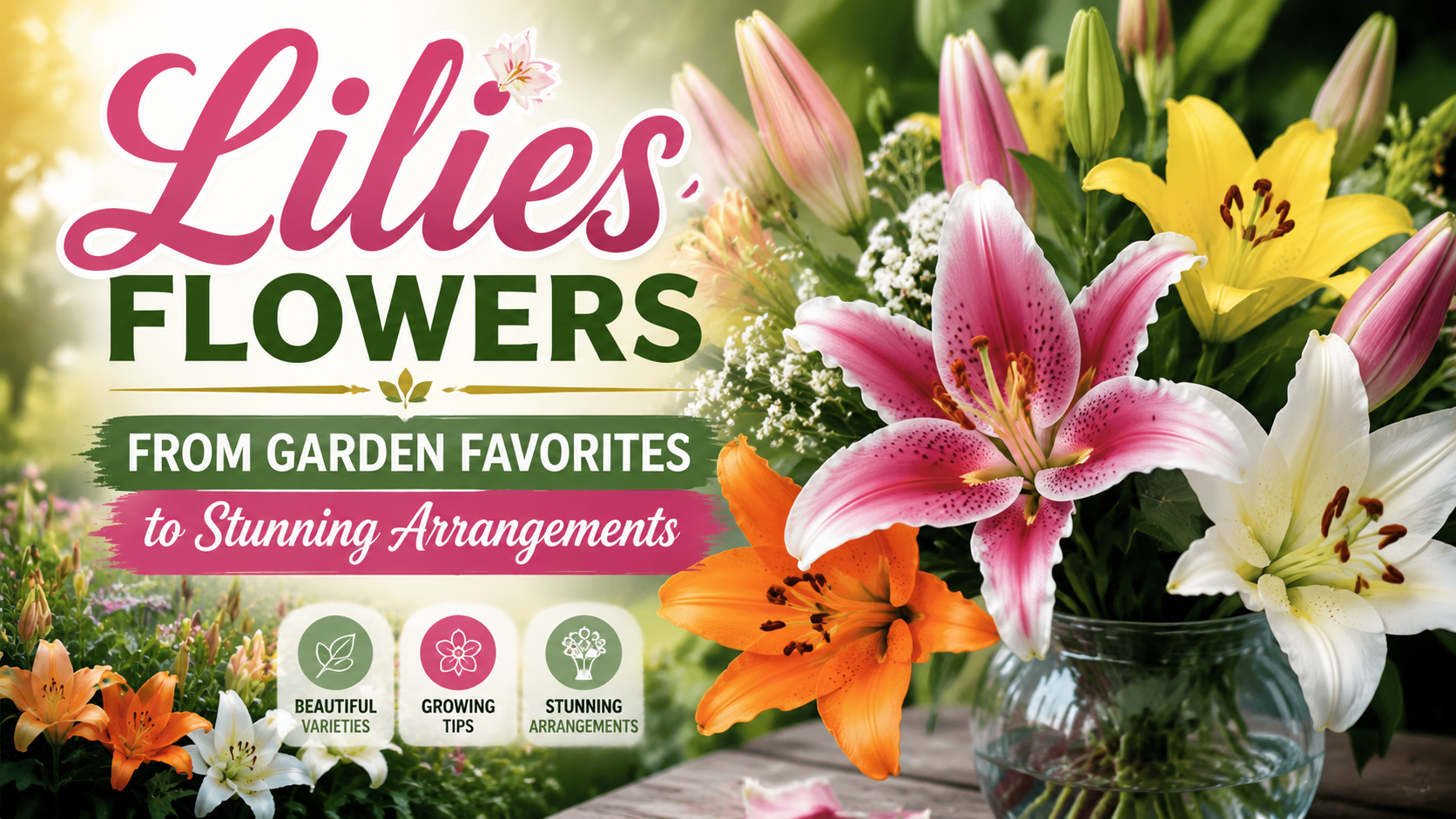

Confused by Asiatic, Oriental and Trumpet lilies? Here’s a friendly, gardener-tested guide to the most popular types of lilies, so you can pick the right lily flower for your climate, space, fragrance and arrangements.
The short answer: true lilies (genus Lilium) grow from bulbs and come in a few main groups — Asiatic, Oriental and Trumpet — with beloved varieties like Stargazer, Casa Blanca, Tiger Lily and Enchantment each suited to different climates, spaces and uses.
Few flowers rival the elegance of lilies, with their tall stems, sculptural blooms and — in many types — an unforgettable fragrance. But with so many lily flowers to choose from, picking the right one can feel overwhelming. This guide breaks down what lilies really are, the main types of lilies, the most popular named varieties, the easiest picks for beginners and containers, how to plant and care for them, how to use lilies in arrangements, and how long the blooms last. It’s general, experience-based guidance — because climate matters so much, always double-check the best varieties for your area before you buy.
What Are Lilies?
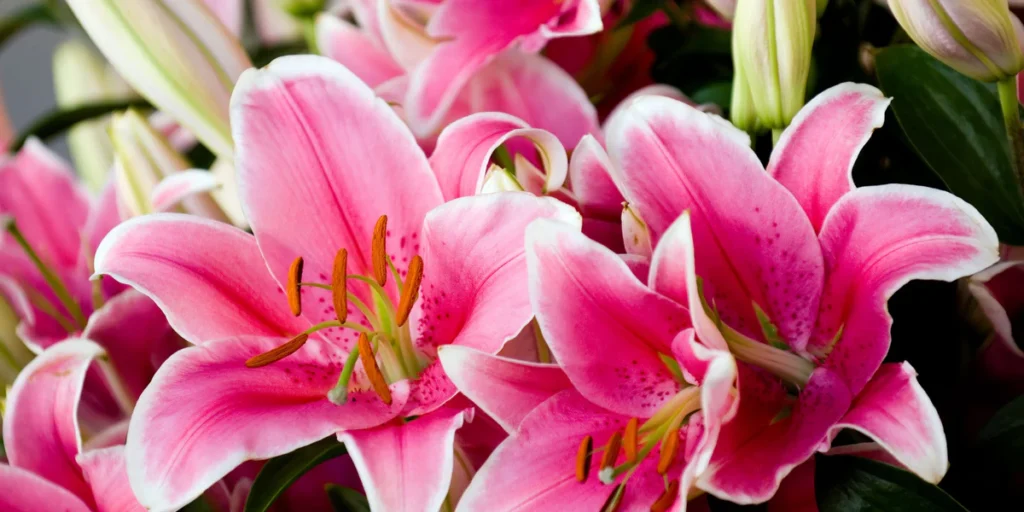
A true lily is any plant in the genus Lilium — a perennial that grows from a scaly bulb and produces tall stems topped with large, showy, often trumpet-shaped flowers. Understanding the plural helps: “lily” refers to a single flower or plant, while “lilies” simply means more than one; both describe the same beautiful genus. It’s worth noting that some popular flowers with “lily” in their name — such as daylilies (Hemerocallis), peace lilies and calla lilies — are not true lilies at all, even though they look similar. In this guide we focus on genuine Lilium bulbs and the varieties that reward home gardeners year after year.
Types of Lilies Explained
Before choosing a variety, it helps to know its type — this tells you about its fragrance, flower shape, height and blooming season.
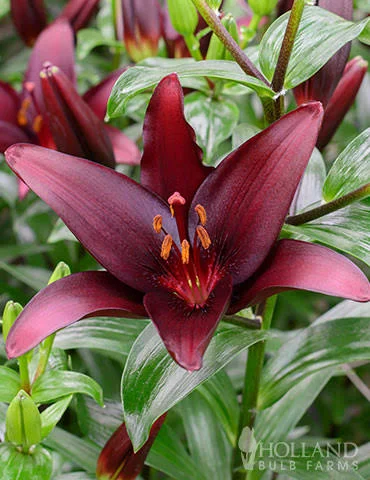
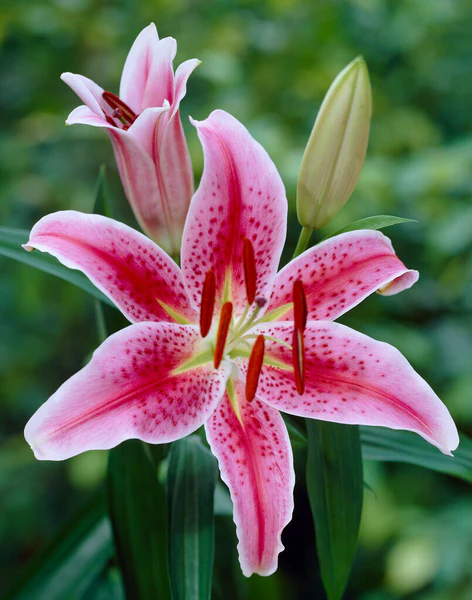
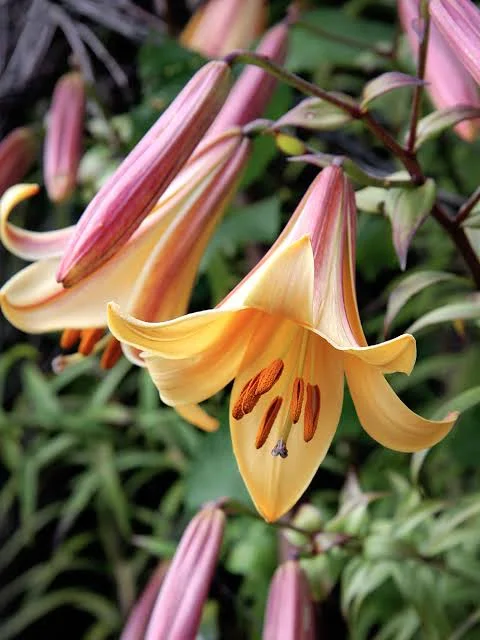
Asiatic Lilies
The easiest lilies to grow. Bright, upward-facing blooms in almost every color, usually unscented, on sturdy stems. They flower earliest — early to midsummer — and are wonderfully reliable for beginners. Examples: Enchantment, Lollipop.
Oriental Lilies
Prized for large, intensely fragrant flowers in white, pink and crimson. They bloom later — mid to late summer — and make show-stopping cut flowers. Examples: Stargazer, Casa Blanca.
Trumpet Lilies
Tall and dramatic, with long trumpet-shaped blooms and a powerful sweet perfume, especially in the evening. Great for the back of a border. Examples: Regal Lily, Golden Splendor.
Most Popular Types of Lilies to Grow
These lily varieties are widely grown by home gardeners for their beauty, fragrance and reliability. There’s no single “best” lily for everyone — the right one depends on your climate and goals.
Stargazer
Perhaps the most famous lily of all — bold crimson-pink petals edged in white, upward-facing, with a powerful sweet fragrance. Superb as a cut flower and a favorite in gardens worldwide.
Casa Blanca
Large, pure-white blooms with a luxurious perfume. A classic wedding and arrangement lily that brings instant elegance to a border or a vase.
Enchantment
Vivid orange, upward-facing flowers on a compact, hardy plant. Unscented, early-blooming and extremely easy — one of the best Asiatics for beginners and cool climates.
Tiger Lily
A tough, easygoing species (Lilium lancifolium) with recurved orange petals covered in dark spots. Naturalizes readily and adds dramatic late-summer color to sunny beds.
Regal Lily
Tall stems of white trumpet flowers flushed with wine-purple outside, releasing an intense evening perfume. Spectacular planted in groups toward the back of a bed.
Golden Splendor
Towering golden-yellow trumpets with a rich fragrance and a burgundy reverse. A dramatic focal point for larger gardens and mid-to-late summer color.
Best Lilies for Beginners
If it’s your first time, choose forgiving, hardy lilies that don’t demand perfect conditions. These three are widely recommended for new gardeners.
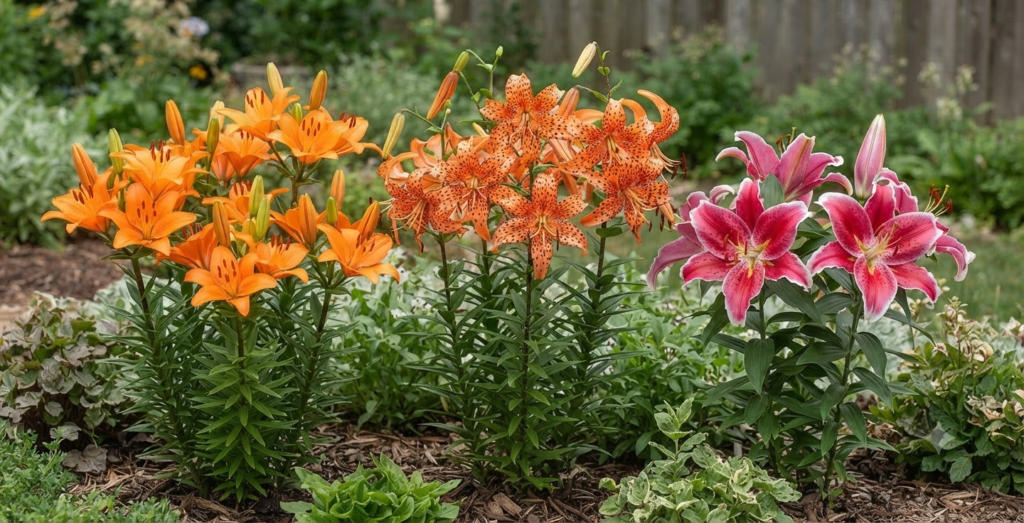
Enchantment (Asiatic)
Hardy, vigorous and dependable, with bright orange blooms early in the season. Asiatics forgive beginner mistakes and multiply happily.
Tiger Lily (Species)
Remarkably tough and adaptable, thriving with little fuss and naturalizing into clumps that return bigger each year.
Stargazer (Oriental)
A little more particular about drainage, but so rewarding — big fragrant flowers that make any new gardener feel like a pro.
Using Lilies in Stunning Arrangements
Few cut flowers are as dramatic as lilies. Oriental and Trumpet types bring fragrance and large sculptural blooms, while Asiatics add clean, bold color without scent — handy for the fragrance-sensitive. A few stems can anchor a whole bouquet or centerpiece.
🌸 Cut stems when the lowest buds just show color — they’ll open indoors and last longer.
🌸 Gently remove the orange pollen anthers to prevent staining petals, linens and clothing.
🌸 Change the water every 2–3 days and recut stems for the longest vase life.
How to Choose the Right Lily
Weigh these four factors before you buy. The best lily is the one that matches your conditions and how you want to enjoy it.
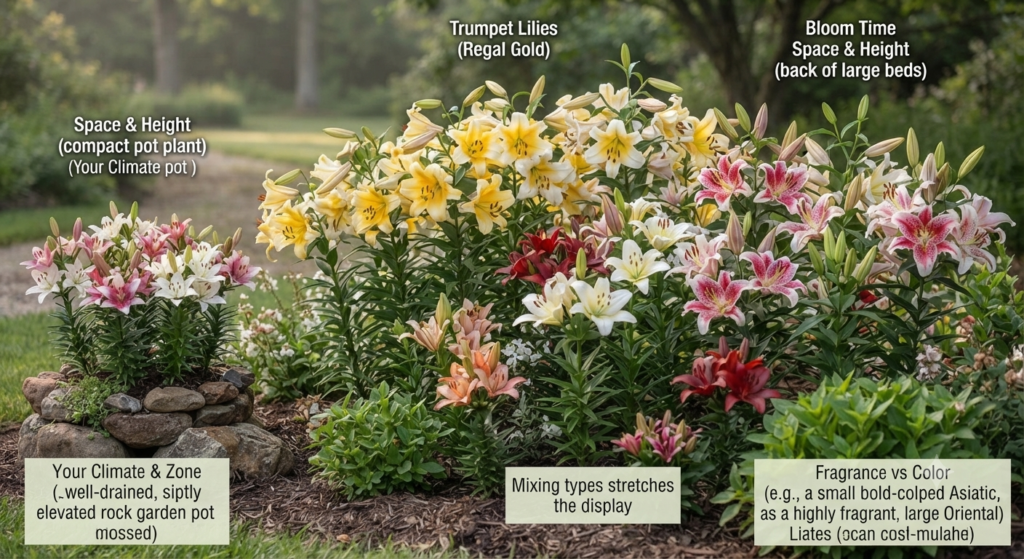
Your Climate & Zone
Asiatics are the most cold-hardy; Orientals prefer milder conditions with good drainage. Check your growing zone first — it’s the single biggest factor in success.
Bloom Time
Asiatics flower first (early summer), Trumpets midsummer, and Orientals last (late summer). Mixing types stretches the display for weeks.
Space & Height
Tall Trumpets suit the back of large beds; compact Asiatics like Lollipop are ideal for pots and front borders. Match the plant’s height to your space.
Fragrance vs Color
Want perfume? Choose Oriental or Trumpet lilies. Prefer bold, unscented color that won’t overwhelm a patio? Asiatics are your friend.
Lily Variety Comparison Chart
A quick side-by-side look at popular types of lilies, their group and where each one tends to shine.
| Variety | Type | Best For |
|---|---|---|
| Stargazer | Oriental | Fragrance & cut arrangements |
| Casa Blanca | Oriental | Elegant white blooms for weddings |
| Enchantment | Asiatic | Easy color for beginners & cool zones |
| Tiger Lily | Species | Naturalizing & tough hardiness |
| Regal Lily | Trumpet | Evening fragrance in large borders |
| Golden Splendor | Trumpet | Tall, dramatic focal displays |
| Lollipop | Asiatic | Containers & neat bicolor blooms |
Descriptions are general guidance. Regional performance, bloom time and hardiness vary — confirm suitability for your growing zone with a local extension office or nursery.
Set Realistic Expectations
No lily blooms everywhere or forever. Newly planted bulbs often produce a modest first-year show and truly hit their stride in year two, once the roots establish. Climate, drainage, sunlight and planting depth all shape the results — and daylilies, despite the name, aren’t true lilies and behave differently. Choosing a variety suited to your area, buying firm healthy bulbs, and planting them well matters far more than chasing the “best” name. Grow a couple of types side by side and let your own garden tell you which it prefers.
Lily Flower Care Tips for Healthy Blooms
Lilies aren’t fussy, but a few basics make a big difference. Get these right and most varieties will reward you with taller stems and more abundant, longer-lasting flowers.
Plant Bulbs Deep
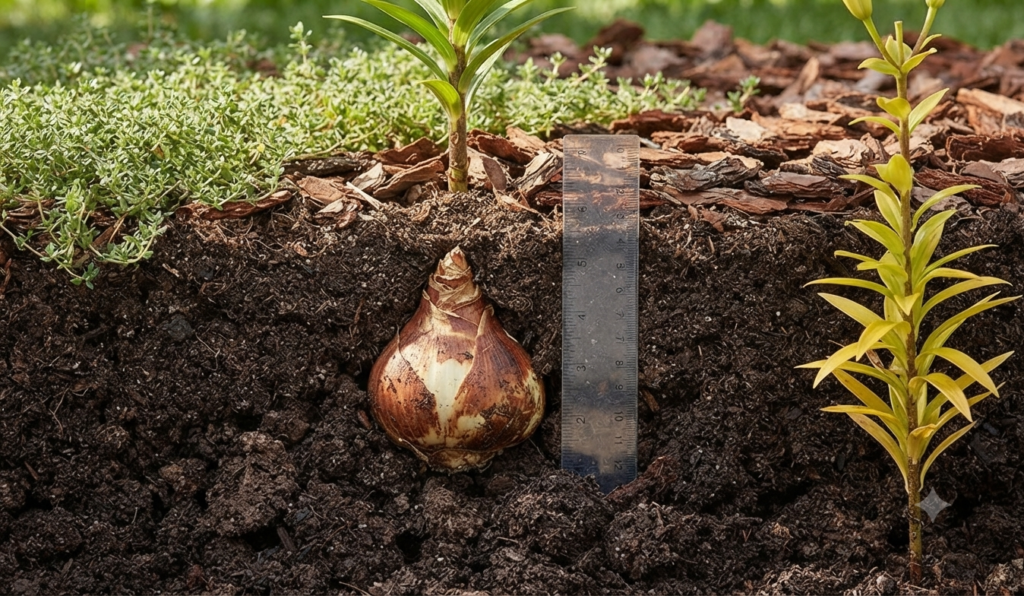
Set bulbs pointed-end up, about three times as deep as the bulb is tall (usually 6–8 inches). Deep planting anchors the tall stems and protects bulbs over winter.
Sun with Cool Roots
Give lilies at least 6 hours of sun for the best blooms, but keep the roots cool and shaded — a low groundcover or mulch is perfect. “Head in the sun, feet in the shade.”
Well-Drained Soil
Lilies hate soggy feet. Plant in rich, free-draining soil and water steadily while growing — but never let bulbs sit in waterlogged ground, which causes rot.
Don’t Cut Too Soon
After flowering, snip only spent blooms. Leave the stem and leaves to yellow naturally — they feed the bulb for next year’s display. Never remove green foliage early.
Frequently Asked Questions About Lilies
What are the different types of lilies?
True lilies (genus Lilium) fall into a few main groups: Asiatic (early, colorful, unscented, easiest), Oriental (late, large, richly fragrant), and Trumpet (tall with sweet-scented trumpet blooms). Species lilies like the Tiger Lily and hybrids such as Orienpets blend these traits. Note that daylilies, calla lilies and peace lilies are not true lilies.
How do you care for lily flowers?
Plant bulbs deep in rich, well-drained soil, give them at least 6 hours of sun with cool, shaded roots, and water steadily during growth. Remove faded blooms but leave the foliage until it yellows so the bulb can store energy for next year.
When do lilies bloom?
Most garden lilies bloom in summer. Asiatics open first in early summer, Trumpets follow in midsummer, and Orientals finish the season in mid to late summer. Planting a mix of types keeps flowers coming for many weeks.
How long do lily flowers last?
On the plant, each stem stays in flower for about two to three weeks as its buds open in sequence. As cut flowers, lilies are exceptionally long-lasting — often 8 to 14 days in a vase if you change the water regularly and remove the pollen anthers.
What is the difference between lily and lilies?
There’s no difference in meaning — “lily” is simply the singular (one flower or plant) and “lilies” is the plural (more than one). Both refer to the same genus, Lilium. You may also see the spelling “lilly,” but the correct spelling is “lily.”
Which lilies have the strongest fragrance?
Oriental lilies like Stargazer and Casa Blanca, and Trumpet lilies like the Regal Lily, are the most fragrant — their scent is strongest in the evening. Asiatic lilies, by contrast, are essentially unscented, which many people prefer indoors.
Ready to Choose Your Perfect Lily?
Use the lily finder above to get a starting suggestion for your garden, then confirm with a local nursery before you buy. A little planning now means elegant, fragrant blooms all summer.
🌸 Match the lily to your climate🌱 Buy firm, healthy bulbs