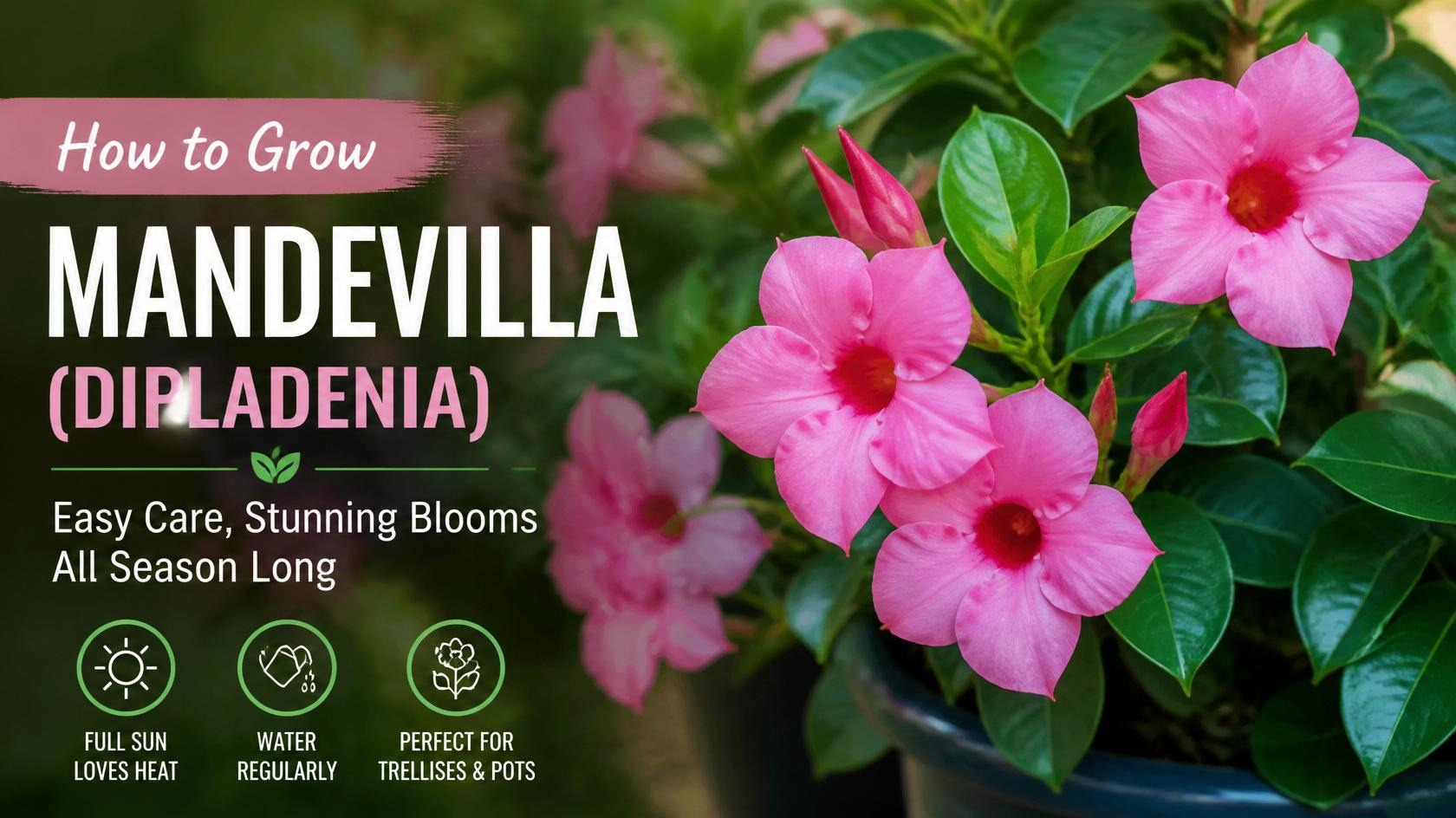

There is nothing quite like sitting on your patio on a warm summer evening, surrounded by a lush wall of tropical color. If you recently picked up a stunning, trumpet-flowered vine at the nursery, you likely bought a Mandevilla or its close sibling, the Dipladenia.
These showstoppers are the ultimate low-maintenance way to bring an instant vacation vibe to your deck, balcony, or entryway. However, nursery tags can be frustratingly vague, often mixing up the names or leaving you guessing on the care rules.
Let’s clear up the confusion so you can maximize your blooms from late spring all the way until the first frost.
Also Read this Content: Lily of the Valley – Complete Plants Care and Growing Guide
Mandevilla vs. Dipladenia: The Name Game Cleared Up
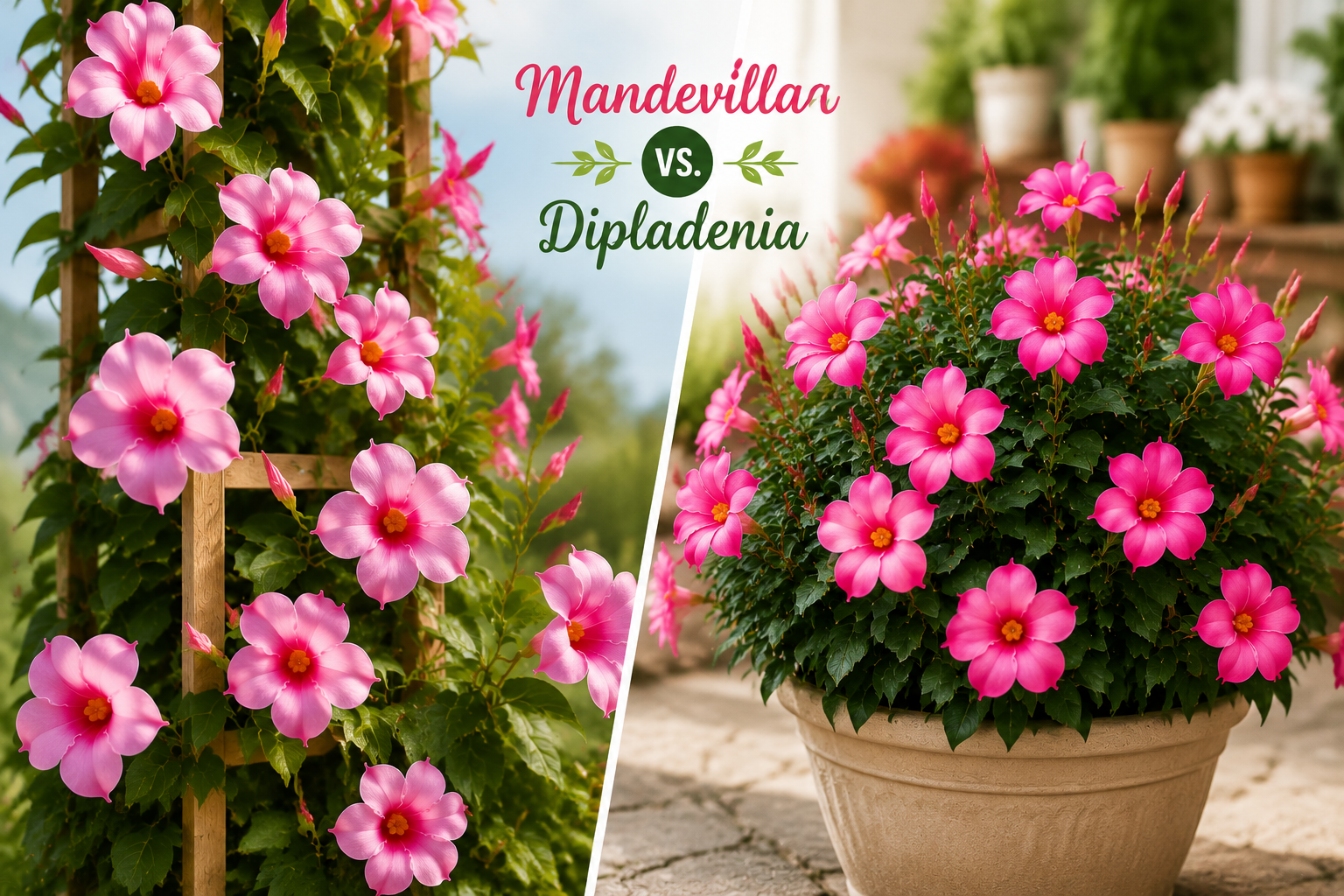
If you are confused about exactly what plant you have, look at how it grows. While they belong to the same plant family and share identical basic care needs, their growth habits are structurally quite different.
- Traditional Mandevilla: This is a true climbing vine. It features larger, broader leaves and aggressively reaching tendrils that need a trellis, obelisk, or mailbox to climb. It can easily scale up to 10–20 feet in a single season.
- Dipladenia: Think of this as the well-behaved, bushy cousin. It grows in a compact, mounded shape, making it perfect for hanging baskets or lower patio pots. Its leaves are smaller, glossier, and deeper green, and it tops out around 1–2 feet tall without trailing structures.
Quick-Reference Care Cheat Sheet
Keep this simple summary handy to give your plant exactly what it needs to thrive in your outdoor living space:
| Care Factor | Target Requirement | Pro Tip |
| Sunlight | 6+ hours of direct sun daily | More sun equals more continuous blooms. |
| Watering | Consistent but well-drained | Soak thoroughly, then let the top 1–2 inches of soil dry out completely. |
| Soil Mix | Loose, well-draining potting soil | Mix in a handful of perlite or orchid bark to keep container roots aerated. |
| Fertilizer | High-phosphorus bloom booster | Feed every 2 weeks throughout spring and summer. |
| Temperature | Warm (60°F to 90°F) | Protect or bring indoors if night temperatures drop below 50°F. |
Troubleshooting Common Problems
Even experienced patio gardeners hit a few bumps. If your plant isn’t performing perfectly, it is usually sending a clear signal that can be fixed with a quick adjustment.
Why Are My Mandevilla Leaves Turning Yellow?
This is the most common issue growers face, and it typically stems from one of two environmental stressors:
- Overwatering: If the soil feels waterlogged or soggy, the roots are starving for oxygen. Scale back your watering frequency and ensure your container has open drainage holes.
- Sudden Chills: These are true tropicals. A sudden drop in night temperatures or an early autumn cold snap will cause the lower leaves to turn bright yellow and drop.

Why Isn’t My Plant Blooming?
If you have plenty of lush green leaves but zero trumpet flowers, your plant is likely lacking two key things: sunlight or the right nutrients. Moving the container to the sunniest spot on your patio is the first fix. Second, swap out any standard balanced fertilizer for a bloom-boosting formula (look for a higher middle number in the N-P-K ratio, like 10-30-20), which coaxes the plant out of green growth mode and into heavy flowering.
How to Overwinter Mandevilla Indoors
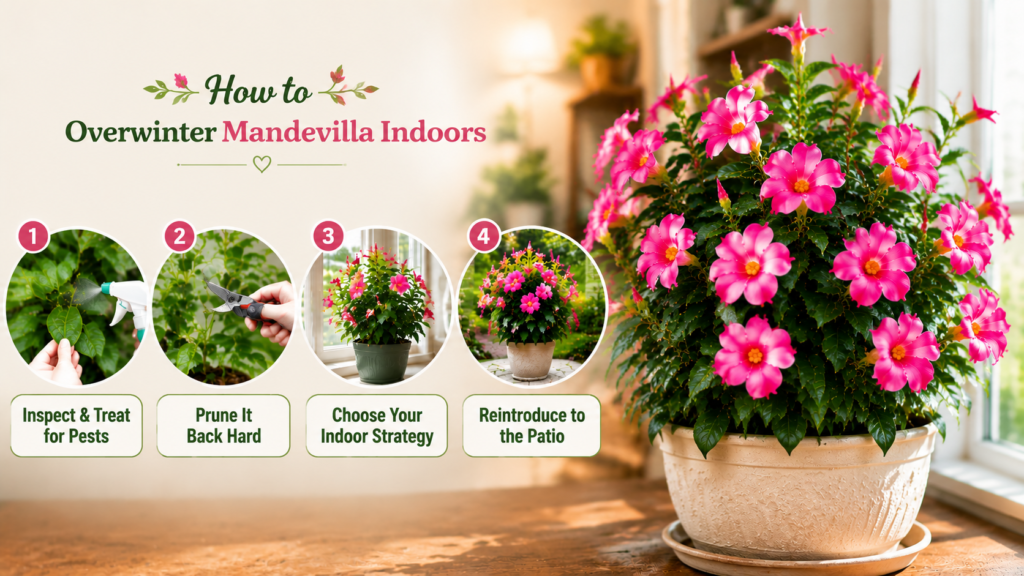
Because Mandevillas are frost-tender perennials, they will not survive freezing winters outdoors. You can let them go at the end of the year, or you can easily save your investment for next summer by bringing them inside.
1.Inspect and treat for pests :Before bringing indoors.
Check the undersides of the leaves closely for spider mites or aphids. Spray the entire plant down thoroughly with a garden hose or insecticidal soap to avoid bringing bugs inside your home.
2.Prune it back hard :Reduces indoor mess.
Cut the vines back significantly, leaving stems that are roughly 6 to 12 inches long. This makes the plant manageable indoors and encourages fresh, bushy growth when spring returns.
3.Choose your indoor strategy :Active growth vs. Dormancy.
Option A (Houseplant): Place it in your sunniest south-facing window and water sparingly when dry. \n\nOption B (Dormancy): Move the pot to a cool, dark basement or garage (around 50°F to 55°F). Water it just once a month to keep the roots alive while it drops its leaves and rests.
4.Reintroduce to the patio :Spring transition.
Once all danger of spring frost has passed and outdoor night temperatures stay consistently above 50°F, move the pot back outside. Start it in partial shade for a few days to harden it off before moving it back into full sun.
Also Read this Content: Best Daylilies — Top Varieties for Your Garden (Hemerocallis Guide)
Mandevilla FAQs (Quick Answers)
Are Mandevillas safe for pets?
No. They are mildly toxic. The milky sap inside the stems can cause skin irritation or stomach upset in dogs and cats. Keep them elevated on stands or in hanging baskets out of reach.
Will Mandevilla grow in the shade?
No. They need at least 6 hours of direct sunlight daily. While they will survive in partial shade, they will stop blooming and grow leggy, green vines instead.
Do I need to deadhead the old flowers?
No. Mandevillas are “self-cleaning.” The faded blooms will drop off naturally on their own. However, you can manually pluck them off to keep your patio looking tidy.
How big do they get?
- Climbing Mandevilla: Can rocket up to 10–20 feet in a single season on a trellis.
- Bush Dipladenia: Stays compact, maxing out around 1–2 feet tall and wide.