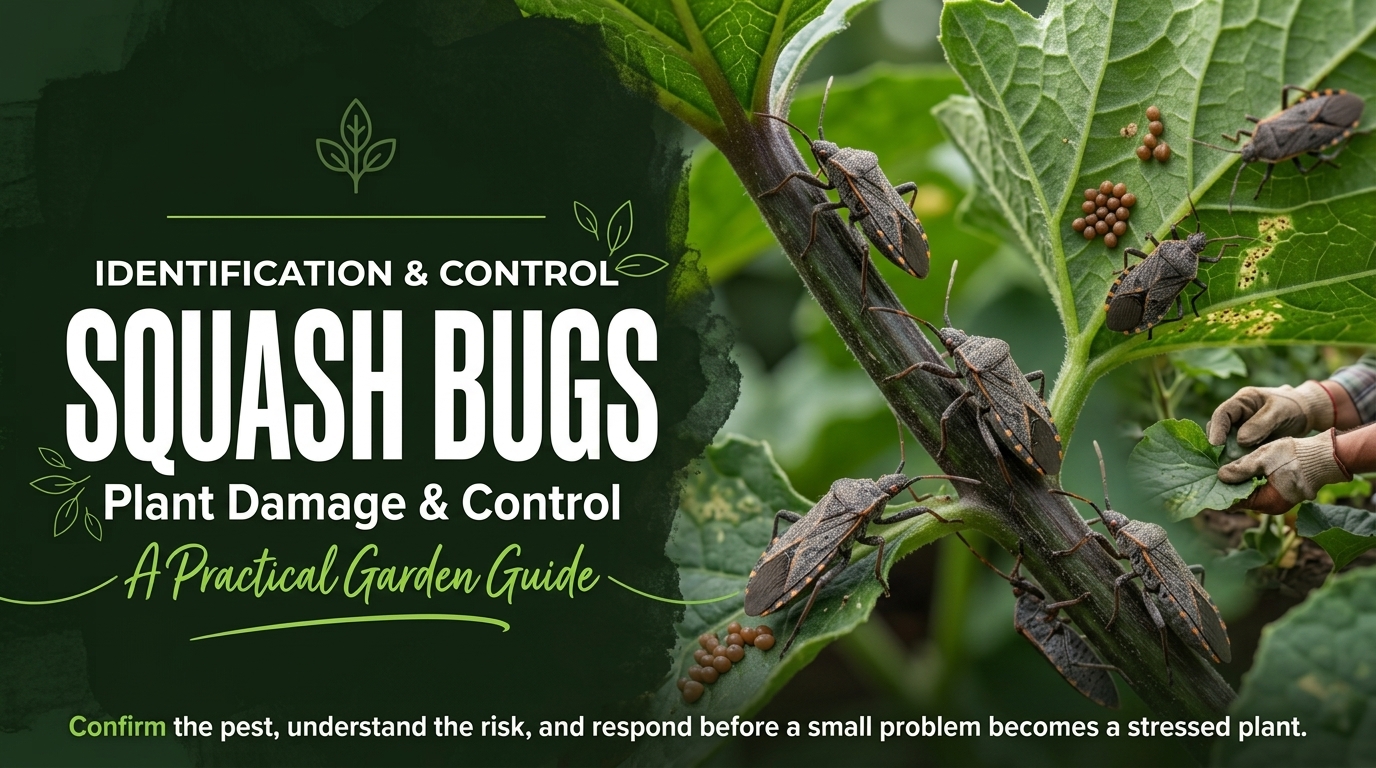

A practical, lower-impact way to confirm squash bugs, understand the risk to your cucurbits, and respond before a small problem becomes a stressed plant.
Quick answer
Squash bugs are gray-brown, shield-shaped sap feeders that target squash-family plants. Their bronze egg clusters, fast-moving gray nymphs, and sudden wilting distinguish them from many other garden insects. Hand removal and egg checks are often the most useful first steps.
How to identify squash bugs
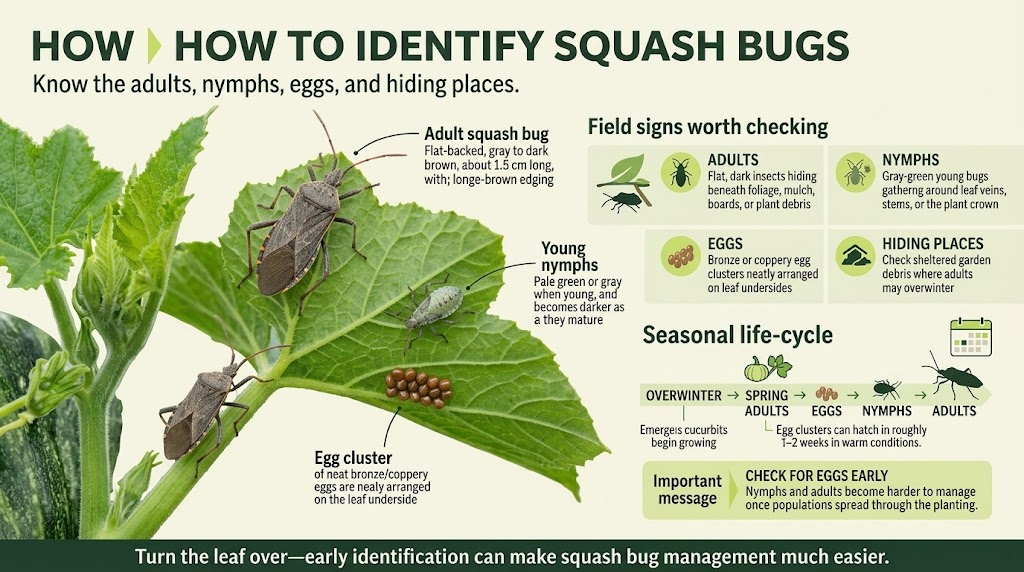
Adult squash bugs are flat-backed, gray to dark brown insects about 1.5 cm long, with long antennae and orange-brown edging along the abdomen. Young nymphs start pale green or gray and become darker as they grow. Unlike many beetles, they move quickly and tend to hide beneath leaves or near plant crowns.
Field signs worth checking
- Bronze, coppery egg clusters arranged neatly on the undersides of leaves.
- Gray-green nymphs gathering in groups around leaf veins, stems, or the crown.
- Flat, dark adults tucked under foliage, boards, mulch, or plant debris nearby.
Adults overwinter in sheltered garden debris and emerge in spring as cucurbits begin growing. Egg clusters hatch in roughly one to two weeks in warm conditions. Checking for eggs early matters because nymphs and adults become harder to manage once populations spread through the planting.
What damage do squash bugs cause?
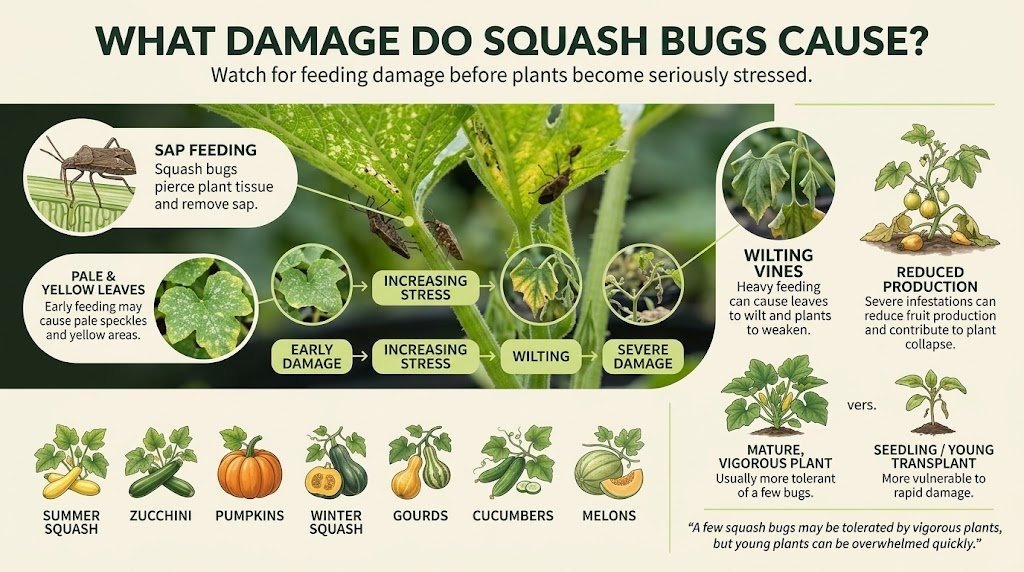
Squash bugs pierce plant tissue and feed on sap. Leaves may first develop pale speckles or yellow areas, then wilt from the edges inward. Heavy feeding can weaken vines, reduce fruit production, and contribute to sudden collapse in young or stressed plants. Their feeding can also introduce pathogens associated with squash vine decline.
Plants commonly affected
Squash bugs prefer summer squash, zucchini, pumpkins, winter squash, and gourds. They may also feed on cucumbers and melons. Large, vigorous squash plants can tolerate a few bugs, while seedlings and young transplants are more vulnerable to rapid damage.
What can look like a squash bug?
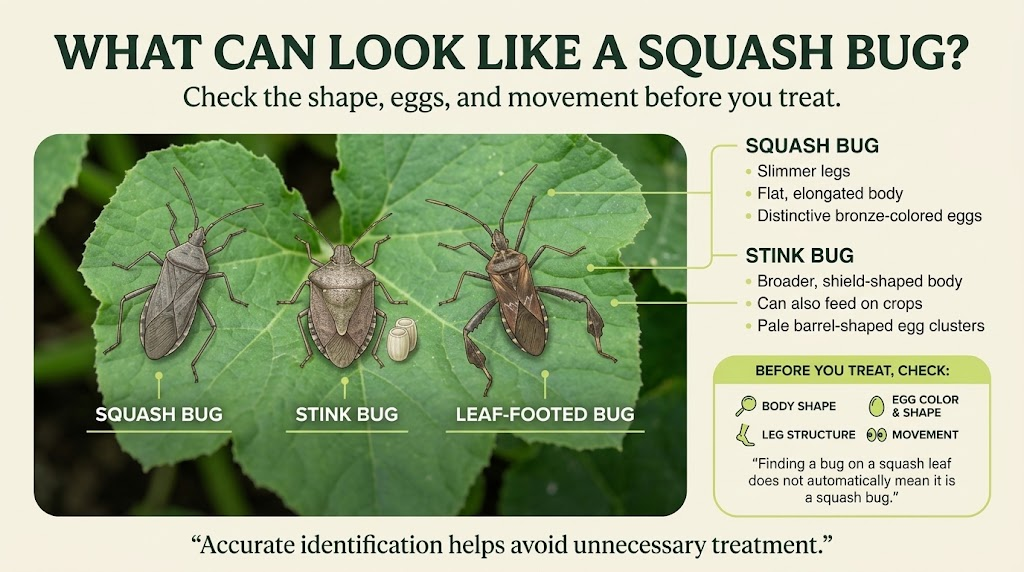
Accurate identification helps avoid unnecessary treatment. Look at the insect’s shape, egg color, and the way it moves—not just the fact that it is on a squash leaf.
Stink bugs
Stink bugs are often broader and more shield-shaped than squash bugs. They can feed on crops too, but their eggs are usually pale barrel-shaped clusters rather than the distinctive bronze squash bug eggs.
Leaf-footed bugs
Leaf-footed bugs are usually longer-legged and have widened, leaf-like sections on their hind legs. Squash bug adults have slimmer legs and a more uniformly flat, elongated body.
A least-disruptive squash bug control plan
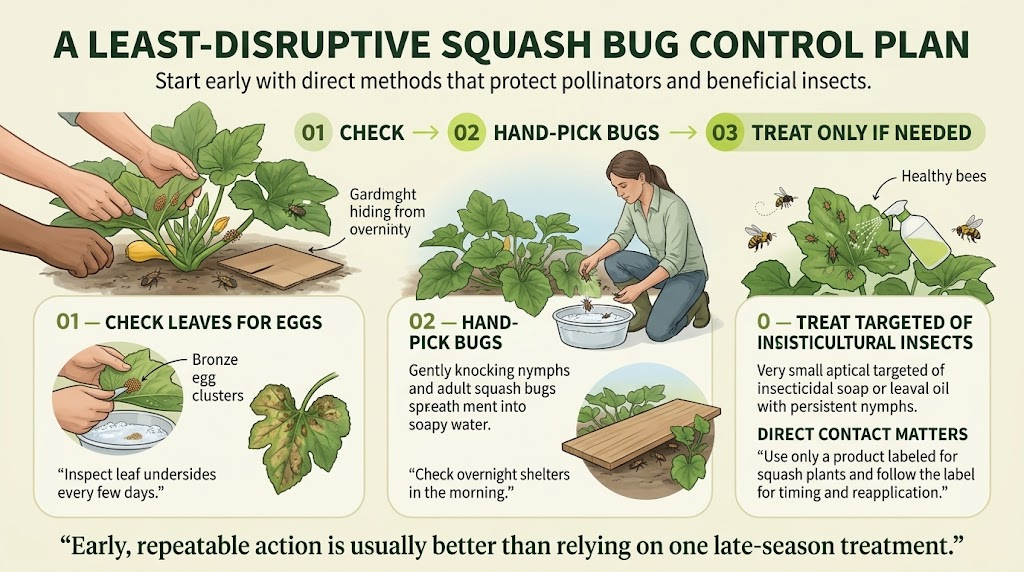
Start with direct, repeatable methods that remove the pest while preserving pollinators and beneficial insects. Early action is more effective than relying on a single late-season treatment.
| Check leaves for eggs Inspect leaf undersides every few days. Scrape bronze egg clusters into a container of soapy water or remove the affected leaf if the plant can spare it. | Hand-pick bugs In the cool morning, knock nymphs and adults into soapy water. Place a board or piece of cardboard near plants overnight, then lift it in the morning to check for hiding adults. | Treat only if needed For persistent nymphs, consider an insecticidal soap or horticultural oil labelled for squash plants. Direct contact is essential, so coat pests thoroughly and follow the product label for timing and reapplication. |
What I avoid
Avoid broad-spectrum insecticides as a first response. They can harm bees and predatory insects while often working poorly against protected eggs and mature adults. If you use any pesticide, choose one labelled for the crop and pest, and follow every label direction.
Prevention and when to get more help
Remove old cucurbit vines and garden debris after the season, especially around former squash beds. Rotate cucurbit plantings where practical, use row covers until flowering, and inspect young plants frequently. Healthy, well-watered plants are better able to tolerate light feeding.
When to escalate
Ask a local extension service, nursery professional, or qualified pest-control specialist for help if valuable plants are declining rapidly, young squash plants repeatedly fail, or you cannot separate squash bug injury from vine borer, disease, or watering problems.
Frequently Asked Question
Will squash bugs kill my squash plant?
A few bugs rarely kill a strong established plant. Heavy feeding can severely weaken seedlings and stressed vines, however, so removing eggs and nymphs early is worthwhile.
Are squash bugs harmful to people or pets?
Squash bugs are plant pests, not a danger to people or pets. They may release an unpleasant odor if crushed, but they are not known for biting or stinging people.
How do I get rid of squash bugs naturally?
Remove egg clusters and squash bugs by hand, check the undersides of leaves regularly, and clear garden debris where bugs can hide.
When should I start controlling squash bugs?
Start checking plants early in the season and act as soon as you find eggs or nymphs. Early control helps prevent populations from building.