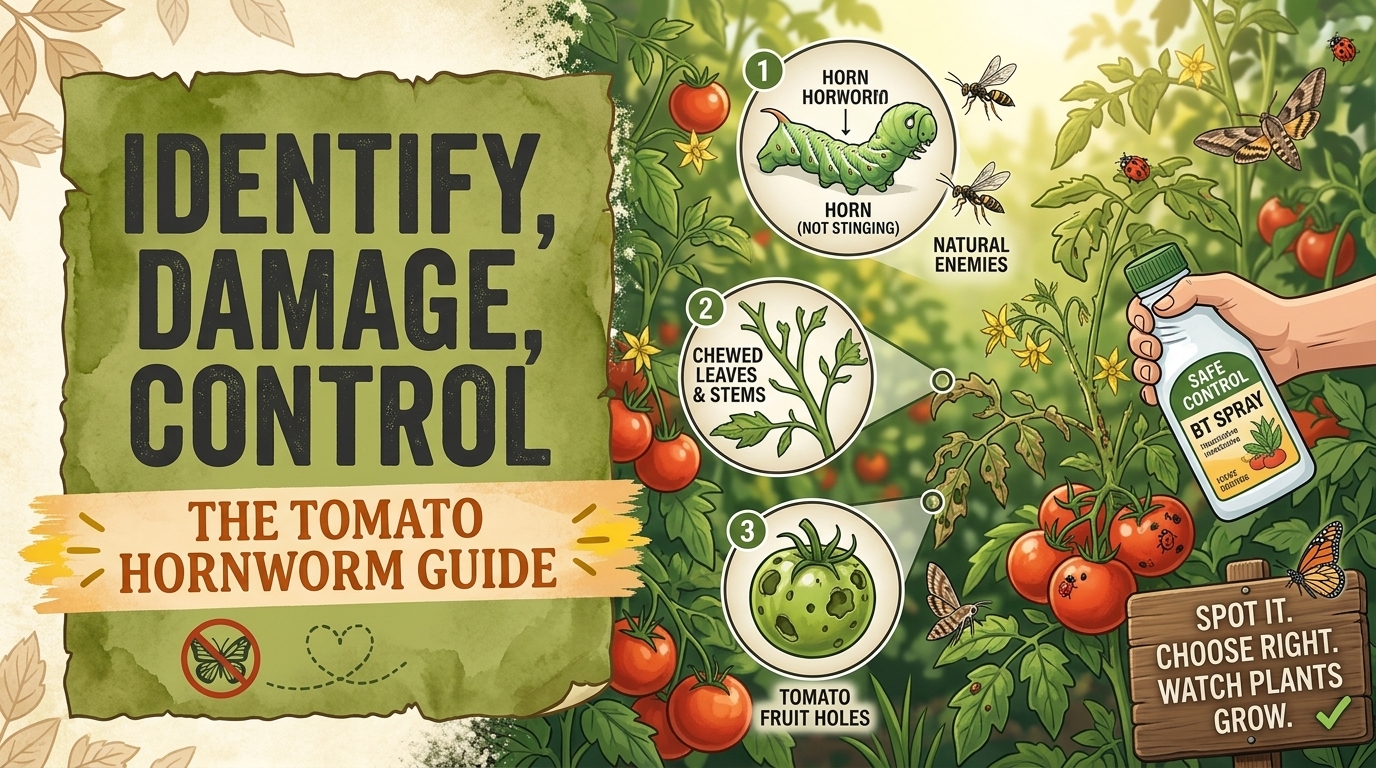

Learn how to spot tomato hornworms, assess the damage they cause, and choose an effective control method — without unnecessary treatment.
1. How to Identify Tomato Hornworms
Tomato hornworms (Manduca quinquemaculata) are large, bright-green caterpillars that can reach 10 cm (4 inches) long. They have distinctive white, V-shaped markings along their sides and a dark “horn” protruding from their rear end — which looks intimidating but is harmless.
Despite their size, hornworms are masters of camouflage. Their green colour blends perfectly with tomato foliage. Look for them on the undersides of leaves, along stems, and near the top of the plant. Often you’ll spot their dark droppings (frass) on lower leaves before you see the caterpillar itself.
Key field marks: large size, bright green body, white diagonal stripes on each segment, and a prominent dark horn at the tail end. Nymphs are smaller but share the same markings.
2. What Damage Do They Cause?
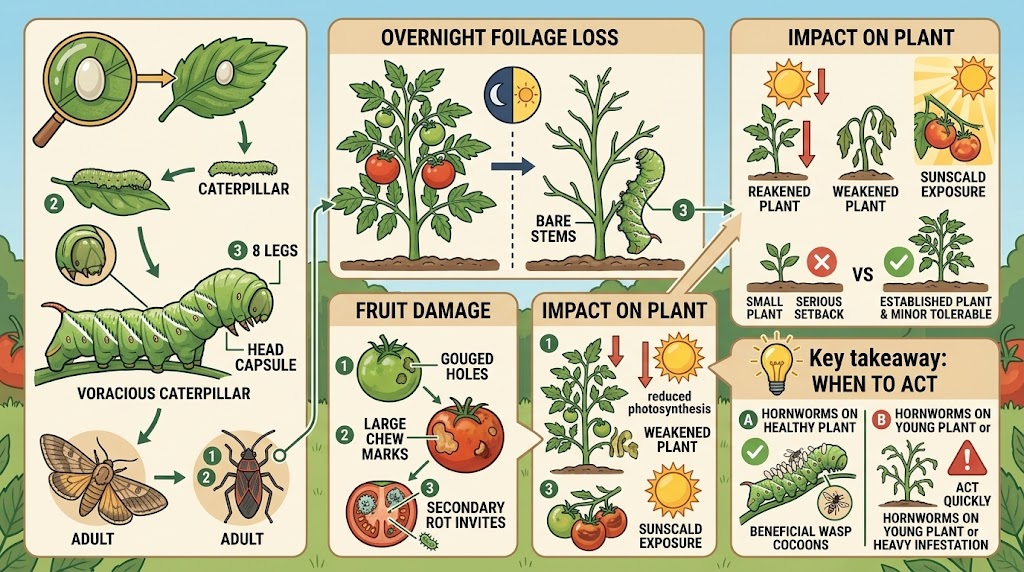
Tomato hornworms are voracious feeders. A single caterpillar can strip large sections of foliage overnight, leaving bare stems behind. They also chew into green and ripening fruit, creating large, gouged holes that invite secondary rot.
Heavy defoliation reduces the plant’s ability to photosynthesize, weakening it and exposing fruit to sunscald. On young or small plants, even one or two hornworms can cause serious setback. On large, established plants, minor feeding is tolerable.
💡 Key takeaway: A few hornworms on a large, healthy plant may not need treatment — especially if you see white cocoons on them (those are beneficial parasitic wasps doing the work for you). But on young plants or heavy infestations, act quickly.
3. Lifecycle & Habitat
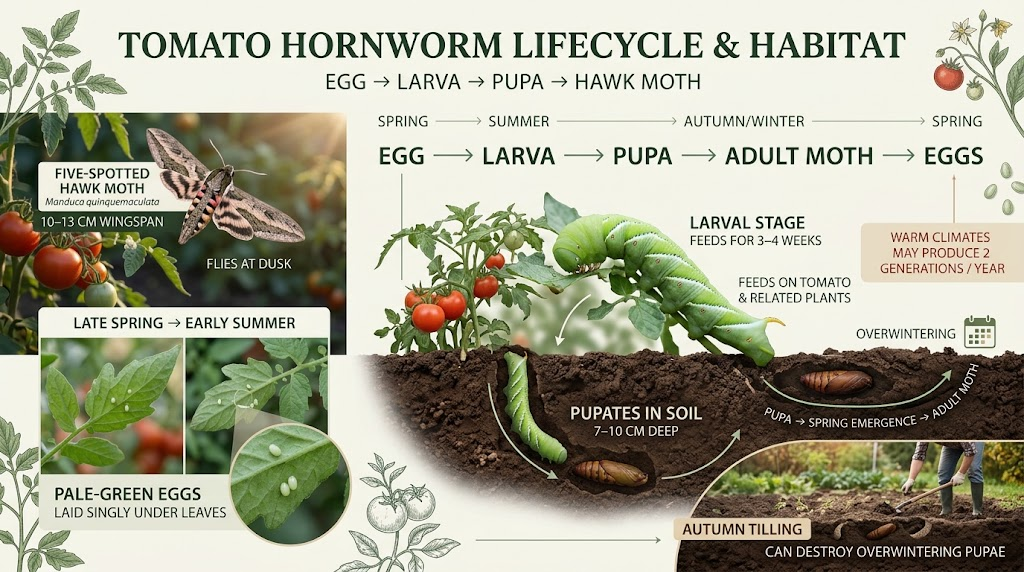
Tomato hornworms are the larval stage of the five-spotted hawk moth (Manduca quinquemaculata). Adults are large, greyish-brown moths with a wingspan of 10–13 cm that fly at dusk. They lay pale-green eggs singly on the undersides of leaves in late spring to early summer.
Larvae feed for 3–4 weeks, then drop to the soil to pupate. In warm climates there may be two generations per year. Pupae overwinter in the soil 7–10 cm deep, emerging as moths the following spring. Tilling soil in autumn can destroy overwintering pupae.
4. Host Plants
Tomatoes are the primary target, but hornworms also feed on other solanaceous (nightshade family) crops: peppers, eggplant, potatoes, and tobacco. They may occasionally be found on related weeds like nightshade and jimsonweed. If you grow multiple nightshade crops, check them all.
5. Lookalikes
The tobacco hornworm (Manduca sexta) is nearly identical but has red horns and straight white stripes (vs. the tomato hornworm’s black horn and V-shaped stripes). Both cause the same damage and are controlled the same way. Cabbage loopers and armyworms are smaller, smoother, and lack the distinctive horn and side markings.
6. Control Methods (Least-Disruptive First)
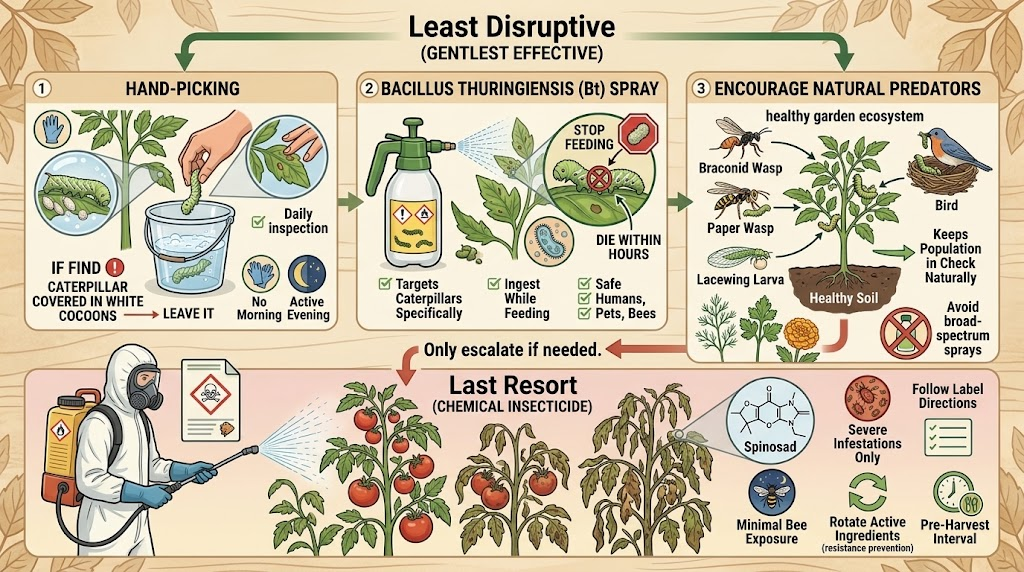
Start with the gentlest effective method. Many gardeners manage hornworms entirely without sprays. Only escalate if hand-picking isn’t keeping up with the infestation.
A. Hand-Picking
The most effective method for home gardens. Check plants in early morning or evening when hornworms are most active. Wear gloves if you prefer — they can’t sting or bite. Drop them into a bucket of soapy water. Inspect daily during peak season (mid-summer). Important: if you find a hornworm covered in small white cocoons, leave it — those are braconid wasp pupae that will kill the caterpillar and produce more beneficial wasps.
B. Bacillus thuringiensis (Bt)
Bt var. kurstaki is an organic biological insecticide that targets caterpillars specifically. Spray it on foliage — hornworms ingest it while feeding and stop eating within hours. It’s safe for humans, pets, bees, and beneficial insects. Reapply after rain. Most effective on younger, smaller caterpillars.
C. Encourage Natural Predators
Braconid wasps, paper wasps, lacewings, and birds all prey on hornworms. Plant dill, parsley, and marigolds near your tomatoes to attract beneficial insects. Avoid broad-spectrum insecticides that kill these allies. A healthy garden ecosystem often keeps hornworm populations in check naturally.
D. Chemical Insecticides (Last Resort)
Spinosad or pyrethrin-based sprays can be used for severe infestations unresponsive to other methods. Follow label directions carefully, spray in the evening to minimise bee exposure, and observe pre-harvest intervals. These are rarely necessary for home gardeners.
7. Preventing Hornworm Problems
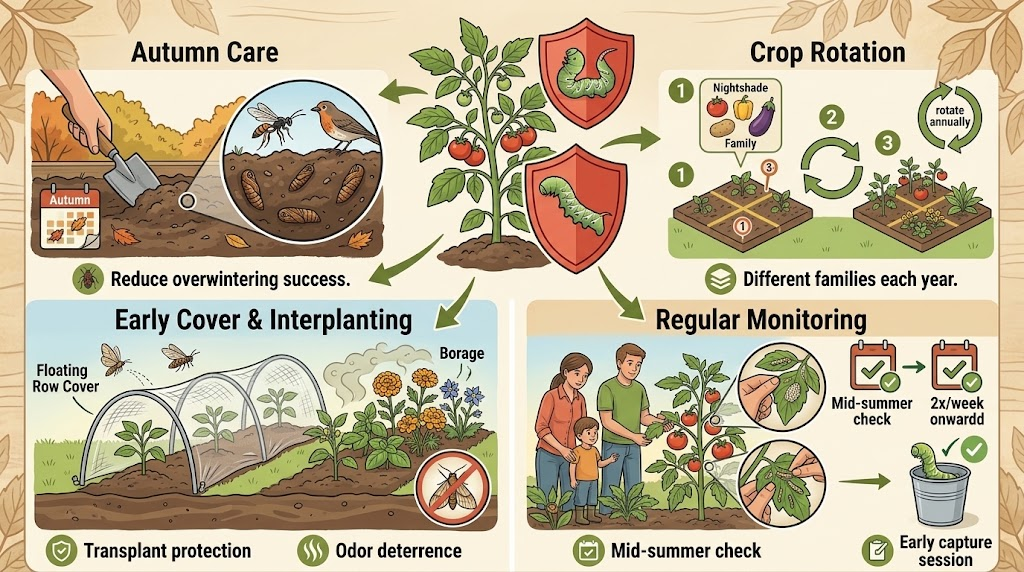
Till your soil in autumn to expose and destroy overwintering pupae. Rotate nightshade crops annually. Use floating row covers on young transplants until they flower. Interplant with basil, marigolds, or borage — these may deter egg-laying moths. Inspect plants at least twice weekly from mid-summer onward to catch infestations early, when a single hand-pick session can solve the problem.
8. When to Call a Professional
Most home gardeners can manage hornworms without professional help. Consider contacting your local cooperative extension service if you’re unsure whether the pest is actually a hornworm, if damage is appearing on many plants despite regular hand-picking and Bt applications, or if you’re growing commercially and need integrated pest management guidance. Extension offices can identify specimens for free and recommend regionally appropriate strategies.
Frequently Asked Questions
Are tomato hornworms poisonous or dangerous to touch?
No. Despite their intimidating horn, they cannot sting or bite. They’re completely harmless to handle. The horn is soft and purely decorative.
What are the white things on a hornworm’s back?
Those are cocoons of braconid wasps — a beneficial parasitoid. The wasp larvae have already consumed the hornworm internally. Leave parasitized hornworms in your garden so the adult wasps can emerge and attack future hornworms.
Will hornworms kill my tomato plant?
A large, established plant can usually recover from moderate feeding. However, young transplants or heavy infestations (multiple large caterpillars) can defoliate a plant to the point where fruit production is severely reduced or the plant dies.
When should I start checking for hornworms?
Begin inspecting once your tomato plants are well-established, typically from mid-June onward (earlier in warm climates). Check twice weekly. Look for frass on leaves, missing foliage at the top of the plant, and the caterpillars themselves on the undersides of leaves.