
How to identify springtails, understand whether they’re actually harmful, and choose the least-disruptive control method.
Key Takeaways
- Springtails are tiny (1–2 mm), wingless arthropods that jump when disturbed — often mistaken for fleas.
- They feed on mould and decaying organic matter, not living plants — they are generally harmless.
- Their presence indoors signals a moisture problem, not a pest infestation requiring chemical treatment.
- Eliminating excess moisture is the most effective and lasting control strategy.
1. How to Identify Springtails
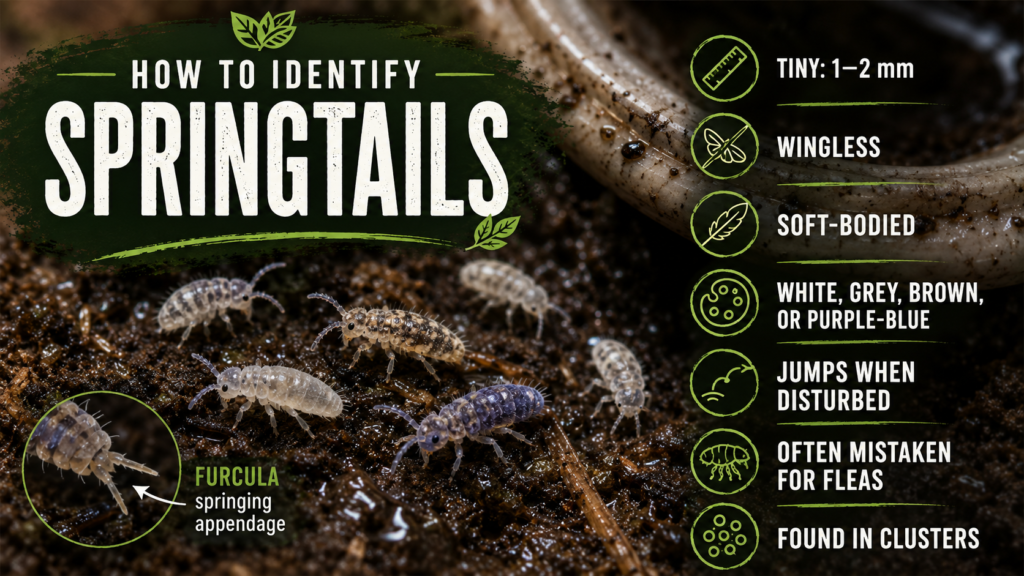
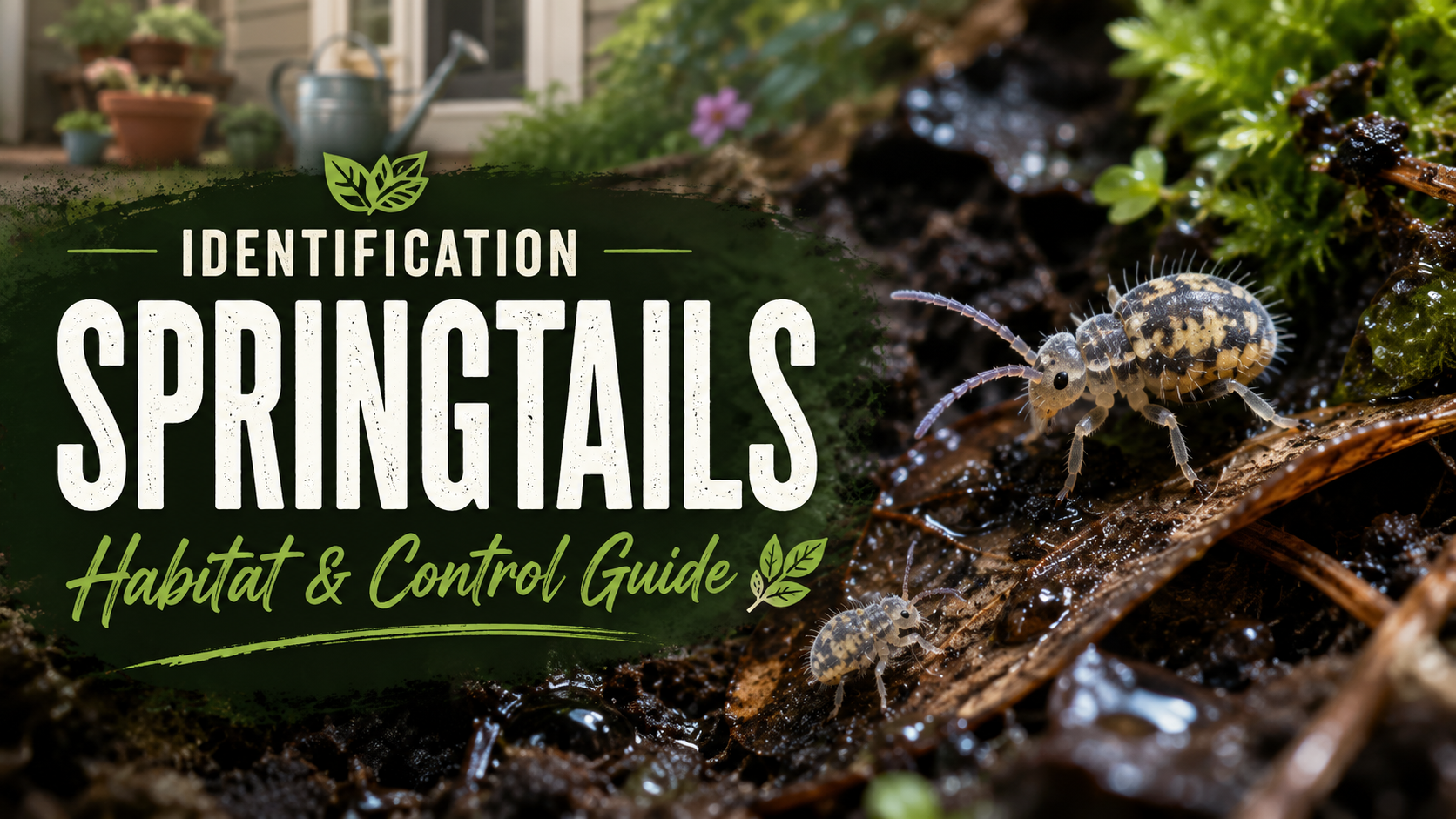
Springtails (Collembola) are extremely small — typically 1–2 mm long — soft-bodied arthropods. They range in colour from white and grey to dark brown or even purple-blue. Unlike insects, they have only six legs and no wings.
Their defining feature is the furcula, a forked tail-like appendage tucked beneath the abdomen. When threatened, the furcula snaps downward and launches the springtail into the air — hence the name. This jumping action often leads homeowners to mistake them for fleas.
You’ll usually notice them in clusters: dozens or hundreds gathered on soil surfaces, around drains, on windowsills, or in bathrooms. Under magnification, their round or elongate bodies and short antennae become visible.
2. Lifecycle & Habitat
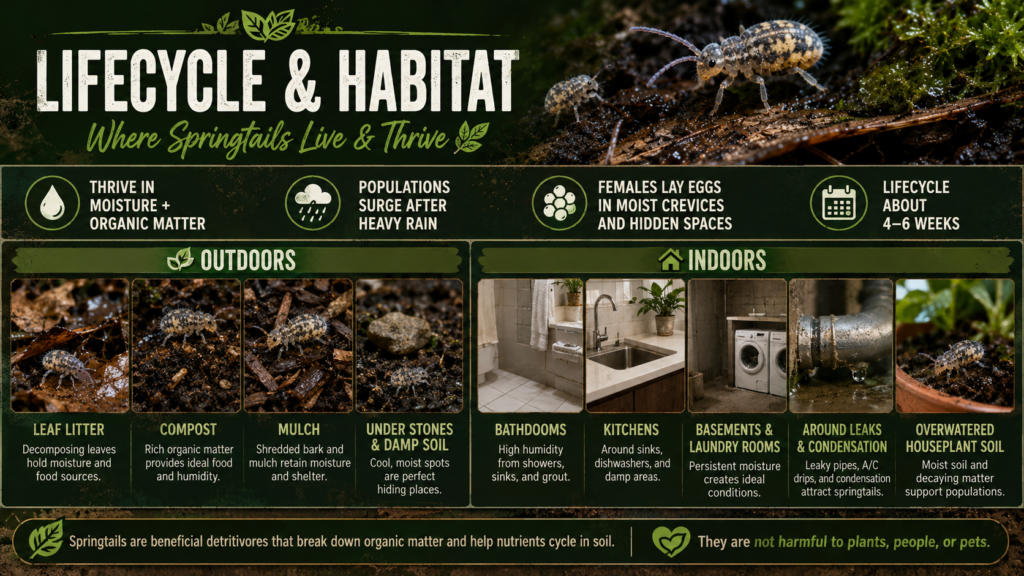
Springtails thrive wherever moisture and organic matter meet. Outdoors they live in leaf litter, compost, mulch, under stones, and in the top layer of damp soil. They reproduce rapidly — females lay clusters of eggs in moist crevices, and populations can explode after heavy rain.
Indoors, they congregate in bathrooms, kitchens, basements, laundry rooms, and around leaking pipes or condensation. They can also appear in over-watered houseplant soil. Their lifecycle from egg to adult takes 4–6 weeks depending on temperature and humidity.
3. Damage & Risk Assessment
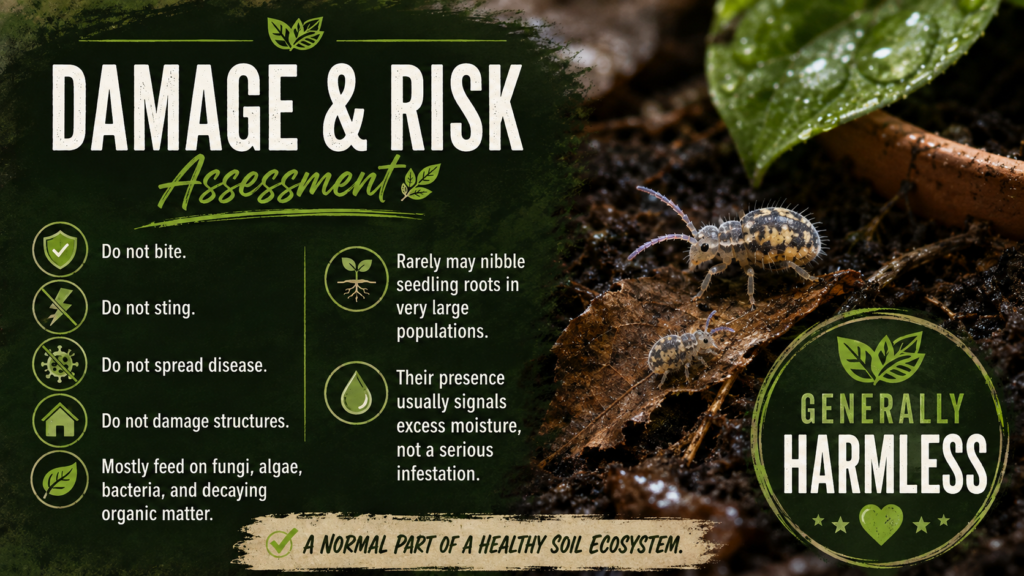
Here’s the good news: springtails do not bite, sting, transmit diseases, or damage structures. They do not eat living plant tissue, fabric, or stored food. Their diet consists almost entirely of fungi, algae, decaying vegetation, and bacteria.
In rare cases, very large populations in potting mix may nibble young seedling roots, but this is uncommon and seldom causes meaningful harm. The real ‘damage’ springtails cause is psychological — their sheer numbers and jumping habit alarm homeowners. Their presence is best understood as a symptom of excess moisture rather than a pest problem in itself.
4. Common Lookalikes
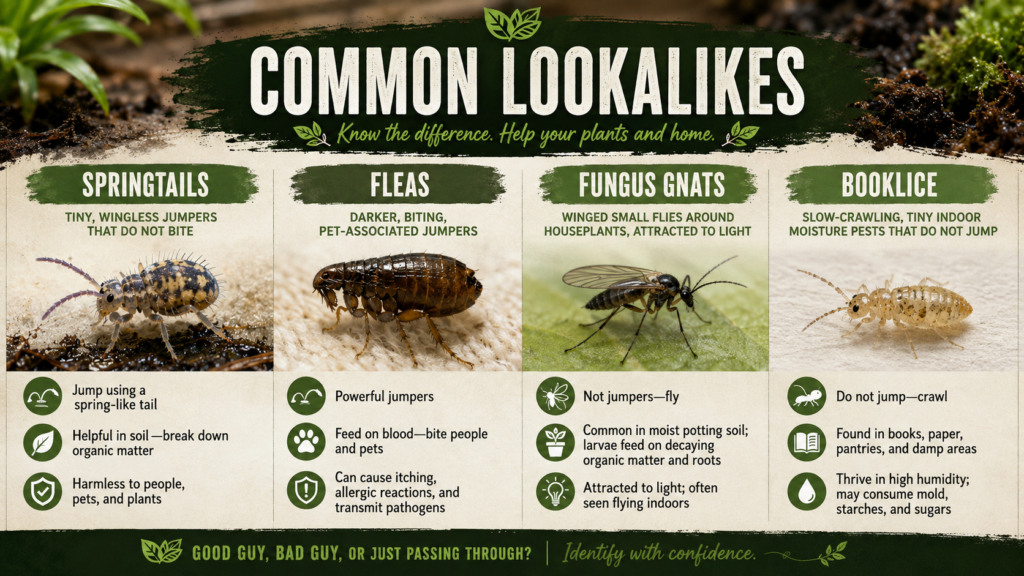
Fleas are the most common confusion. Key differences: fleas are laterally flattened (thin side-to-side), dark brown, and bite humans — springtails are rounded or elongate, lighter-coloured, and never bite. Fleas are also found on pets; springtails are not.
Fungus gnats are another lookalike in houseplant settings. Gnats are true flies with wings and are attracted to light, while springtails are wingless and avoid light. Booklice (psocids) are similar in size but move with a slow crawl rather than jumping.
5. Control Methods (Least-Disruptive First)
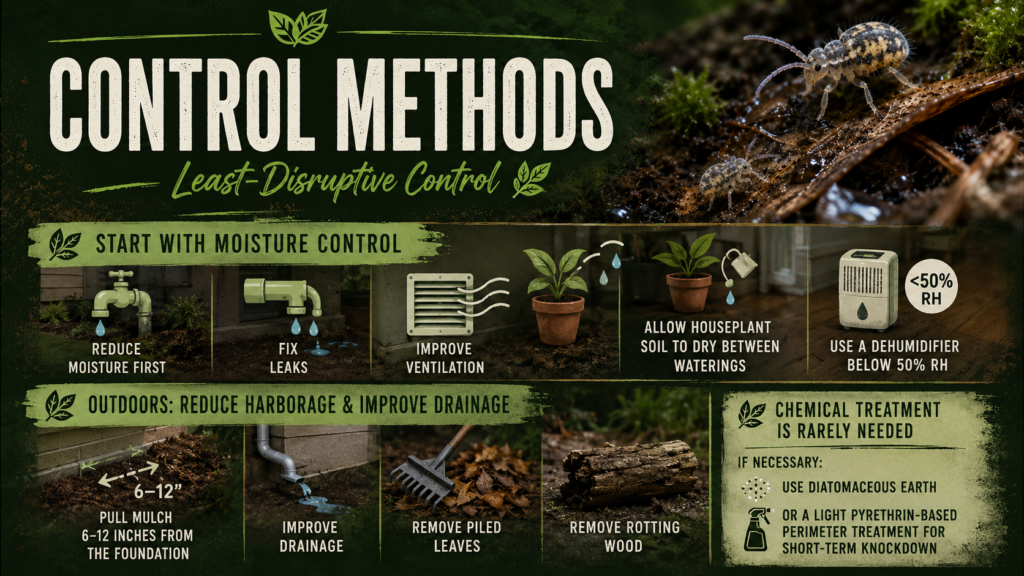
Step one is always moisture reduction. Fix leaking taps, improve ventilation in bathrooms and basements, and allow potting soil to dry between waterings. In most cases, this alone eliminates indoor springtails within days.
A dehumidifier in chronically damp rooms (targeting below 50% relative humidity) is highly effective. Outdoors, pull mulch 6–12 inches away from the foundation, improve drainage around the house, and remove piled leaves or rotting wood.
Chemical treatment is rarely needed. If populations persist after addressing moisture, a perimeter application of diatomaceous earth or a pyrethrin-based spray along baseboards and entry points provides short-term knockdown. Avoid broad-spectrum insecticides — they are unnecessary for a non-damaging organism.
6. Prevention
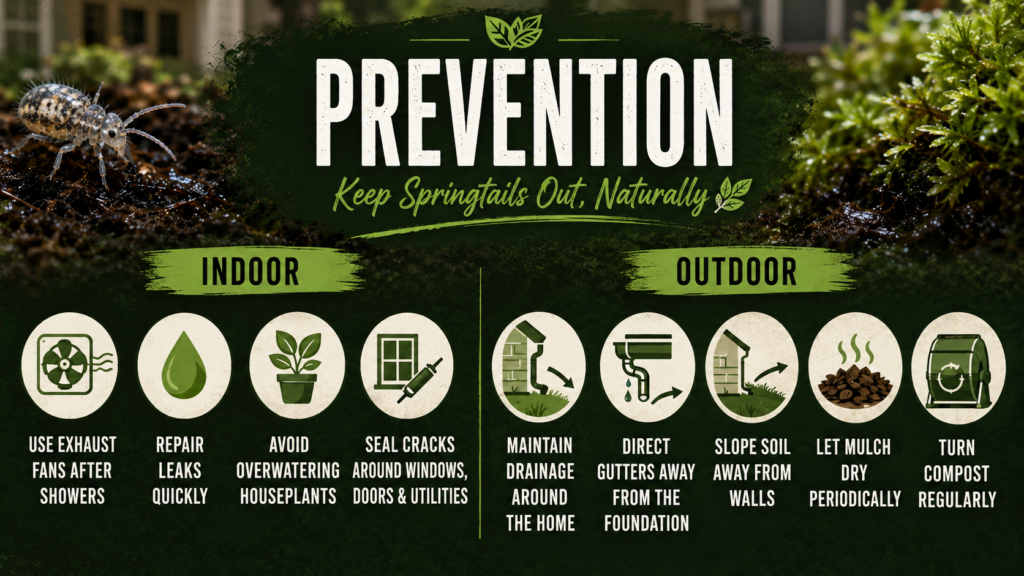
Maintain good drainage around your home’s perimeter. Ensure gutters direct water well away from the foundation. Grade soil so it slopes away from walls. Seal cracks and gaps around windows, doors, and utility penetrations.
Indoors, use exhaust fans during and after showers, repair any plumbing leaks promptly, and avoid over-watering houseplants. In gardens, allow mulch to dry periodically and turn compost regularly to reduce surface moisture.
7. When to Call a Professional
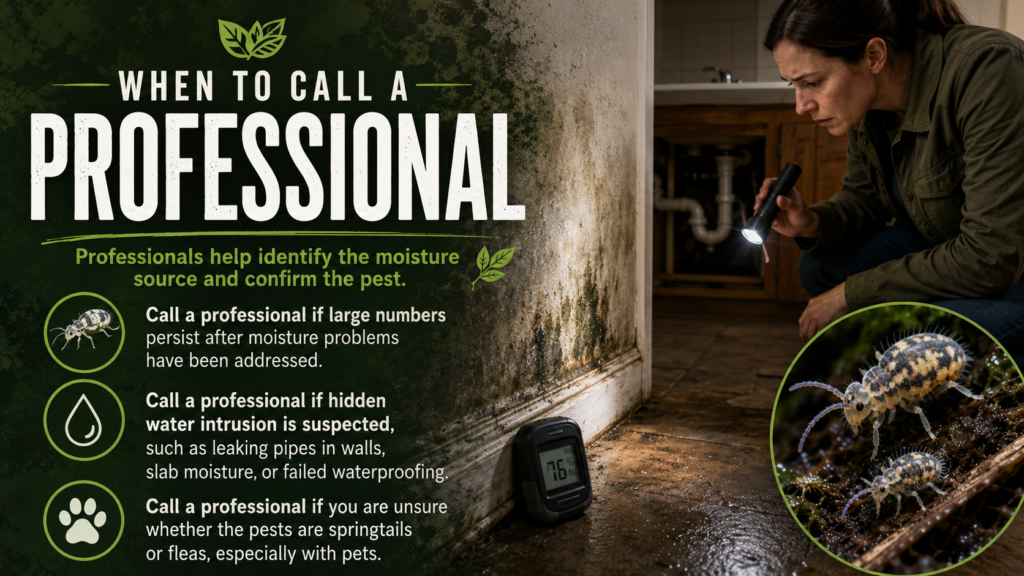
Springtails themselves rarely justify professional pest control. However, if large numbers persist after you’ve addressed all moisture sources, a pest management professional can help identify hidden water intrusion — leaking pipes within walls, slab moisture, or failed waterproofing.
If you’re unsure whether you’re dealing with springtails or fleas (especially if you have pets), a professional can confirm identification and recommend targeted treatment if fleas are actually present.
Frequently Asked Questions
Do springtails bite or carry diseases?
No. Springtails cannot bite or sting humans and are not known to transmit any diseases. They are entirely harmless to people and pets.
Why are there suddenly hundreds in my bathroom?
A sudden appearance indoors almost always indicates a moisture issue — a slow leak, poor ventilation, or high humidity. Springtails breed rapidly in damp conditions and migrate indoors seeking moisture. Fix the water source and they’ll disappear.
Will springtails damage my garden plants?
In the vast majority of cases, no. Springtails feed on decaying matter and fungi in soil, which is actually beneficial — they help break down organic material. Only in extremely high populations might they nibble delicate seedling roots, and even then damage is minimal.