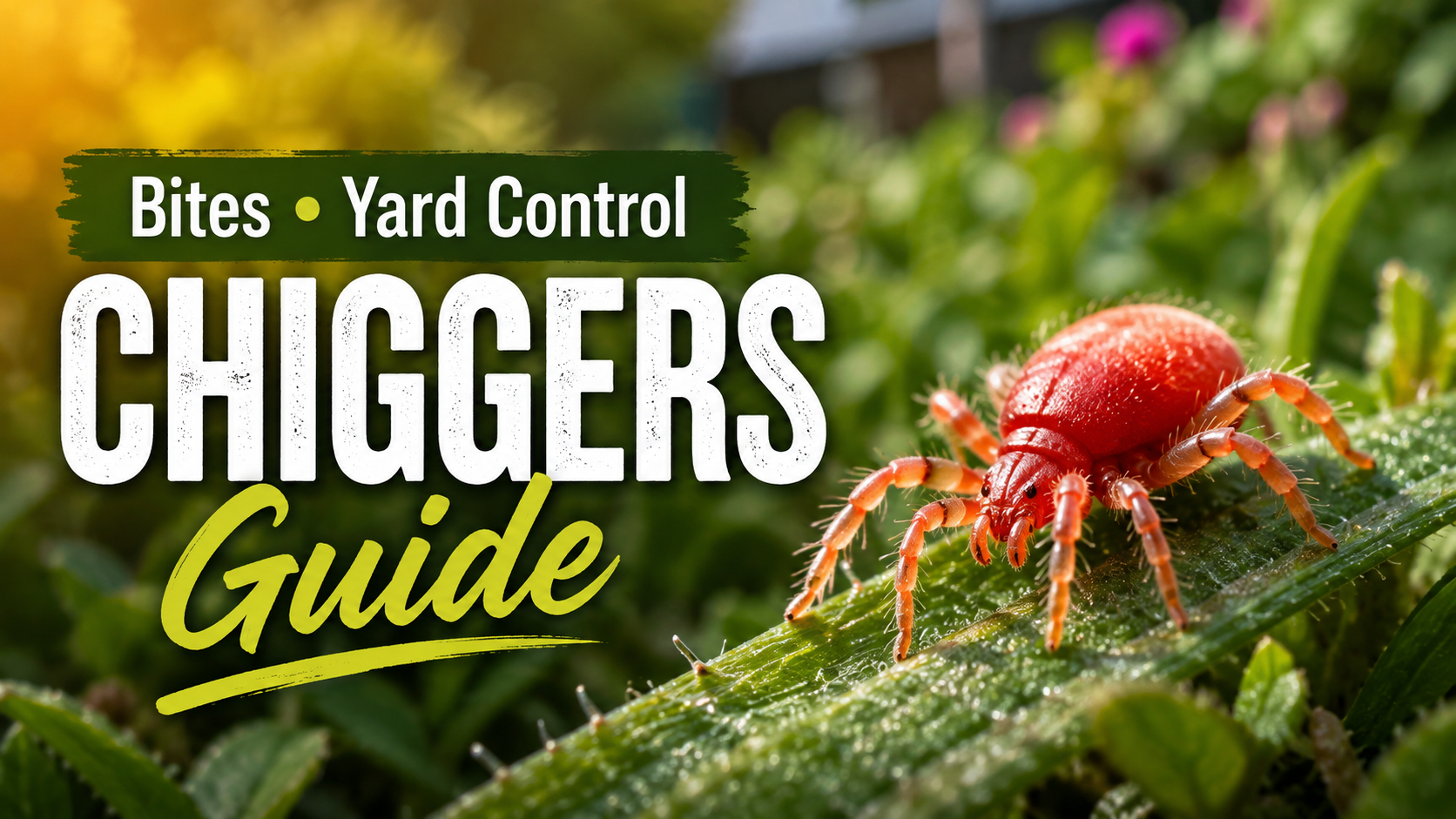

A hands-on guide to identifying chiggers, understanding why bites appear in clusters, and reducing exposure around your yard and garden.
If you’ve ever spent an afternoon weeding or mowing only to discover intensely itchy red welts around your ankles, waistband, or sock line the next morning, there’s a good chance chiggers are responsible. These nearly invisible mites are one of the most misunderstood outdoor pests — many people never actually see one, and the bites don’t appear until hours after exposure.
I’ve dealt with chiggers in my own yard for over a decade, mostly along shady garden edges and where tall grass meets the tree line. This guide shares what I’ve learned about identifying them, understanding the bite cycle, and — most importantly — reducing their numbers so you can enjoy your garden without the itch.
What Do Chiggers Look Like?
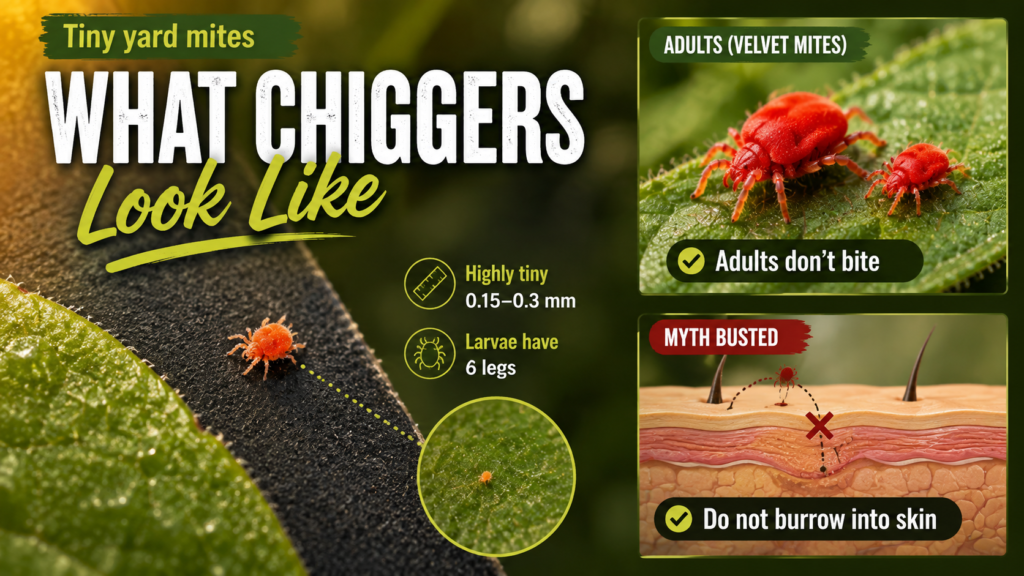
Chiggers (Trombiculidae family) are the larval stage of harvest mites. At roughly 0.15–0.3 mm, they’re nearly invisible to the naked eye — smaller than the period at the end of this sentence. Under magnification they appear as six-legged, oval, pale orange to reddish-yellow dots. Only the larvae bite; the adult mites are harmless velvet-red creatures you may occasionally spot on soil.
Because of their size, you almost never see chiggers before they bite. What you will notice is a cluster of tiny red or orange specks if you place a piece of black card on the ground in a suspected area and wait a few minutes — the larvae crawl onto it and become visible against the dark background.
Chiggers don’t burrow into skin — this is a common myth. They attach to a skin pore or hair follicle, inject digestive enzymes that dissolve a tiny tube of skin cells (called a stylostome), and feed on the liquefied tissue. The intense itch is your body’s reaction to the stylostome, which remains after the mite drops off.
Chigger Bites: Why They Itch So Much
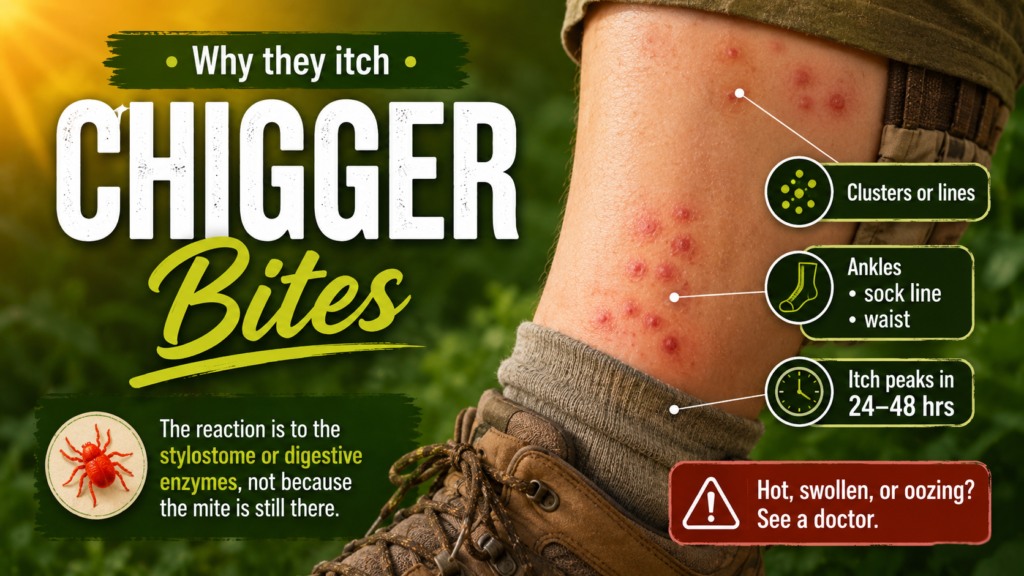
Bites typically appear 3–6 hours after exposure as small, flat red spots that develop into intensely itchy raised welts over the next day or two. They concentrate where clothing is tight against skin — sock lines, waistbands, underwear elastic, and behind the knees. Unlike mosquito bites, chigger welts often appear in clusters or lines.
The itch peaks around 24–48 hours and can persist for up to two weeks if you scratch and irritate the area. Scratching won’t dislodge a chigger (it’s usually already gone by the time you itch), but it can cause secondary infection. Over-the-counter hydrocortisone cream or calamine lotion provides relief; antihistamines help at night.
⚠️ If bites become hot, swollen, streaked red, or ooze pus, see a doctor — this indicates secondary bacterial infection from scratching, not a normal chigger reaction.
Where Chiggers Live in Your Yard
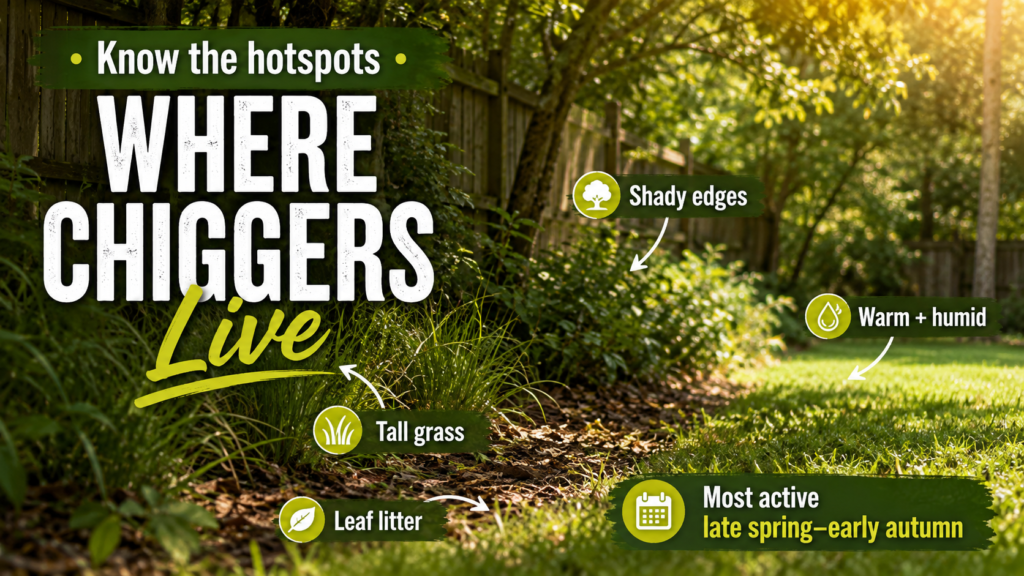
Chigger larvae thrive in warm, humid, shaded conditions — exactly the transition zones between lawn and garden beds, overgrown fence lines, tall grass, leaf litter, and brushy edges near trees. They’re most active when soil temperatures are between 15–30 °C (60–86 °F), which in most regions means late spring through early autumn. They climb onto low vegetation and wait for a host to brush past.
Yard Control: Reducing Chigger Populations
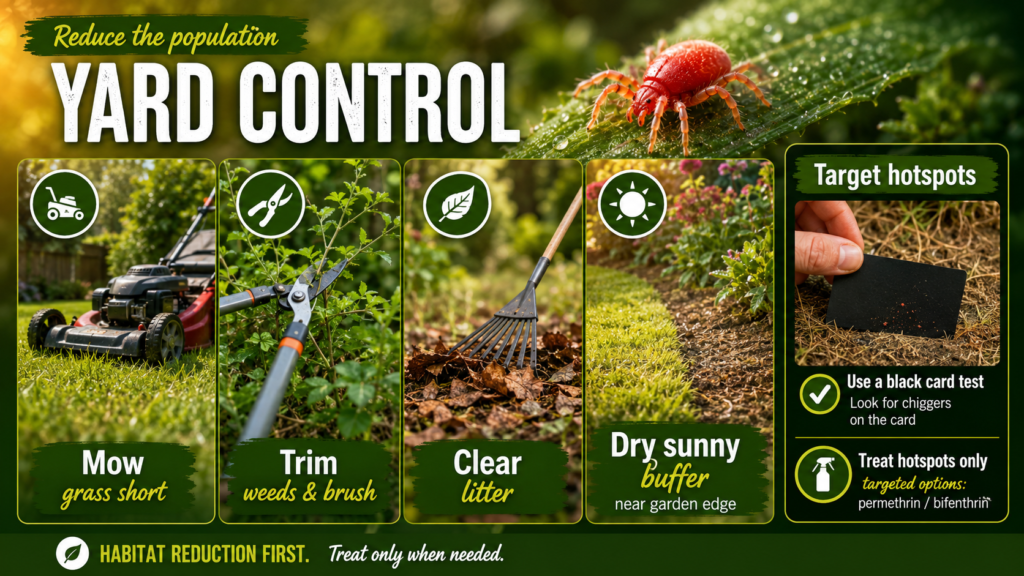
You won’t eliminate every chigger from your property, but you can dramatically reduce their numbers in the areas where you spend time. The key is removing the habitat conditions they depend on.
Mowing, Trimming & Habitat Removal
Keep grass mowed short (under 7 cm) in areas where you walk, sit, or garden regularly. Clear leaf litter, brush piles, and overgrown weeds — especially along fence lines and garden borders. Prune low-hanging branches to let sunlight reach the soil; chiggers avoid hot, dry, sun-exposed areas. In my yard, simply keeping a 1-metre mowed buffer between the lawn edge and the wilder tree line cut bites by about 80%.
Insecticide Treatments
If habitat management alone isn’t enough, a targeted application of bifenthrin or permethrin granules to known chigger hotspots (garden borders, shady edges) in late spring can knock back populations. Apply to vegetation and the top layer of soil — not open lawn. Always follow label directions, wear gloves, and keep children and pets off treated areas until dry. Reapply after heavy rain.
💡 James’s tip: Before treating, confirm chiggers are present. Place 6-inch squares of black card stock on the ground in suspected areas for 10 minutes — if tiny orange-red specks crawl onto the card, you’ve found the hotspot. Treat only those zones.
Personal Prevention: Avoiding Bites

Wear long trousers tucked into socks and closed-toe shoes when working in tall grass or shaded garden edges. Apply DEET-based (20–30%) or permethrin-based repellent to clothing — particularly around ankles, waistband, and cuffs. Permethrin-treated clothing remains effective through several washes and is my go-to for heavy gardening days.
After spending time in chigger-prone areas, shower within 1–2 hours with warm water and soap, scrubbing well around ankles, behind knees, and along the waistline. This dislodges any larvae that haven’t yet attached. Wash clothing in hot water immediately. A lint roller over skin right after coming indoors can also catch unattached mites.
When to Call a Professional
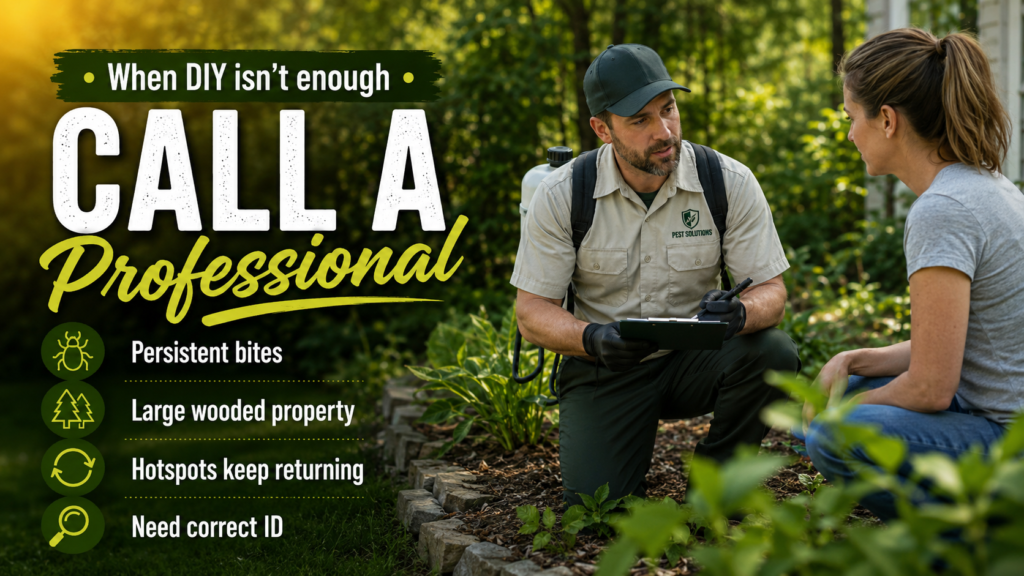
Most chigger issues are manageable with the habitat and prevention steps above. Consider professional pest control if: chigger populations persist despite consistent mowing and treatment; you have a large property with extensive shaded or wooded borders; or bites are frequent despite personal protection measures.
A pest management professional can apply broader-coverage treatments and identify specific microclimates on your property that harbour chiggers. They’ll also confirm the pest — sometimes what people assume are chigger bites are actually from other mites, fleas, or allergic reactions.
Frequently Asked Questions
Do chiggers burrow under the skin?
No — this is a widespread myth. Chiggers attach to the skin surface, feed for a few hours, and drop off. The persistent itch comes from the stylostome (a feeding tube of dissolved skin cells) your body reacts to, not a mite living under your skin. Applying nail polish or bleach to ‘suffocate’ them is unnecessary and can irritate the bite further.
Can chiggers live inside my house?
Chiggers cannot survive or reproduce indoors. They need soil, vegetation, and humidity to complete their life cycle. If you’re getting bitten indoors, the larvae likely hitched a ride on clothing or pets and attached before you came inside. Showering and washing clothes after outdoor activity prevents this.
What’s the best repellent for chiggers?
DEET (20–30% concentration) applied to skin and clothing around ankles and waistband is effective. Even better is permethrin sprayed onto clothing — it kills chiggers on contact and lasts through multiple washes. Sulfur powder dusted on socks and pant cuffs is an old-fashioned but effective alternative some gardeners swear by.
Do I need to treat my entire yard?
No. Chiggers concentrate in shaded, humid transition zones — not open sunny lawn. Use the black card test to identify hotspots and treat only those areas. Keeping grass short and removing leaf litter in your active garden and seating areas is usually enough to eliminate bites without blanket-treating the whole property.