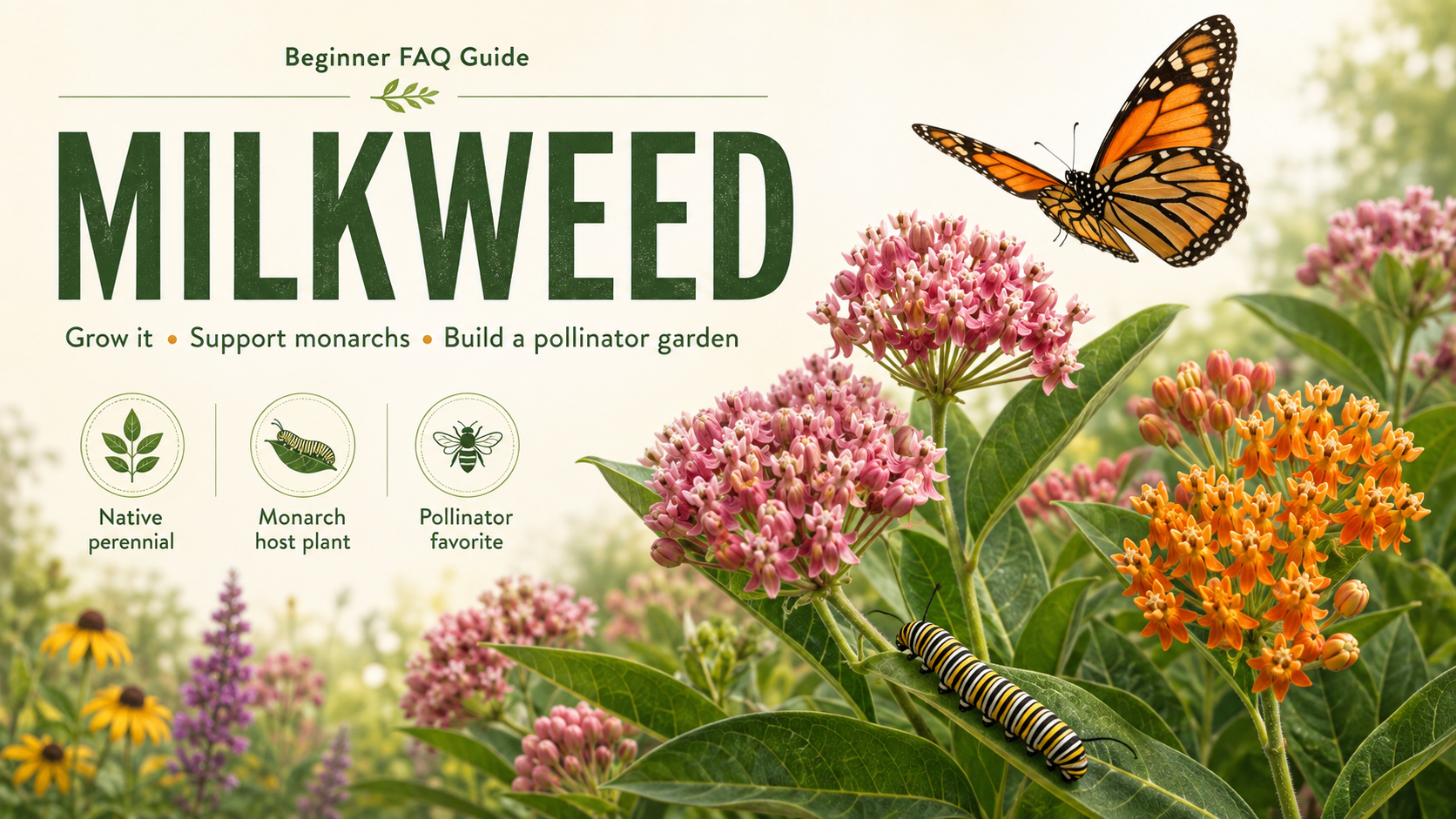

Everything you need to know about growing milkweed, supporting monarch butterflies, and creating a thriving pollinator garden.
What Is Milkweed?
Milkweed (Asclepias) is a genus of over 70 native North American perennial plants named for the milky white sap that oozes from broken stems and leaves. Far from being a nuisance weed, milkweed is a keystone plant for pollinators — particularly the monarch butterfly, whose caterpillars feed exclusively on milkweed foliage.
Milkweed species range from tall, fragrant prairie plants to compact garden-friendly varieties. They produce clusters of intricate flowers in summer that attract bees, butterflies, and hummingbirds, followed by distinctive seed pods that split open to release silk-parachuted seeds in autumn.
Why Is Milkweed Important for Monarch Butterflies?
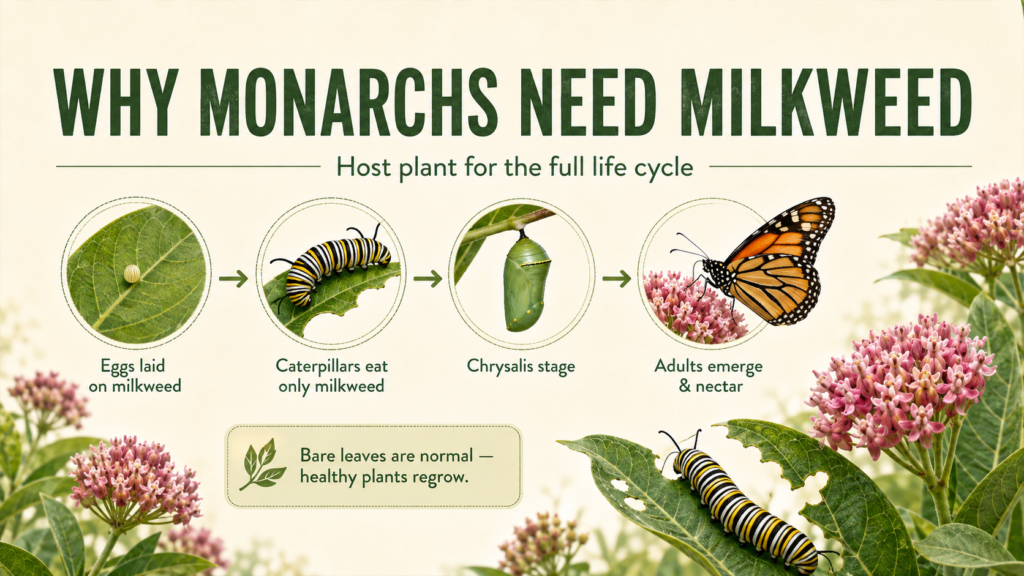
Monarch butterflies depend on milkweed at every stage of their reproductive cycle. Female monarchs lay eggs exclusively on milkweed plants, and the hatching caterpillars eat only milkweed leaves. The cardiac glycosides in milkweed make both caterpillars and adult monarchs toxic to predators — a brilliant evolutionary defense. Without milkweed, monarchs simply cannot reproduce.
Do monarch caterpillars only eat milkweed?
Yes. Monarch caterpillars are obligate milkweed feeders — they cannot survive on any other plant. This is why planting milkweed is the single most impactful action you can take to support declining monarch populations. Adult monarchs nectar on many flowers, but reproduction depends entirely on milkweed.
My milkweed is eaten bare — is it dying?
No! A defoliated milkweed plant is doing its job perfectly. Healthy milkweed typically regrows its leaves within 2–3 weeks after caterpillars finish feeding. Do not spray insecticides — the caterpillars are the entire reason you planted it. The plant’s deep root system allows it to recover quickly.
Which Milkweed Should I Plant?
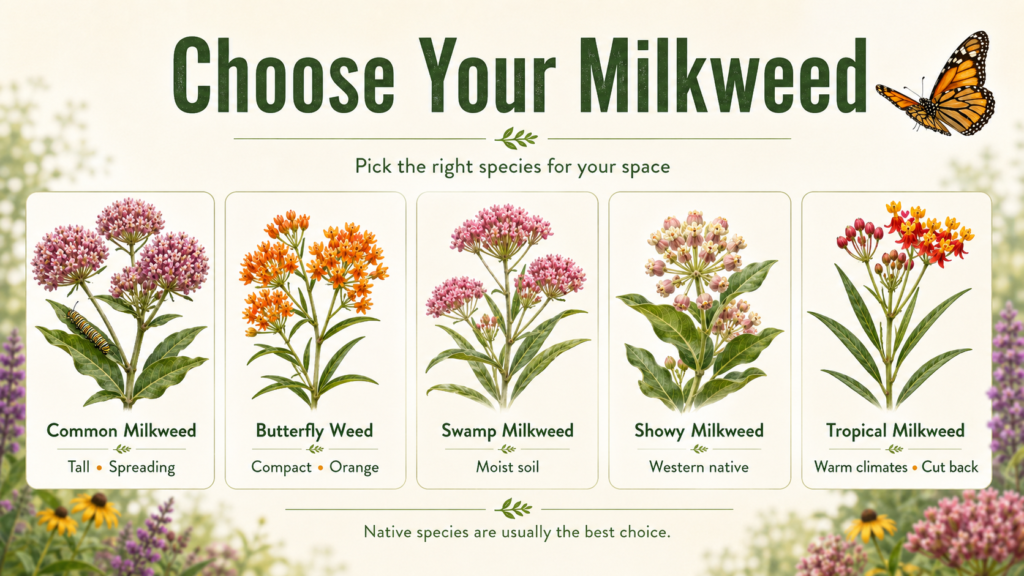
Choosing a milkweed species native to your region gives the best results for both the plant and local monarchs. Here are the five most popular species:
Common Milkweed (Asclepias syriaca)
Tall (3–5 ft), fragrant pink-purple flower clusters, excellent for monarchs. Spreads via underground rhizomes — best for meadows, edges, and areas where spreading is welcome. Native to eastern and central North America.
Butterfly Weed (Asclepias tuberosa)
Compact (1–2 ft), brilliant orange flowers, drought-tolerant, clump-forming and non-spreading. The best choice for garden beds and borders. Native across most of the US and southern Canada.
Swamp Milkweed (Asclepias incarnata)
Pink flowers on tall stems (3–4 ft), prefers moist to wet soil. Excellent in rain gardens, pond edges, and low spots. Clump-forming and well-behaved. Native to eastern North America.
Showy Milkweed (Asclepias speciosa)
Large pink flower clusters on sturdy 2–4 ft stems. The western counterpart to Common Milkweed — excellent wildlife value with moderate spreading. Native to western North America.
Tropical Milkweed (Asclepias curassavica) ⚠️
Showy orange-and-red flowers, non-native annual in most of North America. While monarchs use it readily, research suggests year-round tropical milkweed in warm climates may enable OE parasite buildup. In frost-free zones, cut it back to the ground in late autumn. Native species are generally preferred.
Growing Milkweed From Seed
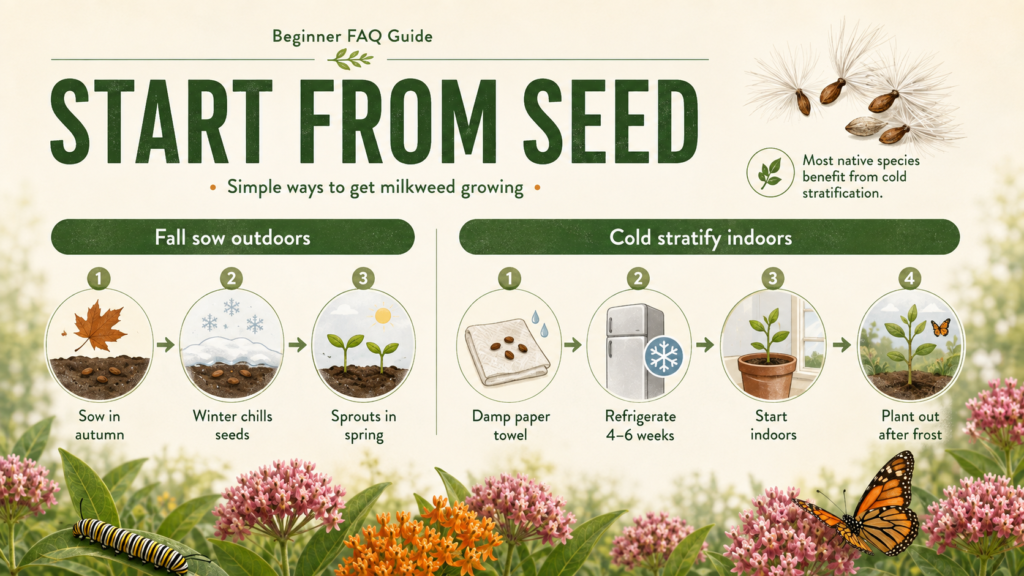
When should milkweed seeds be planted?
You have two main options: fall sowing outdoors (October–November) lets winter naturally cold-stratify the seeds, with germination in spring. Or start seeds indoors 6–8 weeks before your last frost date after manually cold-stratifying them. Nursery transplants can go in the ground after the last frost.
Do milkweed seeds need cold stratification?
Most native milkweed species benefit from 30 days of cold stratification — a period of cold, moist conditions that breaks seed dormancy. To stratify indoors: place seeds between damp paper towels in a sealed bag and refrigerate for 4–6 weeks. Tropical milkweed (A. curassavica) and Butterfly Weed (A. tuberosa) generally do not require stratification.
Sun, Soil & Water
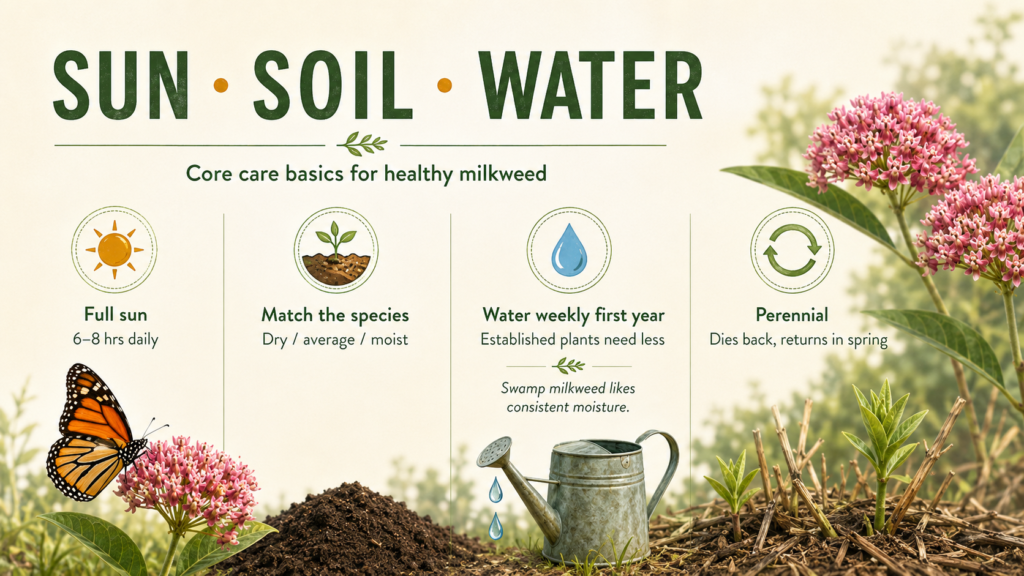
How much sun does milkweed need?
Full sun — at least 6–8 hours of direct sunlight daily. Milkweed in partial shade tends to grow leggy, produce fewer flowers, and attract fewer monarchs. Place it in the sunniest spot in your garden.
What soil does milkweed prefer?
It depends on the species. Common Milkweed and Butterfly Weed thrive in well-drained, average to sandy soil and tolerate poor conditions. Swamp Milkweed prefers consistently moist, even clay soil. Most milkweeds dislike soggy winter roots, so drainage matters. You generally don’t need to amend soil — milkweed is tough.
How often should milkweed be watered?
Once established (after the first growing season), most milkweed species are drought-tolerant and need water only during extended dry spells. New transplants and seedlings should be watered weekly for the first season. Swamp Milkweed is the exception — keep its soil consistently moist.
Does milkweed come back every year?
Yes! Native milkweeds are hardy perennials. They die back to the ground in autumn and re-emerge from their roots each spring — usually in late spring, so be patient and don’t assume plants have died. Mark their locations so you don’t accidentally dig them up. Tropical Milkweed behaves as an annual in frost zones.
Flowering & Seed Pods
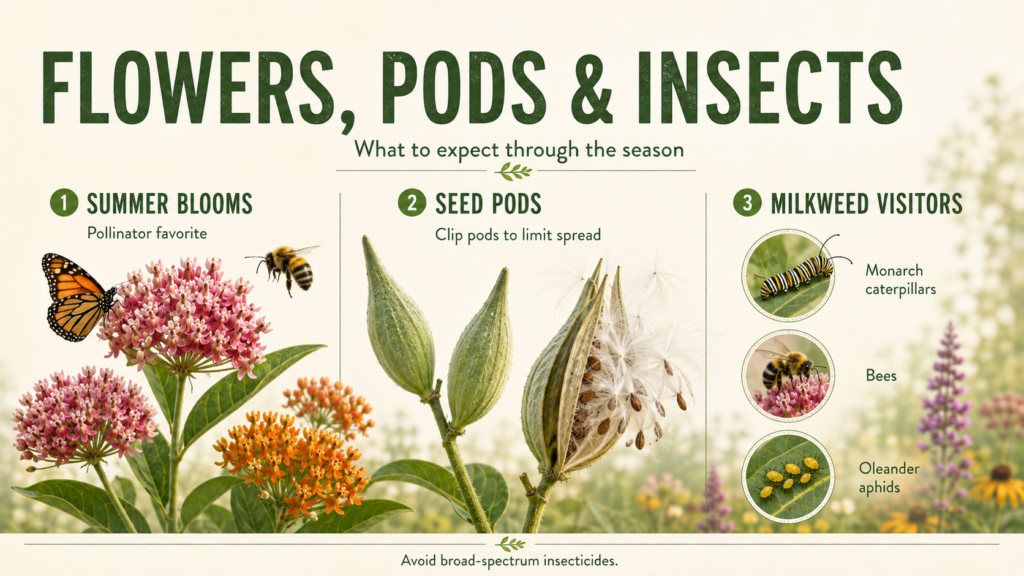
Most milkweed species bloom from June through August, producing clusters of small, fragrant flowers that attract dozens of pollinator species. After pollination, distinctive elongated pods develop, eventually splitting open in autumn to release seeds on silky filaments carried by the wind.
Should I remove milkweed seed pods?
It’s your choice. Leaving pods on the plant allows natural seed dispersal and provides winter interest. If you want to prevent milkweed from spreading to new areas, clip pods before they split open (when they’re still green but plump). You can also collect seeds for sharing or planting elsewhere by harvesting pods just as they begin to crack.
Insects on Your Milkweed
What insects commonly appear on milkweed?
Milkweed hosts a rich insect community. You’ll commonly see: monarch caterpillars (striped yellow, black, and white), milkweed beetles (red and black), milkweed bugs (orange and black), various bees and wasps, and oleander aphids (bright yellow). Most of these are harmless to the plant and part of a healthy ecosystem. Avoid broad-spectrum insecticides — they kill monarchs too.
My milkweed is covered in yellow aphids — what should I do?
Oleander aphids (bright yellow) are common on milkweed and rarely cause lasting damage to established plants. You can blast them off with a strong water spray, wipe them away by hand, or simply leave them — ladybugs and lacewings often arrive within days. Never use systemic insecticides on milkweed, as they will poison monarch caterpillars.
Controlling Milkweed Spread
Does milkweed spread aggressively?
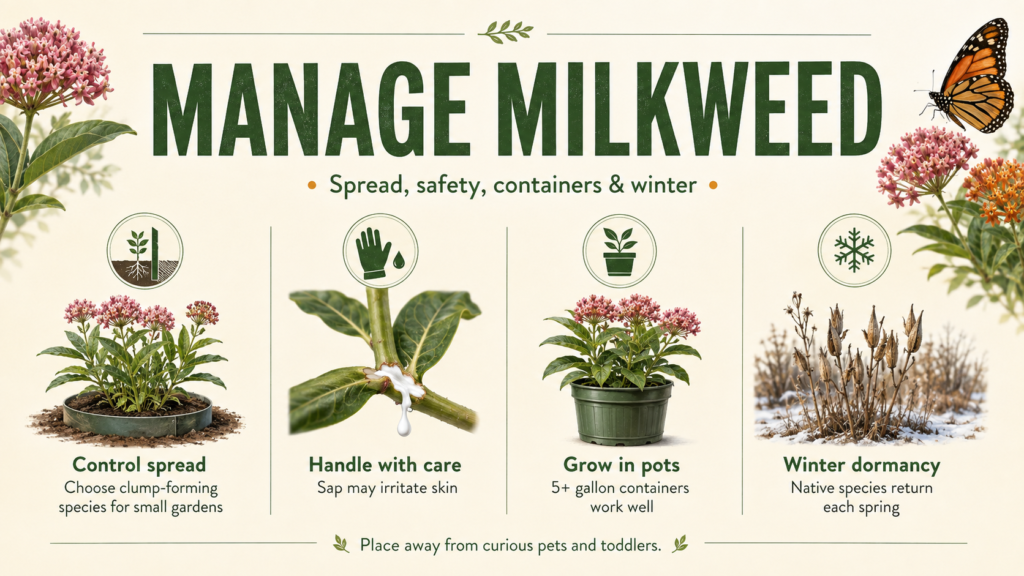
It depends on the species. Common Milkweed (A. syriaca) and Showy Milkweed (A. speciosa) spread via underground rhizomes and can colonize an area over time. Butterfly Weed and Swamp Milkweed form clumps and stay put. If you have a small garden, choose clump-forming species to avoid management headaches.
How can I control milkweed spreading?
For rhizome-spreading species: install a root barrier (at least 12 inches deep) around the planting area, or grow in a raised bed or large container. Remove unwanted shoots as they appear — pulling young shoots is easiest in spring. Clip seed pods before they open to prevent wind dispersal. Alternatively, choose non-spreading species like Butterfly Weed.
Safety & Toxicity
Milkweed produces a milky latex sap containing cardiac glycosides. While it’s safely grown in millions of gardens, take simple precautions: wear gloves when pruning or handling broken stems, wash hands after contact, avoid touching your eyes, and place plants where pets or toddlers are unlikely to chew them. The sap can irritate skin and is harmful if ingested in quantity.
Is milkweed poisonous to pets or children?
Milkweed is considered mildly to moderately toxic if ingested, with the sap and leaves containing cardiac glycosides. In practice, the bitter taste deters most animals and children from eating significant quantities. Pets that graze freely (especially curious puppies or rabbits) should be supervised around milkweed. If you suspect ingestion, contact Poison Control or your veterinarian. Sensible placement — away from play areas and pet runs — is usually sufficient.
Container Growing & Winter Care
Can milkweed grow in containers?
Absolutely! Butterfly Weed and Swamp Milkweed adapt well to large containers (5+ gallons). Use well-draining potting mix, place in full sun, and water more frequently than in-ground plants since containers dry out faster. In cold climates, either move pots to an unheated garage for winter dormancy or treat container milkweed as an annual and replant each spring.
Key Takeaway
Choose a milkweed species native to your region, plant it in full sun, leave the caterpillars alone, and skip the pesticides. That’s genuinely all it takes to make your garden a lifeline for monarch butterflies. Even one plant makes a difference.