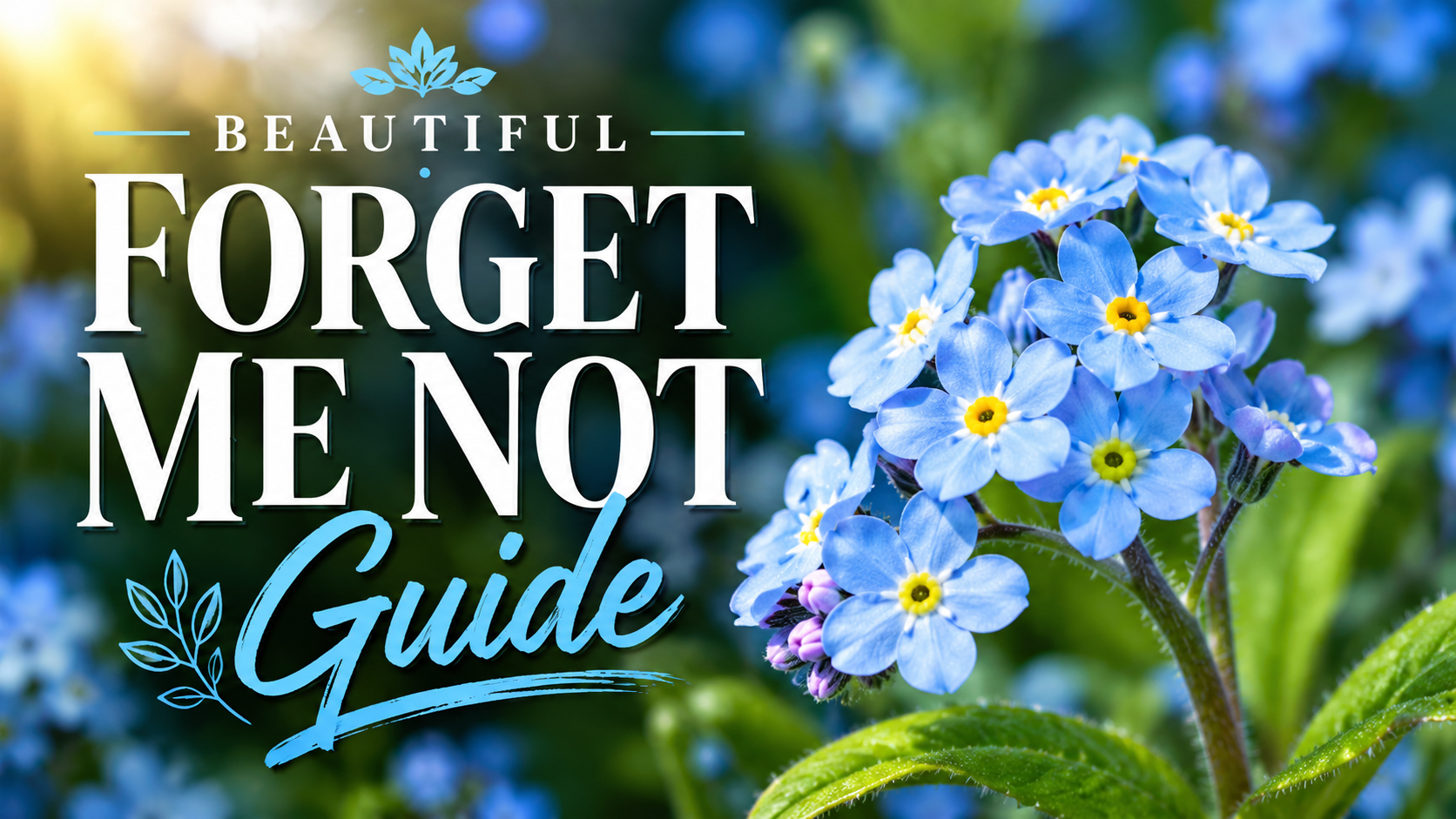

Everything you need to know about planting forget-me-not seeds, care requirements, self-seeding, container growing, and creating beautiful cottage-garden displays.
Forget-Me-Not Care at a Glance
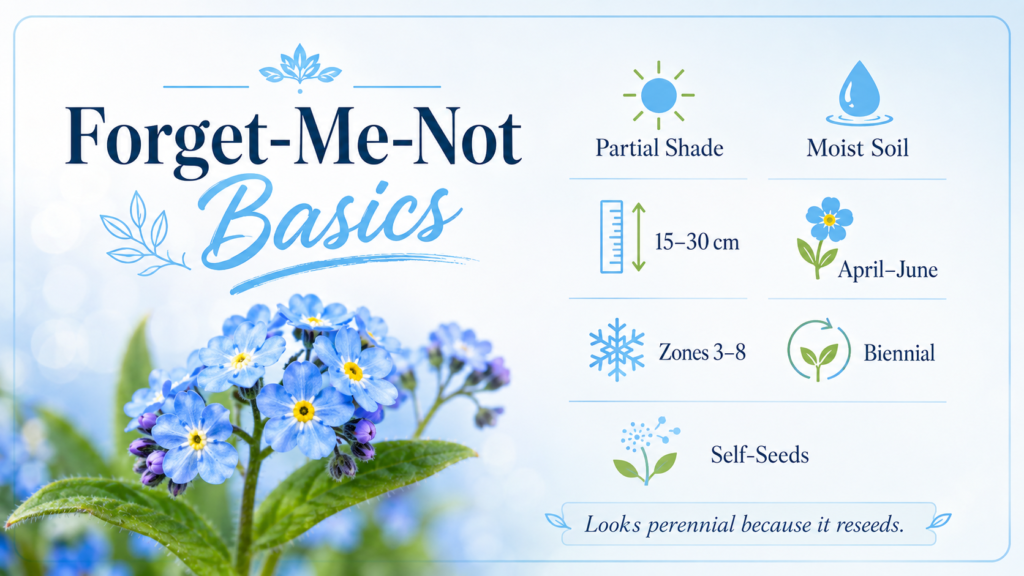
Light: Partial shade to dappled sun · Soil: Moist, well-drained, humus-rich · Water: Keep consistently moist, never waterlogged · Height: 15–30 cm (6–12 in) · Bloom time: April–June · Hardiness: USDA Zones 3–8 · Type: Biennial or short-lived perennial · Self-seeds: Yes, freely
What Are Forget-Me-Nots?
Forget-me-nots (Myosotis) are charming small flowering plants beloved for their delicate clusters of sky-blue flowers with tiny yellow centres. They belong to the Boraginaceae family and are native to Europe, Asia, and parts of North America. The name Myosotis comes from Greek meaning ‘mouse ear,’ referring to the shape of the leaves.
Most garden forget-me-nots are technically biennials — they grow foliage in their first year and flower in their second spring before setting seed and dying. However, because they self-seed so readily, they appear to be perennial, returning reliably year after year once established. This natural cycle makes them wonderfully low-maintenance once you have them growing.
🌸 Key Point: Most garden forget-me-nots are biennials that self-seed freely, creating the impression of a perennial plant that returns every spring without replanting.
Popular Myosotis Species
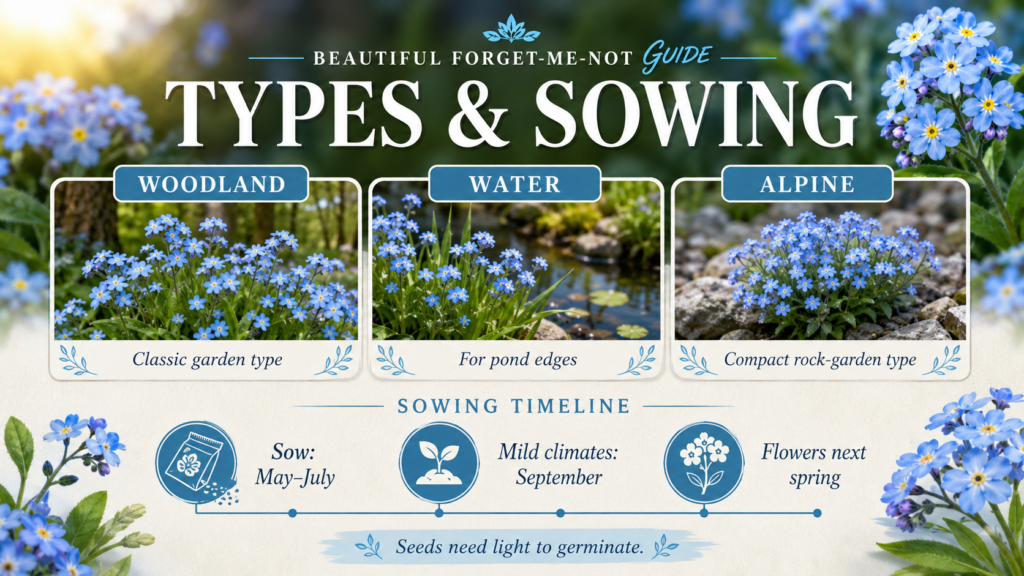
Myosotis sylvatica (Woodland Forget-Me-Not) — The most widely grown garden type. Usually treated as a biennial with classic sky-blue flowers, though pink and white varieties exist. Thrives in partial shade beneath trees and along borders. This is the species most people picture when they think of forget-me-nots.
Myosotis scorpioides (Water Forget-Me-Not) — A true perennial that loves consistently wet soil. Ideal for pond margins, bog gardens, and stream banks. Spreads by creeping stems and produces flowers from late spring into summer.
Myosotis alpestris (Alpine Forget-Me-Not) — A compact species suited to rock gardens, alpine troughs, and cooler mountain conditions. Grows in tight clumps and tolerates more sun than the woodland type, provided the soil stays moist.
When to Sow Forget-Me-Not Seeds
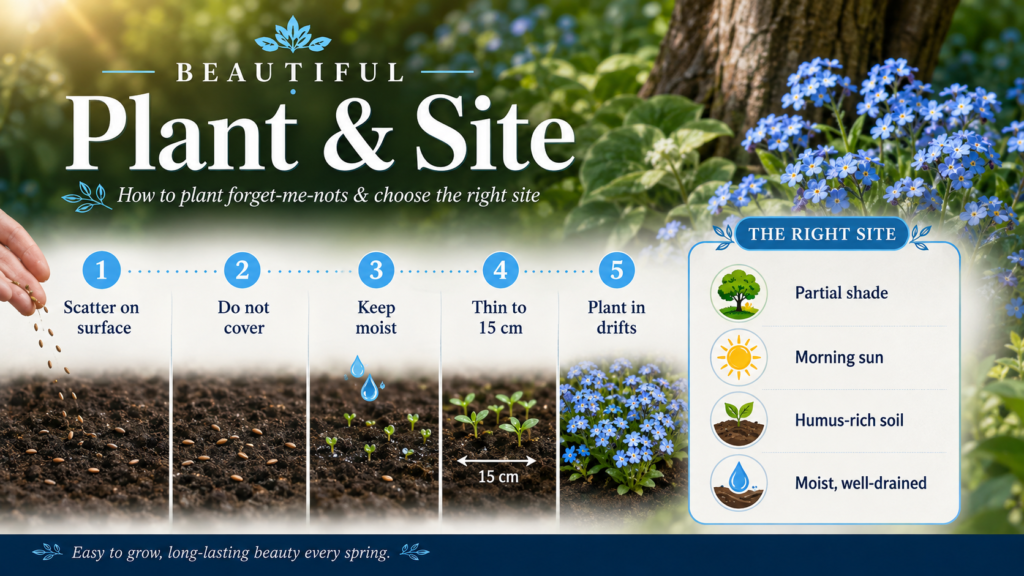
Sow forget-me-not seeds from late May to July for flowers the following spring. This timing allows plants to establish a rosette of leaves before winter, then burst into bloom from April onwards. You can also sow in early autumn (September) in milder climates, though late-summer sowing generally gives stronger plants.
Seeds can be sown directly outdoors where you want them to flower, or started in trays and transplanted later. Direct sowing is simpler and mimics how the plants naturally self-seed. Scatter seeds on the surface of moist soil and press them lightly — they need light to germinate, so don’t bury them. Germination takes 1–3 weeks at around 15–18°C (60–65°F).
How to Plant Forget-Me-Nots
If sowing directly, prepare the area by lightly raking the soil surface and watering it well. Scatter seeds thinly and pat them gently into the soil surface without covering. Keep the area moist until germination. Once seedlings have two or three true leaves, thin them to about 15 cm (6 inches) apart to give each plant room to develop.
For transplanting nursery-bought plants or your own seedlings, dig a hole slightly larger than the root ball, set the plant at the same depth it was growing previously, firm the soil gently, and water in well. Space plants 15–20 cm apart. They fill in quickly and look best planted in informal drifts rather than rigid rows.
Sun, Shade & Soil Requirements
Forget-me-nots perform best in partial shade or dappled sunlight. They tolerate gentle morning sun beautifully but struggle in prolonged hot afternoon sun, which causes wilting and shortens the flowering period. Beneath deciduous trees is ideal — they receive spring sunshine before the leaf canopy closes over.
Soil should be moist, well-drained, and reasonably fertile. They appreciate humus-rich soil that retains moisture without becoming waterlogged. If your soil is heavy clay, work in organic matter such as garden compost or well-rotted leaf mould to improve drainage and moisture retention simultaneously.
💡 Top Tip: Forget-me-nots thrive in the same conditions as hostas, ferns, and primroses. If those plants grow well in your garden, forget-me-nots will too.
Watering Forget-Me-Nots
Keep the soil consistently moist, especially during dry spells in spring and early summer when plants are flowering. Forget-me-nots dislike drought — their shallow root systems dry out quickly in hot weather. A light mulch of garden compost around the plants helps retain soil moisture and keeps roots cool.
Water at the base of the plants rather than overhead to reduce the risk of powdery mildew on the leaves. In containers, check daily during warm weather as pots dry out much faster than garden soil. If leaves start to wilt or look grey-green, water immediately — they usually recover quickly.
When Do Forget-Me-Nots Flower?
Forget-me-nots typically bloom from April through June, providing weeks of delicate blue colour during mid to late spring. In cooler climates or shaded positions, flowering may extend into early July. The peak display usually lasts 4–6 weeks, during which plants produce clouds of tiny flowers that attract bees and other early pollinators.
After flowering finishes, the plants begin to look tired and straggly as they put energy into seed production. This is completely normal for a biennial plant — it has completed its life cycle. The next generation of seedlings will already be appearing nearby, ready to grow through summer and autumn before flowering the following spring.
Deadheading & Self-Seeding
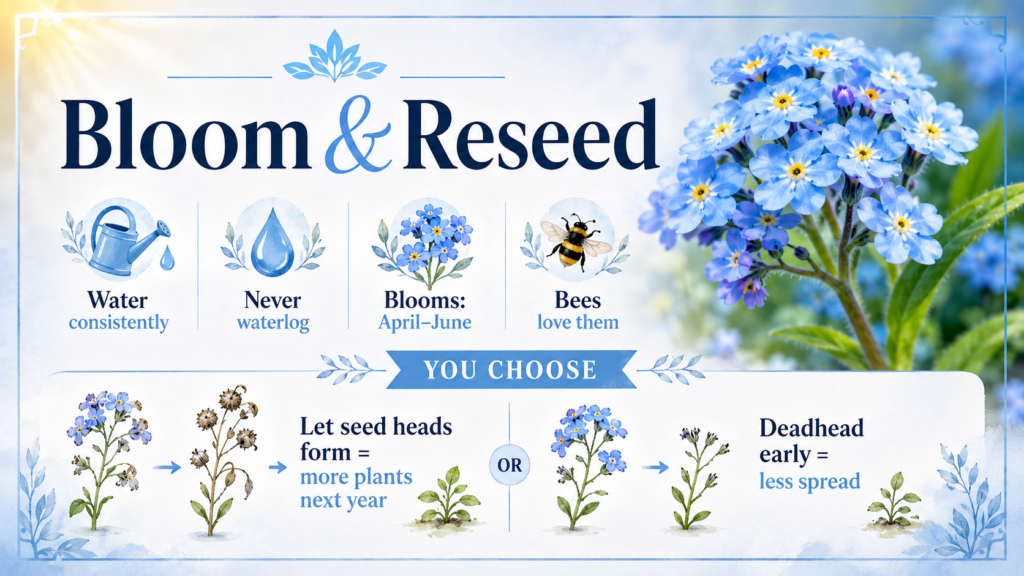
This is where you make an important choice. If you want forget-me-nots to return naturally each year, allow some flowers to develop seeds before removing the spent plants. The tiny black seeds drop nearby and germinate readily, producing next year’s flowering plants without any effort from you.
If you want to control their spread, deadhead spent flower stems before seeds form. Remove the entire flowering stem once blooms fade, cutting back to the basal foliage. You can also pull up entire plants after flowering and compost them, relying on a controlled re-sowing of saved seeds where you actually want them.
🌱 Self-Seeding Tip: Let some seed heads develop and scatter naturally, then thin out unwanted seedlings in autumn. This gives you reliable spring colour with minimal effort while keeping plants where you want them.
Growing Forget-Me-Nots in Containers
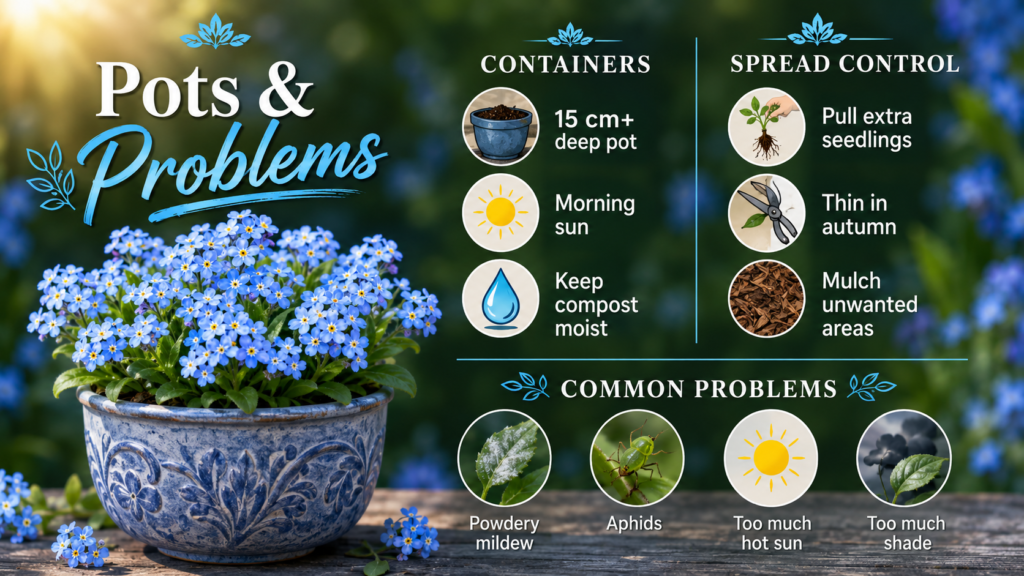
Forget-me-nots grow beautifully in pots, window boxes, and hanging baskets. Use a good-quality peat-free compost mixed with a little perlite for drainage. Choose containers at least 15 cm deep and ensure they have drainage holes. Position in a spot that receives morning sun or bright indirect light.
The main challenge with container growing is keeping the compost consistently moist — check daily in warm weather. Combine forget-me-nots with spring bulbs like tulips or daffodils for a classic cottage-garden container display. After flowering, you can replace them with summer bedding or allow seeds to drop into the pot for next year.
How to Control Unwanted Spread
Forget-me-nots can spread more enthusiastically than expected, especially in ideal growing conditions. The good news is they are very easy to manage — seedlings pull up effortlessly thanks to their shallow roots. Simply weed out any that appear where you don’t want them in late summer or early autumn.
Other strategies include: removing all spent plants before seeds ripen; applying a thick mulch where you don’t want seedlings to establish; or growing them in contained areas bordered by paving or lawn. In most gardens, forget-me-nots stay manageable with a quick annual thinning. They are not considered invasive in most regions, though check local guidance if you live near sensitive natural habitats.
Common Problems & Troubleshooting
Powdery mildew is the most common issue, appearing as a white dusty coating on leaves, usually in late spring as weather warms. Improve air circulation by not overcrowding plants, water at soil level, and remove badly affected foliage. Aphids may cluster on stems — a strong jet of water or an organic insecticidal soap will deal with them.
If your forget-me-nots aren’t flowering, the most likely causes are: too much shade (they need some light), plants are still in their first year (biennials flower in year two), or the soil is too dry. If plants look scorched or wilted, they may be getting too much direct hot sun — move container plants to a shadier spot or provide afternoon shade.
Frequently Asked Questions
Are forget-me-nots annuals or perennials?
Most garden forget-me-nots (Myosotis sylvatica) are biennials — growing leaves in year one and flowering in year two. However, they self-seed so freely that they behave like perennials, returning every spring without replanting. The water forget-me-not (M. scorpioides) is a true perennial.
Do forget-me-nots come back every year?
Yes, through self-seeding. Individual plants die after flowering in their second year, but their seeds germinate nearby and produce new plants that flower the following spring. Once established, you can expect forget-me-nots to reappear reliably each year.
Can I grow forget-me-nots in full sun?
They can tolerate morning sun, but hot afternoon sun causes wilting and shortens flowering. Partial shade or dappled light is ideal. In cooler climates (Scotland, Pacific Northwest), they handle more sun than in warmer regions.
Are forget-me-nots good for bees and pollinators?
Absolutely. Forget-me-nots flower early in spring when food sources for pollinators are still scarce. Bees, hoverflies, and butterflies all visit them. Planting a drift of forget-me-nots provides valuable early-season nectar and pollen.
Are forget-me-nots invasive?
In most garden settings, no. They self-seed freely but are very easy to pull up where unwanted. However, in some regions (parts of the US Pacific Northwest and New Zealand), Myosotis sylvatica can naturalise in wild areas. Check local guidance if you garden near sensitive natural habitats.