
Everything you need to know about planting, nurturing, and managing this beautifully fragrant shade-loving perennial.
Lily of the Valley at a Glance
| Botanical Name: Convallaria majalis | Light: Partial to full shade | Soil: Moist, well-drained, humus-rich |
| Hardiness: USDA Zones 3–8 | Bloom Time: Mid to late spring | Spread: Vigorous via rhizomes |
What Is Lily of the Valley?
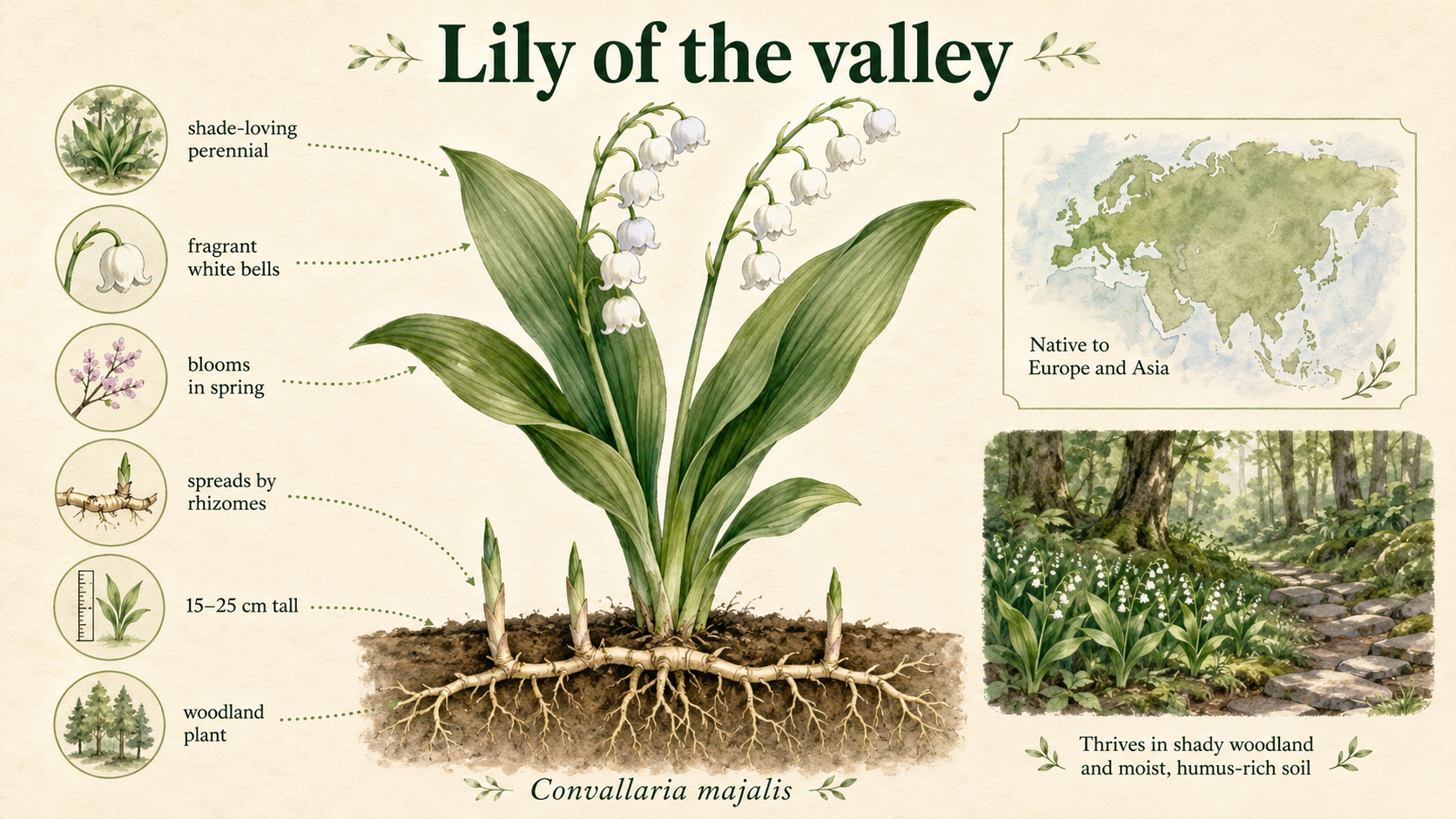
Lily of the valley (Convallaria majalis) is a low-growing, shade-loving perennial prized for its intensely fragrant, bell-shaped white flowers that appear in mid to late spring. Native to the woodlands of Europe and parts of Asia, it has been cultivated in gardens for centuries and remains one of the most recognizable and cherished spring flowers.
The plant spreads via underground rhizomes, forming dense colonies of arching green leaves that reach 15–25 cm tall. Each flower stalk carries 5–15 tiny, nodding white bells with a sweet perfume. Despite its delicate appearance, lily of the valley is remarkably tough and thrives where many other flowers struggle — in deep shade beneath trees and along north-facing walls.
You May Also Like: Calla Lily: How to Plant, Grow & Care for Calla Lilies
How to Plant Lily of the Valley
When to Plant
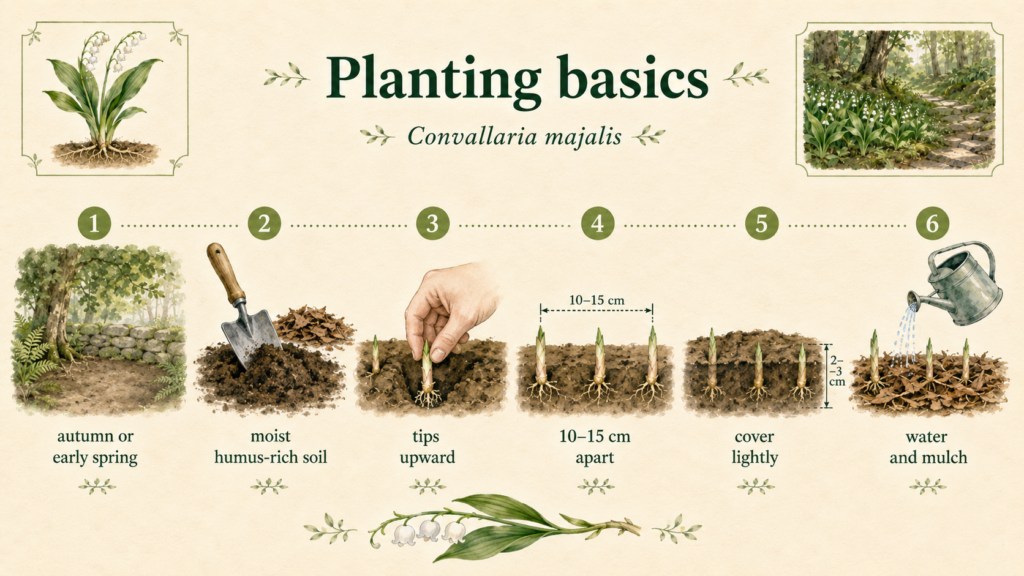
The best time to plant lily of the valley pips (bare roots) is in autumn or early spring while the plants are dormant. Autumn planting gives roots time to establish before the growing season. Potted plants from nurseries can be planted at any time the ground is workable.
Step-by-Step Planting Instructions
- Choose a shaded or partially shaded spot with moist, humus-rich soil. Under deciduous trees or along a north-facing border works well.
- Dig the soil to about 15 cm deep and mix in a generous amount of compost or well-rotted leaf mould to improve moisture retention.
- Place pips horizontally with the pointed growing tip facing upwards, spacing them approximately 10–15 cm apart.
- Cover with just 2–3 cm of soil — planting too deeply is a common mistake that delays growth and flowering.
- Water thoroughly after planting and apply a light mulch of leaf mould to keep the soil cool and moist.
💡 Tip: If you’re buying bare-root pips, look for plump, firm roots with visible pointed buds. Soak them in lukewarm water for two hours before planting to rehydrate.
Ideal Growing Conditions
Light Requirements
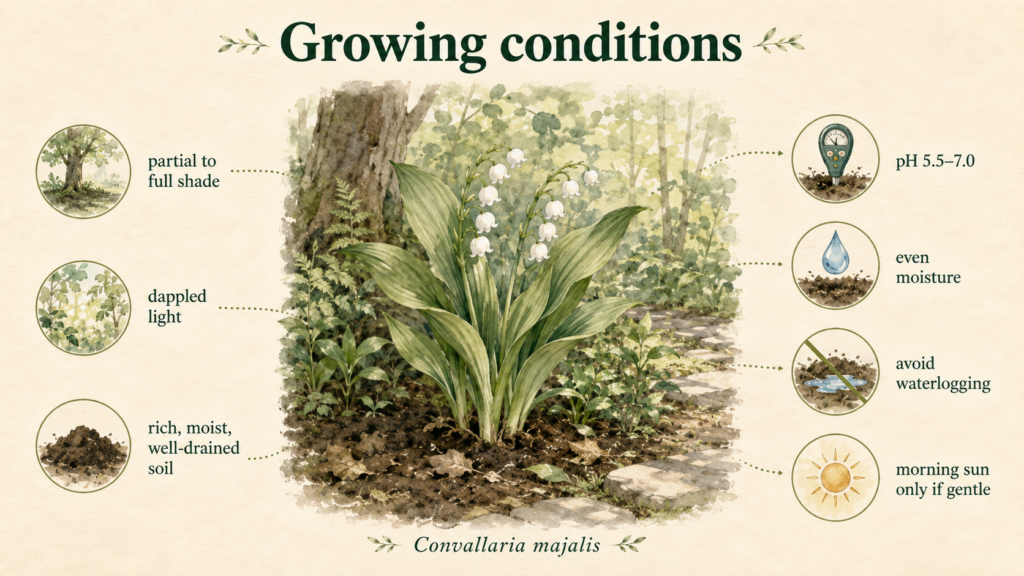
Lily of the valley performs best in partial to full shade. It tolerates morning sun but struggles in hot afternoon sunlight, which can scorch the leaves and dry the soil too quickly. Dappled light beneath trees mimics its natural woodland habitat perfectly.
Soil & Drainage
Rich, moist, well-drained soil is ideal. The plant prefers a slightly acidic to neutral pH (5.5–7.0). Amend heavy clay with organic matter to improve drainage, and sandy soils with compost to increase water retention. Consistent soil moisture is more important than soil type.
Watering
Keep the soil evenly moist, especially during the first growing season while roots establish. Once settled, lily of the valley is fairly drought-tolerant in shade but will look its best with regular watering during dry spells. Avoid waterlogged conditions which can cause root rot.
Flowering & Blooming
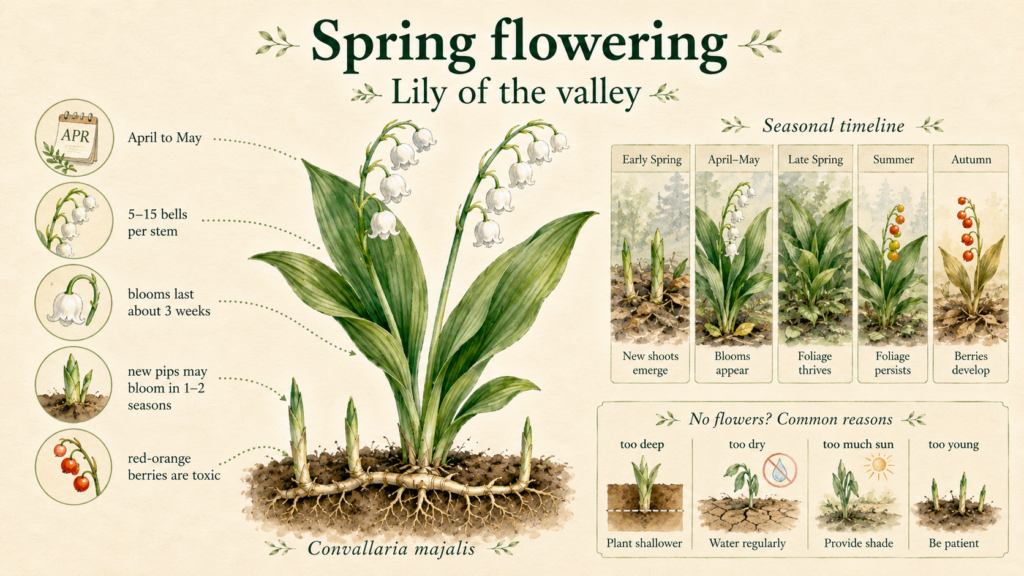
Expect flowers from mid to late spring, typically April to May depending on your climate. Each flower stalk lasts about three weeks. Newly planted pips may take one to two seasons to produce their first blooms as they focus energy on root establishment.
After the flowers fade, small red-orange berries may appear in late summer. These are attractive but highly toxic — remove them if children or pets have access to the garden. The foliage remains attractive through summer before dying back naturally in autumn.
💡 Why isn’t my lily of the valley flowering?
The most common reasons are: planting too deeply, too much direct sun, soil that’s too dry, or plants that are too young. Established colonies in good conditions flower reliably every year.
Ongoing Care & Maintenance
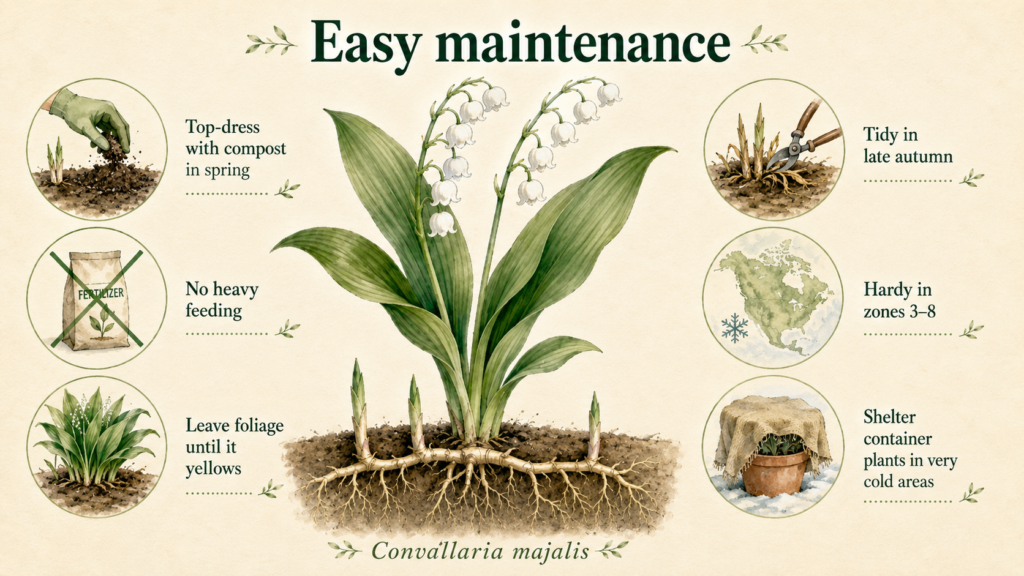
Lily and the valley is genuinely low-maintenance once established. In spring, top-dress with a thin layer of compost or leaf mould to nourish the soil. No regular fertilising is needed — over-feeding produces lush leaves at the expense of flowers.
After flowering, leave the foliage intact until it yellows naturally in autumn. The leaves photosynthesise and send energy back to the rhizomes for next year’s growth. You can tidy browning foliage in late autumn or early winter.
No winter protection is needed in zones 3–8. The plant is fully deciduous and hardy to well below freezing. Container-grown plants in very cold areas benefit from moving pots to a sheltered spot or wrapping with fleece.
Dividing & Propagating Lily of the Valley
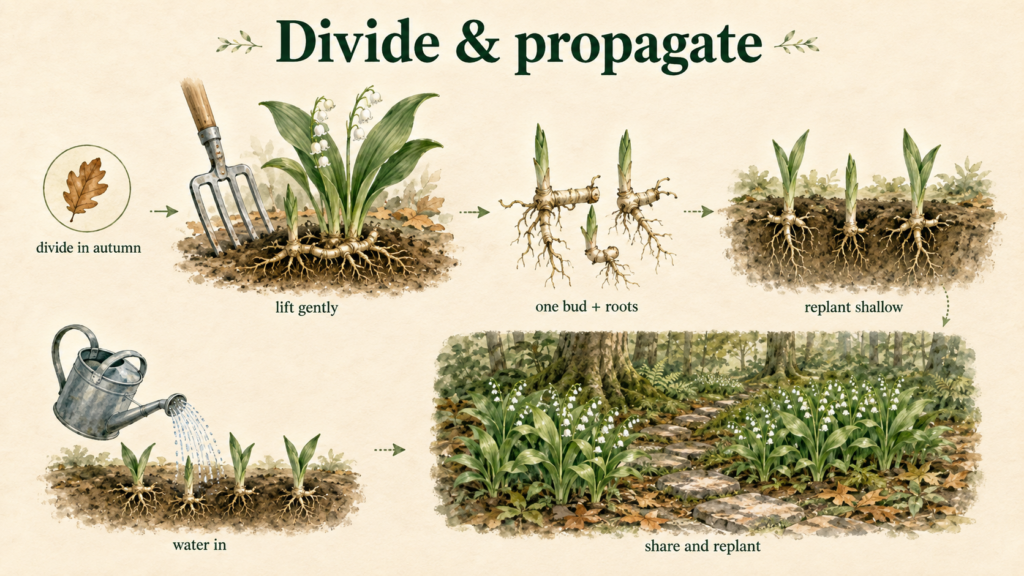
The easiest way to propagate lily of the valley is by dividing established clumps in autumn. Lift a section of rhizomes with a garden fork, gently separate individual pips (each should have roots and at least one growing point), and replant immediately at the same shallow depth.
Divisions establish quickly and often flower the following spring. This is also an excellent way to share plants with friends and neighbours — and to fill new shaded areas of your garden without buying more plants.
Controlling Unwanted Spread
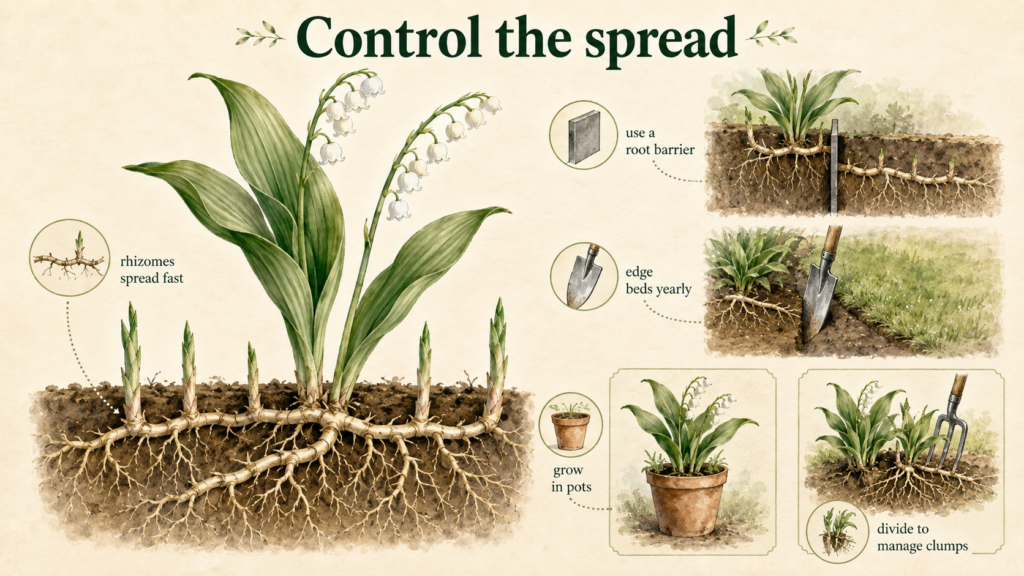
Lily of the valley spreads vigorously via underground rhizomes and can colonise large areas if left unchecked. While this is desirable as ground cover in wild areas, it can become problematic in mixed borders or small gardens.
To contain it: plant within a buried root barrier (a pot with the bottom removed works well), edge beds annually by slicing through wandering rhizomes with a sharp spade, or grow it in containers. Regular autumn division also helps keep colonies manageable.
Common Problems & Solutions
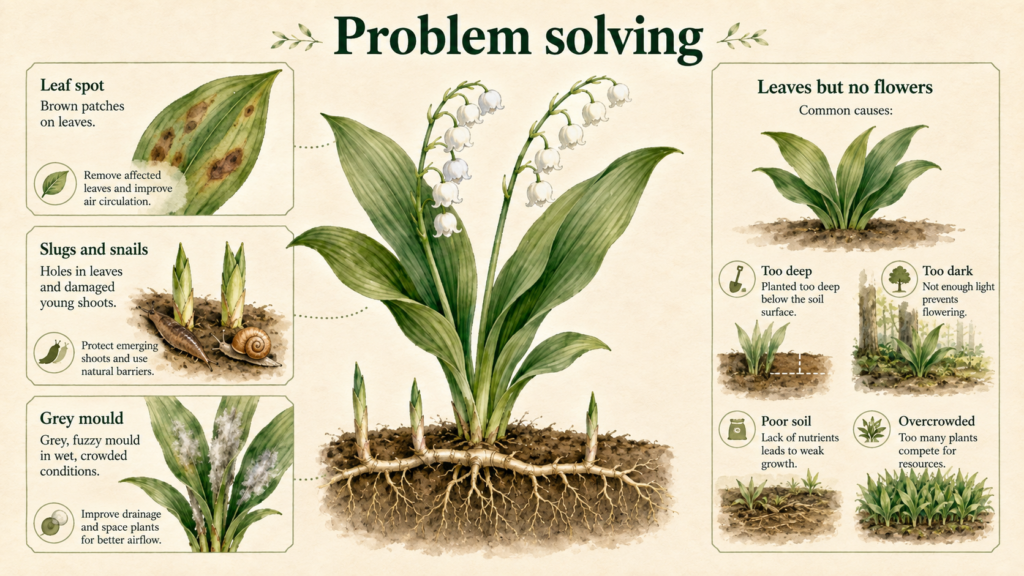
Leaf spot (brown patches on foliage) can occur in humid conditions — improve air circulation and remove affected leaves. Slugs and snails may nibble young shoots in spring; organic slug pellets or beer traps help. Grey mould (botrytis) is rare but appears in very wet, airless conditions.
The most common frustration — leaves but no flowers — is almost always caused by planting too deep, excessive shade (yes, even this plant needs some indirect light), very poor soil, or overcrowded colonies that need dividing.
Safety & Toxicity Information
⚠️ Important: All parts of lily of the valley are toxic if ingested — including leaves, flowers, berries, and roots. Keep plants away from young children and pets, and always wash hands after handling.
The plant contains cardiac glycosides (primarily convallatoxin) that affect the heart. Symptoms of ingestion include nausea, vomiting, and irregular heartbeat. While serious poisoning is rare from garden contact, it’s wise to wear gloves when dividing or handling roots extensively.
If a child or pet ingests any part of the plant, contact poison control or a veterinarian immediately. For everyday gardening, common-sense precautions — gloves, hand-washing, and supervising young children — are sufficient to enjoy this plant safely.
Frequently Asked Questions
Does lily of the valley need full shade?
It prefers partial to full shade, especially dappled light beneath deciduous trees. Gentle morning sun is usually fine, but hot afternoon sun can scorch the foliage and dry the soil.
When is the best time to plant lily of the valley?
Plant dormant bare-root pips in autumn or early spring. Autumn planting gives roots time to establish before active growth, while potted plants can be planted whenever the ground is workable.
Is lily of the valley poisonous to people and pets?
Yes. Every part of the plant, including the berries, is toxic if eaten. Keep it away from children and pets, wash hands after handling, and contact poison control or a veterinarian immediately after ingestion.