
An evidence-aware guide to rose water made from roses: what it is, what it can realistically do, and how to use the right product safely in skincare, hair care, cooking, and everyday rituals.
Rose water is an aromatic liquid traditionally produced by distilling rose petals with water. It is used in skincare, fragrance, cooking, and cultural traditions, but its benefits depend on the product, concentration, ingredients, and method of use.
Rose water has a long history in Middle Eastern, South Asian, Mediterranean, and other cultural traditions. It can make a pleasant facial mist, add a floral note to desserts, or scent a bath, but it is not a proven cure for acne, eczema, rosacea, infections, hair loss, anxiety, or eye conditions. This guide focuses on practical uses, ingredient awareness, and realistic expectations.
What is rose water, exactly?
Traditional rose water is made by steam-distilling rose petals with water. Steam passes through the plant material, picks up aromatic compounds, then cools and condenses. The water-based aromatic distillate is commonly called a hydrosol. Depending on the maker and market, a bottle labeled rose water may be a true distillate, a water-and-fragrance blend, or a preserved cosmetic formula.
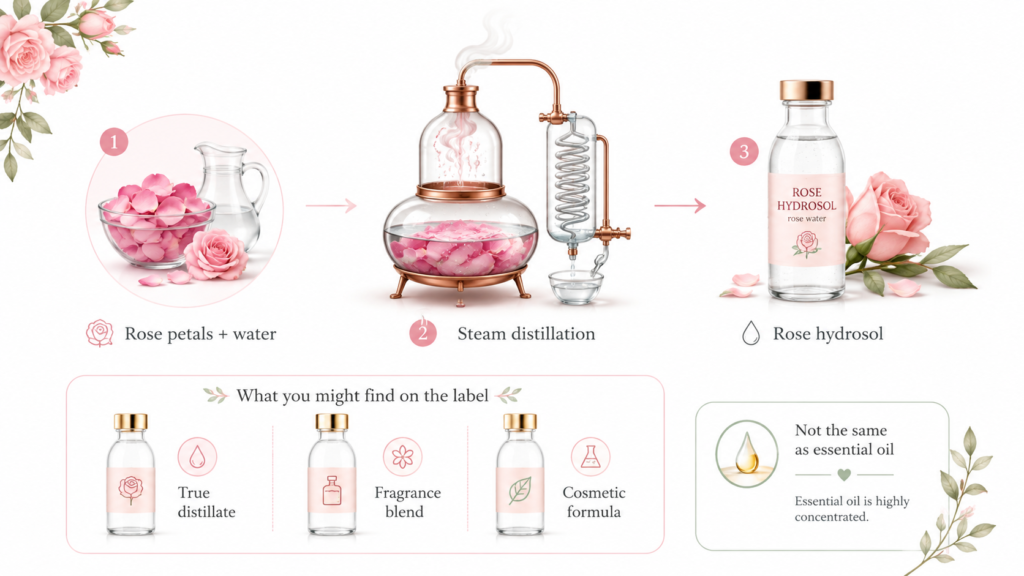
That difference matters. A simple distilled product may have a subtle, fresh scent, while a product with added perfume can smell much stronger and may not suit fragrance-sensitive skin. Rose water made from roses is also different from rose essential oil: essential oil is highly concentrated and should not be treated as interchangeable with a gentle hydrosol.
Rose water versus related rose products
Rose water / hydrosol
A water-based aromatic distillate. Labels may use these terms loosely, so check the full ingredients list.
Rose essential oil
A concentrated oil with a different safety profile. Never assume it can be sprayed or consumed like rose water.
Rose fragrance
A scent blend that may be natural, synthetic, or mixed. It is not proof that a product contains distilled roses.
Rose syrup
A sweet culinary ingredient, usually flavored and colored. It is not a substitute for food-grade rose water.
Potential skincare benefits: what is reasonable to expect
Rose water can be a pleasant supporting step in a routine, especially when you enjoy its scent and feel. Laboratory research on rose-derived compounds is interesting, but it does not prove that every rose-water product treats a skin condition. Think of it as a cosmetic extra, not a replacement for moisturizer, sunscreen, prescribed treatment, or advice from a qualified clinician.
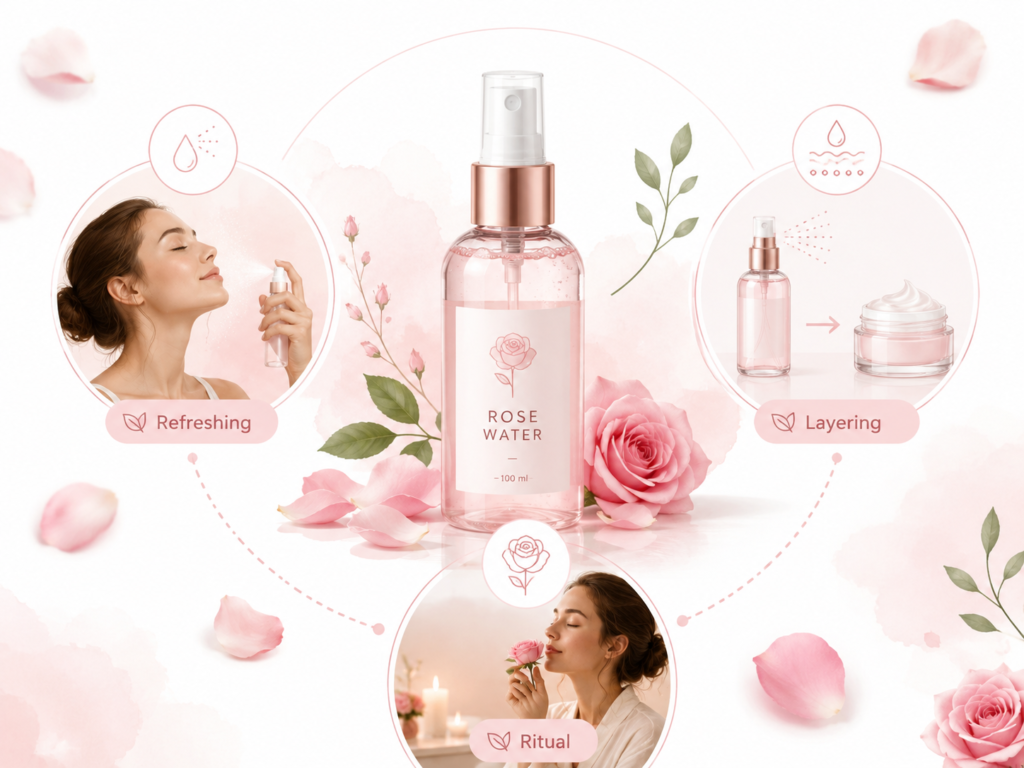
A refreshing feel
A light mist can feel cooling and comfortable during the day or before makeup, particularly in warm weather.
A layering step
Water alone does not lock in moisture, but applying moisturizer soon after misting can support a comfortable routine.
A sensory ritual
The gentle floral aroma can make a routine feel more enjoyable, though scent preferences and sensitivities differ.
How to use rose water on the face
For most people, the simplest approach is best: use a suitable cosmetic product on clean skin, then follow with moisturizer. A facial mist does not replace cleansing, moisturizer, or daily sunscreen. If you have sensitive or reactive skin, select a short ingredient list and treat added fragrance with care.
A low-fuss way to try it
- Patch-test first on a small area of skin and wait for a reaction before regular use.
- After gentle cleansing, mist lightly from a comfortable distance or apply a little with clean hands.
- Apply moisturizer while the skin still feels slightly damp if that suits your routine.
- Avoid the eye area unless the product specifically says it is intended for that use.
Practical note: if you notice burning, swelling, itching, hives, or persistent redness, rinse off the product and stop using it.
Rose water for hair and scalp
Rose water may add a soft floral scent or refreshing feel to hair lengths and scalp between washes. It is not a proven treatment for dandruff, scalp disease, hair loss, or hair growth. If you try it, use a cosmetic formula as directed, avoid spraying onto broken or irritated skin, and stop if your scalp becomes itchy or uncomfortable.
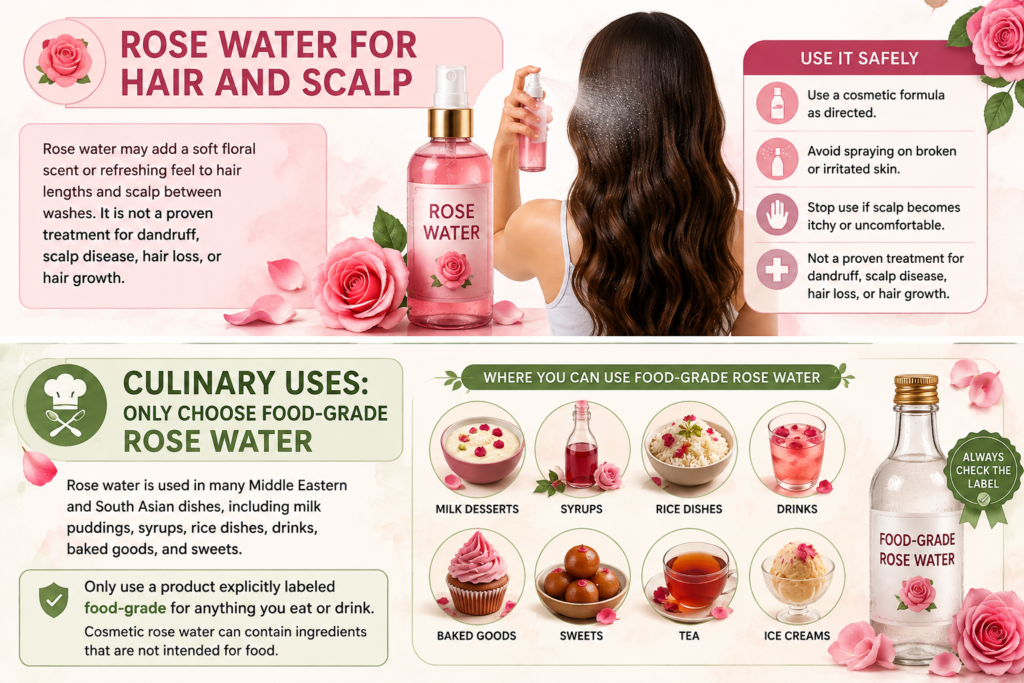
Culinary uses: only choose food-grade rose water
Rose water is used in many Middle Eastern and South Asian dishes, including milk puddings, syrups, rice dishes, drinks, baked goods, and sweets. Only use a product explicitly labeled food-grade for anything you eat or drink. Cosmetic rose water can contain ingredients that are not intended for food.
A little goes a long way
- Add a few drops to milk-based desserts, custards, or rice pudding.
- Stir a small amount into syrup for cakes, fruit, or traditional sweets.
- Use sparingly in tea, lemonade, lassi-style drinks, or chilled beverages.
- Pair with pistachio, cardamom, saffron, citrus, vanilla, or almond flavors.
Cooking observation: culinary rose water is strongly aromatic. Start with less than a recipe suggests if you are unsure; too much can quickly overpower a dish.
Rose water safety, storage, and shelf life
Natural does not automatically mean non-irritating or allergy-free. Keep bottles tightly closed, protect them from heat and direct sunlight, and avoid touching the nozzle to skin or food. Follow the manufacturer’s expiry and period-after-opening guidance. Homemade rose water has a shorter, less predictable shelf life than a properly manufactured and preserved product, so contamination is a genuine concern.
How to choose a good rose water product
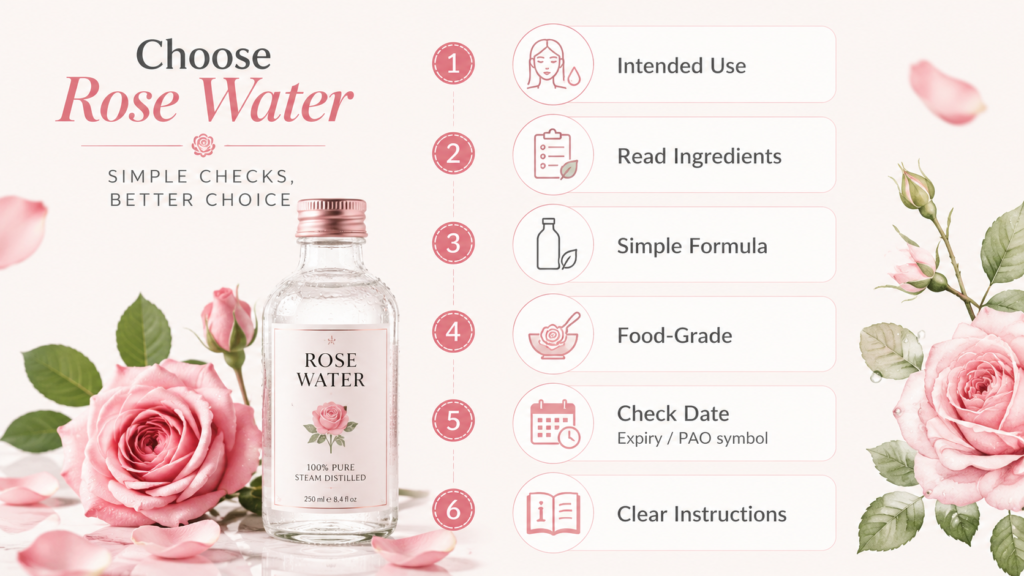
The best choice depends on your intended use. Read the complete label rather than relying on front-of-pack words such as “pure” or “natural.” For facial use, a simple formula may be preferable if you are sensitive to fragrance. For recipes, food-grade labeling is non-negotiable. For any product, clear manufacturer instructions and a visible date or period-after-opening symbol are helpful quality signals.
Frequently asked questions
Is rose water good for sensitive skin?
It can be comfortable for some people, but sensitivity varies. A product with added fragrance may trigger irritation in fragrance-sensitive skin. Patch-test first, use a simple formula, and stop if you react.
Can rose water treat acne and eczema?
Rose water is not a proven treatment for acne, eczema, rosacea, infections, or other skin conditions. It may feel pleasant as a cosmetic mist, but persistent symptoms should be assessed by a qualified healthcare professional.
Dose rose water expire?
Yes. Follow the manufacturer’s expiry date and period-after-opening instructions. Heat, sunlight, and contamination can shorten usable life. Homemade preparations should be treated as especially perishable and discarded if anything changes.