

A complete guide to popular ficus tree plants — learn which varieties thrive indoors, how to water and position your ficus plant, and how to prevent common problems.
What Is a Ficus?
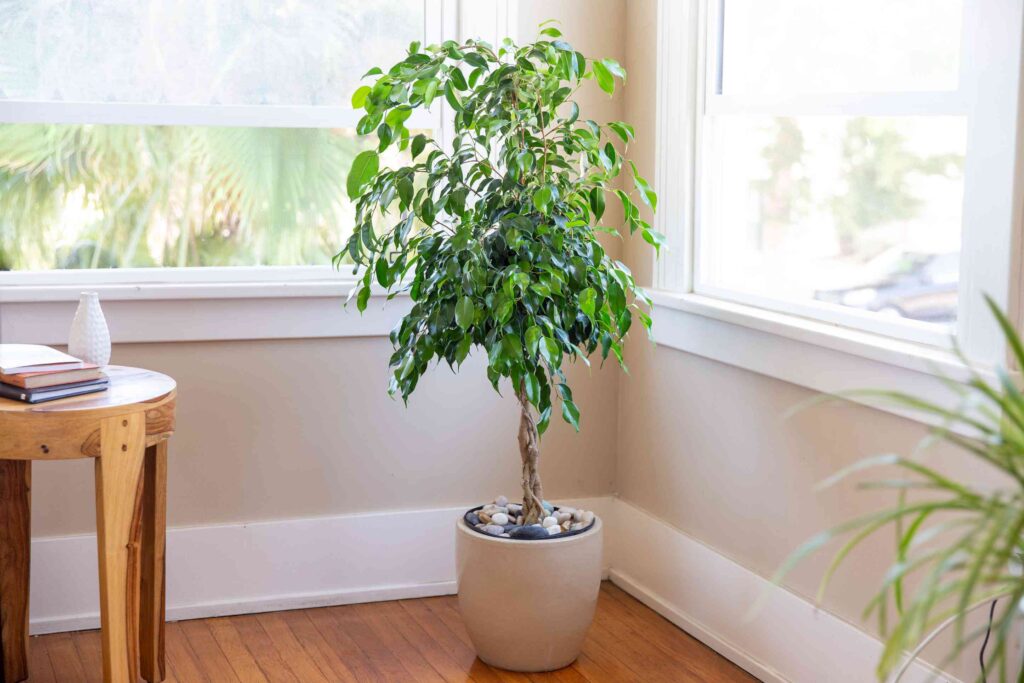
Ficus is a large genus of over 800 species of trees, shrubs, and climbing plants in the family Moraceae — commonly known as figs. While most people associate the word “fig” with the edible fruit, the genus includes many ornamental species that have become some of the world’s most popular houseplants. The rubber plant, fiddle-leaf fig, weeping fig, and Ficus Audrey all belong to this diverse group.
What makes ficus tree plants so appealing is their variety. Some grow into towering indoor trees with broad, dramatic leaves. Others trail delicately or form compact bonsai shapes. Despite their differences in appearance, most ficus plants share a preference for bright indirect light, consistent moisture, and stable environments. Understanding these shared traits — and the specific needs of each variety — is the key to growing a healthy ficus plant indoors.
Ficus Tree Varieties — Quick Comparison
| Common Name | Botanical Name | Indoor Height | Light | Difficulty |
|---|---|---|---|---|
| Fiddle-Leaf Fig | Ficus lyrata | 1.5–3 m | Bright indirect | Moderate |
| Rubber Plant | Ficus elastica | 1–2.5 m | Medium to bright | Easy |
| Weeping Fig | Ficus benjamina | 1–2.5 m | Bright indirect | Moderate |
| Ficus Audrey | Ficus benghalensis | 1.5–3 m | Bright indirect | Easy–Moderate |
| Creeping Fig | Ficus pumila | Trailing/climbing | Medium | Easy |
| Ginseng Ficus | Ficus microcarpa | 30–60 cm | Bright indirect | Easy |
| Ficus Alii | Ficus maclellandii | 1.5–2.5 m | Bright indirect | Easy |
Popular Ficus Tree Plants — Variety Profiles
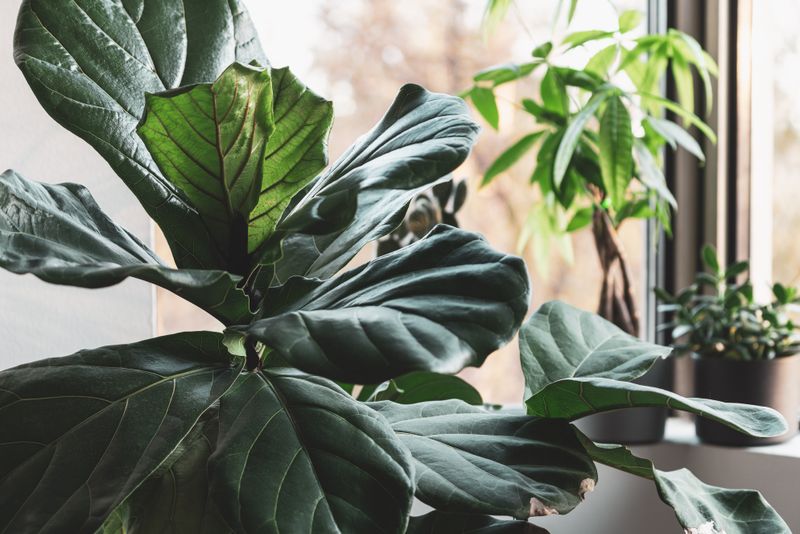
Fiddle-Leaf Fig (Ficus lyrata)
The fiddle-leaf fig is arguably the most recognizable ficus tree in modern interior design. Its large, violin-shaped leaves can reach 30–45 cm in length, creating bold architectural drama in any room. This ficus plant thrives in bright, indirect light near a south- or east-facing window. Water when the top 5 cm of soil feels dry, and avoid moving it frequently — fiddle-leaf figs are sensitive to environmental changes and may drop leaves in response. Expect a mature indoor height of 1.5–3 meters. While not the easiest ficus for beginners, consistent care rewards you with stunning growth.
Rubber Plant (Ficus elastica)
The rubber plant is one of the most forgiving ficus tree plants for beginners. Its thick, glossy, dark-green leaves have an almost waxy appearance — some cultivars like ‘Burgundy’ display deep purple-red tones. This ficus tolerates medium light better than most of its relatives, though it grows fastest in bright indirect conditions. Water when the top few centimetres of soil are dry. Wipe leaves with a damp cloth occasionally to remove dust and improve light absorption. Indoor rubber plants typically reach 1–2.5 meters and respond well to pruning if you want a bushier shape.
Weeping Fig (Ficus benjamina)

The weeping fig is a classic indoor ficus tree with graceful, arching branches covered in small, pointed leaves. It’s been a popular houseplant for decades, though it has a reputation for dropping leaves when stressed. The key is stability: once you find a bright spot away from drafts and heating vents, try not to move it. Water thoroughly when the top soil dries, and ensure the pot has excellent drainage. Variegated cultivars like ‘Starlight’ need slightly more light than solid-green forms. Expect heights of 1–2.5 meters indoors.
Ficus Audrey (Ficus benghalensis)
Ficus Audrey — the national tree of India — is gaining popularity as a more forgiving alternative to the fiddle-leaf fig. Its oval, velvety leaves are slightly smaller and more resilient to imperfect conditions. This ficus tree prefers bright indirect light but adapts to moderate light better than Ficus lyrata. Water when the top layer dries, and rotate the plant every few weeks for even growth. Ficus Audrey can reach 1.5–3 meters indoors and develops an attractive pale trunk as it matures.
Creeping Fig (Ficus pumila)
Unlike its tree-form relatives, the creeping fig is a trailing or climbing ficus plant with tiny, heart-shaped leaves. It works beautifully in hanging baskets, terrariums, or trained up a small trellis. This variety prefers consistent moisture — let the soil dry only slightly between waterings. It thrives in medium light and appreciates higher humidity. Outdoors in warm climates (zones 8–11), creeping fig can cover walls and fences vigorously. Indoors, it remains manageable and adds a delicate, textural element to plant collections.
Ginseng Ficus (Ficus microcarpa)
The ginseng ficus is the most popular ficus for bonsai beginners. Its thick, bulbous aerial roots and compact canopy of small oval leaves create instant bonsai appeal without years of training. This ficus plant prefers bright indirect light and should be watered when the surface soil dries. It’s more tolerant of occasional neglect than many bonsai species, making it a good entry point. Keep it away from cold drafts, and mist occasionally or place on a humidity tray. Mature specimens typically stay between 30–60 cm indoors.
General Ficus Plant Care Guide
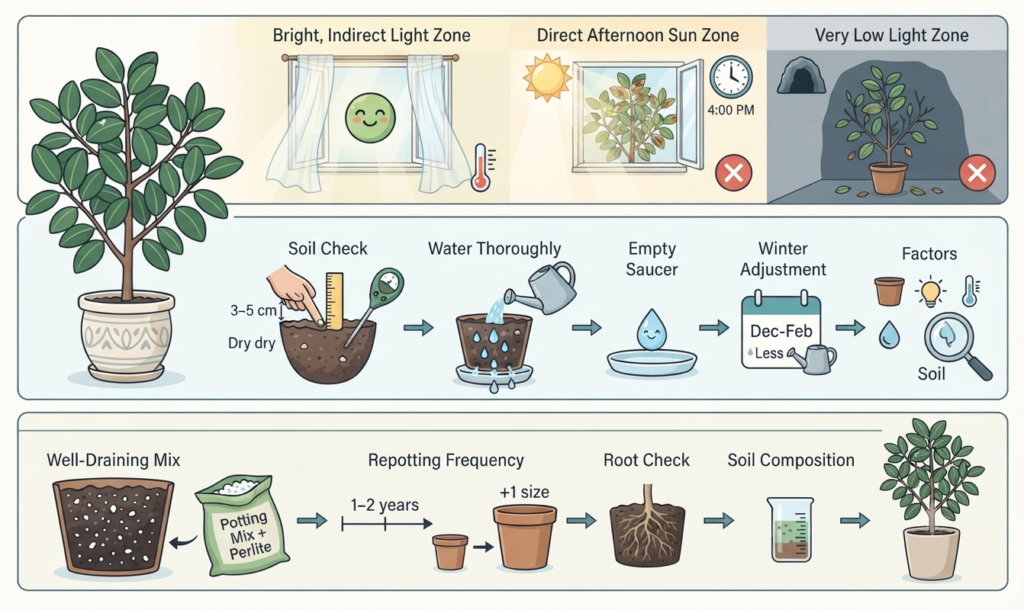
Light: Most ficus tree plants perform best in bright, indirect light — near a window with filtered sun. Some varieties (rubber plant, Ficus Alii) tolerate medium light, but growth will be slower. Avoid direct afternoon sun, which can scorch leaves, and very low light, which causes leggy growth and leaf drop.
Watering: The most common ficus mistake is overwatering. Always check the top 3–5 cm of soil before adding water — it should feel dry to the touch. Water thoroughly until it drains from the bottom, then empty the saucer. Reduce frequency in winter when growth slows. Factors that affect watering frequency include pot size, light intensity, temperature, humidity, and soil composition. There is no universal schedule — observation is your best tool.
Soil & Repotting: Use a well-draining potting mix — a standard indoor mix with added perlite works well. Repot every 1–2 years in spring, moving up one pot size. Ficus plants generally prefer being slightly root-bound rather than overpotted. Fertilize monthly during the growing season (spring through early autumn) with a balanced liquid fertilizer diluted to half strength. Clean leaves regularly to remove dust, which can reduce photosynthesis.
Common Ficus Problems & Solutions
Ficus plants communicate stress through their leaves. A single symptom can have multiple causes, so consider your overall care routine and recent environmental changes before making adjustments. Here are the most common issues:
| Symptom | Possible Cause | What to Do |
|---|---|---|
| Sudden leaf drop | Environmental change, draft | Keep conditions stable; check watering |
| Yellow leaves | Overwatering or poor drainage | Let soil dry; improve drainage |
| Brown leaf edges | Low humidity or inconsistent watering | Increase humidity; water consistently |
| Small new leaves | Insufficient light or nutrients | Move closer to light; fertilize |
| Sticky leaves | Scale insects or mealybugs | Inspect undersides; treat with neem oil |
| Soft dark roots | Root rot from overwatering | Remove damaged roots; repot in fresh soil |
How to Choose the Right Ficus Tree
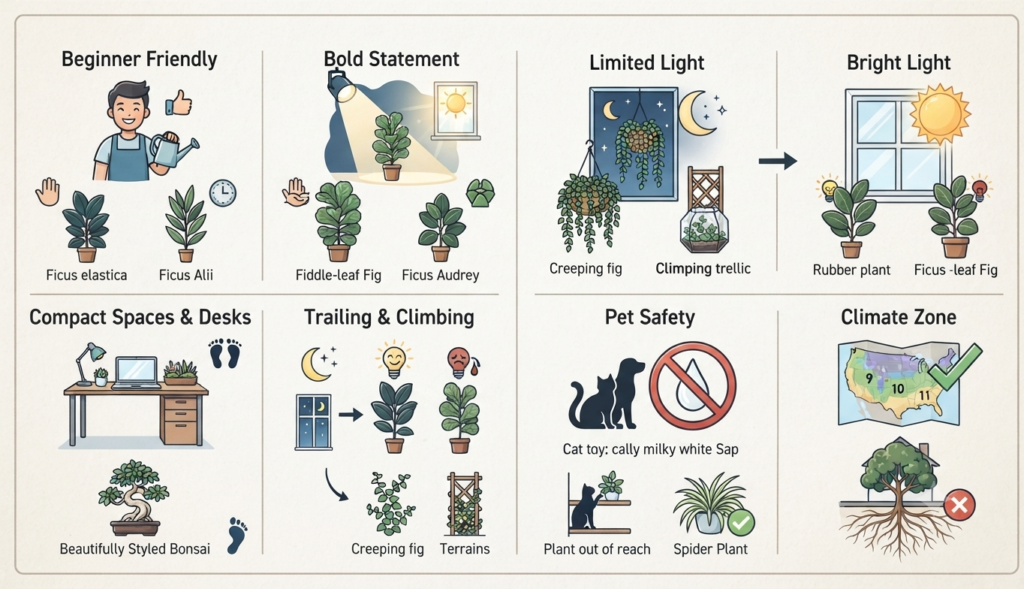
For beginners: Start with a rubber plant (Ficus elastica) or Ficus Alii — both are forgiving of occasional care lapses. For a bold statement tree: The fiddle-leaf fig or Ficus Audrey make dramatic focal points in bright rooms. For compact spaces or desks: A ginseng ficus bonsai stays small and requires minimal floor space. For trailing or climbing interest: The creeping fig (Ficus pumila) works in hanging baskets and terrariums.
Consider your available light before choosing. A north-facing room with limited natural light is better suited to a rubber plant than a fiddle-leaf fig. If you have pets, note that all ficus species produce a milky latex sap that can cause mild irritation if ingested by cats or dogs — place plants out of reach or choose a pet-safe alternative. Check your local climate zone before planting ficus outdoors; most species are only hardy in USDA zones 9–11 and their root systems can become invasive in suitable conditions.
🌱 Pro Tip: Stability Is Key
Ficus plants are creatures of habit. Once you find a spot where your ficus tree is growing well — producing new leaves and maintaining its existing foliage — resist the urge to move it. Even rotating too quickly can trigger temporary leaf drop. If you must relocate the plant, do so gradually over several days, and expect a short adjustment period.
Frequently Asked Questions About Ficus
Is a ficus the same as a fig tree?
Yes — ficus is the botanical genus name for all fig trees. The edible fig (Ficus carica) is one species in this large genus. However, most ornamental ficus houseplants do not produce edible fruit. When people say “ficus” in the context of indoor plants, they typically mean decorative species like Ficus benjamina, Ficus elastica, or Ficus lyrata.
Why is my ficus dropping leaves?
Leaf drop is the most common ficus stress response. It can be triggered by moving the plant to a new location, changes in temperature, drafts from windows or heating systems, overwatering, underwatering, or low light. Some leaf loss after a move is normal — if conditions are otherwise good, the plant usually stabilizes within a few weeks. Persistent drop suggests an ongoing issue that needs investigation.
How often should I water my ficus plant?
There is no single schedule that works for every home. Check the top 3–5 cm of soil — when it feels dry, water thoroughly until liquid flows from the drainage holes. This might be weekly in summer in a bright room, or every 10–14 days in winter. Factors like pot size, soil mix, humidity, and light all affect drying time. Avoid watering on a strict calendar; use the finger test instead.
Are ficus plants toxic to cats and dogs?
All ficus species produce a milky latex sap that can cause mild gastrointestinal upset and oral irritation if ingested by cats or dogs. According to the ASPCA, ficus plants are considered mildly toxic to pets. Place your ficus tree out of reach of curious animals, or consider a pet-safe plant if your pet tends to chew foliage. Contact your veterinarian if you suspect ingestion.
Which ficus variety is best for beginners?
The rubber plant (Ficus elastica) is widely considered the most beginner-friendly ficus tree. It tolerates a range of light conditions, forgives occasional missed waterings, and communicates clearly through its leaves when something is wrong. Ficus Alii (Ficus maclellandii) is another excellent choice — it drops fewer leaves than the weeping fig and adapts well to typical indoor conditions.
Can ficus trees grow outdoors?
Yes — in warm climates (USDA zones 9–11), many ficus species grow vigorously outdoors as landscape trees. Ficus benjamina, Ficus microcarpa, and Ficus benghalensis can become very large with aggressive root systems. Check local regulations before planting outdoors, as some species are considered invasive in certain regions. In cooler climates, ficus plants can spend summer outdoors in a sheltered, shaded position but must come indoors before temperatures drop below 10°C.