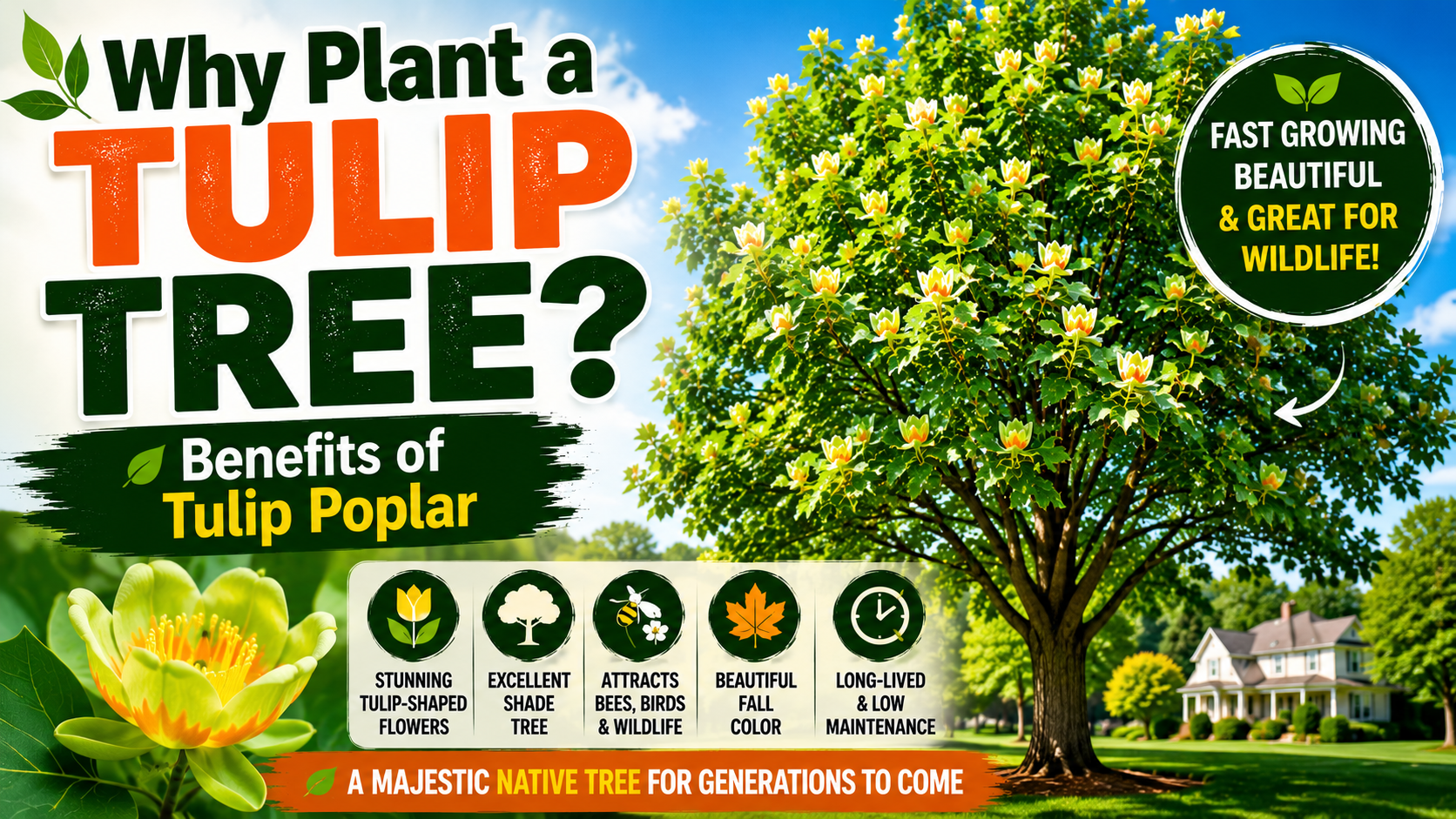

Discover why Liriodendron tulipifera is one of the best native shade trees for large landscapes — from stunning flowers and fast growth to wildlife value and brilliant fall color.
What Is a Tulip Tree?
A tulip tree (Liriodendron tulipifera) is a fast-growing deciduous tree native to eastern North America. Despite its common name tulip poplar, it is not a true poplar at all — it belongs to the magnolia family (Magnoliaceae). The name comes from its distinctive tulip-shaped flowers that bloom in late spring, featuring yellow-green petals with an orange band at the base.
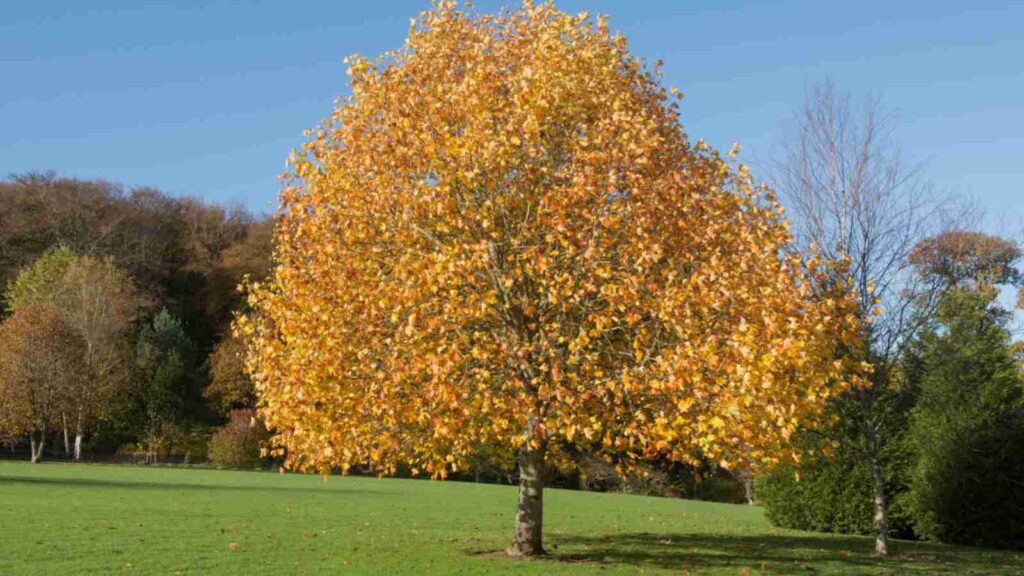
The tulipifera tulip tree is one of the tallest hardwoods in North America, commonly reaching 21 to 37 meters at maturity. Its straight, columnar trunk and high canopy have made it a prized timber tree for centuries. Early American settlers used the wood for canoes, and it remains commercially important today for furniture, cabinetry, and musical instruments.
You may also hear it called yellow poplar, whitewood, or fiddle tree. Regardless of the name, all refer to the same species: Liriodendron tulipifera. Understanding this helps avoid confusion when researching or purchasing — if a nursery lists ‘tulip poplar’ or ‘yellow poplar,’ you are looking at the same magnificent tree.
Benefits of Planting a Tulip Tree
Fast-Growing Shade
Few native trees match the tulip tree’s growth rate. Young specimens can add 60 to 90 centimeters of height per year in ideal conditions. Within a decade of planting, you can enjoy meaningful shade from a tree that might already stand 8 to 10 meters tall. This makes the tulip poplar an excellent choice for homeowners who want results faster than oaks or hickories can provide.
Stunning Tulip-Shaped Flowers
In May and June, mature tulip trees produce cup-shaped blooms resembling tulips — yellow-green with a distinctive orange interior. While the flowers often appear high in the canopy and can be easy to miss on tall specimens, they are spectacular on younger trees at eye level. Each flower produces abundant nectar, making the tulip tree one of the most important honey trees in the eastern United States.
Pollinator & Wildlife Support
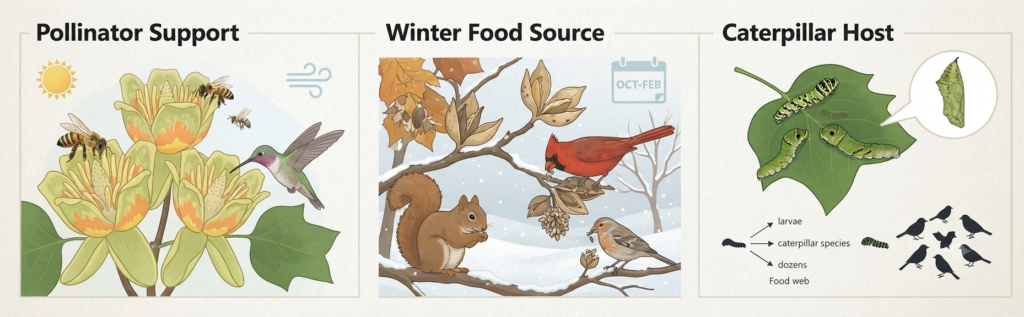
Honeybees, native bees, and hummingbirds all visit tulip tree flowers for nectar. The seeds provide food for squirrels, cardinals, finches, and other birds throughout autumn and winter. As a native species, the tulipifera tulip tree supports dozens of caterpillar species — including the eastern tiger swallowtail butterfly — making it a cornerstone of the local food web.
Brilliant Golden Fall Color
In autumn, the uniquely shaped leaves turn a clear, bright golden yellow. The effect is striking against a blue October sky. Because the leaves are large and distinctively lobed — flat-topped with four points — they create a uniform golden canopy unlike any other native tree.
Property Value & Curb Appeal
Research consistently shows that mature trees increase residential property values by 7–19%. A healthy, well-placed tulip tree — with its imposing height, clean trunk, and seasonal interest — makes a strong visual statement. Real estate appraisers consider large specimen trees an asset, particularly in suburban neighborhoods where shade and character are prized.
Carbon Sequestration & Air Quality
Due to its rapid growth and large size, the tulip tree is one of the most effective carbon-sequestering species in temperate forests. A single mature specimen can store several tonnes of carbon over its lifetime while filtering particulate matter from the air. Planting a tulip poplar is a tangible contribution to urban and suburban air quality.
Growing Requirements
Sunlight
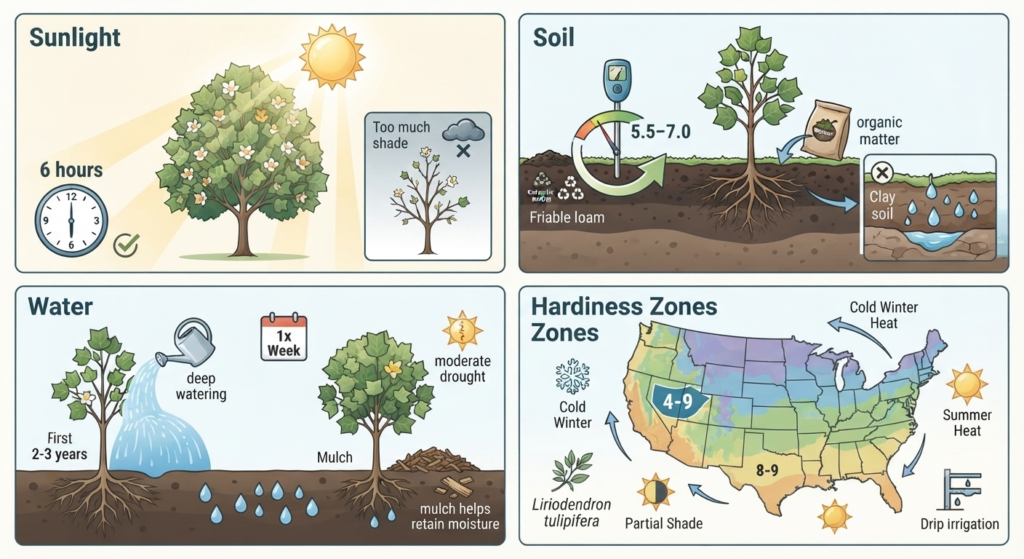
Tulip trees need full sun — at least 6 hours of direct sunlight daily. They tolerate light afternoon shade but develop their strongest canopy and best flowering in open, sunny positions. Trees planted in too much shade become leggy and produce fewer flowers.
Soil
The tulip poplar prefers deep, moist, well-drained soil with a slightly acidic to neutral pH (5.5–7.0). It grows well in loamy or sandy loam soils. Heavy clay or poorly drained sites can lead to root problems. If your soil is compacted, amend the planting area generously with organic matter.
Water
Young tulip trees need consistent moisture during their first 2–3 years. Water deeply once a week during dry periods. Established trees are moderately drought-tolerant but may drop interior leaves during extended heat and drought — a survival mechanism, not a sign of disease. Mulching to a depth of 7–10 cm around the root zone helps retain moisture.
Hardiness Zones
Liriodendron tulipifera thrives in USDA Hardiness Zones 4 through 9. It handles cold winters well and tolerates summer heat, though prolonged drought stress is its main vulnerability in warmer zones. In zones 8–9, ensure adequate irrigation and partial afternoon shade if possible.
Where to Plant a Tulip Tree

Because tulip trees grow very large, proper spacing is critical. Plant at least 12 to 15 meters from your house, driveway, sidewalks, and septic systems. Keep them at least 10 meters from overhead power lines. The root system is moderately spreading but not typically invasive to foundations when planted at appropriate distances.
Tulip poplars are best suited to medium and large properties. They make exceptional specimen trees in open lawns, along property borders, or lining long driveways. They are not appropriate for small urban lots or courtyards. If your available space is limited, consider a smaller native alternative such as serviceberry or redbud.
Potential Drawbacks to Consider
No tree is perfect, and honest evaluation is important. Tulip trees can develop weak branch attachments, making them susceptible to storm damage — particularly ice storms. They are prone to aphid infestations that produce sticky honeydew on surfaces beneath the canopy. Large leaves create significant autumn litter. The trees are also shallow-rooted compared to oaks, which can make lawn maintenance underneath more challenging.
Additionally, tulip trees do not tolerate prolonged drought well. In dry summers, they may drop leaves prematurely or show stress sooner than deeper-rooted species. They are not suitable for compact gardens, and their mature height means they will eventually tower over most residential structures. Plan for the long term — this tree will outlive you.
Tulip Tree vs Other Shade Trees
| Feature | Tulip Tree | Red Maple | White Oak |
|---|---|---|---|
| Growth Rate | Fast (60–90 cm/year) | Medium (30–60 cm/year) | Slow (30–45 cm/year) |
| Mature Height | 21–37 m | 12–21 m | 18–30 m |
| Lifespan | 200–300 years | 100–150 years | 300–600 years |
| Flowers | Yes — tulip-shaped | Inconspicuous | Inconspicuous |
| Wildlife Value | High (bees, birds) | Moderate | Very High |
| Maintenance | Low–Moderate | Low | Low |
Planting Tip: First-Year Care
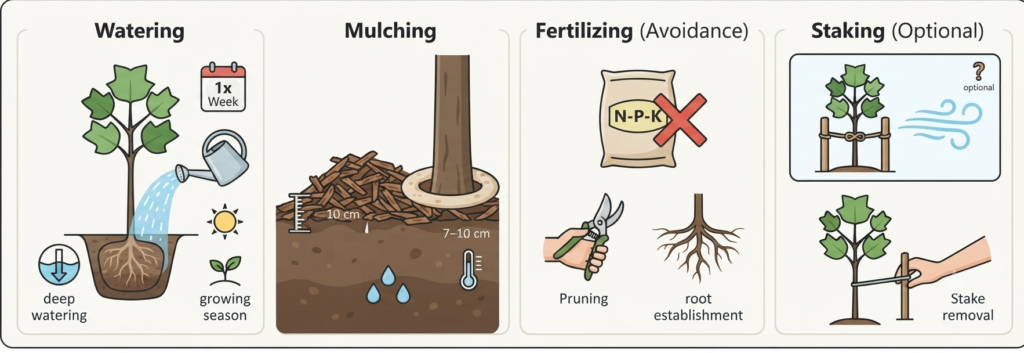
Water your newly planted tulip tree deeply once per week during its first growing season. Apply a 7–10 cm layer of organic mulch around the base (keeping it away from the trunk) to conserve moisture and regulate soil temperature. Avoid fertilizing in the first year — let the roots establish before pushing top growth. Stake only if the site is extremely windy, and remove stakes after the first year.
Frequently Asked Questions About Tulip Trees
Is a tulip tree the same as a tulip poplar?
Yes. Tulip tree, tulip poplar, yellow poplar, and whitewood are all common names for the same species: Liriodendron tulipifera. Despite the name ‘poplar,’ it is not related to true poplars (Populus). It belongs to the magnolia family.
How fast does a tulip tree grow?
Tulip trees are among the fastest-growing native hardwoods in North America, adding 60 to 90 cm of height per year in good conditions. A well-sited tree can reach 10 meters within its first decade. Growth rate slows somewhat as the tree matures.
How tall does a tulip tree get?
Mature tulip trees typically reach 21 to 37 meters (70–120 feet) tall with a spread of 9 to 15 meters. In ideal forest conditions, some specimens exceed 45 meters. In residential settings, expect the lower end of this range due to more open growing conditions.
Do tulip trees have invasive roots?
Tulip tree roots are moderately spreading and relatively shallow, but they are not considered aggressively invasive like willows or silver maples. When planted at least 12–15 meters from structures, they rarely cause foundation or sidewalk problems. Avoid planting near septic systems or shallow utility lines.
Are tulip trees messy?
Moderately. Tulip trees drop large leaves in autumn, spent flower petals in early summer, and small seed capsules in late fall and winter. Aphid honeydew can also coat cars and patios beneath the canopy. They are tidier than sweetgums or sycamores but messier than oaks. Regular raking in autumn is expected.
Can I plant a tulip tree in a small yard?
Generally no. Tulip trees need significant space — at least 12 meters clearance from structures in all directions. For small urban lots, consider smaller native alternatives like dogwood, redbud, or serviceberry that provide similar seasonal interest in a fraction of the space.
When do tulip trees bloom?
Tulip trees typically bloom in May and June, depending on your climate zone. Trees generally need to reach 15–20 years of age before producing significant flowers. The blooms appear high in the canopy on mature trees, so they are sometimes missed unless you look up or notice fallen petals on the ground.
Is a tulip tree better than a maple or oak?
It depends on your priorities. Tulip trees grow faster and provide shade sooner than oaks. They offer showier flowers than maples. However, oaks support more wildlife species overall and are more wind-resistant. Maples offer more intense red fall color. The best choice depends on your space, soil, climate, and goals. Many arborists recommend planting a mix of species for biodiversity.