
A practical guide to keeping a tropical hibiscus healthy, leafy, and full of color—from choosing the right sunny spot to managing bud drop and winter cold.
Tropical hibiscus usually refers to Hibiscus rosa-sinensis and its cultivars. It grows best with strong light, warmth, evenly moist but well-drained soil, and regular feeding during active growth. It is not frost-hardy: bring container plants under protection before cold weather, and use local climate guidance before planting one outdoors year-round.
What is a tropical hibiscus?
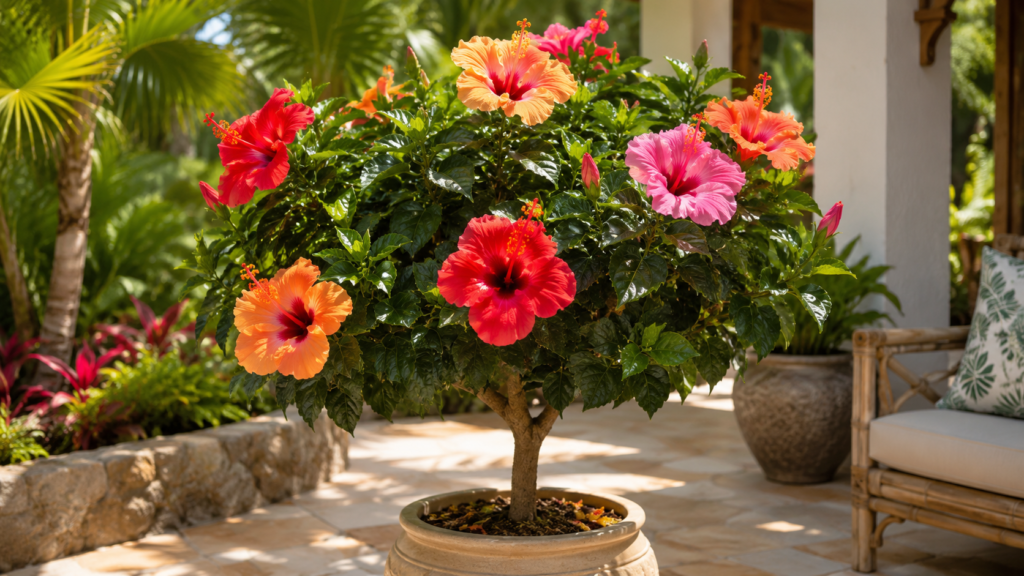
The tropical hibiscus sold in garden centers is most often Hibiscus rosa-sinensis or a related hybrid. It is an evergreen, woody flowering shrub in frost-free climates, valued for its glossy leaves and large flowers in red, pink, orange, yellow, white, and multicolored combinations. Individual flowers may last only a day or two, but a healthy plant can produce new buds through the warm season.
Do not confuse tropical hibiscus with hardy hibiscus, such as Hibiscus moscheutos. Hardy types usually die back in cold winters and return from the roots, while tropical hibiscus is damaged by cold and can be killed by frost. Exact performance depends on your climate, light, cultivar, root space, soil moisture, and the plant’s condition.
Tropical hibiscus vs. hardy hibiscus
Tropical hibiscus needs reliably warm conditions and cannot be treated as frost-hardy. Hardy hibiscus tolerates much colder winters but has a different seasonal habit, larger leaves, and often flowers later in summer.
Is a hibiscus tree different?
A hibiscus tree is usually the same tropical hibiscus plant trained into a standard form with one clear trunk and a rounded canopy. It needs the same warmth and light, plus gentle, regular pruning to preserve its shape.
How to plant tropical hibiscus
Planting in the ground
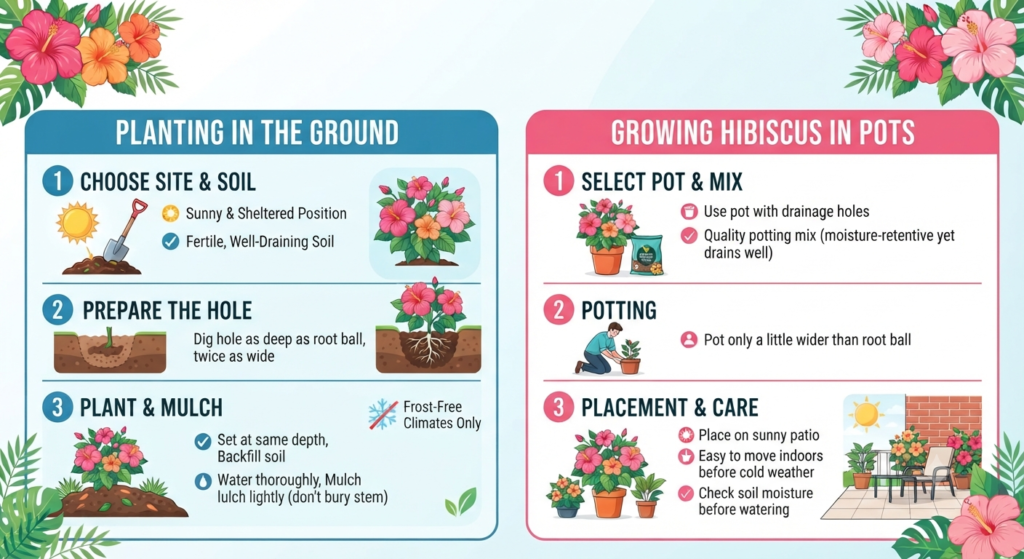
Plant outdoors only where winters are reliably frost-free or where local experts confirm it is suitable. Choose a sunny, sheltered position with fertile soil that drains freely. Dig a hole no deeper than the root ball and roughly twice as wide, set the plant at the same depth it grew in its pot, backfill, water thoroughly, and mulch lightly without burying the stem.
Growing hibiscus in pots
A container is often the most flexible choice for a hibiscus plant in temperate regions because it can move indoors before cold weather. Use a pot with drainage holes that is only a little wider than the root ball, plus a quality potting mix that holds moisture without staying soggy. Large containers dry more slowly than small ones, so always check the mix before watering.
A sunny patio lets container-grown hibiscus receive strong light while remaining easy to move when temperatures fall.
The best tropical hibiscus care routine
Reliable flowering is not about one fixed watering schedule. It comes from matching the plant’s care to changing weather, container size, root growth, light level, and soil moisture. Use this reference as a starting point, then adjust based on what your own plant shows you.
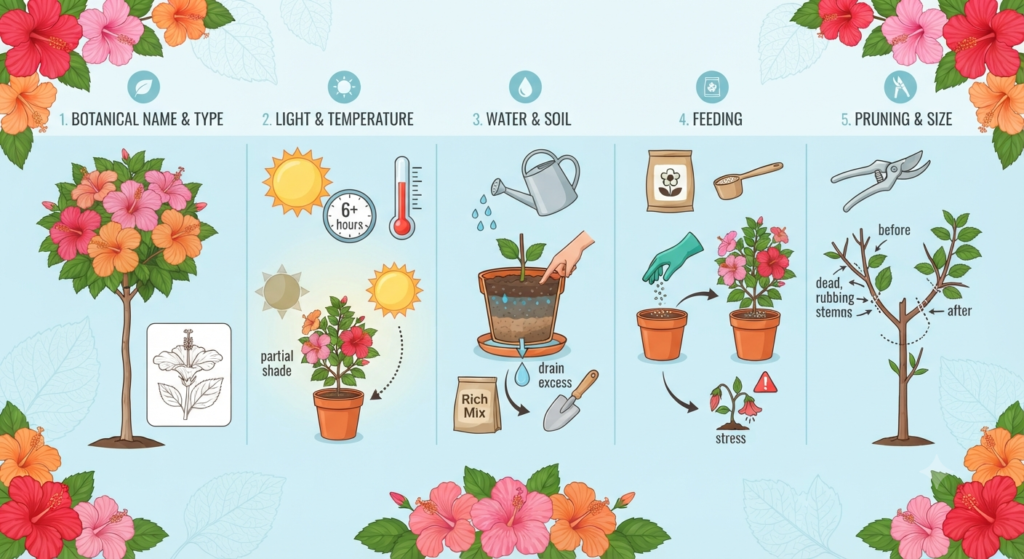
| Care point | Practical guidance |
|---|---|
| Botanical name & type | Usually Hibiscus rosa-sinensis; tropical evergreen flowering shrub, often trained as a standard hibiscus tree. |
| Light & temperature | Aim for 6 or more hours of bright direct light where conditions allow. Growth and flowering slow in cool weather; protect from chilly winds and frost. |
| Water & soil | Water deeply when the upper layer of mix begins to dry, then let excess drain. Grow in a fertile, moisture-retentive but well-drained soil or potting mix. |
| Feeding | Feed during active growth with a fertilizer labeled for flowering plants, following the product label. Avoid overfeeding stressed or dry plants. |
| Pruning & size | Many cultivars reach roughly 4–10 feet tall in warm climates; prune lightly in warm active weather to shape, remove damage, and encourage branching. |
- Light: more usable light generally means more flowers. Acclimate a newly purchased plant gradually to hot outdoor sun to reduce scorch, especially after greenhouse growing.
- Watering: feel the mix rather than watering by calendar. A thirsty hibiscus may wilt, while a constantly wet root zone can cause yellow leaves and root decline. Water until it drains, then empty saucers.
- Soil: choose a loose, rich mix with drainage. Garden soil should be improved only if needed for structure; avoid creating a water-holding pocket around the root ball.
- Feeding: active hibiscus are hungry plants, but fertilizer cannot compensate for low light or damaged roots. Follow label rates and local regulations, and reduce feeding when growth naturally slows.
- Pruning: use clean, sharp tools. Remove dead or rubbing stems first, then shorten selected shoots above an outward-facing node. For a standard hibiscus tree, remove shoots that emerge from the trunk below the canopy.
Light, purposeful pruning helps a tropical hibiscus branch well without removing more living growth than necessary.
Winter care and overwintering
Tropical hibiscus should not be left outside through frost. Before night temperatures become cool, inspect the plant carefully for pests, prune only damaged growth, and move containers to the brightest protected place available. A sunny window, enclosed porch, or greenhouse can work if temperatures remain comfortably above freezing.
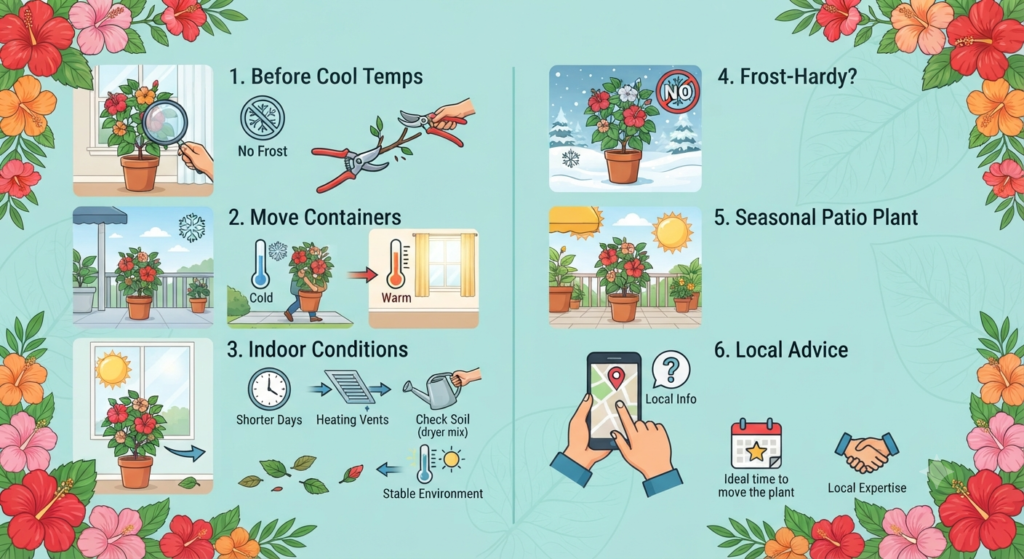
Indoor plants usually use less water because days are shorter and evaporation is slower. Let the mix dry slightly more between waterings, keep it away from heating vents and cold glass, and expect flowering to slow. New leaves and buds may drop briefly after a major change in light or temperature; stabilize conditions rather than repeatedly moving the plant.
Cold is the non-negotiable limit
A tropical hibiscus is not a frost-hardy shrub. If your region has freezing winters, treat it as a seasonal patio plant or overwinter it under protection. Local extension advice is especially valuable for timing the move indoors.
Yellow leaves, bud drop, and common pests
Why leaves turn yellow
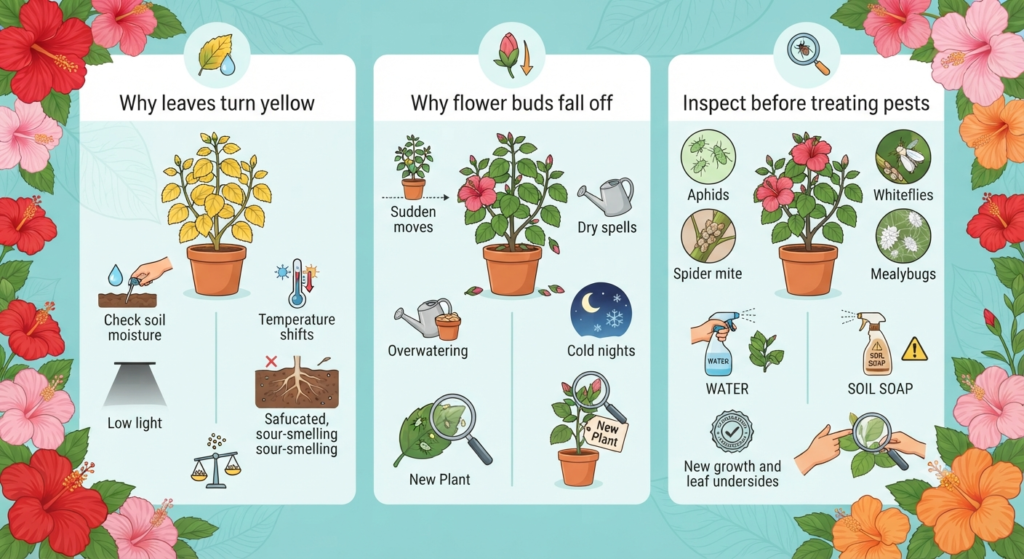
A few older yellow leaves can be normal, but widespread yellowing often points to stress: overly wet roots, dry roots, low light, sudden temperature shifts, or nutrient imbalance. Check moisture at root level and inspect drainage before adding fertilizer. If the mix is saturated and sour-smelling, address the root environment first.
Why flower buds fall off
Bud drop is often a response to change rather than a single disease. Sudden moves, dry spells, overwatering, insufficient light, cold nights, pests, or a plant adjusting after purchase can all trigger it. Keep conditions steady, avoid letting the plant swing between bone-dry and waterlogged, and check buds and leaf undersides for insects.
Inspect before treating pests
Aphids, whiteflies, spider mites, scale, and mealybugs can attack tropical hibiscus, especially in warm, sheltered conditions. Isolate a heavily affected pot if possible, rinse small infestations with water, and identify the pest before choosing a treatment. If you use insecticidal soap, horticultural oil, or another pesticide, follow the label exactly and follow local regulations.
Check new growth and leaf undersides regularly so pest issues can be addressed before they weaken the plant.
Frequently asked questions
Can tropical hibiscus grow indoors?
Yes, but strong light is essential. Place it in the brightest available location, ideally with several hours of direct sun, and rotate the pot occasionally for balanced growth. Indoor air can be dry, so keep watering consistent and inspect frequently for spider mites and other pests.
How can I make my hibiscus produce more flowers?
Prioritize bright light, warm temperatures, healthy roots, steady moisture, and appropriate feeding during active growth. A leafy plant with few flowers may need more light, may be receiving too much nitrogen, or may simply be recovering from stress. Flowering also varies by cultivar and plant maturity.
Is tropical hibiscus toxic to pets?
Pet safety information can vary by plant species and animal. It is wise to prevent pets from chewing ornamental plants and to contact a veterinarian or a reputable animal poison resource promptly if a pet eats a plant and seems unwell. Keep plant labels so the exact species can be identified.