
A practical, season-aware guide to helping desert rose thrive and flower for as long as your light, warmth, and climate allow.
Desert rose, botanically known as Adenium obesum, can bloom repeatedly through warm, bright periods—but dependable year-round flowers are realistic only where it receives very strong light, warmth, excellent drainage, and little or no winter dormancy. The safest routine is simple: give it sun, let its mix dry appropriately, and reduce water sharply when growth slows.
Can desert rose really flower all year?
A healthy mature desert rose can flower for long stretches in hot, sunny climates and in a bright greenhouse. However, flowering is not guaranteed by one product or a fixed watering timetable. It depends on plant maturity, cultivar, root health, hours of direct sun, temperature, nutrition, and the natural seasonal cycle.
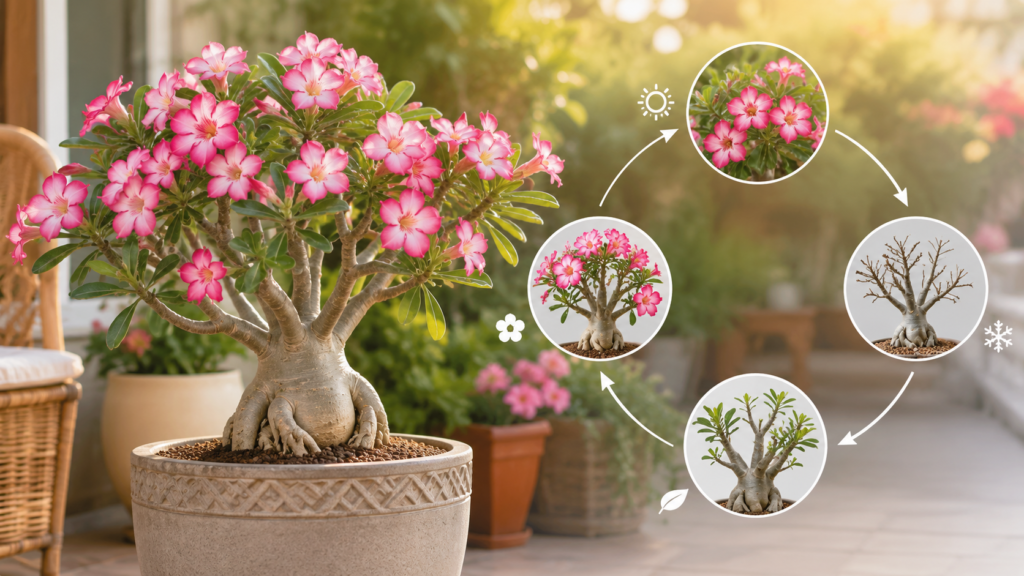
In cooler climates, indoor plants and plants kept in short winter days often pause, drop leaves, or become partly dormant. That is usually a seasonal response rather than a sign that you have failed. The goal is to create the best growing conditions during active months and avoid rot during slow months.
Flower color and bloom frequency vary by cultivar, plant maturity, light exposure, and growing conditions.
Light and watering: the two habits that matter most
Give it the brightest position you can
For the strongest growth and best flowering, aim for at least six hours of direct sun outdoors. In very hot climates, a little protection from harsh late-afternoon sun can help newly moved or stressed plants. Indoors, place the plant in the brightest south-, west-, or north-facing window available for your hemisphere; weak window light is a common reason for leafy growth with few flowers.
Water deeply, then wait for the mix to dry
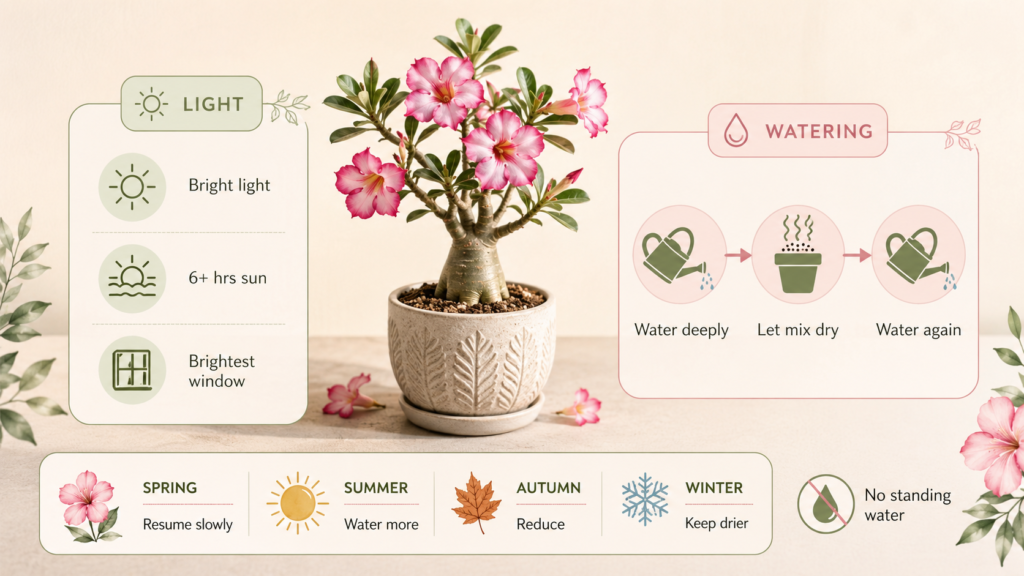
Drought tolerance does not mean a desert rose should be neglected indefinitely. When it is actively growing in warmth, water thoroughly until excess drains away, then wait until the potting mix is mostly dry before watering again. Test the mix with a finger, wooden skewer, or the pot’s weight. The right interval changes with heat, pot size, soil blend, airflow, and root activity.
- Spring: resume watering gradually when you see new leaves and firm growth. Start feeding only after active growth begins.
- Summer: water more often in heat and strong sun, but never leave the roots sitting in a saucer of water.
- Autumn: reduce watering as nights cool and growth slows; stop pushing soft growth with heavy feeding.
- Winter: keep the plant warm and much drier. Water only enough to prevent severe shriveling if it is dormant.
Best soil, containers, feeding, and pruning
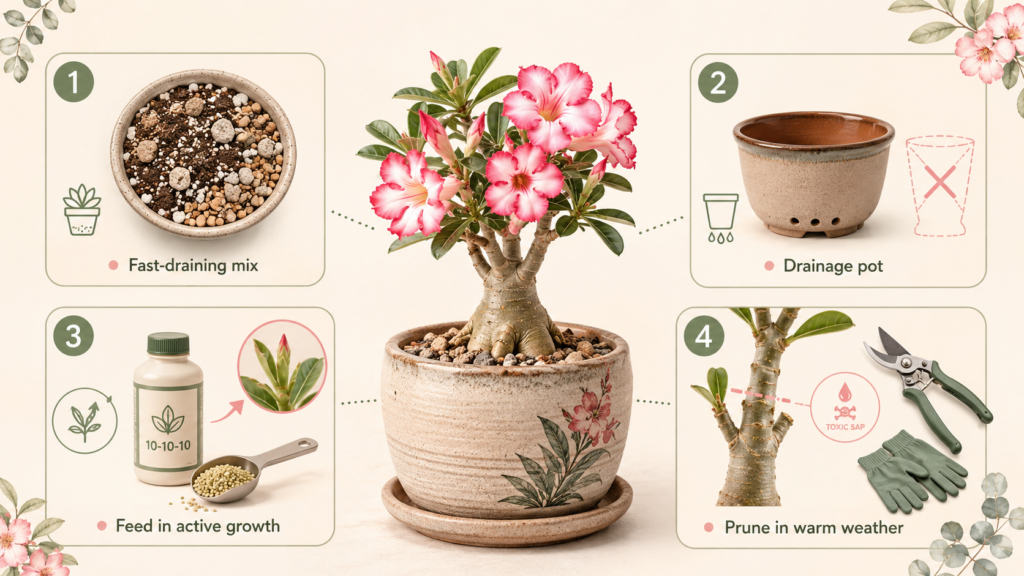
Desert rose needs a sharply draining mix that contains air around its roots. A commercial cactus or succulent mix improved with mineral ingredients such as pumice, perlite, grit, or coarse sand is usually safer than dense universal potting compost. Choose a pot with drainage holes and avoid oversized containers, which stay wet for too long.
Choose the right pot
A broad, stable pot can suit the swollen caudex, but drainage matters more than material. Repot in warm active growth when roots have filled the pot or the mix is breaking down.
Feed for healthy growth, not forced blooms
Use a balanced or bloom-supporting fertilizer diluted according to its label during active growth. Stop or greatly reduce feeding when the plant is cold, dormant, stressed, or not producing new growth.
Prune for a fuller shape after active growth
Pruning can encourage branching and create a compact silhouette, but it is best done on a healthy plant in warm weather when it can heal quickly. Use clean tools, make deliberate cuts above a branch point, and avoid pruning a weak or dormant plant. Many growers prune after a flowering flush. Wear gloves: the milky sap is toxic and irritating.
A realistic seasonal desert rose routine
Instead of following a calendar date, watch the plant and the temperature around it. This seasonal overview is a starting point for container-grown desert rose in climates with distinct warm and cool periods.
| Season | What the plant may do | Your care focus |
|---|---|---|
| Spring | New leaves, shoots, and buds begin as warmth returns. | Increase sun and water gradually; refresh tired mix or repot if needed. |
| Summer | Fastest growth and strongest flowering potential. | Provide sun, thorough drainage, and regular moisture checks. |
| Autumn | Growth slows as nights become cooler and days shorten. | Reduce water and fertilizer; bring container plants under cover before cold weather. |
| Winter | Leaf drop or near-dormancy can be normal in cool, low-light conditions. | Keep warm, bright, and dry enough to protect roots from rot. |
Normal dormancy is usually gradual and linked to cold or reduced light. A suddenly soft stem, blackened tissue, foul-smelling mix, or collapse is not normal dormancy—treat it as a possible root or stem rot problem.
Why desert rose struggles: quick troubleshooting
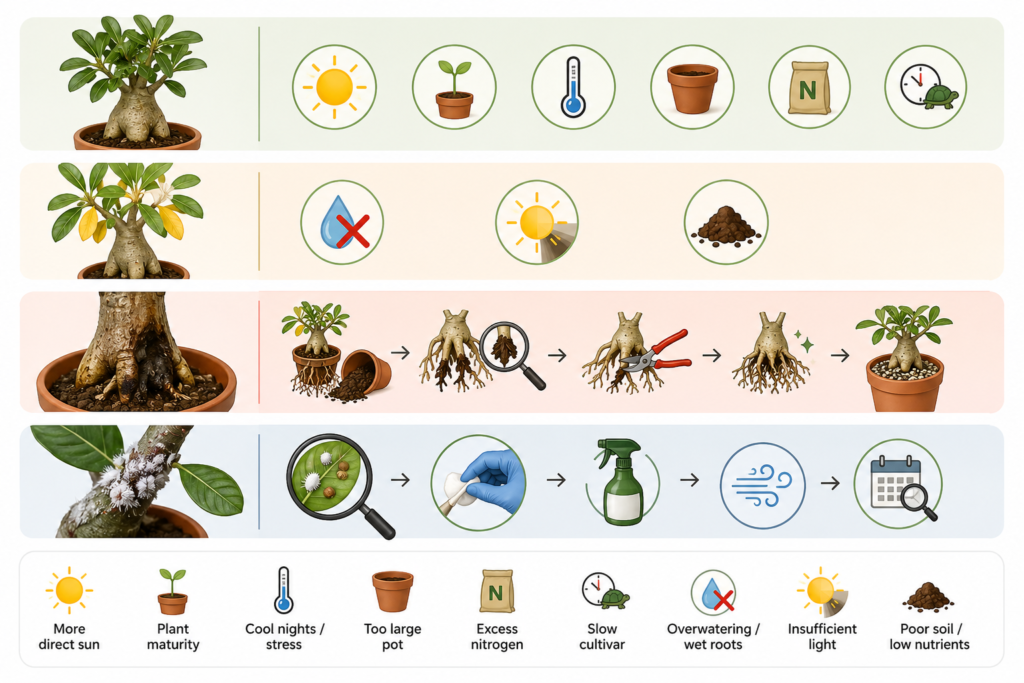
Healthy leaves but no flowers
First check light. Most non-flowering plants need more direct sun, not more water or stronger fertilizer. Also consider maturity: seedlings and young plants may need time before blooming. Cool nights, recent repotting, over-large pots, excess nitrogen, and a naturally slow cultivar can all delay flowers.
Yellow leaves or leaf drop
A few yellow leaves can occur as the plant adjusts to a new location or enters a cool-season rest. Widespread yellowing during warm active growth often points to wet roots, insufficient light, or a depleted mix. Check soil moisture before changing the routine.
Soft caudex, soft stem, or root rot
Root rot is the main risk for desert rose. It is most likely when a plant is cold and wet, planted in dense soil, or kept in a pot without reliable drainage. Remove the plant from the wet conditions, inspect for dark mushy roots or tissue, cut away decay with sterilized tools, and allow healthy cuts to dry before repotting into a dry, open mix. Severe rot may need specialist help.
Common pests
Check new growth and leaf undersides for mealybugs, spider mites, scale insects, and aphids. Isolate affected plants, physically remove small outbreaks where practical, and use a suitable horticultural soap or treatment according to its label. Improve airflow and inspect regularly rather than treating on a fixed schedule.
Frequently asked questions
Can desert rose grow indoors?
Yes, but indoor success depends on direct light. A bright windowsill may keep a desert rose alive, yet flowering usually needs more sun than many homes provide. A sunny outdoor position during warm weather or a suitable grow light can make a substantial difference.
How cold can a desert rose tolerate?
Desert rose is a warm-climate plant and is not frost hardy. Protect it before temperatures become chilly, especially if the soil is damp. Keeping it warm and dry through winter is far safer than testing its cold tolerance.
Can I grow desert rose from seed or cuttings?
Both are possible. Seed-grown plants often develop attractive swollen caudex forms but may vary from the parent plant. Cuttings are useful for copying a favored cultivar, although they may form less dramatic caudex growth. Use clean tools, warm conditions, and a free-draining propagation medium.