
It is real—not a genetically engineered curiosity. Here is how artist Sam Van Aken uses grafting to create a living collection of compatible stone fruits.
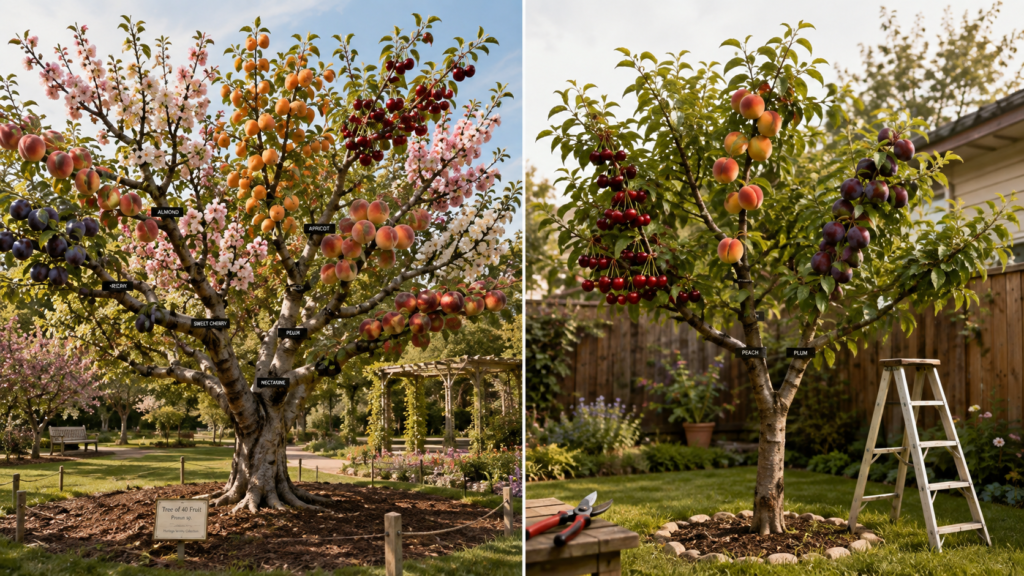
Yes, the Tree of 40 Fruit is real. It is a long-term grafting project by artist Sam Van Aken in which compatible stone-fruit varieties are joined onto one tree. Each grafted branch keeps the identity of its own variety, so a single framework can eventually bloom and fruit in many different ways.
What is the Tree of 40 Fruit?
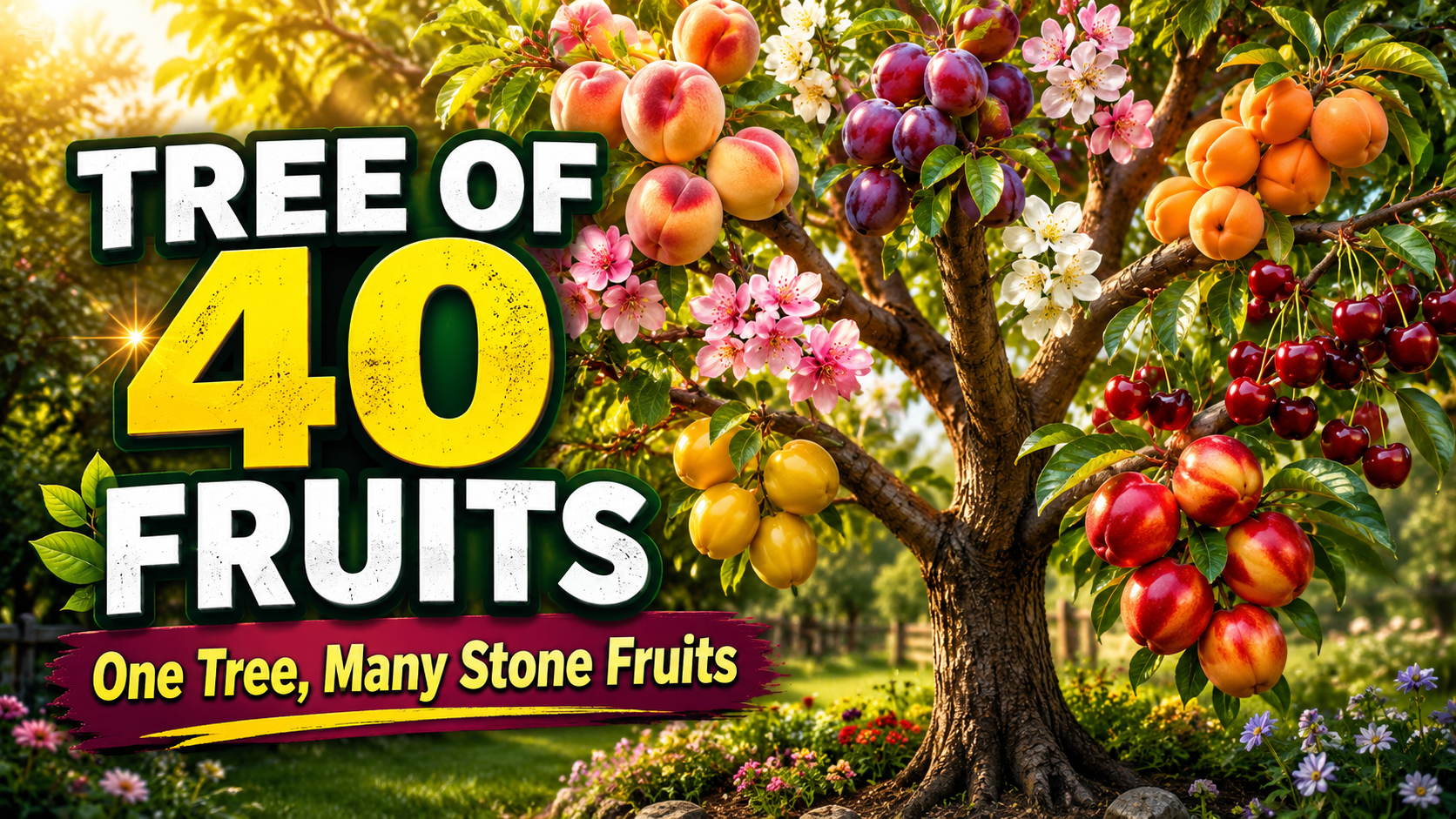
The Tree of 40 Fruit is a series of living artworks created by Sam Van Aken, an artist and professor. Rather than producing forty unrelated fruits, each tree brings together many compatible varieties of stone fruit—plants in and around the Prunus group. Depending on the individual tree, that can include peaches, plums, apricots, nectarines, cherries, and almonds.
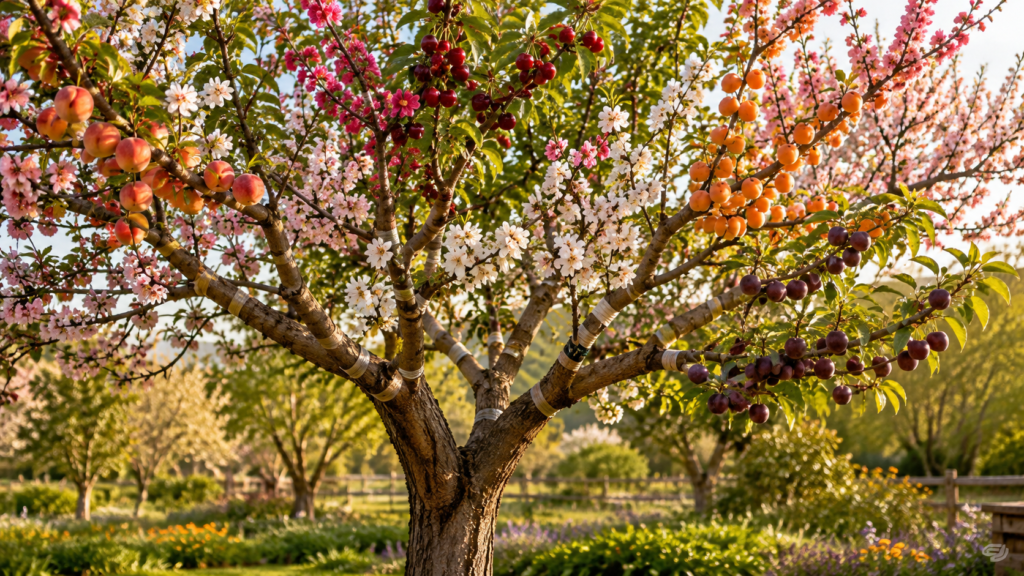
The project is striking in every season. In spring, different grafted branches can carry blossoms in shades of white, blush, pink, and crimson. Later, those branches produce the fruit variety attached to them. Van Aken has also described the work as a way to preserve heirloom and antique stone-fruit varieties that are no longer widely grown commercially.
Grafting is the reason one tree can carry many varieties
A Tree of 40 Fruit is built over time, not grown from a blend of seeds. Grafting joins living tissues so that a chosen fruit variety can grow on an established tree framework. The vascular tissues must meet and heal; once the graft takes, the new branch is nourished by the shared root system while retaining its own variety traits.
- Rootstock is the rooted foundation. It influences vigor, size, soil adaptation, and sometimes disease tolerance.
- A scion is a piece of growth from the desired fruit variety. In bud grafting, a single bud can become a new branch.
- Compatibility matters. Closely related stone fruits are far more likely to form durable graft unions than unrelated fruits such as citrus, apples, or mangoes.
Which fruits can grow on a Tree of 40 Fruit?
The exact collection varies by tree. The important idea is not a list of forty wildly different species; it is a curated group of compatible stone-fruit varieties. A stone fruit has a hard inner pit surrounding the seed.
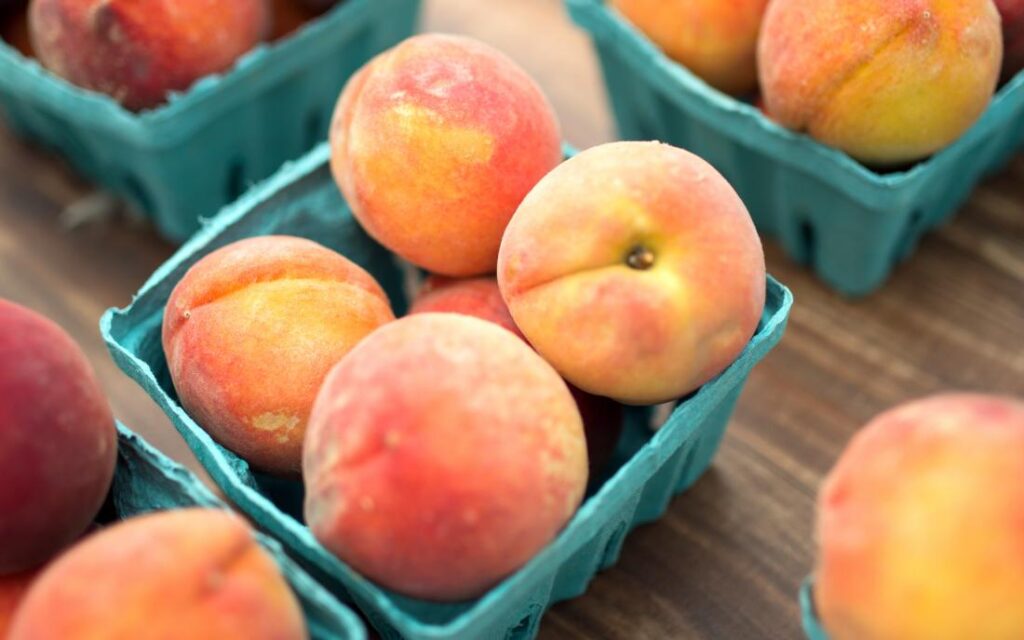
Peaches, nectarines, and apricots
These familiar orchard fruits are close relatives. Their blossoms and ripening windows can vary dramatically by cultivar, which contributes to the tree’s changing appearance.
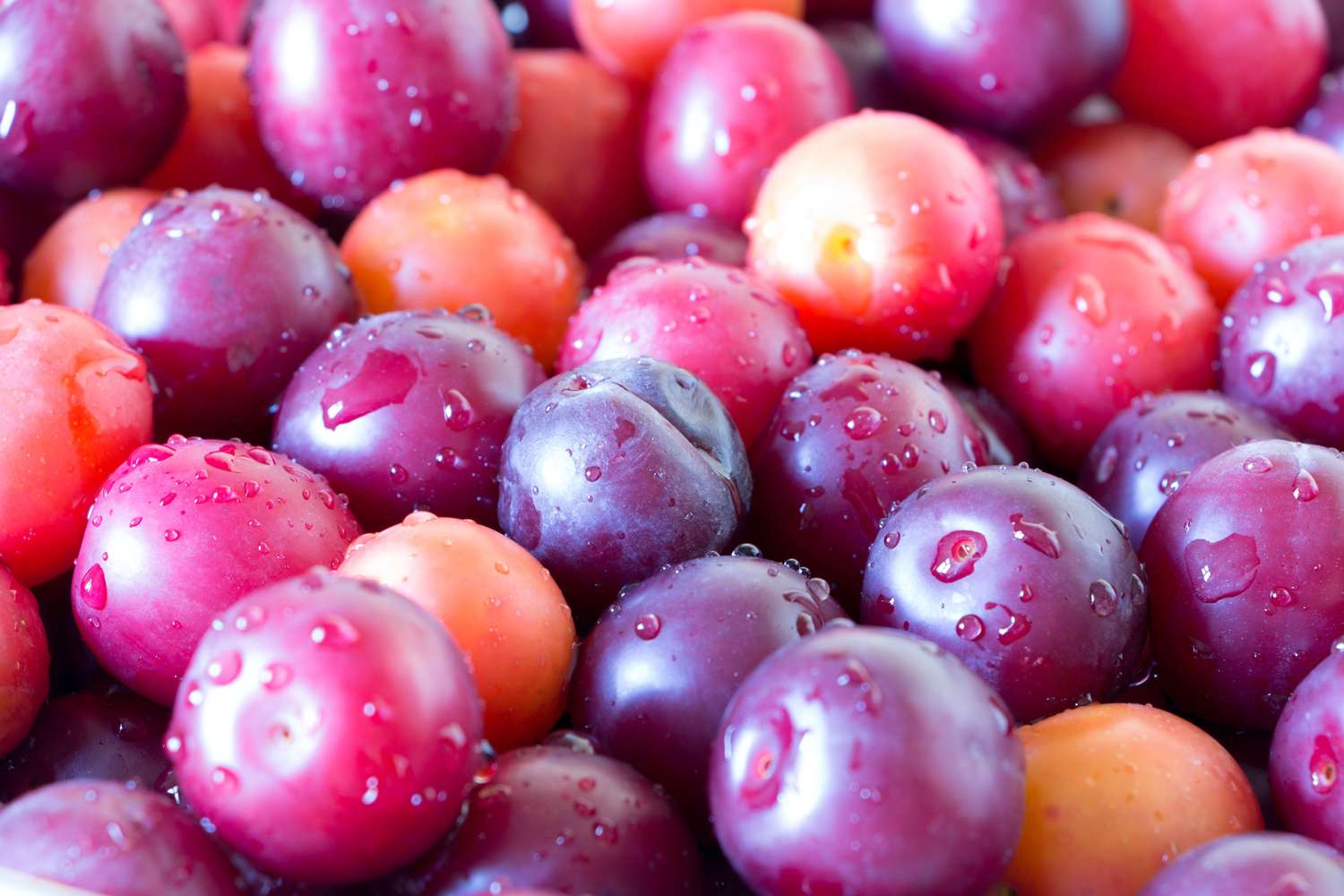
Plums and cherries
Plums and cherries are also stone fruits. Whether a particular graft combination succeeds long term depends on the varieties, the rootstock, and the grower’s skill—not simply the common name.
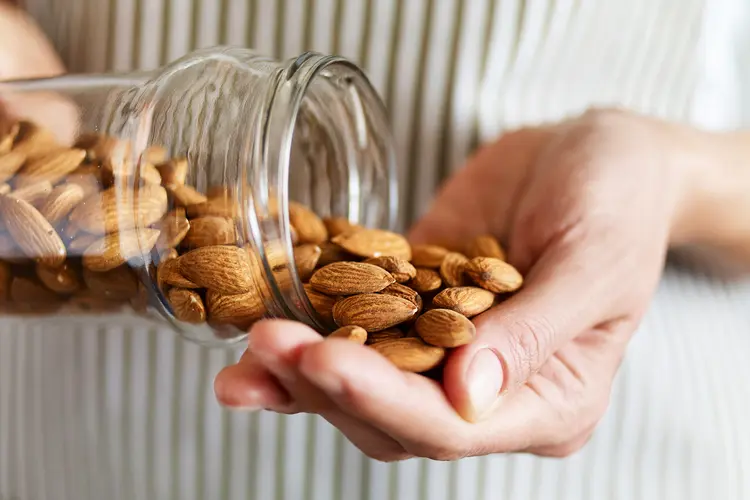
Almonds, too
Almonds belong to the same broad stone-fruit family. Botanically, the edible almond is the seed inside a fruit, which helps explain why it can appear in a compatible Prunus-focused collection.
The blossoms and harvest do not all arrive at once
A photo of a multi-grafted tree can make it seem as though every fruit appears simultaneously. In reality, each grafted branch follows the schedule of its own variety. Some bloom earlier, some leaf out differently, and some ripen weeks apart from their neighbors.
That seasonal variation is part of the artwork. It also makes practical sense in a small orchard: staggered harvests can be easier to enjoy than a single, overwhelming crop. Weather, pollination, pruning, and the maturity of each graft all affect how much fruit appears in a given year.
Tree of 40 Fruit vs. a home multi-grafted fruit tree
Multi-grafted fruit trees are not unusual in horticulture, but Van Aken’s project is an ambitious living artwork and conservation effort. A home gardener can borrow the principle without expecting the same scale.
| Topic | Tree of 40 Fruit project | Practical home approach |
|---|---|---|
| Scale | Many stone-fruit varieties carefully added over years. | Two to five compatible varieties is a manageable learning goal. |
| Purpose | Living artwork, public conversation, and variety preservation. | More harvest variety in limited garden space. |
| Maintenance | Ongoing grafting, training, observation, and balancing. | Annual pruning and attention to vigorous branches. |
| Compatibility | Centered on compatible Prunus stone fruits. | Confirm rootstock and scion compatibility with a local nursery or extension service. |
Can you grow a smaller version at home?
- Start with a compatible foundation
Choose a healthy stone-fruit tree suited to your climate, or purchase a nursery-grown multi-graft tree. Ask specifically which varieties and rootstock are included. - Learn one grafting method well
Bud grafting is a common approach for fruit trees. Practice clean cuts, correct cambium alignment, firm wrapping, and careful aftercare before attempting several varieties. - Add varieties gradually
A small number of successful grafts is more useful than many rushed attempts. Label every branch immediately so you can track growth, bloom timing, and fruit quality. - Prune for balance
One vigorous variety can outgrow the others. Pruning helps preserve light, airflow, and a fair share of the tree’s energy for each grafted branch.
The practical challenge: keeping many branches in balance
The science of a successful graft is only the beginning. A multi-grafted fruit tree needs regular observation. Fruit-tree growers commonly watch for differences in vigor, structural strength, disease pressure, and bloom overlap.
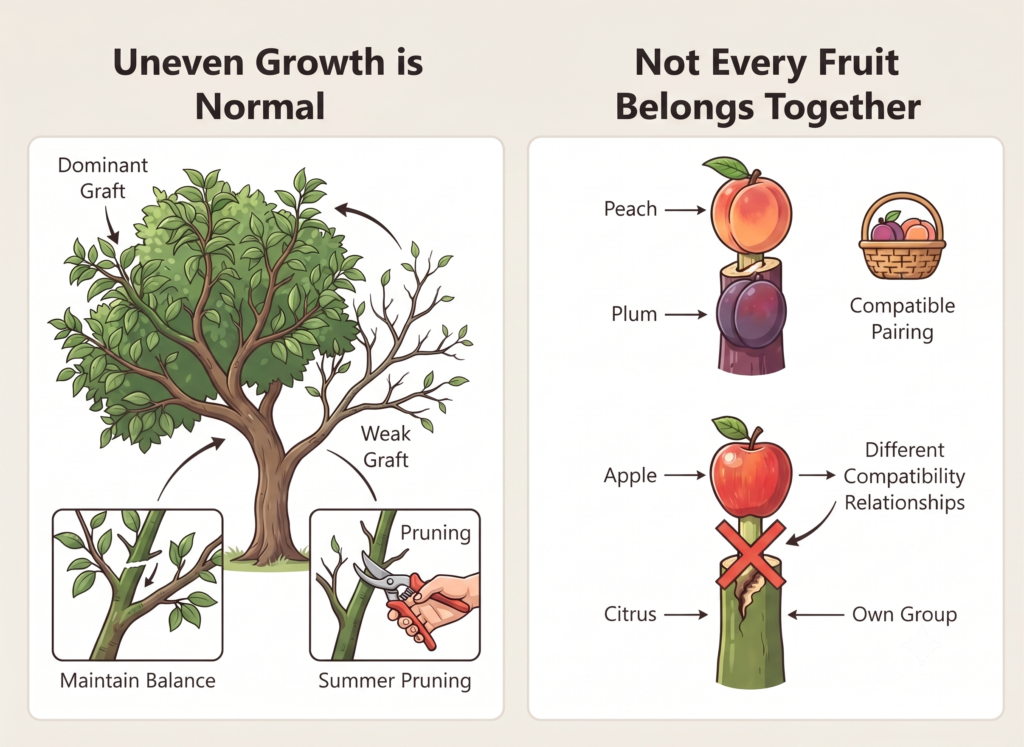
Uneven growth is normal
Different varieties may push shoots at different speeds. Left alone, the strongest branch can shade or suppress weaker grafts. Thoughtful dormant-season and summer pruning can help maintain a balanced canopy.
Not every fruit belongs together
A peach branch cannot simply be grafted onto any fruit tree. Apples and pears have different compatibility relationships, while citrus has its own group. Successful pairings should be confirmed from trusted local horticultural guidance.
A remarkable project, explained without exaggeration
For the project’s history, purpose, and the artist’s own description, consult Sam Van Aken’s official Tree of 40 Fruit information. For grafting methods and local compatibility advice, use university extension programs, botanical gardens, and reputable fruit-tree nurseries. Conditions vary by climate, rootstock, cultivar, and local pests, so general guidance should never replace location-specific advice.
Tree of 40 Fruits FAQs
Is the Tree of 40 Fruit real?
Yes. Sam Van Aken’s Tree of 40 Fruit is a real grafted-tree project. The trees are produced through repeated grafting of compatible stone-fruit varieties onto a shared tree structure.
Does one tree really grow 40 different fruits?
The project is described as carrying forty types of stone fruit. That does not mean forty unrelated fruits appear on one trunk at the same time. Individual grafted branches produce the fruit variety attached to that branch, each on its own seasonal schedule.
Is the Tree of 40 Fruit genetically engineered?
No. The effect comes from grafting, a long-established horticultural technique. Grafting physically joins compatible plant tissues; it does not combine every fruit into a new hybrid or alter the fruiting branch’s variety identity.
Where can I see a Tree of 40 Fruit?
Trees have been installed at selected museums, gardens, and public sites as part of Van Aken’s art project. Availability changes over time, so consult the artist’s official project information or the host institution before planning a visit.