
Learn to spot thrips, understand the damage they cause, and choose the least-disruptive control method for your garden.
What Are Thrips?
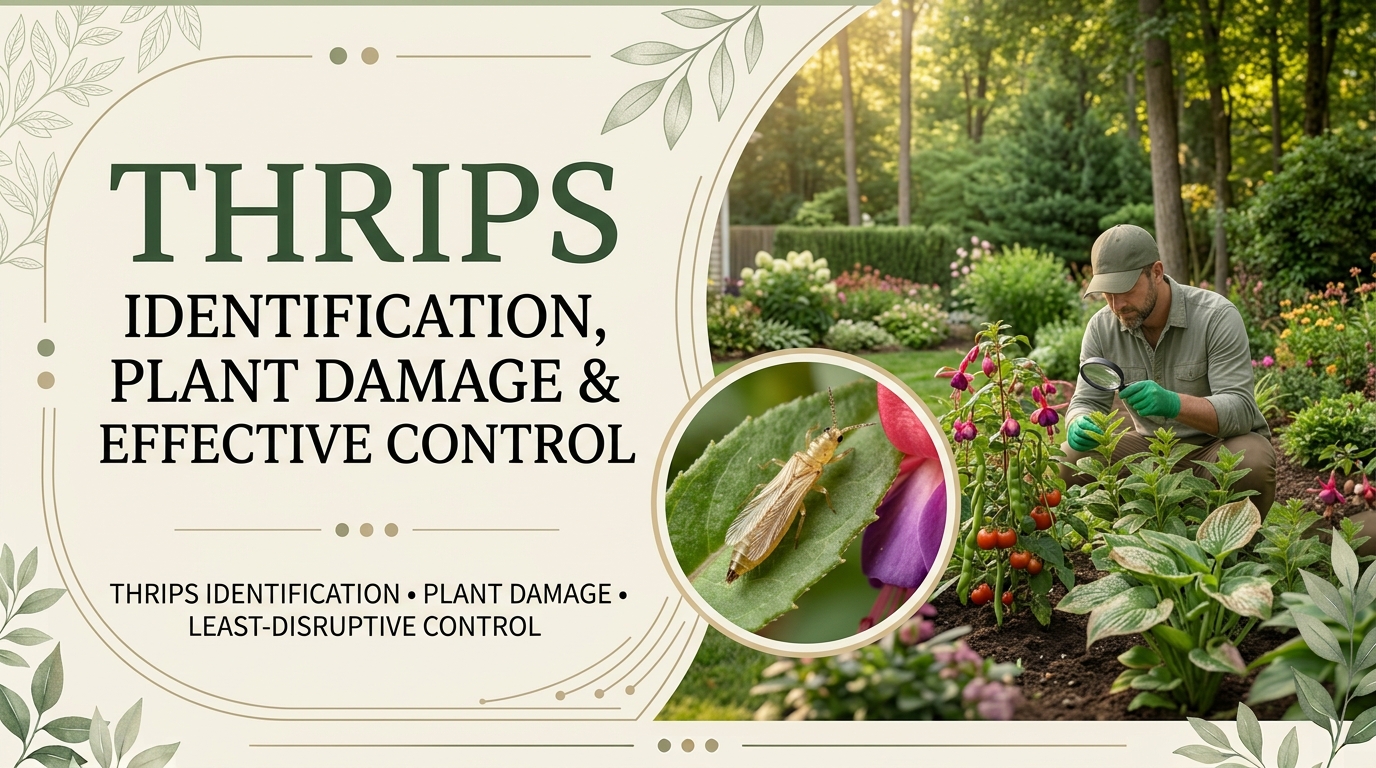
Thrips (order Thysanoptera) are tiny, slender insects typically 1–2 mm long. Most species are plant feeders that use their asymmetric mouthparts to puncture and rasp individual plant cells, then suck up the contents. There are over 6,000 known species worldwide, but only a handful regularly trouble home gardens.
Despite their small size, thrips can reproduce rapidly — a single female may lay 50–100 eggs — meaning a minor presence can become an infestation within weeks during warm weather.
How to Identify Thrips
Adult thrips are slender, cigar-shaped, and range from pale yellow to black depending on species. Their wings are fringed with fine hairs (visible under a hand lens). Nymphs are smaller, wingless, and usually lighter in colour. Tap a flower or leaf over a white sheet of paper — thrips appear as tiny moving specks.
A 10× hand lens helps confirm the diagnosis: look for the distinctive narrow body shape and feathery wings that distinguish thrips from mites or aphids.
Signs of Thrips Damage
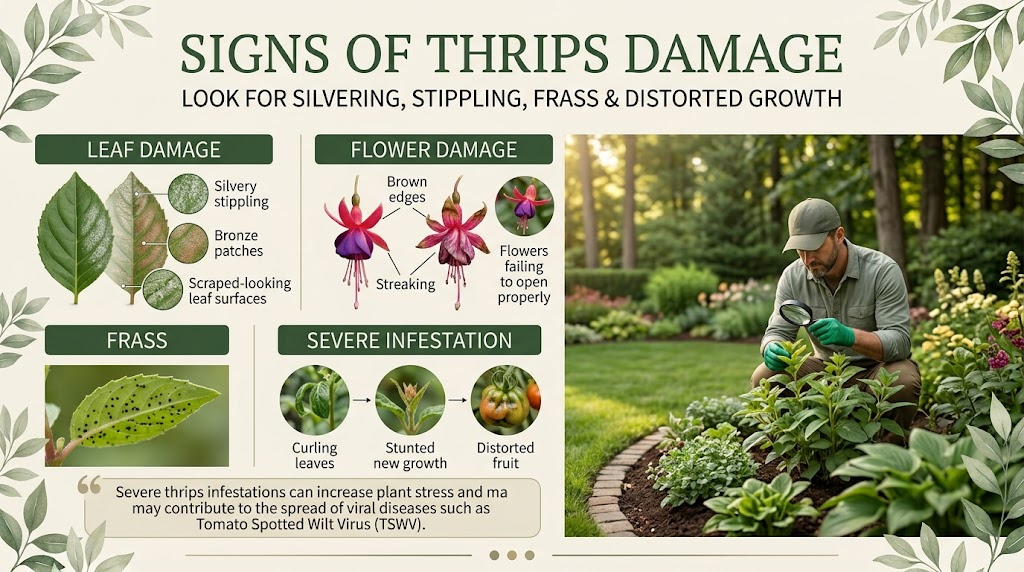
The most recognisable sign is silvery or bronze stippling on leaf surfaces where cells have been emptied. You may also notice tiny black dots (frass) on the undersides of leaves. Flowers may show brown edges, streaking, or fail to open properly.
On fruiting plants, thrips feeding can cause scarring or distortion. In severe cases, leaves curl, new growth is stunted, and the plant may become susceptible to viral diseases like Tomato Spotted Wilt Virus (TSWV).
Lifecycle & Habitat
Thrips go through egg → larva (two instars) → prepupa → pupa → adult stages. Eggs are inserted into plant tissue. Larvae feed on leaves and flowers, then drop to the soil to pupate. The full cycle takes 2–3 weeks in warm conditions, allowing multiple generations per growing season.
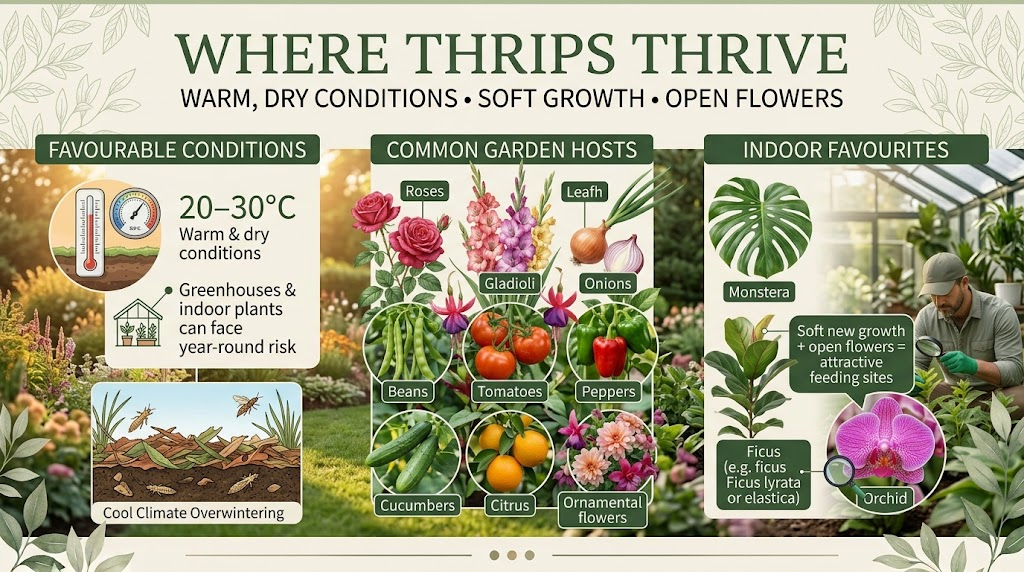
They thrive in warm, dry environments (20–30 °C). In cooler climates they overwinter as adults in plant debris or soil. Greenhouse and indoor plants are at risk year-round.
Common Host Plants
Thrips are generalists but especially favour roses, gladioli, onions, beans, tomatoes, peppers, cucumbers, citrus, and many ornamental flowers. Indoor plants such as monstera, ficus, and orchids are also vulnerable. Any plant with soft new growth or open flowers can attract thrips.
Lookalikes: What Else Could It Be?
Spider mites cause similar stippling but leave fine webbing. Leaf miners produce winding trails inside the leaf (thrips damage is surface-level). Lace bugs also cause stippling but are larger and flat, with lace-patterned wings. If you see sticky honeydew, the culprit is more likely aphids or whiteflies — thrips do not produce honeydew.
Control Methods (Least-Disruptive First)
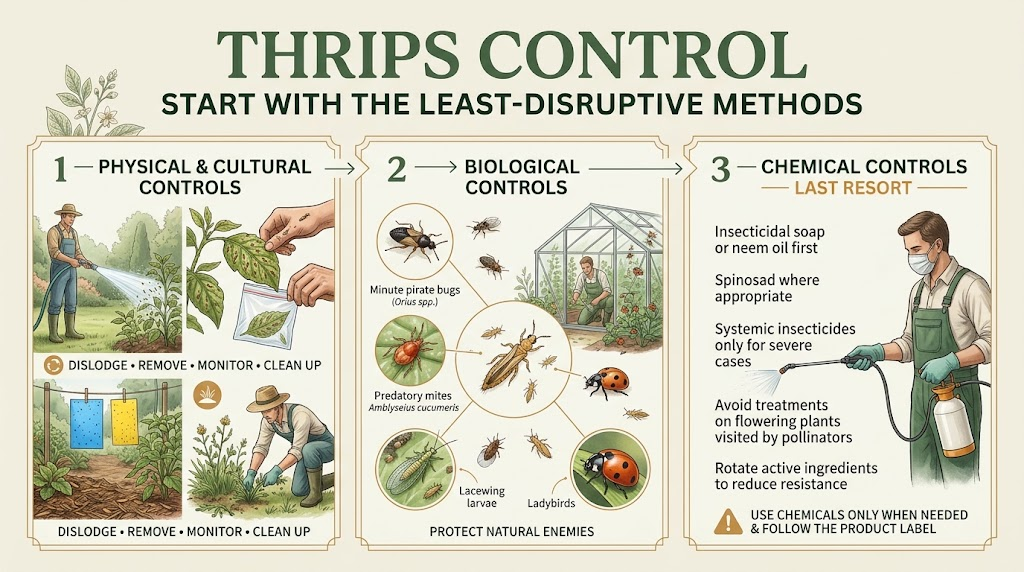
1. Physical & Cultural Controls
Blast plants with a strong jet of water to dislodge thrips. Remove heavily infested leaves and dispose of them in sealed bags. Use blue or yellow sticky traps to monitor and reduce populations. Mulching suppresses soil-pupating stages. Keep the garden free of weeds that host thrips between seasons.
2. Biological Controls
Encourage or release natural predators: minute pirate bugs (Orius spp.), predatory mites (Amblyseius cucumeris), lacewing larvae, and ladybirds. These are especially effective in greenhouses. Avoid broad-spectrum sprays that kill beneficials.
3. Chemical Controls (Last Resort)
If infestations persist, try insecticidal soap or neem oil first — they have low toxicity to beneficials. Spinosad is effective and relatively low-risk. Systemic insecticides (e.g. imidacloprid) should only be considered for severe cases and avoided on flowering plants visited by pollinators. Rotate active ingredients to prevent resistance.
Prevention Tips
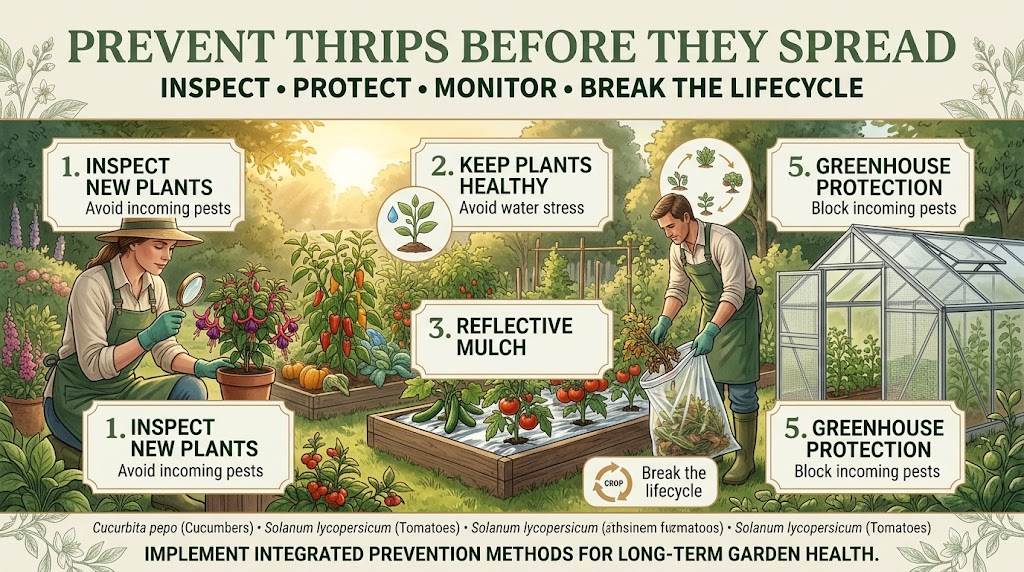
Inspect new plants before introducing them to your garden. Provide good air circulation and avoid water stress — healthy plants tolerate minor feeding. Use reflective mulch (silver or aluminium) to disorient thrips. Rotate crops and clean up end-of-season debris to break the lifecycle. In greenhouses, install fine mesh screens on vents.
When to Call a Professional
Contact a licensed pest management professional if thrips are spreading plant viruses (look for ring spots, wilting, or unusual mosaic patterns), if infestations persist despite multiple control attempts, or if you’re managing a large greenhouse or valuable crop where economic loss is significant.
Frequently Asked Questions
Are boxelder bugs harmful to humans?
No. Boxelder bugs do not bite, sting, or transmit diseases. They can stain light-colored surfaces with their excrement and produce an unpleasant smell if crushed, but they pose no health risk. They are purely a nuisance pest.
Will boxelder bugs damage my house?
They don’t cause structural damage. The main concern indoors is cosmetic staining from their droppings on curtains, walls, and furniture. Vacuuming promptly and sealing entry points prevents most indoor issues.
Do boxelder bugs come back every year?
Yes — as long as a female boxelder or maple tree is nearby, new generations will hatch each spring and seek overwintering shelter each autumn. Removing the host tree or consistently sealing your home are the only ways to break the annual cycle.
Should I spray insecticide on the tree itself?
Generally no. Spraying a large tree is expensive, difficult to do thoroughly, and harms beneficial insects. It’s more effective and less disruptive to focus control on the bugs’ entry points into your home and to use targeted perimeter treatments rather than broadcast tree sprays.