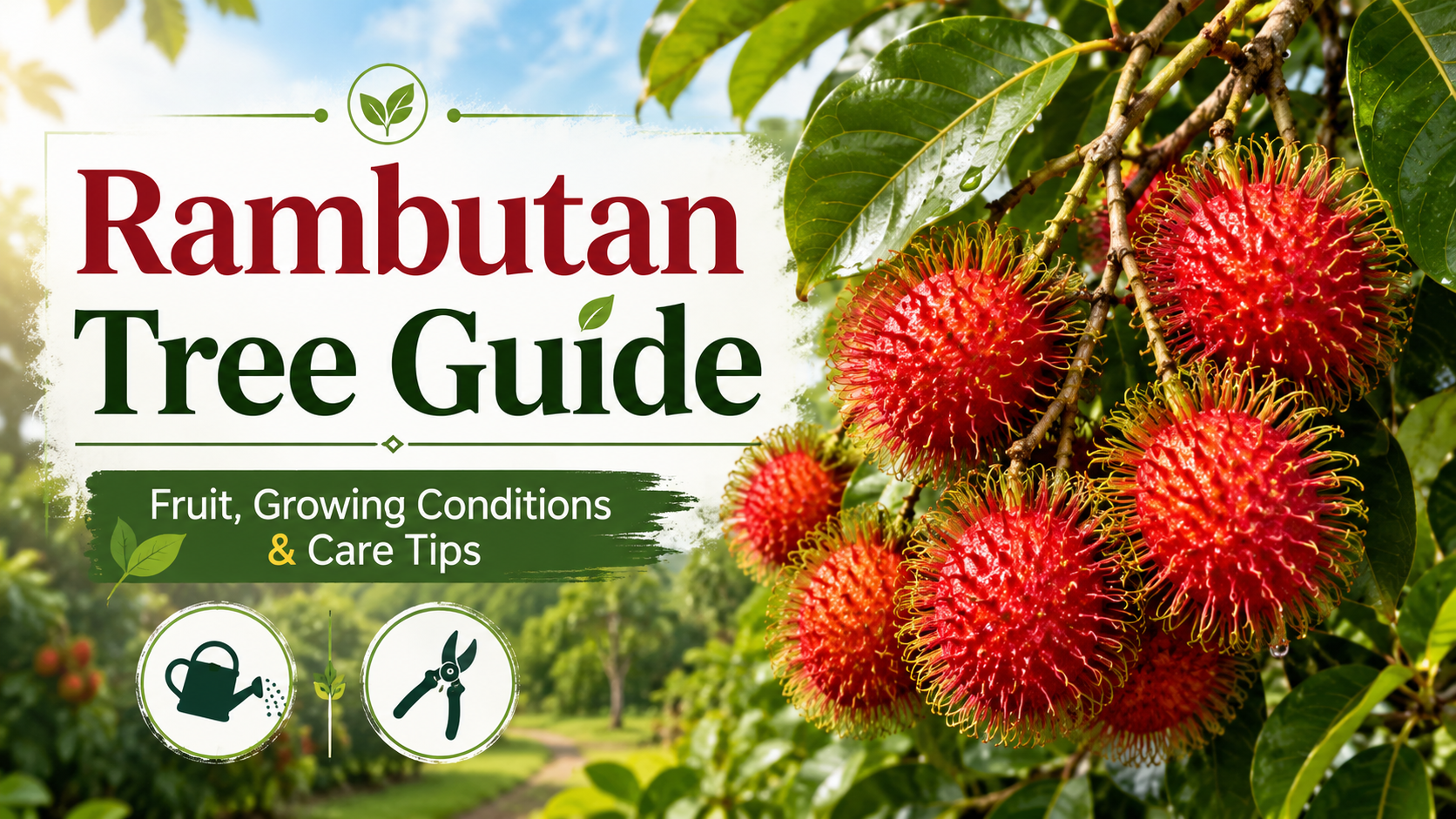

A practical, climate-first guide to growing Nephelium lappaceum—from choosing the right tree to harvesting its vivid, sweet fruit.
A rambutan tree can be a rewarding home fruit tree—but only where warmth, humidity, and drainage line up. It is best suited to frost-free tropical climates. Give it full sun, deep well-drained soil, even moisture, and a compatible flowering tree or proven self-fruiting cultivar for dependable crops.
What is a rambutan tree?
Rambutan (Nephelium lappaceum) is an evergreen tropical fruit tree in the soapberry family, alongside lychee and longan. It is grown for round to oval fruit with a bright red, pink, or yellow-red skin covered in soft, hair-like spines. Inside is a translucent, juicy flesh surrounding one seed.
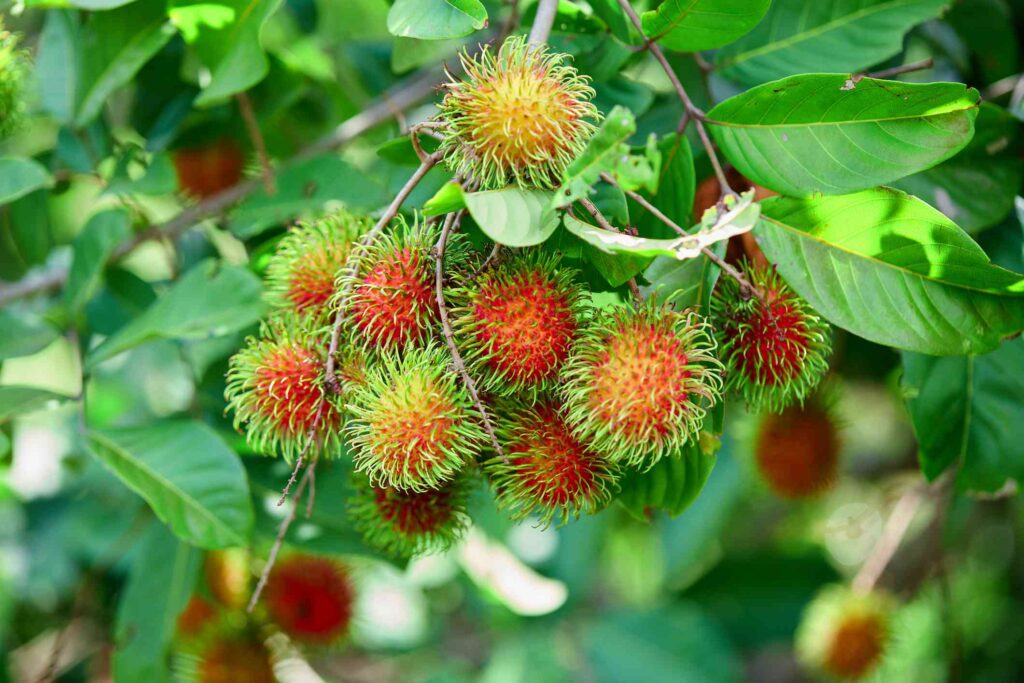
In warm climates, a healthy rambutan tree develops a dense, glossy canopy and can become a substantial landscape tree. The fruit flavor is often sweet with a gentle floral acidity, though taste and seed separation vary by cultivar. For home growers, the most important decision is not the fruit’s appearance—it is whether your site can provide year-round tropical conditions.
Botanical name
Nephelium lappaceum
Mature height
30–60 ft in the ground; smaller with pruning
Fruit type
Juicy aril around a single seed
Best for
Frost-free tropical gardens
Rambutan tree growing conditions: can it grow where you live?
Rambutan is not a forgiving cold-climate fruit tree. It performs best in humid lowland tropics with reliable warmth and rainfall or irrigation. Coastal and inland microclimates can differ greatly, so use your actual winter lows—not a yearly average—to decide whether in-ground planting is realistic.
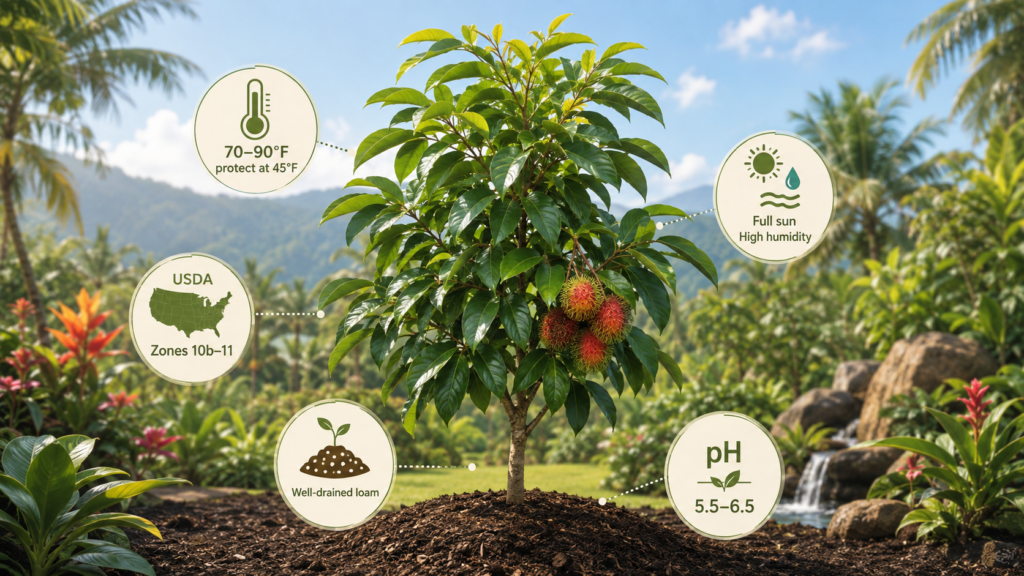
Care at a glance
Temperature
Ideal growth is roughly 70–90°F (21–32°C). Protect trees when temperatures approach 45°F (7°C). Frost can severely damage or kill them.
USDA guidance
Most realistic outdoors in USDA Zones 10b–11, with especially protected sites needed at the cool edge of that range.
Sun & humidity
Full sun is best after establishment. High humidity and good air movement help support healthy foliage and flowering.
Soil
Deep, fertile, well-drained loam with steady organic matter. Aim for mildly acidic soil, approximately pH 5.5–6.5.
How to plant a rambutan tree
Plant at the start of the warm, rainy season when possible, so roots can establish before dry or cool weather. Choose an open site with at least 25–35 feet of space from other large trees, buildings, and overhead lines. Avoid low pockets where cold air settles or where water stands after rain.
Planting checklist
Prepare the site before the tree arrives. A wide planting hole and thoughtful watering routine matter more than adding large amounts of fertilizer at planting time.
- Dig a hole about twice as wide as the root ball, but no deeper than the original root depth.
- Set the root flare slightly above the surrounding soil line; backfill with native soil improved only if it is very poor.
- Mulch 2–4 inches deep, keeping mulch several inches away from the trunk to reduce rot risk.
Seed-grown vs. grafted rambutan trees
Fresh rambutan seed can sprout quickly, but seed-grown trees are genetically variable. They may take 5–8 years or more to fruit, and you cannot be certain of fruit quality or flowering behavior. For a home orchard, a named grafted, budded, or air-layered tree from a reputable tropical fruit nursery is usually the safer choice. These trees commonly fruit earlier—often in about 3–5 years under good conditions—and preserve the cultivar’s known traits.
Rambutan tree care: water, feed, prune, and pollinate
Consistency is the central theme of rambutan tree care. Young trees need regular attention while their root system expands; mature trees benefit from seasonal adjustments rather than constant heavy inputs.
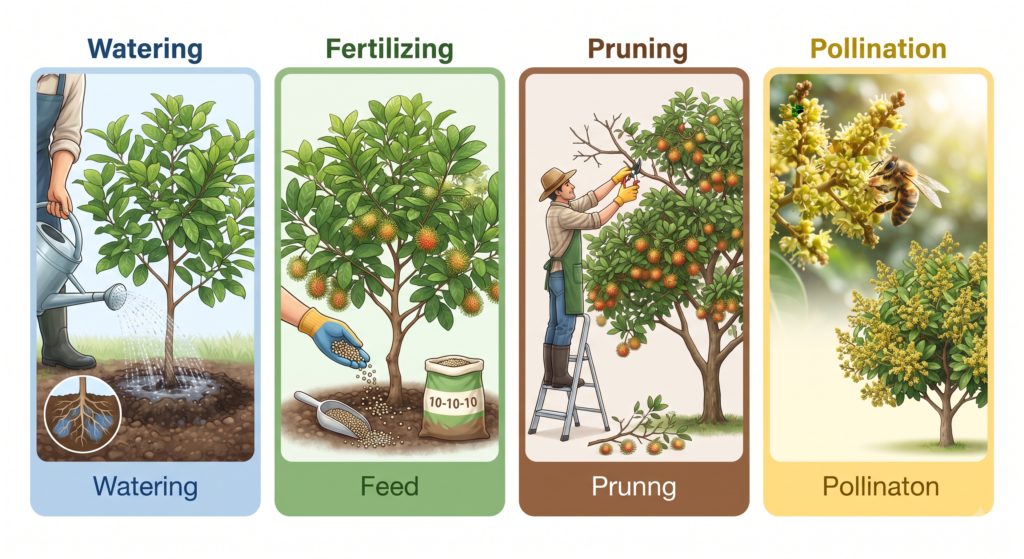
Watering
Keep the root zone consistently moist, especially for the first 2–3 years and during flowering or fruit fill. Water deeply, then allow the surface to begin drying. Yellow leaves, sour-smelling soil, and poor vigor can signal waterlogging; limp new leaves and dry soil several inches down suggest drought stress.
Fertilizing
Use a balanced fruit-tree fertilizer in smaller split applications during active growth, following your product label and local soil-test guidance. Mature trees may benefit from potassium and micronutrients where soils are deficient. Avoid pushing excessive nitrogen, which can favor leafy growth over balanced flowering.
Pruning
Prune after harvest or during a suitable local recovery period. Remove dead, damaged, rubbing, or crowded branches, then lightly shape to keep the canopy manageable and airy. Avoid hard pruning just before expected flowering, because it can remove productive wood and delay crops.
Pollination
Flower types and cultivar behavior matter. Some rambutan selections produce functionally male, female, or hermaphroditic flowers, and fruit set can improve with compatible pollen nearby. Ask the nursery whether your cultivar is self-fruitful and whether it needs a pollinizer. Protecting insect activity around bloom also helps.
How long does a rambutan tree take to fruit?
Fruiting time depends on propagation method, climate, root health, and pollination. A grafted rambutan tree in a suitable tropical garden may begin producing a modest crop in 3–5 years. Seedlings commonly take 5–8 years or longer. Early crops can be light; mature, well-managed trees become more dependable once their canopy and root system are established.
A realistic home-grower timeline
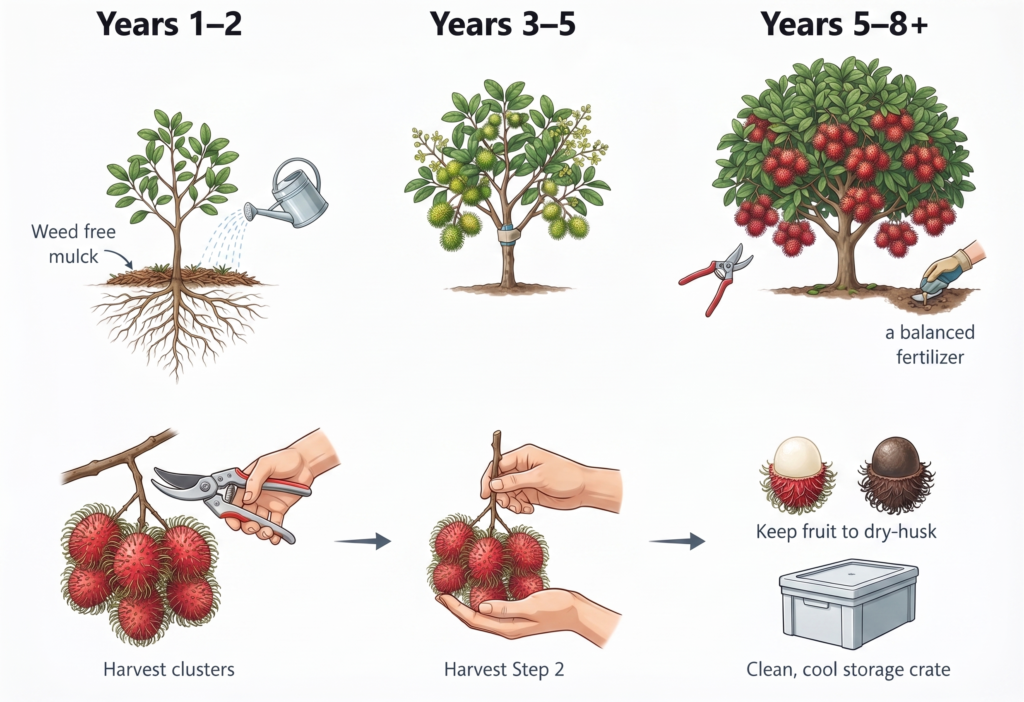
Years 1–2
Prioritize roots, structure, irrigation, and weed-free mulch. Remove only damaged growth.
Years 3–5
A grafted tree may begin flowering or set its first small crop if conditions and pollination are right.
Years 5–8+
Seed-grown trees may begin fruiting. Continue canopy management and correct nutrition.
When and how to harvest rambutan
Harvest clusters with clean hand pruners when most fruit has reached its mature color for that cultivar—often red to red-orange—and the spines look fresh and flexible. Rambutan does not improve dramatically after picking, so taste a fruit before harvesting the whole cluster. Handle gently and keep fruit cool after picking; the husk can darken and dry quickly at room temperature.
Common rambutan tree problems and practical fixes
Start with site conditions before reaching for a treatment. In many home gardens, poor drainage, cold exposure, nutrient imbalance, or inconsistent irrigation creates symptoms that resemble pest or disease problems.
Frequently asked questions
Can I grow rambutan from seed?
Yes, rambutan seeds germinate readily when fresh. However, seed-grown trees are unpredictable in flavor, fruiting time, and flower type. Most home growers prefer grafted trees from nurseries, which bear fruit in 3–5 years versus 5–8+ years for seedlings.
Do I need two rambutan trees for pollination?
Some cultivars are self-fruitful, while others produce better with cross-pollination. Ask your nursery about your specific cultivar. If you have space, planting a second compatible tree often improves crop reliability and volume.
How much cold can rambutan tolerate?
Rambutan begins suffering below 45°F (7°C) and can be killed by frost at 32°F (0°C). It thrives in USDA zones 10b–11. Container growing in cooler regions is rarely successful long-term because indoor conditions cannot replicate tropical light, humidity, and pollination needs.
When is the best time to harvest rambutan?
Harvest when the fruit husk has reached its cultivar’s mature color—typically red or red-orange—and the spines are soft and supple rather than dry. Taste a fruit first; rambutan does not improve much after picking. Handle gently and refrigerate immediately to preserve quality.