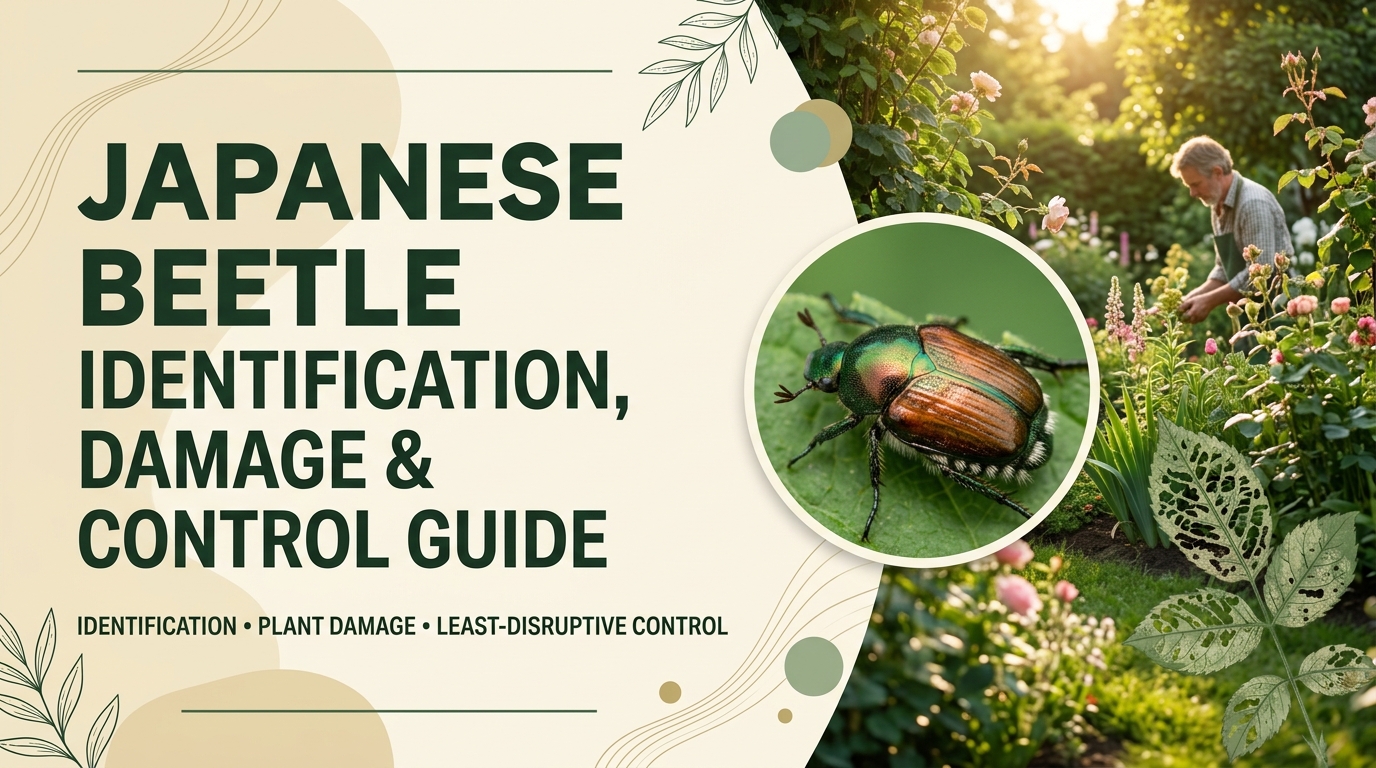

Learn to identify Japanese beetles, understand the damage they cause, and choose the most effective control method for your garden.
Key Takeaways
- Japanese beetles are metallic green-and-copper insects (~12 mm) that skeletonize leaves, leaving only the veins behind.
- Adults feed on 300+ plant species; grubs damage lawns by eating grass roots.
- Start with hand-picking and row covers — avoid pheromone traps near gardens, which attract more beetles.
- Milky spore and beneficial nematodes target grubs in the soil for long-term population reduction.
What Are Japanese Beetles?
Japanese beetles (Popillia japonica) are an invasive species originally from Japan, now widespread across the eastern and central United States and parts of Canada. Adults are about 12 mm long with a distinctive metallic green thorax and copper-bronze wing covers. They feed voraciously on the foliage, flowers, and fruit of over 300 plant species.
Their larvae (white grubs) live in the soil and feed on grass roots, often causing brown patches in lawns from late summer through spring. A single female can lay 40–60 eggs per season, and populations can build rapidly once established in an area.
How to Identify Japanese Beetles
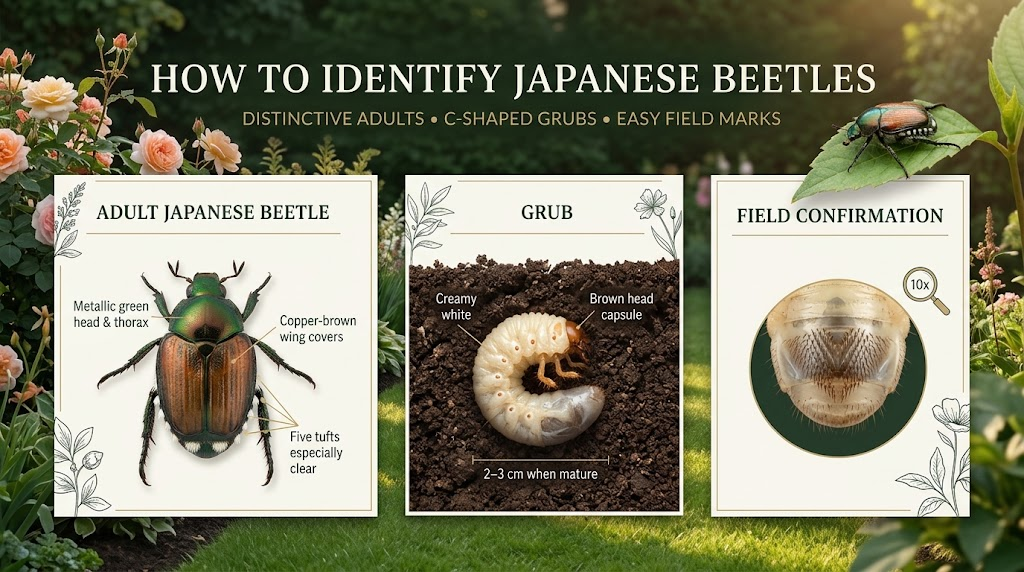
Adults are unmistakable: a shiny metallic-green head and thorax with iridescent copper-brown wing covers (elytra). Along each side of the abdomen you’ll see five patches of white hair tufts — this is the single best field mark that separates them from similar beetles.
Grubs are C-shaped, creamy white with a brown head capsule, and about 2–3 cm long when mature. They can be distinguished from other white grubs by a V-shaped pattern of hairs (raster) on the underside of their last abdominal segment — a hand lens helps confirm this.
Signs of Japanese Beetle Damage
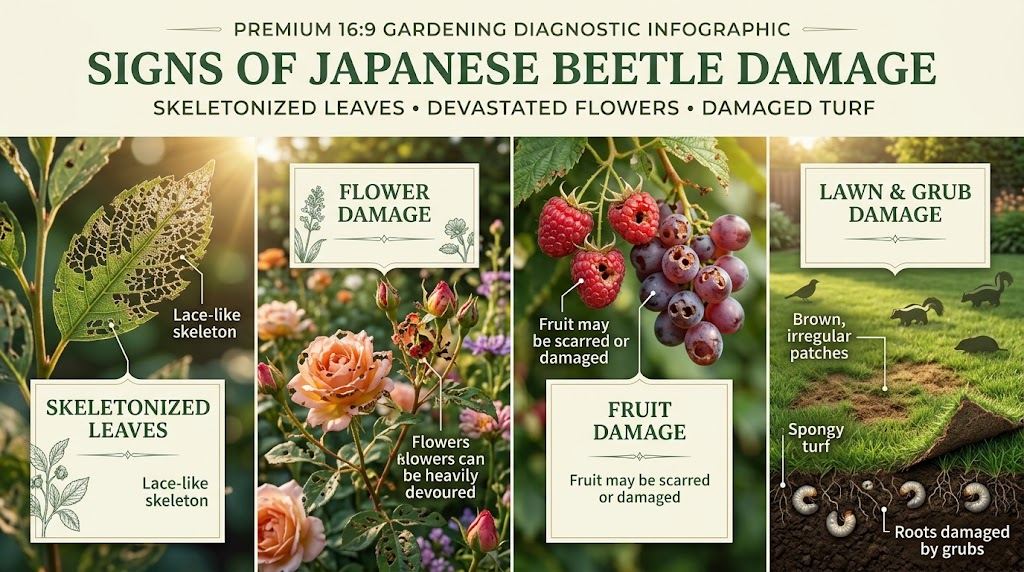
The hallmark of adult feeding is ‘skeletonized’ leaves — the beetles eat the soft tissue between veins, leaving a lace-like skeleton. Flowers, especially roses, may be completely devoured. Fruit such as raspberries and grapes can also be damaged.
In lawns, grub damage appears as irregular brown patches that feel spongy underfoot. Heavily infested turf can be rolled back like carpet because the roots have been severed. You may also notice increased activity from skunks, moles, or birds digging for grubs.
Lifecycle & Habitat
Japanese beetles have a one-year lifecycle. Adults emerge from the soil in late June to July, feed and mate for 4–6 weeks, and females repeatedly burrow into moist turf to lay eggs. Eggs hatch within two weeks, and the young grubs feed on roots through autumn before burrowing deeper to overwinter.
In spring, grubs move back toward the surface to resume feeding, pupate in late May to June, and emerge as adults to restart the cycle. They prefer sunny areas with well-watered lawns — irrigated turf is especially attractive for egg-laying.
Common Host Plants
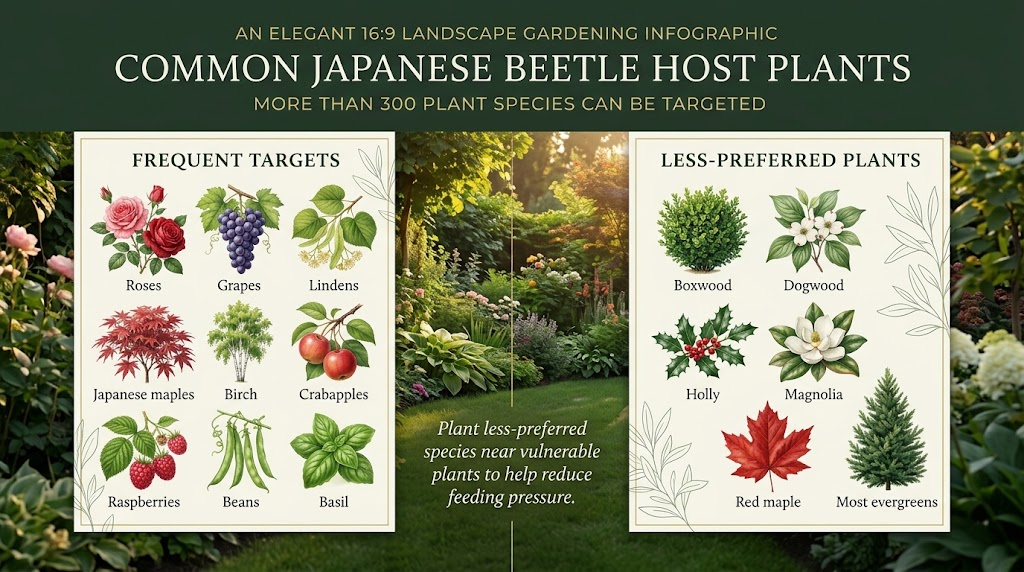
Japanese beetles feed on over 300 species but have strong preferences. Top targets include roses, grapes, lindens, Japanese maples, birch, crabapples, raspberries, beans, and basil. They tend to avoid boxwood, dogwood, holly, magnolia, red maple, and most evergreens. Planting less-preferred species near vulnerable ones can reduce overall pressure.
Lookalikes: What Else Could It Be?
Green June beetles are larger (20–22 mm), uniformly dull green, and fly with a distinctive buzzing sound — they rarely damage garden foliage. Fig beetles (figeater beetles) are similar in size and colour but lack the white hair tufts. Rose chafers are tan, slender, and have spiny legs. If skeletonized leaves are present but no beetles are visible, suspect Japanese beetle feeding earlier in the day (they are most active in warm sunshine).
Control Methods (Least-Disruptive First)
1. Physical & Cultural Controls
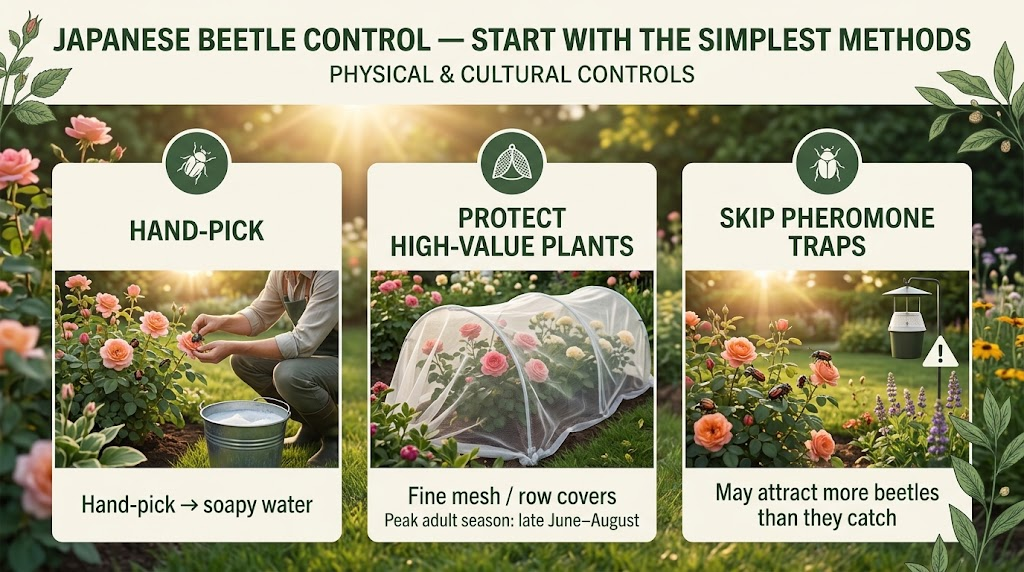
Hand-pick beetles in the early morning when they are sluggish and drop them into a bucket of soapy water. Cover high-value plants with fine mesh or floating row covers during peak adult season (late June–August). Avoid pheromone traps near your garden — research shows they attract far more beetles than they catch, increasing damage to nearby plants.
2. Biological Controls
Apply milky spore (Paenibacillus popilliae) or beneficial nematodes (Heterorhabditis bacteriophora) to lawns in late summer when grubs are young and near the surface. These establish in the soil and provide multi-year suppression. Tachinid flies and Tiphia wasps are natural parasitoids — avoid broad-spectrum insecticides that kill them.
3. Chemical Controls (Last Resort)
For severe infestations, neem oil or pyrethrins provide short-term knockdown with lower environmental impact. Systemic products containing imidacloprid or chlorantraniliprole can be applied to soil in spring for season-long grub control but must be avoided on flowering plants to protect pollinators. Always read and follow label directions carefully.
Prevention Tips
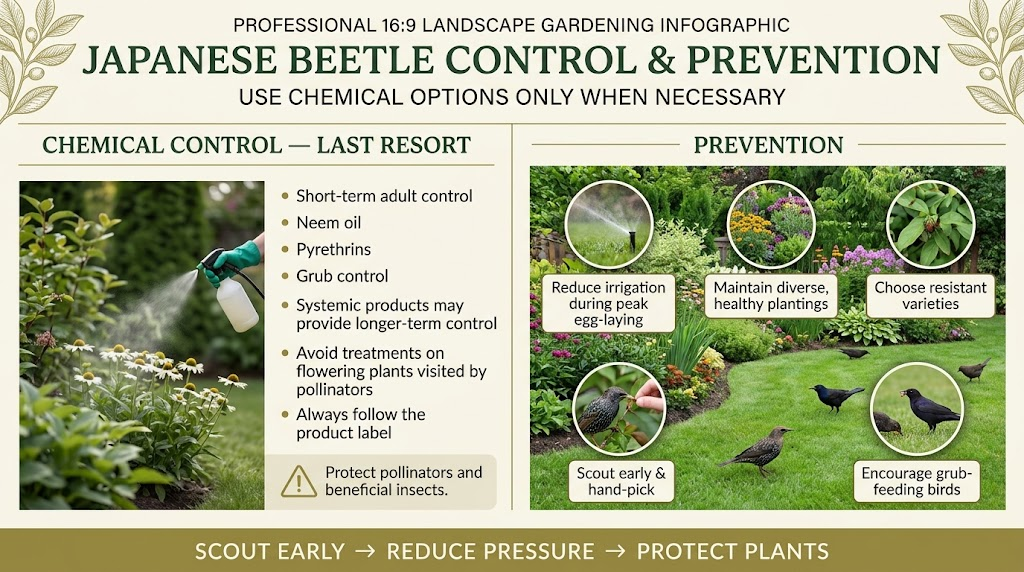
Reduce irrigation during peak egg-laying season (July–August) to make your lawn less attractive for oviposition. Maintain healthy, diverse plantings — stressed monocultures suffer worse damage. Choose resistant plant varieties when possible. Scout early: a few beetles hand-picked at the start of the season prevents the aggregation pheromone from drawing in more. Encourage birds, particularly starlings and grackles, which feed heavily on grubs.
When to Call a Professional
Consider professional help if grub counts exceed 10–12 per square foot of turf, if large areas of lawn are dying despite cultural controls, or if you manage high-value ornamental plantings (e.g., a rose garden or vineyard) where economic loss is significant. A licensed pest management professional can apply targeted treatments and advise on integrated management strategies tailored to your property.
Frequently Asked Questions
When are Japanese beetles most active?
Adults are most active on warm, sunny days from late June through August. Check plants in the early morning, when beetles are sluggish and easier to hand-pick.
What is the fastest way to reduce adults?
Hand-pick beetles and drop them into soapy water, then protect valuable plants with fine mesh or floating row covers during peak season.
Do Japanese beetle traps help?
Usually not near gardens. Their pheromone and floral lures can attract more beetles than the trap catches, increasing feeding on nearby plants.
How can I tell Japanese beetle grubs from other grubs?
Japanese beetle grubs are creamy white, C-shaped larvae with a brown head. A V-shaped hair pattern on the underside of the last abdominal segment can help confirm the identification.