
Everything you need to know about growing lantana — from sunlight and soil to pruning and winter protection — so your lantana plant thrives with colorful blooms from spring to frost.
Lantana is one of the most rewarding flowering plants you can grow — heat-loving, drought-tolerant, and covered in vibrant clusters of lantana flowers from late spring until the first frost.
Whether you are planting lantana in garden beds, containers, or hanging baskets, this guide covers everything from soil preparation and watering schedules to the simple pruning trick that keeps your lantana plant blooming nonstop. We draw on university extension research and real-world gardening experience to give you practical, trustworthy advice.
What Is Lantana?
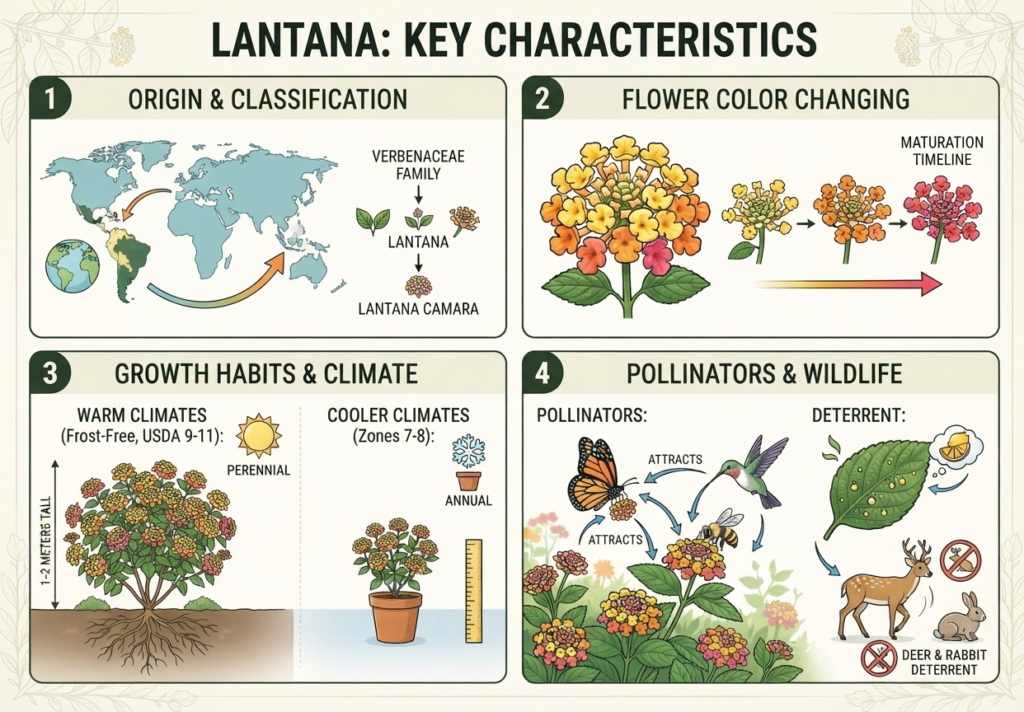
Lantana (Lantana camara) is a tropical flowering shrub in the Verbenaceae family, closely related to verbena. Native to Central and South America, lantanes have naturalized in warm climates worldwide. The lantana plant produces dense clusters of tiny tubular flowers that change color as they mature — opening yellow and shifting to orange, pink, or red on the same flower head.
Depending on your climate zone, lantana behaves as a perennial (USDA zones 9–11) or a warm-season annual (zones 7–8). In frost-free areas, established lantana plants can grow into woody shrubs reaching 1–2 meters tall. In cooler climates, gardeners treat them as annuals or overwinter them in containers indoors.
Lantana flowers are magnets for butterflies, hummingbirds, and other pollinators, making them a top choice for pollinator gardens. The foliage has a distinctive citrusy scent when brushed, which also helps deter deer and rabbits — a genuine bonus for gardeners dealing with browsing wildlife.
How to Plant Lantana: Sunlight, Soil & Spacing
Lantana demands full sun — at least 6 to 8 hours of direct sunlight daily. This is non-negotiable. A lantana plant placed in partial shade will produce leggy growth with fewer flowers. If your garden has limited sun, choose the sunniest spot available and avoid planting near tall trees or north-facing walls.
Soil should be well-draining. Lantana thrives in average to slightly sandy soil and actually performs poorly in rich, heavily amended beds — too much fertility encourages foliage at the expense of lantana flowers. If your soil is heavy clay, raise the planting bed or mix in coarse sand and perlite. A slightly acidic to neutral pH (6.0–7.0) is ideal.
Space lantana plants 45–90 cm apart depending on variety. Compact cultivars like ‘New Gold’ need less room, while vigorous types like ‘Miss Huff’ spread widely. Plant after the last frost date when soil temperatures reach 18°C (65°F). Lantana can also be grown in pots — use a container at least 30 cm wide with drainage holes and a quality potting mix.
Watering & Feeding Your Lantana Plant
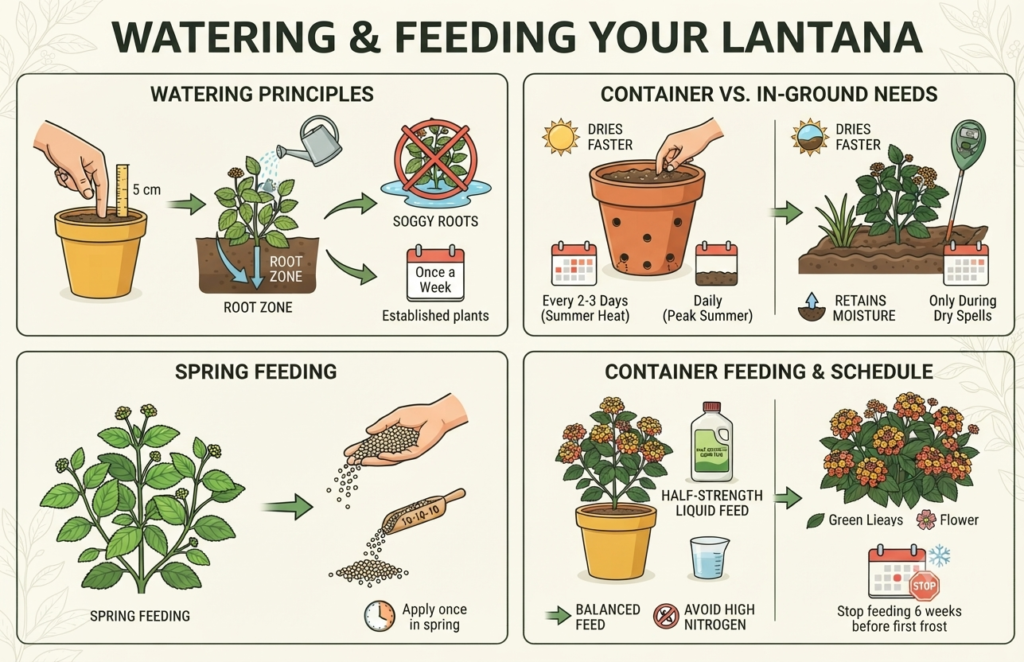
Once established, lantana is remarkably drought-tolerant. Water deeply once a week during the first growing season to develop strong roots, then reduce to watering only during extended dry spells. The number one mistake gardeners make is overwatering — soggy roots cause root rot and yellow leaves faster than any disease.
Check soil moisture by pushing your finger 5 cm into the soil. If it feels dry at that depth, water thoroughly until it drains from the bottom of the pot or saturates the root zone in-ground. Container-grown lantana dries faster and may need watering every 2–3 days in peak summer heat.
Lantana is a light feeder. Apply a balanced slow-release fertilizer (10-10-10) once in spring when new growth appears. Avoid high-nitrogen fertilizers — they push leafy growth and suppress flowering. For container plants, a half-strength liquid feed every 4–6 weeks during the growing season is sufficient. Stop feeding 6 weeks before your expected first frost.
Popular Lantana Varieties for Home Gardens
Lantana comes in dozens of cultivars ranging from compact groundcovers to large shrubs. Here are three reliable choices for home gardeners.
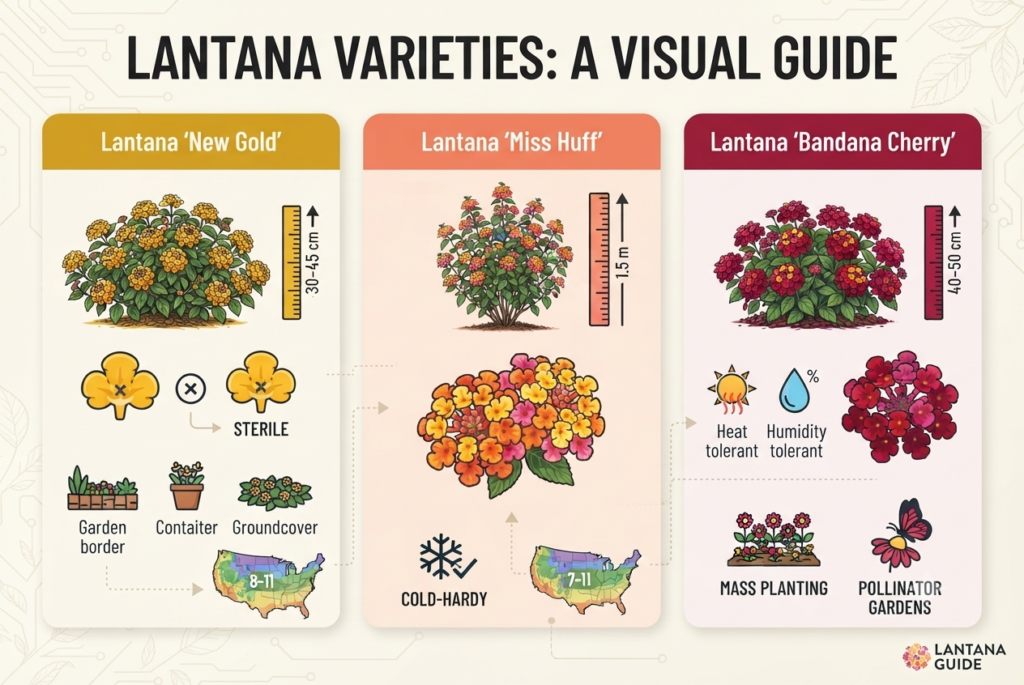
Lantana ‘New Gold’
Compact, spreading habit (30–45 cm tall). Solid golden-yellow flowers. Sterile — won’t self-seed. Excellent for borders, containers, and groundcover. Zones 8–11.
Lantana ‘Miss Huff’
Vigorous, cold-hardy perennial (zones 7–11). Orange-pink-yellow multicolored blooms. Grows to 1.5 m tall. One of the most cold-tolerant lantanes available.
Lantana ‘Bandana Cherry’
Deep cherry-red to magenta flowers. Compact mounding form (40–50 cm). Heat and humidity tolerant. Ideal for mass planting and pollinator gardens.
How to Prune Lantana for More Flowers
Pruning is the single most effective way to encourage continuous lantana flowers. Deadhead spent flower clusters every 1–2 weeks by snipping them off just above the next set of leaves. This redirects energy from seed production into new blooms. Many gardeners notice their lantana stops flowering in mid-summer — deadheading solves this almost immediately.
For shape control, cut back leggy stems by one-third in mid-summer to promote bushy, compact growth. In perennial zones, do a hard pruning in late winter or early spring — cut the entire plant back to 15–20 cm above ground before new growth emerges. This rejuvenates the lantana plant and prevents it from becoming woody and unproductive.
Troubleshooting: Why Is My Lantana Not Flowering?
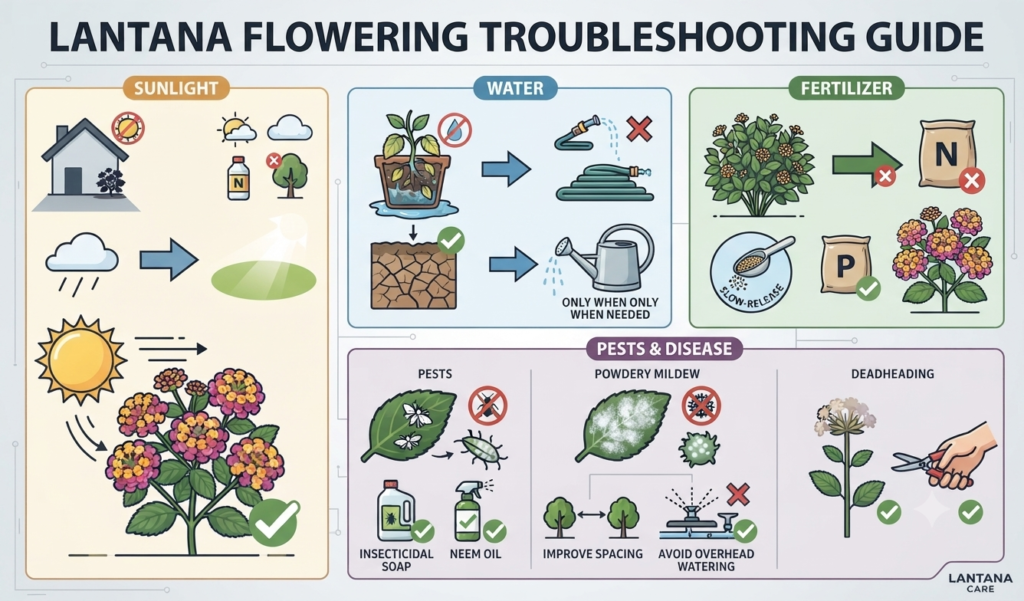
The most common reasons a lantana plant stops blooming are insufficient sunlight, overwatering, and over-fertilizing with nitrogen. Move container plants to a sunnier spot, let the soil dry between waterings, and switch to a bloom-boosting fertilizer with higher phosphorus. Also check for spent flowers that need deadheading.
Yellow leaves usually indicate overwatering or poor drainage. Whiteflies and lace bugs occasionally attack lantana — spray with insecticidal soap or neem oil early in the morning. Powdery mildew can appear in humid conditions with poor air circulation; improve spacing and avoid overhead watering to prevent it.
How to Protect Lantana in Winter
In zones 9–11, lantana is evergreen and needs no winter protection. In zone 8, apply a thick 10–15 cm layer of mulch over the root zone after the first hard frost — established plants like ‘Miss Huff’ will resprout from the roots in spring. In zones 7 and colder, treat lantana as an annual or move containers indoors to a bright, cool location (10–15°C).
Overwintered indoor lantana may drop leaves — this is normal dormancy. Reduce watering to once every 2–3 weeks and stop fertilizing entirely. Resume normal care when you see new green growth in spring. Harden off gradually before moving back outdoors after the last frost date.
Frequently Asked Questions About Lantana
Is lantana a perennial or annual?
Lantana is a tender perennial in USDA zones 9–11, meaning it returns year after year. In cooler zones (7–8), it may die back to the ground and resprout from roots with mulch protection. In zones 6 and below, it is grown as a warm-season annual.
How often should I water lantana?
Water deeply once a week during the first season. Once established, lantana is drought-tolerant and only needs supplemental water during prolonged dry spells. Container plants need more frequent watering — every 2–3 days in hot weather. Always let soil dry between waterings.
Can lantana grow in pots?
Absolutely. Lantana thrives in containers at least 30 cm wide with good drainage holes. Use well-draining potting mix and place in full sun. Container growing also makes it easy to overwinter indoors in cold climates.
Does lantana attract butterflies?
Yes — lantana is one of the top butterfly-attracting plants. Its nectar-rich flower clusters draw swallowtails, monarchs, painted ladies, and many other species. It also attracts hummingbirds and beneficial pollinators like bees.
Is lantana toxic to pets?
Lantana foliage and unripe berries are toxic if ingested by dogs, cats, and livestock. Symptoms include vomiting, diarrhea, and liver damage in severe cases. Keep pets away from the plant and remove any berries that form. The flowers themselves are generally not a concern.
Why are my lantana leaves turning yellow?
Yellow leaves on lantana almost always indicate overwatering or poor drainage. Check that soil dries between waterings and that containers have functional drainage holes. Less common causes include iron deficiency in alkaline soil or spider mite infestations.
How fast does lantana grow?
Lantana is a fast grower in warm conditions. A small nursery plant can fill a 60-cm-wide space within a single growing season. In perennial zones, established plants grow rapidly in spring once temperatures consistently exceed 18°C.
When is the best time to plant lantana?
Plant lantana after all danger of frost has passed and soil temperatures reach at least 18°C (65°F). In most regions this means late spring. Planting too early in cold soil stunts growth and can cause root rot.