
The yucca plant is one of the most popular and forgiving houseplants you can grow. With its striking sword-shaped leaves and architectural form, a yucca plant adds a bold, tropical touch to any room — without demanding constant attention. Whether you’re a first-time plant parent or looking to add another low-maintenance beauty to your collection, yucca is an excellent choice.
In this complete yucca plant care guide, you’ll learn exactly how to keep your plant yucca plant healthy, how to troubleshoot common issues, and how to help your yucca thrive for years to come. Let’s dig in.
What Is a Yucca Plant?
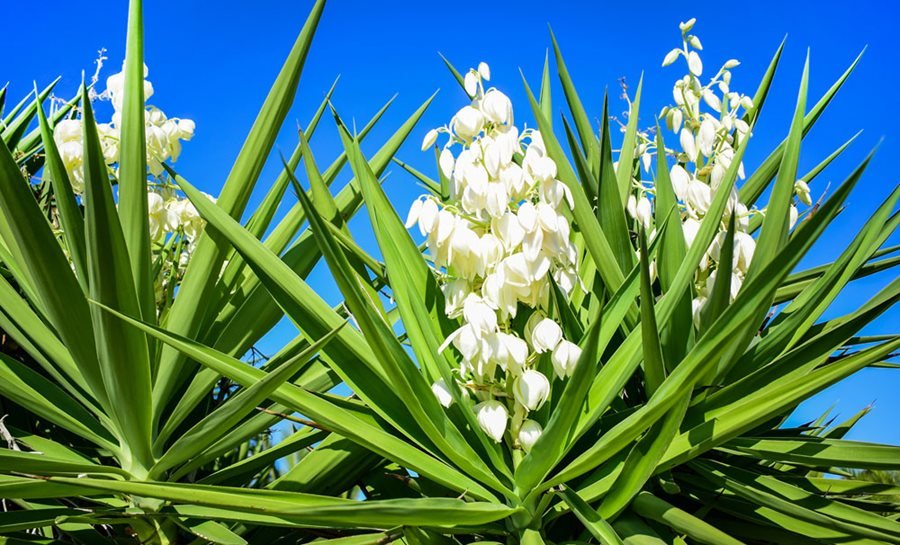
Yucca is a genus of perennial shrubs and trees belonging to the family Asparagaceae. Native to the hot, arid regions of the Americas and the Caribbean, yucca plants have adapted to survive drought, intense sunlight, and poor soil conditions. This makes the yucca plant yucca an incredibly resilient houseplant that thrives on minimal care.
There are over 40 species of yucca, but the most common varieties grown indoors include Yucca elephantipes (Spineless Yucca) and Yucca aloifolia (Spanish Bayonet). The spineless yucca is the friendliest option for home growers, featuring softer leaf tips that are safer around children and pets.
Yucca plants can grow anywhere from 2 to 10 feet indoors depending on the variety and pot size. They’re slow growers, so you won’t need to worry about them outgrowing your space quickly — making them perfect for apartments and smaller homes.
Yucca Plant Care Requirements
Caring for a yucca plant is straightforward once you understand its basic needs. Here’s what every plant yucca plant owner should know about light, water, soil, temperature, and humidity.
☀️ Light Requirements
Yucca plants love bright, indirect light and can tolerate several hours of direct sunlight. Place your yucca near a south-facing or west-facing window for best results. While yucca can survive in lower light conditions, it will grow more slowly and may become leggy over time. If you notice your plant leaning toward the window, rotate it every few weeks to encourage even growth.
💧 Watering Your Yucca
Overwatering is the number one mistake new yucca plant owners make. Yucca is drought-tolerant and prefers to dry out between waterings. During spring and summer, water your yucca thoroughly when the top 2–3 inches of soil feel completely dry. In winter, reduce watering to once every 2–3 weeks. Always ensure your pot has drainage holes to prevent water from sitting around the roots.
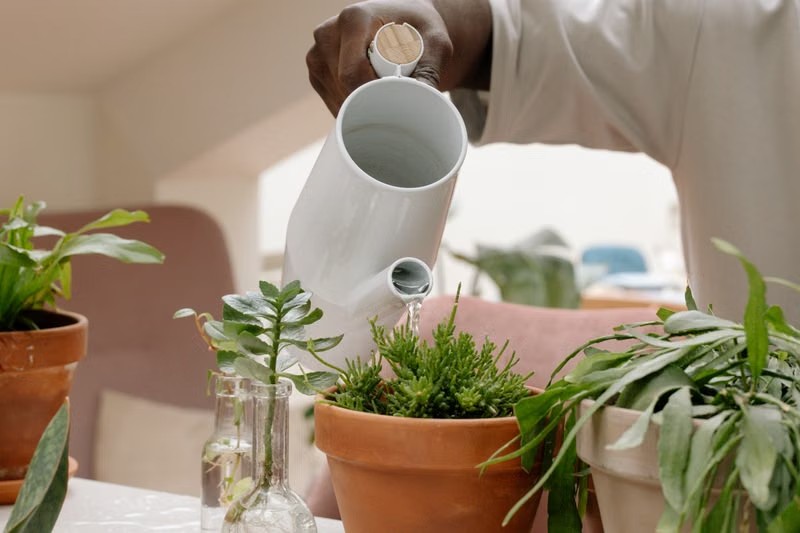
💡 Pro Tip: Insert your finger 2–3 inches into the soil before watering. If it still feels moist, wait a few more days. Many indoor gardeners make the mistake of watering on a fixed schedule — but your yucca will tell you when it’s thirsty.
🌱 Soil Requirements
Yucca plants prefer slightly acidic to neutral soil that drains quickly and prevents excess moisture around the roots. A standard cactus or succulent potting mix works perfectly. You can also create your own by mixing regular potting soil with perlite or coarse sand in a 2:1 ratio for improved drainage.
🌡️ Temperature
Yucca plants do best in temperatures between 60–80°F (15–27°C). They can tolerate brief cold snaps down to about 30°F (-1°C) but should be kept away from drafty windows and heating vents during winter. Normal household temperatures are perfectly fine for your yucca.
💨 Humidity
Good news for apartment dwellers — yucca plants thrive in average indoor humidity and don’t need misting or humidity trays. They actually prefer drier air, which makes them ideal for homes with central heating or air conditioning.
How to Grow Yucca Indoors
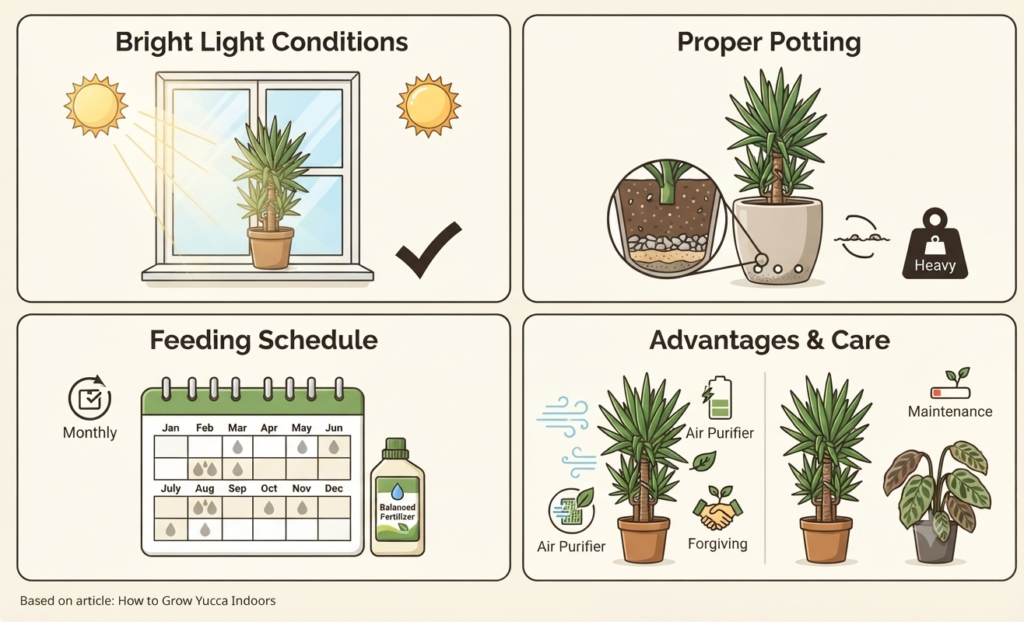
Growing a yucca plant indoors is simple if you give it the right conditions. Choose a spot with plenty of bright light — near a large window is ideal. Use a heavy pot with drainage holes (yucca can become top-heavy as they grow) and well-draining soil. Indoor yucca rarely needs fertilizing, but you can feed it with a balanced liquid fertilizer once a month during the growing season (spring through summer).
One of the biggest advantages of growing yucca indoors is that it purifies the air while requiring very little maintenance. Unlike ferns or calatheas that demand constant attention to humidity and watering, your plant yucca plant will forgive the occasional missed watering.
💡 Apartment Tip: If your space doesn’t get much natural light, a Yucca elephantipes (Spineless Yucca) is your best bet — it’s the most shade-tolerant variety. Just avoid completely dark corners.
How to Plant and Repot Yucca
Yucca plants are slow growers and typically only need repotting every 2–3 years. You’ll know it’s time when you see roots growing through the drainage holes or the plant becomes visibly root-bound. The best time to repot is in spring when the plant enters its active growing season.
When repotting, choose a pot only 1–2 inches larger in diameter than the current one. Gently remove the yucca from its existing pot, shake off excess soil, and inspect the roots for any signs of rot (dark, mushy roots should be trimmed). Place the plant in its new pot with fresh, well-draining soil and water lightly.
A common mistake is choosing a pot that’s too large — this holds excess moisture around the roots and can lead to rot. Remember: yucca prefers being slightly snug in its container.
Common Yucca Plant Problems and Solutions
Even the hardiest yucca plant can run into trouble. Here are the most common issues and how to fix them quickly.
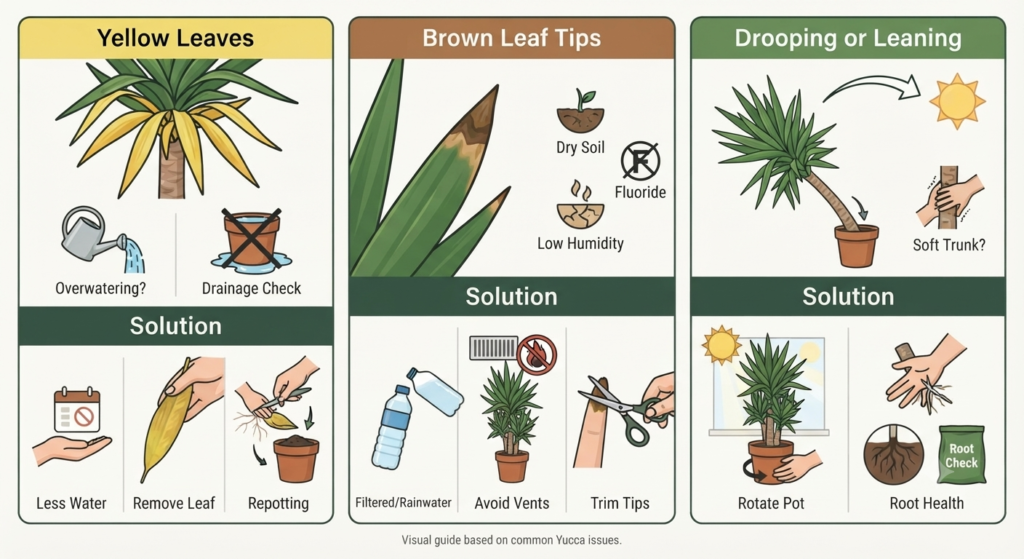
Yellow Leaves
Yellow leaves on a yucca almost always indicate overwatering. Cut back on your watering schedule immediately and check that the pot drains properly. Remove severely yellowed leaves at the base — they won’t recover. If the stem feels soft or mushy, root rot may have set in, and you’ll need to trim the affected roots and repot in fresh soil.
Brown Leaf Tips
Brown tips can result from underwatering, low humidity, or fluoride sensitivity. Try watering with filtered or rainwater, and ensure your yucca isn’t sitting directly next to a heating vent. Trim brown tips with clean scissors for a tidier appearance.
Drooping or Leaning
A yucca that leans heavily is usually reaching for light. Move it to a brighter spot and rotate the pot weekly. If the trunk is soft, overwatering may be weakening the plant’s structure — check the roots immediately.
⚠️ Pet Safety: Yucca plants contain saponins, which are mildly toxic to cats and dogs if ingested. Keep your yucca out of reach of curious pets, or choose a pet-safe alternative like a spider plant or Boston fern.
How to Propagate Yucca
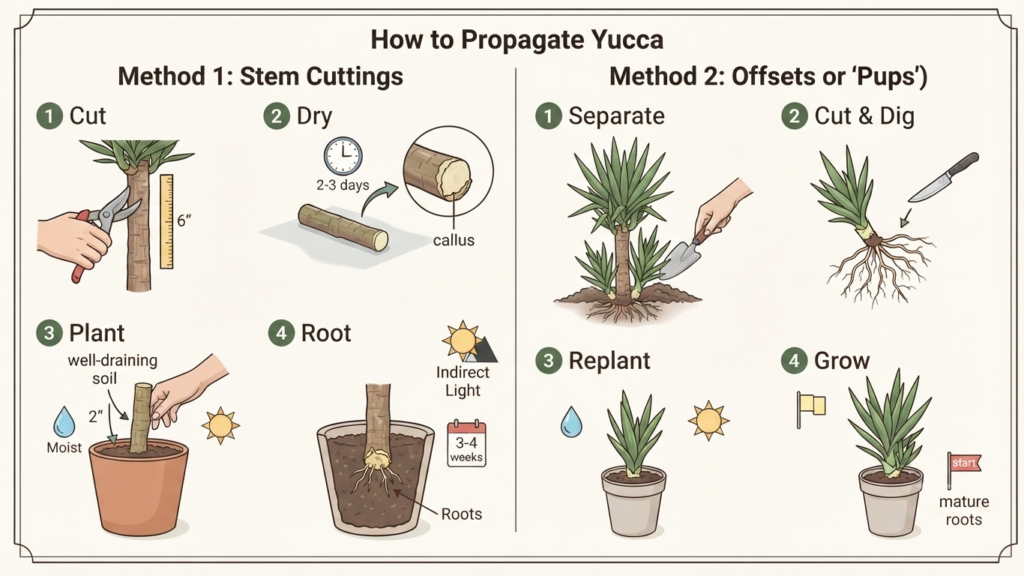
Propagating yucca is surprisingly easy using stem cuttings. The best time to propagate is during spring or early summer when the plant is actively growing. Using a clean, sharp saw or pruning shears, cut a section of the yucca stem at least 6 inches long.
Let the cutting dry for 2–3 days in a cool, shaded spot until the cut end forms a callus. Then plant the callused end about 2 inches deep in moist, well-draining soil. Keep the soil slightly moist (not wet) and place in bright, indirect light. Roots typically develop within 3–4 weeks.
You can also propagate yucca by separating offsets (pups) that grow at the base of the mother plant. Gently dig around the offset, cut it away with some attached roots, and plant it in its own pot. This method gives you a head start since the pup already has an established root system.
Yucca Plant Care Tips for Beginners
Here are the most important things to remember when caring for your yucca plant:
- Always err on the side of underwatering — yucca recovers from drought much better than from overwatering.
- Clean dust from leaves monthly with a damp cloth to help the plant photosynthesize efficiently.
- Use a heavy pot or add stones to the bottom for stability — mature yucca plants can become top-heavy.
- Avoid placing yucca in bathrooms or kitchens where humidity tends to be high.
- Don’t panic if lower leaves yellow and drop naturally — this is normal as the plant matures and sheds older foliage.
Frequently Asked Questions
How often should I water my yucca plant?
Water your yucca only when the top 2–3 inches of soil are completely dry. In summer this is typically every 7–10 days; in winter, every 2–3 weeks. Always check the soil first rather than following a fixed schedule.
Can a yucca plant survive in low light?
Yucca can tolerate lower light but won’t thrive. It will grow more slowly and may become leggy. For best results, provide bright indirect light or a few hours of direct sunlight daily.
Is yucca toxic to cats and dogs?
Yes, yucca contains saponins which are mildly toxic to pets if ingested. Symptoms include vomiting, drooling, and diarrhea. Keep your yucca plant out of reach of pets or consider a pet-safe plant alternative.
Why are my yucca leaves turning brown at the tips?
Brown tips usually indicate underwatering, fluoride in tap water, or very dry air from heating vents. Try watering with filtered water and moving the plant away from direct heat sources. Trim brown tips for a cleaner look.
How fast does a yucca plant grow?
Yucca is a slow grower, typically adding 2–4 inches of height per year indoors. With optimal light and care, some varieties may grow slightly faster. Don’t worry if progress seems slow — this is completely normal for yucca plants.