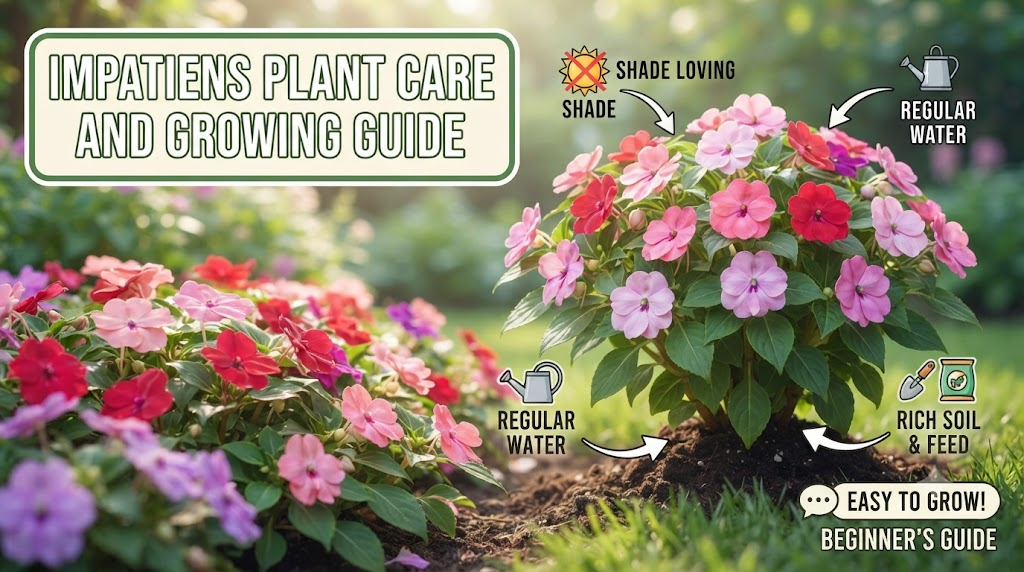

Everything you need to fill your shady spaces with non-stop color — from planting day to first frost
If your yard sits mostly in shade, you already know the frustration of watching sun-loving annuals fizzle out by July. Impatiens are the undisputed champions of low-light color — but getting them to stay bushy, bloom-packed, and disease-free all season takes a bit of know-how. This guide gives you the practical, step-by-step plan to make that happen.
Quick Care Checklist
Light: Partial to full shade (2–4 hours morning sun ideal)
Water: Keep soil consistently moist — about 1 inch per week
Soil: Rich, well-draining, amended with compost (pH 6.0–6.5)
Spacing: 10–12 inches apart for Walleriana; 12–18 for New Guinea
Fertilizer: Balanced 10-10-10 every 2–3 weeks or slow-release at planting
Hardiness: Annual in most zones; perennial in USDA zones 10–11
Light & Location
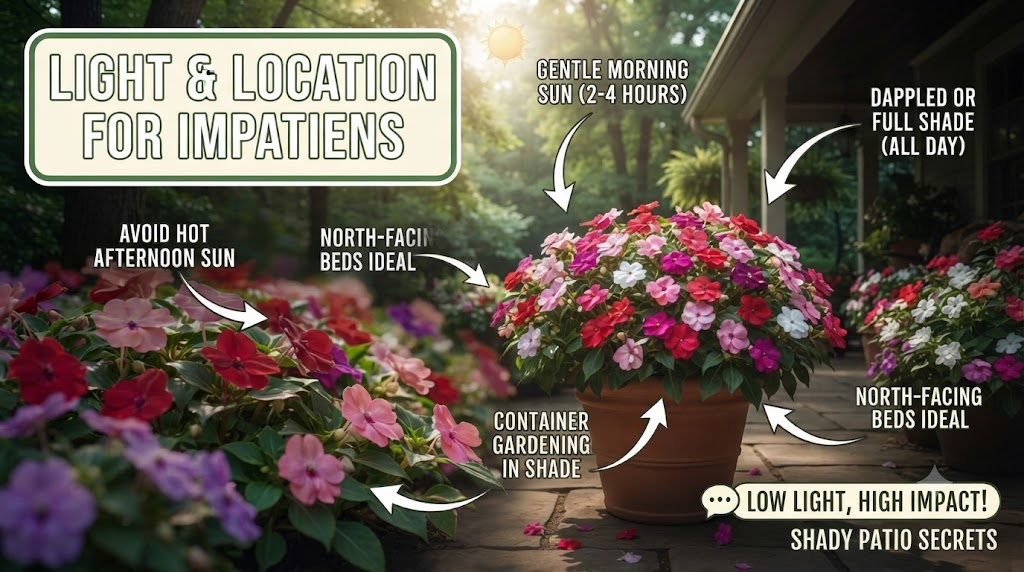
Impatiens thrive in spots that receive 2–4 hours of gentle morning sun followed by dappled or full shade for the rest of the day. North-facing beds, under deciduous tree canopies, and covered porches are all prime real estate. Avoid hot afternoon sun — it scorches leaves and halts blooming.
A shaded patio brimming with container impatiens — proof that low light doesn’t mean low impact.
Soil & Planting
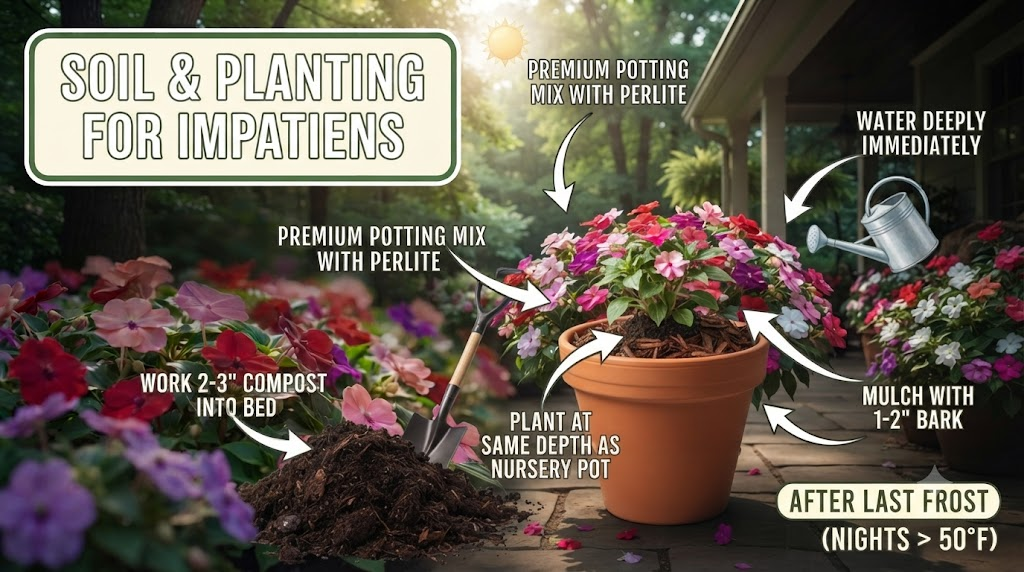
Impatiens demand rich, well-draining soil. Before planting, work 2–3 inches of compost into the top 6 inches of your bed. If you’re using containers, a premium potting mix with perlite is ideal — never use garden soil in pots, as it compacts and suffocates roots.
Plant after the last frost once nighttime temperatures stay above 50°F (10°C). Set transplants at the same depth as their nursery pot and water deeply immediately. Mulch with 1–2 inches of shredded bark to hold moisture without smothering stems.
Watering: The Goldilocks Balance
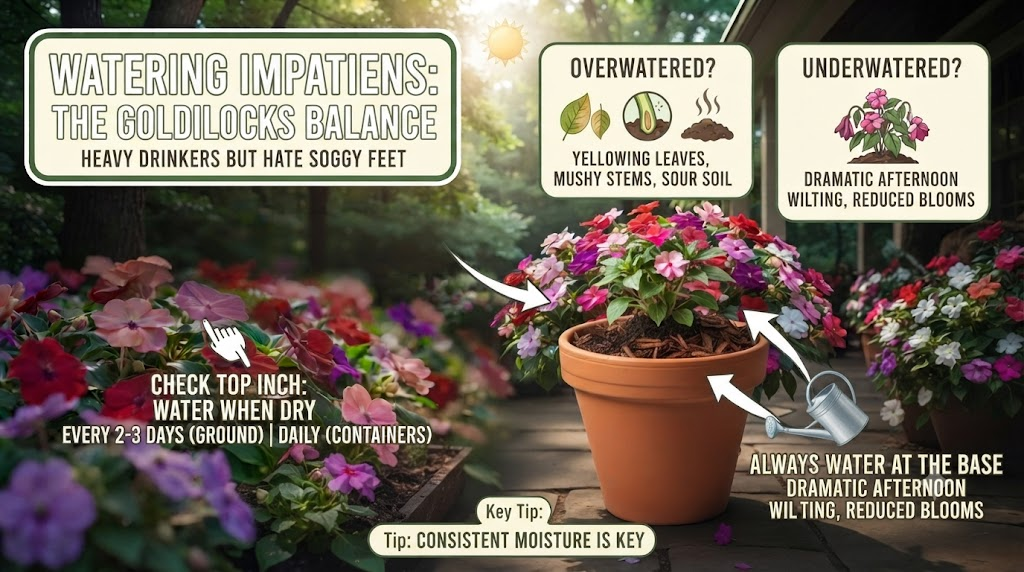
Impatiens are heavy drinkers but hate soggy feet. Water when the top inch of soil feels dry — typically every 2–3 days in ground beds and daily for containers in warm weather. Always water at the base, not overhead, to reduce disease risk.
Signs you’re overwatering: yellowing lower leaves, mushy stems, or a sour soil smell. Signs of underwatering: dramatic wilting in the afternoon (they recover quickly once watered, but repeated stress reduces blooms).
Fertilizing for Non-Stop Blooms
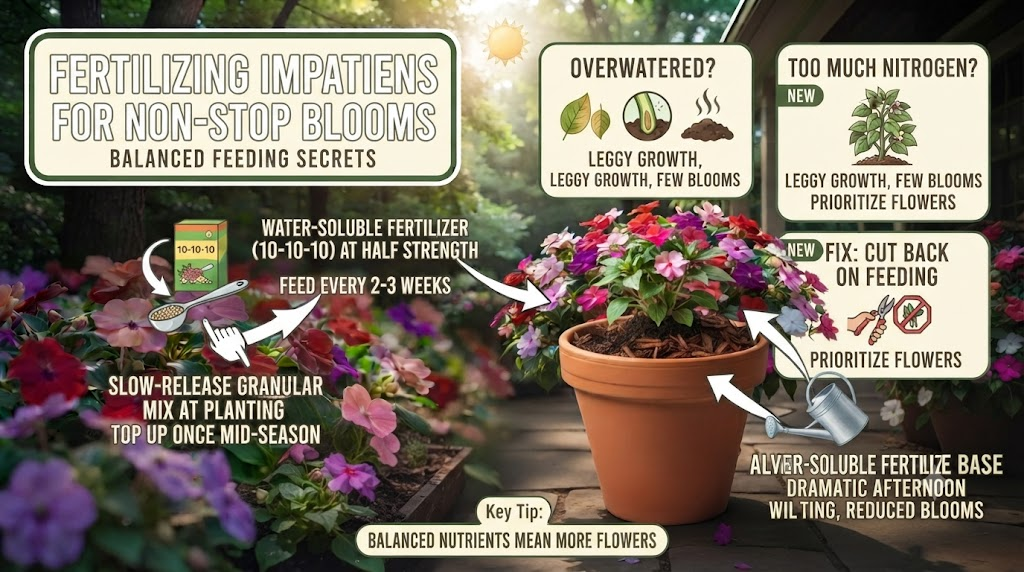
Feed every 2–3 weeks with a water-soluble balanced fertilizer (10-10-10) at half strength. Alternatively, mix a slow-release granular fertilizer into the soil at planting time and top up once mid-season. Over-fertilizing with nitrogen pushes leggy green growth at the expense of flowers — if you notice lots of leaves but few blooms, cut back on feeding.
Choosing Your Variety: Walleriana vs. New Guinea
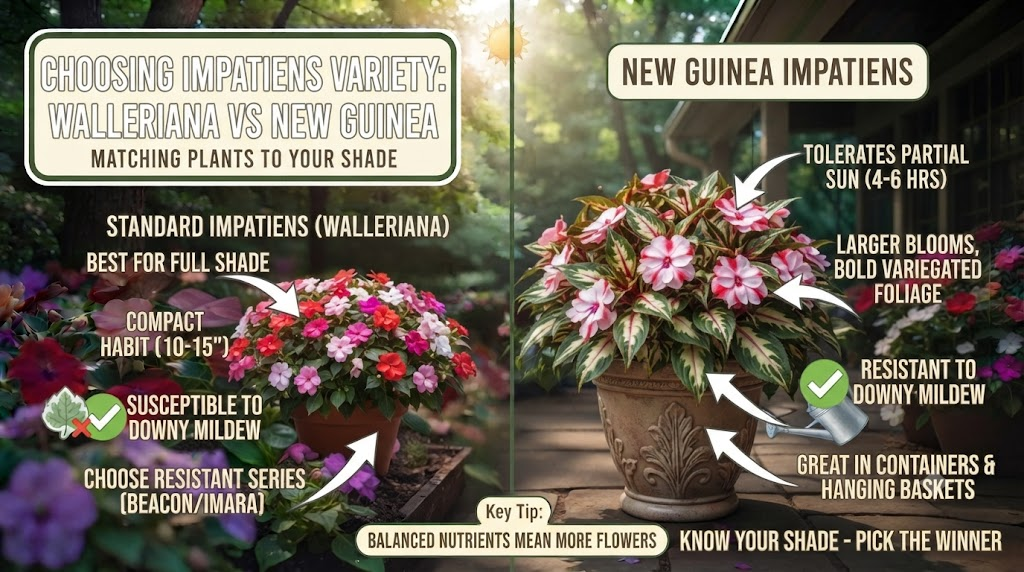
The two main types serve different microclimates. Standard impatiens (Walleriana) are your deep-shade workhorses, while New Guinea impatiens handle more light and offer larger, showier flowers with striking foliage.
Standard Impatiens (Walleriana)
Best for full shade. Compact mounding habit, 10–15″ tall. Wide color range. Susceptible to downy mildew — choose resistant series like Beacon or Imara XDR if mildew is common in your area.
New Guinea Impatiens
Tolerates partial sun (4–6 hours). Larger blooms, bold variegated foliage. Resistant to downy mildew. Excellent in containers and hanging baskets where they get filtered light.
Troubleshooting Common Problems
| Symptom | Likely Cause | Quick Fix |
|---|---|---|
| Leggy, sparse growth | Too much shade or overcrowding | Pinch stems back by ⅓; ensure 10–12″ spacing |
| Yellowing leaves | Overwatering or poor drainage | Reduce watering; add perlite to soil mix |
| Wilting in afternoon | Underwatering or too much sun | Water deeply at base; relocate to shadier spot |
| Few or no flowers | Excess nitrogen fertilizer | Switch to bloom-booster (higher phosphorus) |
Downy Mildew: What You Need to Know
Downy mildew (Plasmopara obducens) decimated standard impatiens across North America starting in 2011. Symptoms include leaf yellowing, white fuzzy growth on leaf undersides, and rapid defoliation. Once present, there is no cure — infected plants must be removed and disposed of (not composted).
Prevention is your best strategy: choose resistant Walleriana series (Beacon, Imara XDR) or switch to naturally resistant New Guinea types. Ensure good air circulation, avoid overhead watering, and never plant in beds where mildew occurred the previous year without replacing the top 4 inches of soil.
Frequently Asked Questions
Can impatiens grow in full sun?
Standard Walleriana types will struggle and burn in full sun. New Guinea impatiens can handle 4–6 hours of sun if kept well-watered, but neither type thrives in all-day direct sunlight.
Are impatiens annuals or perennials?
In most climates (USDA zones 2–9), impatiens are grown as annuals — they die at first frost. In frost-free zones 10–11, they can behave as tender perennials and bloom year-round.
How do I make leggy impatiens bushy again?
Pinch or cut each stem back by about one-third just above a leaf node. This encourages branching. Do this mid-season (around late June) for a fresh flush of compact growth and blooms within 2–3 weeks.