
What Is Hardy Hibiscus?
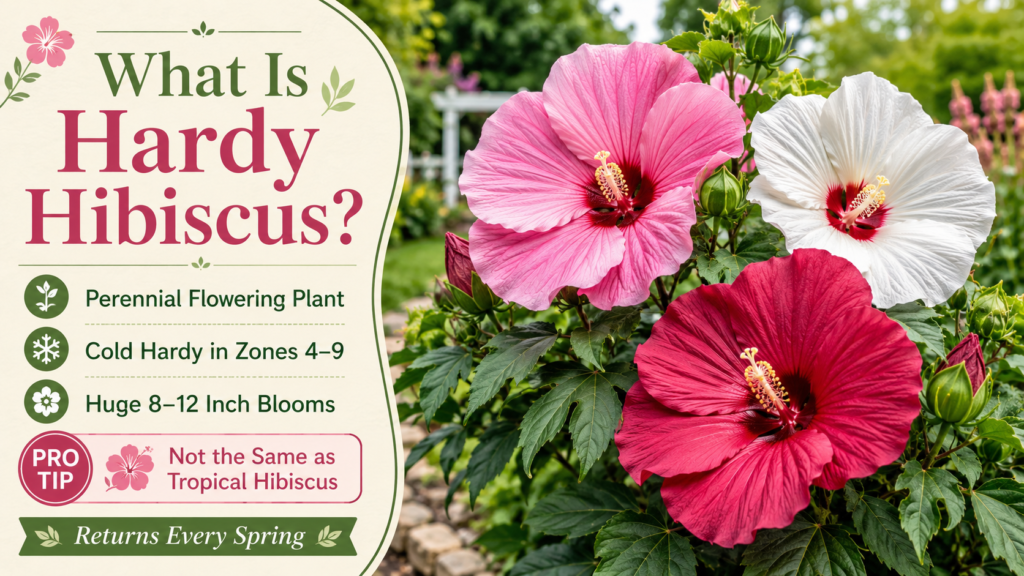
Hardy hibiscus (Hibiscus moscheutos) is a perennial flowering plant native to North America. Unlike its tropical cousin, hardy hibiscus can survive freezing winters in USDA zones 4–9 and returns reliably every spring. It produces enormous flowers—often 8 to 12 inches across—in shades of white, pink, red, and bicolor.
The plant dies back to the ground each winter and emerges late in spring (often the last perennial to appear), which worries many new gardeners. Don’t panic—this is completely normal. Once summer heat arrives, hardy hibiscus grows rapidly and blooms from mid-summer through early fall.
| Pro Tip: Hardy hibiscus is NOT the same as tropical hibiscus. Tropical varieties (Hibiscus rosa-sinensis) cannot survive frost. If you want a plant that overwinters outdoors in cold climates, make sure the label says “hardy” or “perennial” hibiscus. |
How to Plant Hardy Hibiscus
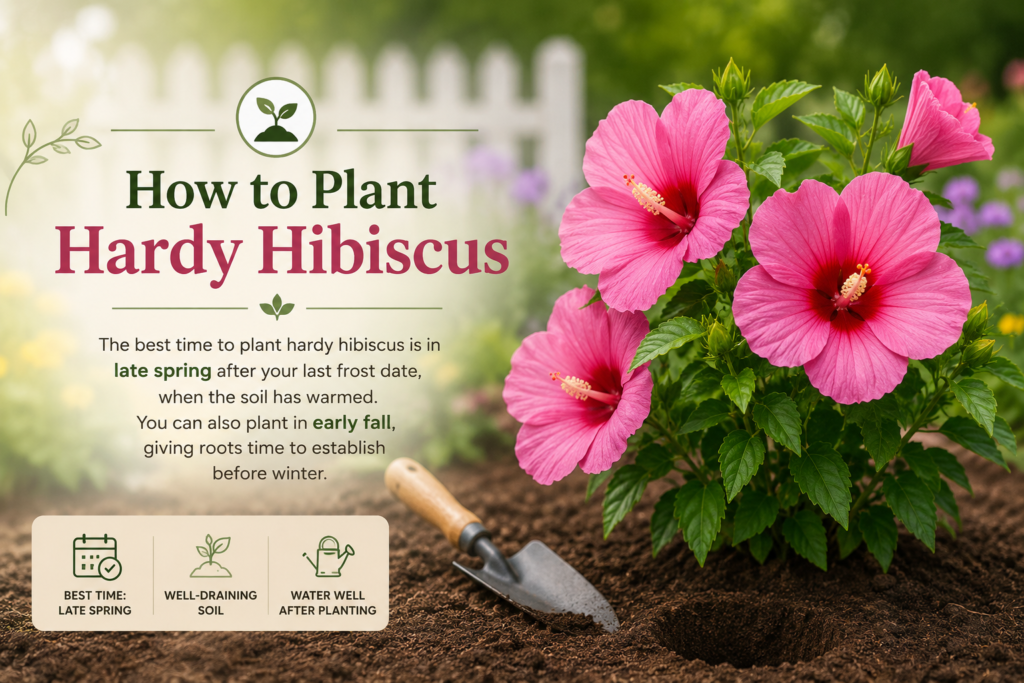
| The best time to plant hardy hibiscus is in late spring after your last frost date, when the soil has warmed. You can also plant in early fall, giving roots time to establish before winter. |
Step-by-Step Planting Instructions
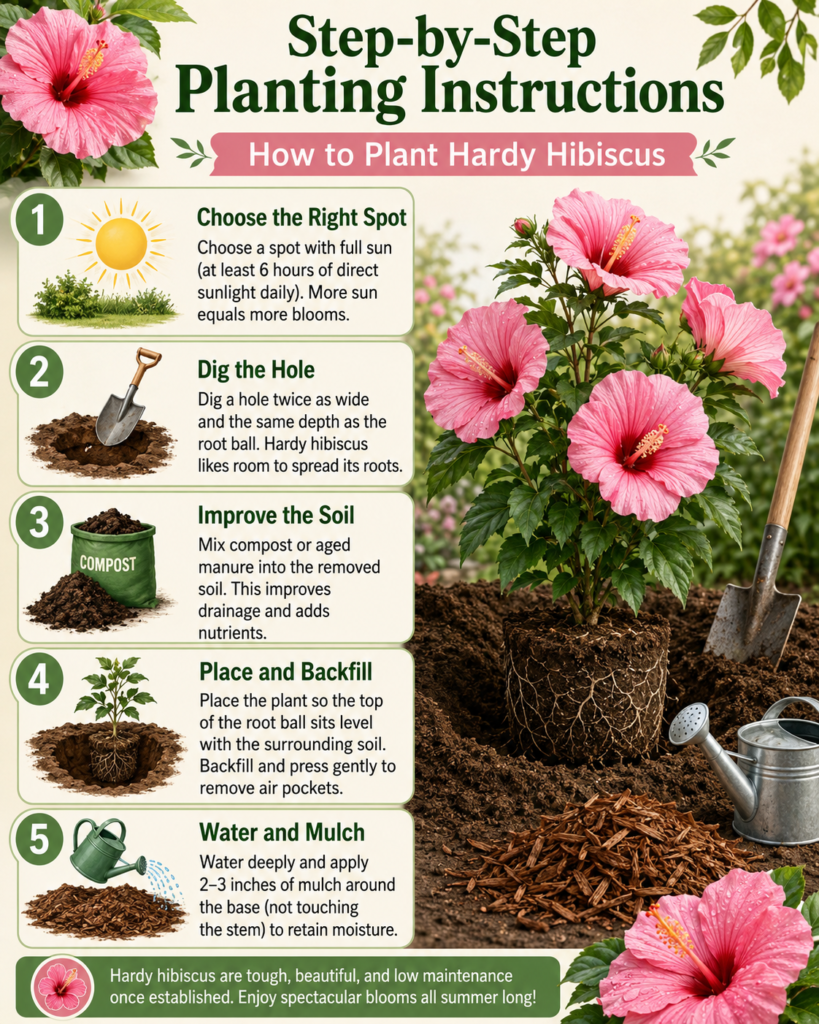
- Choose a spot with full sun (at least 6 hours of direct sunlight daily). More sun equals more blooms.
- Dig a hole twice as wide and the same depth as the root ball. Hardy hibiscus likes room to spread its roots.
- Mix compost or aged manure into the removed soil. This improves drainage and adds nutrients.
- Place the plant so the top of the root ball sits level with the surrounding soil. Backfill and press gently to remove air pockets.
- Water deeply and apply 2–3 inches of mulch around the base (not touching the stem) to retain moisture.
| Task | Best Time | Details |
| Prepare Soil | Before planting | Mix compost and aged manure to improve drainage and add nutrients. |
| Dig Hole | Day of planting | Make hole 2× wider and same depth as root ball for proper root spread. |
| Water & Mulch | Immediately after planting | Water deeply and apply 2–3 inches of mulch around base. |
Sunlight, Soil & Watering Needs
Sunlight, soil, and watering are essential for healthy hardy hibiscus growth. It needs full sun (6–8 hours daily), moist well-draining soil, and regular watering to stay strong. When these three needs are balanced, the plant grows well and produces beautiful blooms all season.
Sunlight
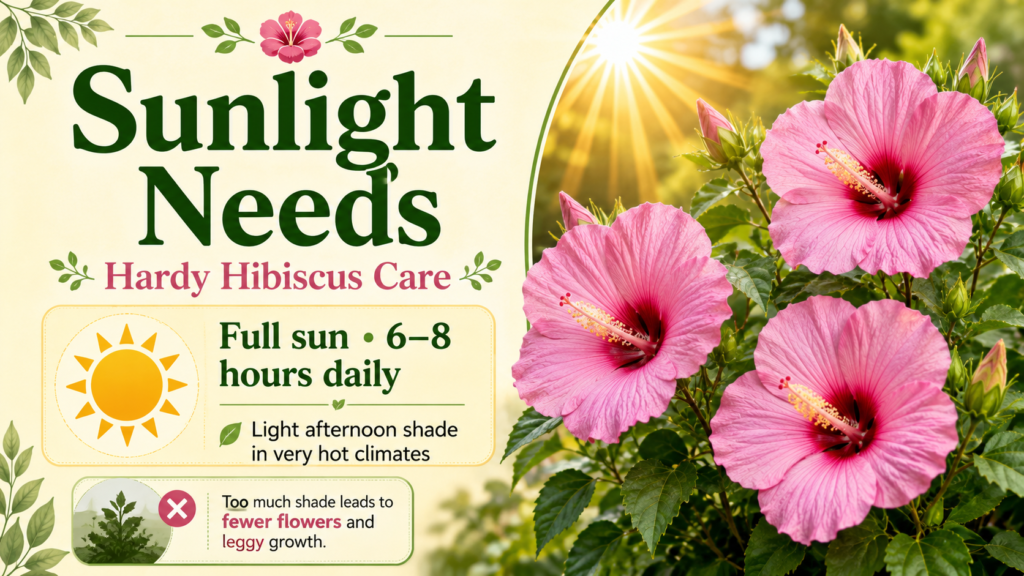
Hardy hibiscus thrives in full sun—6 to 8 hours daily is ideal. It can tolerate light afternoon shade in very hot climates (zones 8–9), but too much shade leads to fewer flowers and leggy growth.
Soil
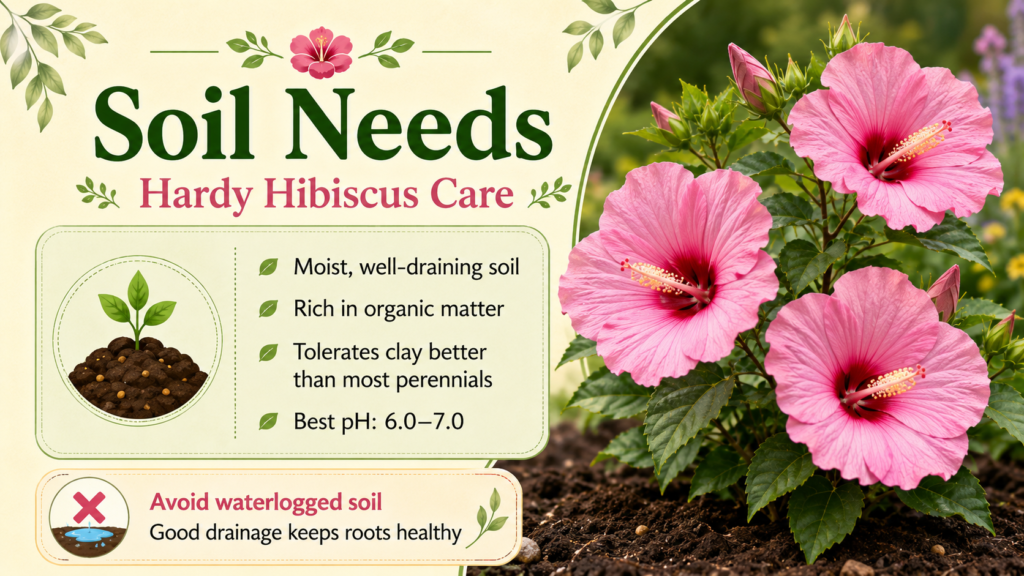
This plant prefers moist, well-draining soil rich in organic matter. It tolerates clay soil better than most perennials but doesn’t like sitting in waterlogged conditions. Aim for a slightly acidic to neutral pH (6.0–7.0).
Watering
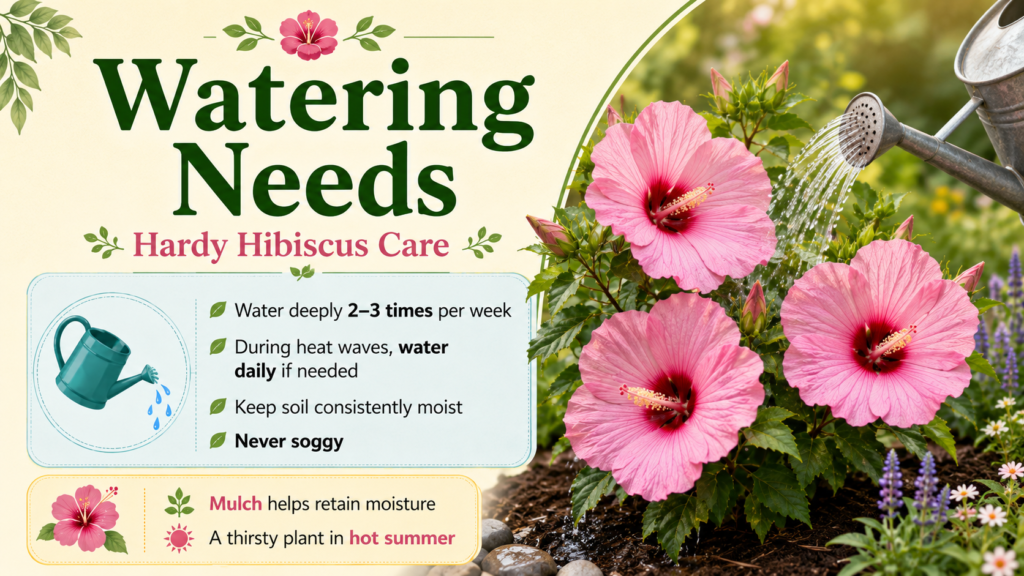
Hardy hibiscus is a thirsty plant. Water deeply 2–3 times per week during hot summer months, or daily during heat waves. The soil should stay consistently moist but never soggy. Mulch helps retain moisture between waterings.
| Care Element | Ideal Condition | Problem If Ignored |
| Sunlight | 6–8 hours of direct sun daily | Too little sun → fewer blooms, leggy growth |
| Soil | Moist, well-draining, pH 6.0–7.0 | Poor drainage → root rot and yellow leaves |
| Water | Consistent moisture, 2–3 times weekly | Dry soil → wilting; waterlogged → root disease |
Fertilizer & Feeding
Feed hardy hibiscus monthly from spring through mid-summer with a balanced fertilizer (10-10-10) or one slightly higher in phosphorus to encourage blooming. Stop fertilizing by late summer so the plant can prepare for dormancy. You can also top-dress with compost in early spring as a gentle, slow-release option.
Pro Tip: Avoid high-nitrogen fertilizers—they produce lots of foliage but fewer flowers. Look for a bloom-booster formula if your plant has lush leaves but refuses to flower.
When & How to Prune Hardy Hibiscus
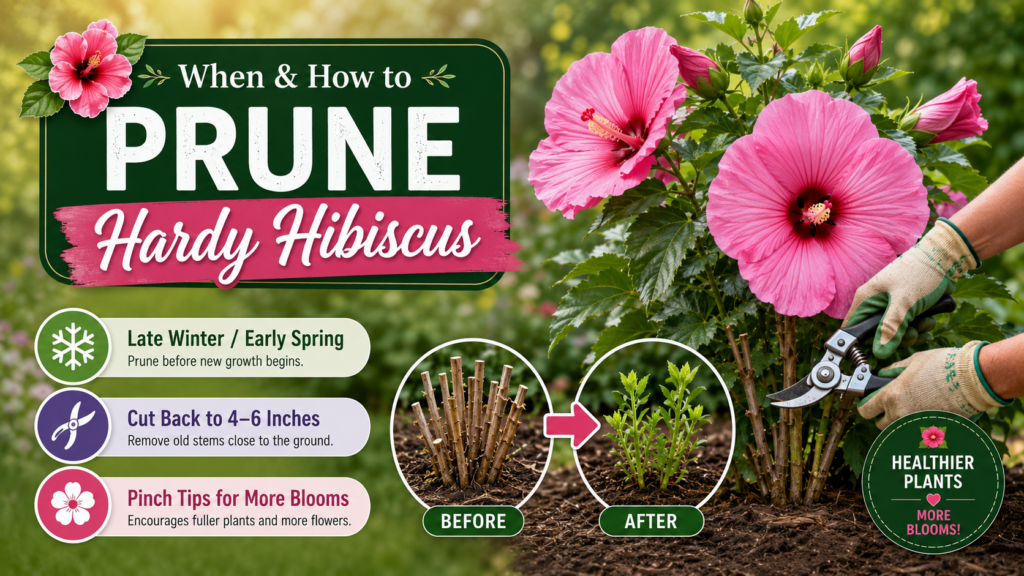
Prune hardy hibiscus in late winter or early spring before new growth appears. Cut all stems back to 4–6 inches above the ground. This encourages strong, bushy new growth and prevents the plant from becoming too tall and floppy.
You can also pinch the growing tips in late spring (when stems are 8–12 inches tall) to promote branching and more flowers. Deadheading spent blooms isn’t necessary for re-blooming, but it keeps the plant looking tidy.
| Season |
| Late Winter/ Early Spring |
| Late Spring (May–June) |
| Summer (ongoing) |
| Action |
| Cut stems back to 4–6 inches |
| Pinch growing tips when stems are 8–12 inches tall |
| Deadhead spent blooms |
| Why |
| Encourages bushy new growth. |
| Promotes branching and increases flower |
| Keeps plants tidy and blooming. |
Winter Care for Hardy Hibiscus
Hardy hibiscus is a true perennial that dies back to the ground each winter. After the first hard frost kills the foliage, you can cut the dead stems down or leave them as markers so you remember where the plant is in spring.
Apply 3–4 inches of mulch (shredded bark, straw, or leaves) over the root zone after the ground freezes. This insulates roots from extreme temperature swings. Remove excess mulch in spring when you see new shoots emerging.
Common Problems & Solutions
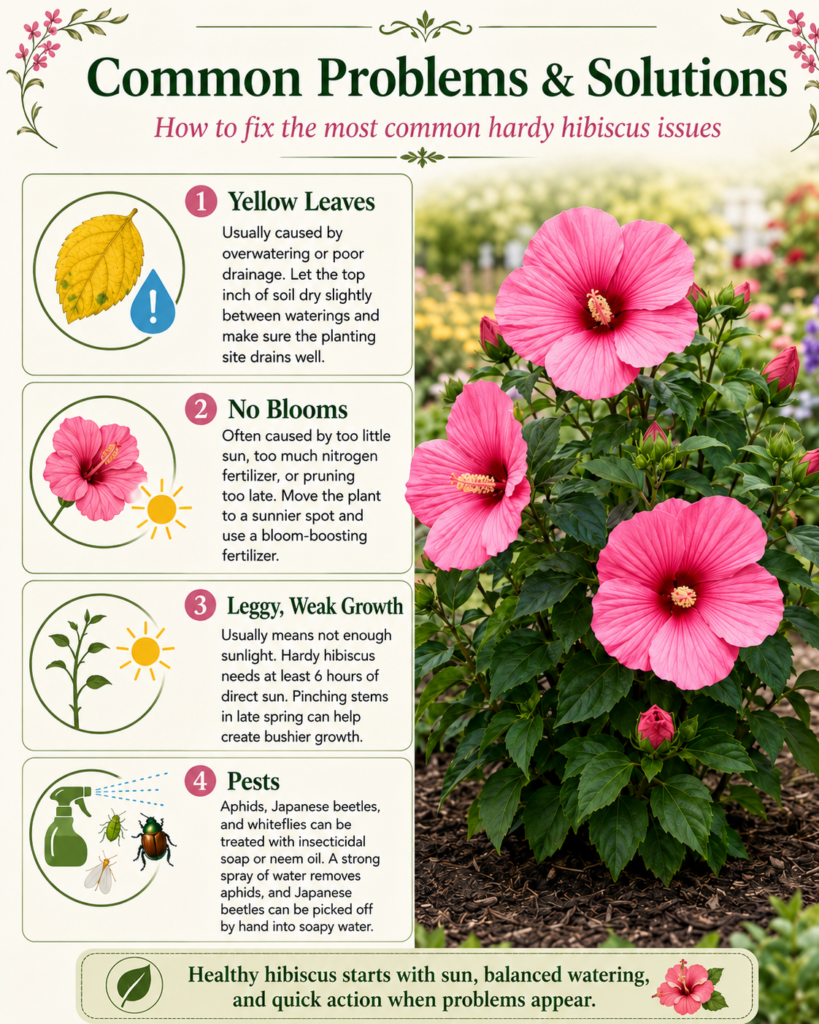
Here are the most common issues gardeners face and how to fix them:
- Yellow leaves — Usually overwatering or poor drainage. Let the top inch of soil dry slightly between waterings and ensure the planting site drains well.
- No blooms: Caused by low sun, excess nitrogen, or late pruning. Move plant to full sun and use a bloom-boosting fertilizer.
- Leggy, weak growth: Not enough sun. Needs 6+ hours of direct sunlight. Pinch stems in late spring for bushier growth.
- Pests: Use neem oil or insecticidal soap. Spray water to remove aphids. Pick beetles by hand into soapy water.
Quick Care Chart
| Care Factor | Recommendation |
| Sunlight | Full sun (6–8 hours daily) |
| Soil | Moist, well-draining, rich in organic matter |
| Water | 2–3 times per week; keep soil consistently moist |
| Hardiness Zones | USDA Zones 4–9 |
| Bloom Time | Mid-summer to early fall (July–September) |
| Mature Height | 3–7 feet tall depending on variety |
| Pruning | Cut back to 4–6 inches in late winter/early spring |
Frequently Asked Questions
Can I grow hardy hibiscus in a pot?
Yes! Use a large container (at least 5 gallons) with drainage holes. Potted plants need more frequent watering and may need winter protection in colder zones—move the pot to an unheated garage or wrap it with insulation.
Why is my hardy hibiscus not coming back in spring?
Hardy hibiscus is famously late to emerge—sometimes not until June. Wait until soil temperatures consistently reach 60°F before worrying. If nothing appears by mid-June, gently scratch the base of old stems; green underneath means it’s alive.
How big do hardy hibiscus flowers get?
Individual flowers can reach 8–12 inches in diameter—earning the nickname “dinner plate hibiscus.” Each bloom lasts only one day, but the plant produces new flowers continuously throughout the blooming season.
Is hardy hibiscus deer resistant?
Unfortunately, no. Deer find hardy hibiscus tasty. If deer are a problem in your area, consider fencing, deer repellent sprays, or planting it close to the house where deer are less likely to browse.
Can I grow hardy hibiscus from seed?
Yes, but it requires patience. Nick or soak seeds overnight, then start indoors 10–12 weeks before last frost. Seedlings grow slowly