

Everything you need to plant, grow, and enjoy these bold, low-maintenance perennials — even if you’re a total beginner.
What Are Asiatic Lilies?
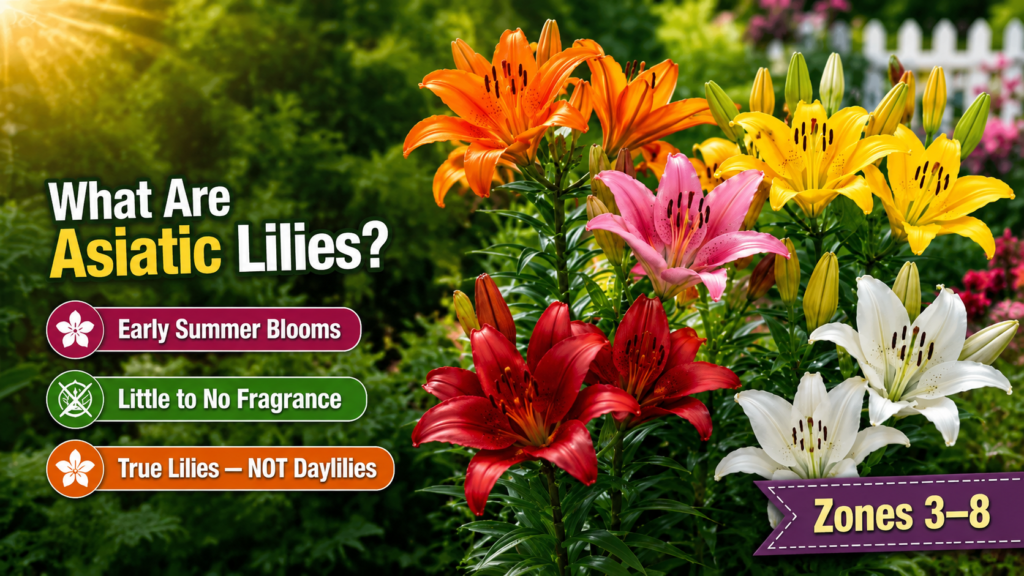
Asiatic lilies (Lilium asiatica hybrids) are true lilies that grow from bulbs and return year after year in USDA Hardiness Zones 3–8. They are the earliest lilies to bloom each summer — typically June through July — and produce upward-facing, star-shaped flowers in virtually every color except blue.
Also Read this Content: English Lavender: The Classic Fragrance You’ve Been Searching For
Unlike Oriental lilies, Asiatic varieties have little to no fragrance, making them ideal for gardeners sensitive to strong scents. They’re also NOT daylilies (Hemerocallis) — a common mix-up. True Asiatic lilies grow on a single sturdy stem with whorled leaves and can reach 2–4 feet tall.
Planting Depth & Spacing — Get It Right the First Time
Quick Planting Cheat Sheet
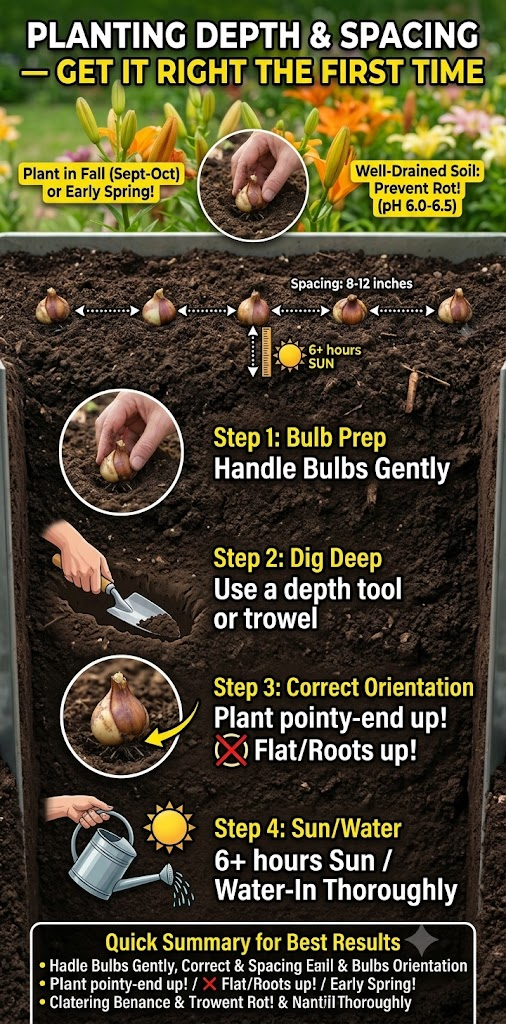
- Depth: Plant bulbs 4–6 inches deep (3× the bulb’s height).
- Spacing: 8–12 inches apart for air circulation.
- Sun: Full sun (6+ hours) for maximum blooms.
- Soil: Well-drained, slightly acidic (pH 6.0–6.5). Wet feet = bulb rot.
- When: Plant in fall (Sept–Oct) or early spring before last frost.
- Plant Asiatic lilies: at a depth of 4 to 6 inches for strong root growth.
- Keep bulbs: spaced 8 to 12 inches apart to allow healthy airflow and full blooming.
- Proper planting depth: helps the plant grow stronger and prevents bending stems.
- Avoid overcrowding: to get bigger, brighter, and longer-lasting flowers.
Asiatic Liliesvs. Oriental Lilies — Know the Difference
This is the #1 source of confusion for new lily growers. Here’s the quick breakdown so you buy the right bulb:
| Feature | Asiatic Lily | Oriental Lily |
| Fragrance | None to very mild | Intensely fragrant |
| Bloom Time | Early summer (June–July) | Mid-late summer (July–Sept) |
| Cold Hardiness | Zones 3–8 (very cold hardy) | Zones 5–8 (less cold tolerant) |
| Height | 2–4 feet | 3–6 feet |
| Flower Direction | Upward-facing | Outward or downward- facing |
Essential Care Tips — Keep Them Coming Back
Water deeply once a week during active growth. Let the top inch of soil dry between waterings — overwatering is the #1 killer.
Mulch with 2–3 inches of organic mulch to keep roots cool and retain moisture without waterlogging.
Deadhead spent blooms immediately but leave the stem and leaves intact — they feed the bulb for next year.
Cut stems to ground level only after foliage turns completely yellow in autumn.
Watch for red lily beetles (bright red, 8mm). Hand-pick adults and check leaf undersides for larvae in spring.
Feed with a balanced 10-10-10 fertilizer when shoots emerge and again at bud stage. Avoid high-nitrogen feeds.
Bloom Time & Best Companion Plants
Asiatic lilies bloom for 2–3 weeks between early June and mid-July depending on your zone. Since their foliage can look sparse after flowering, pairing them with companion plants fills gaps and extends seasonal interest.
Top Companion Plants
- Nepeta (Catmint) — Low, bushy; hides bare lily stems. Blooms simultaneously.
- Salvia — Spiky purple contrasts perfectly with round lily blooms.
- Coreopsis — Yellow daisies extend color after lilies finish.

Frequently Asked Questions
Do Asiatic lilies smell?
No — Asiatic lilies have little to no fragrance. If you want scented lilies, look at Oriental varieties. This makes Asiatics perfect for cutting and bringing indoors without overwhelming a room.
Will they survive cold winters?
Yes! Asiatic lilies are hardy to Zone 3 (−40°F / −40°C). They actually need a cold dormancy period to bloom well. Just mulch heavily in zones with fluctuating freeze-thaw cycles.
How do I prevent bulb rot?
Drainage is everything. Never plant in clay that holds water. Amend heavy soils with coarse sand or perlite, and avoid overhead watering. Raised beds are excellent insurance against soggy roots.
Are these the same as daylilies?
No. Daylilies (Hemerocallis) are a completely different genus — they grow from tuberous roots, have grass-like foliage, and each flower lasts only one day. Asiatic lilies are true lilies that grow from scaled bulbs on a single upright stem.