
Learn how to identify inchworms, assess the damage they cause to your garden, and choose the least-disruptive control method that actually works.
Key Takeaways
- Inchworms are caterpillars of geometer moths — they move in a distinctive looping motion and are easy to identify.
- Light infestations rarely harm established trees, but heavy populations can defoliate plants and weaken them over time.
- Bt (Bacillus thuringiensis var. kurstaki) is the most effective, least-disruptive treatment for active infestations.
- Encouraging natural predators — birds, parasitic wasps, and ground beetles — is the best long-term prevention.
What Are Inchworms?
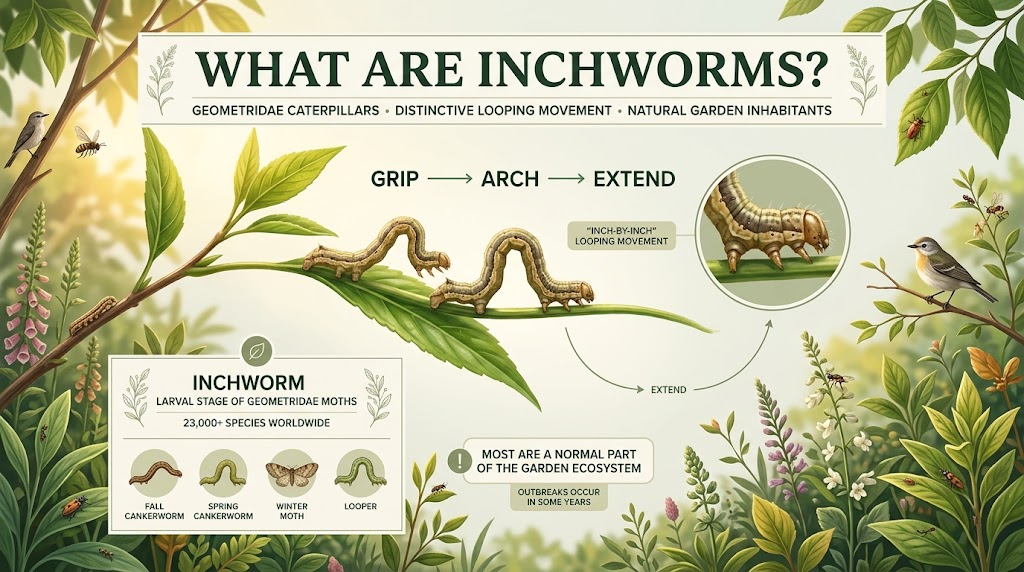
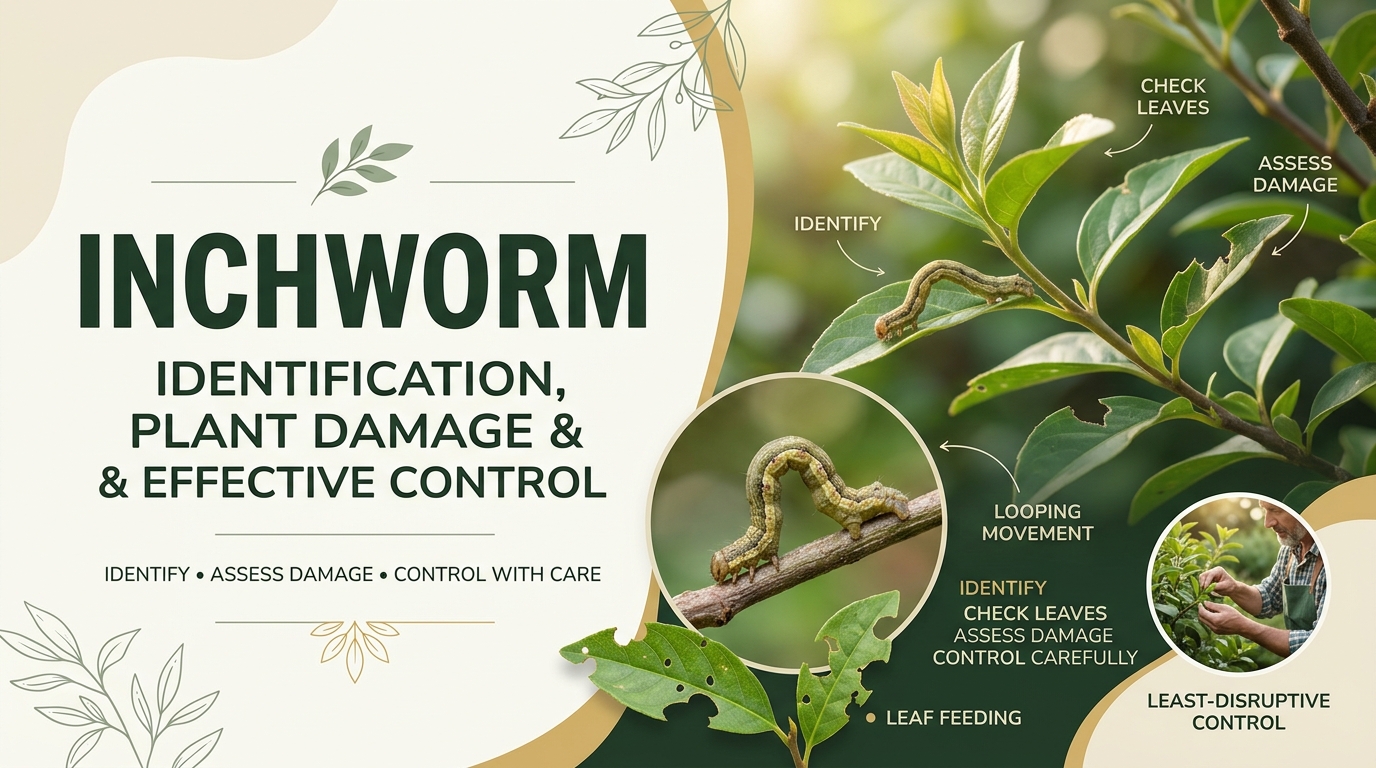
Inchworms are the larval (caterpillar) stage of moths in the family Geometridae — one of the largest moth families with over 23,000 species worldwide. The name comes from their distinctive locomotion: lacking the middle prolegs other caterpillars use, they draw their rear end up to their front legs in a looping arch, then extend forward, appearing to measure the ground inch by inch.
Common species in home gardens include the fall cankerworm (Alsophila pometaria), spring cankerworm (Paleacrita vernata), winter moth (Operophtera brumata), and the omnivorous looper. Despite the alarming appearance of a tree covered in tiny dangling caterpillars, most inchworm species are a normal part of the garden ecosystem and only become problematic in outbreak years.
How to Identify Inchworms?
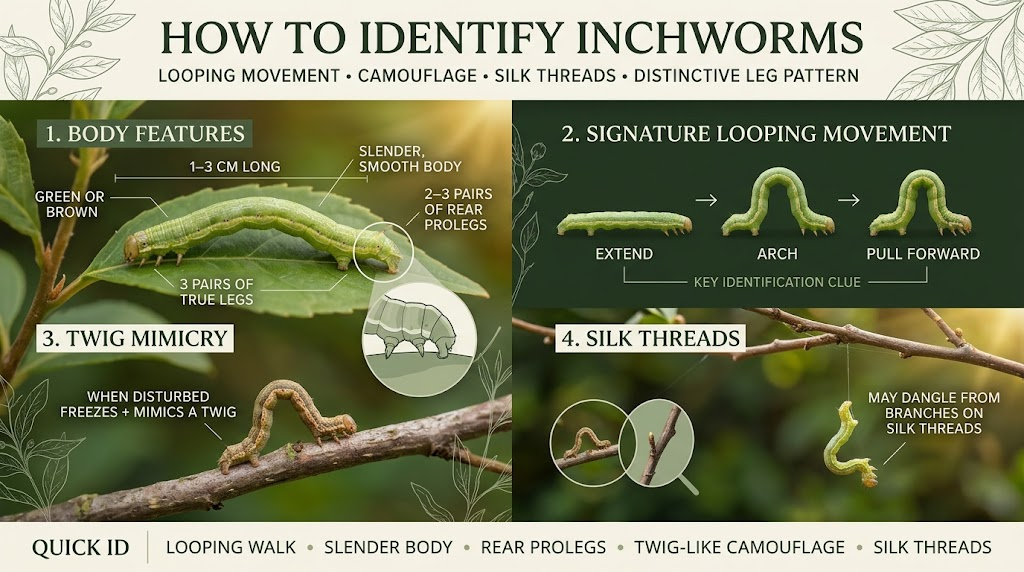
Inchworms are typically 1–3 cm long, slender, and smooth-bodied. Most are green or brown — colours that camouflage them against foliage and bark. The key identifying feature is their movement: they loop their body into an inverted “U” shape with each step. They have three pairs of true legs at the front and usually two or three pairs of prolegs at the very rear — nothing in the middle.
When disturbed, many species freeze in an outstretched position, gripping with their rear prolegs and extending their body rigidly at an angle — mimicking a small twig. This camouflage behaviour is another reliable identification clue. You may also notice fine silk threads: inchworms often dangle from branches on silk strands, especially when populations are high or when they’re blown by wind.
Lifecycle & Habitat
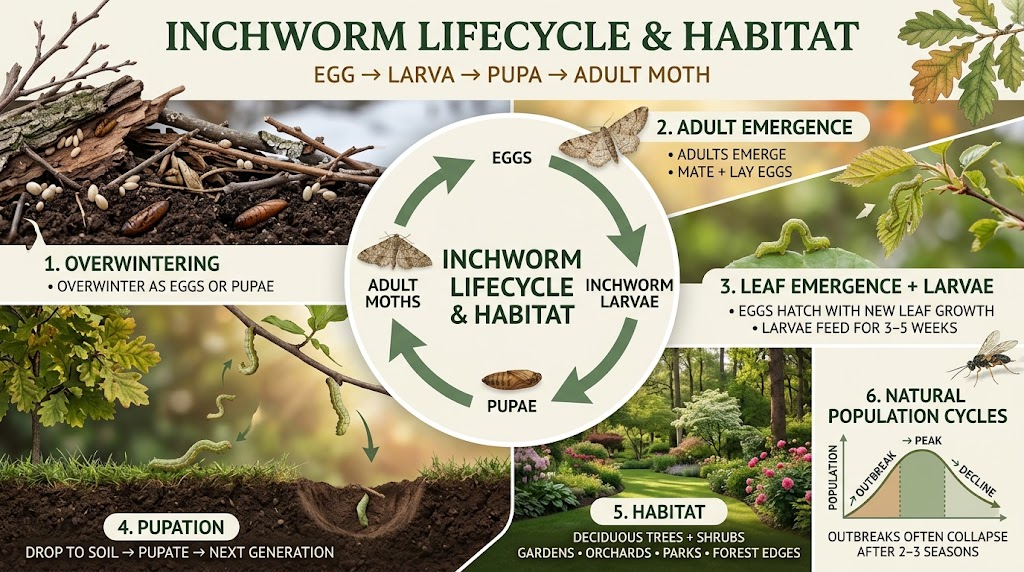
Most inchworm species overwinter as eggs or pupae in soil. Adults emerge in spring (or autumn, for fall cankerworms), mate, and females lay eggs on twigs and bark. Eggs hatch as leaves emerge, giving larvae immediate access to tender new foliage. The caterpillars feed for 3–5 weeks, then drop to the ground and pupate in the soil until the next cycle.
Inchworms are found wherever deciduous trees and shrubs grow — suburban gardens, orchards, parks, and forest edges. They prefer oaks, maples, elms, lindens, apple, cherry, and blueberry. Some species also feed on roses, herbaceous annuals, and vegetable crops. Populations fluctuate naturally year to year; outbreaks often collapse after 2–3 seasons due to parasitoid buildup.
Host Plants & Damage
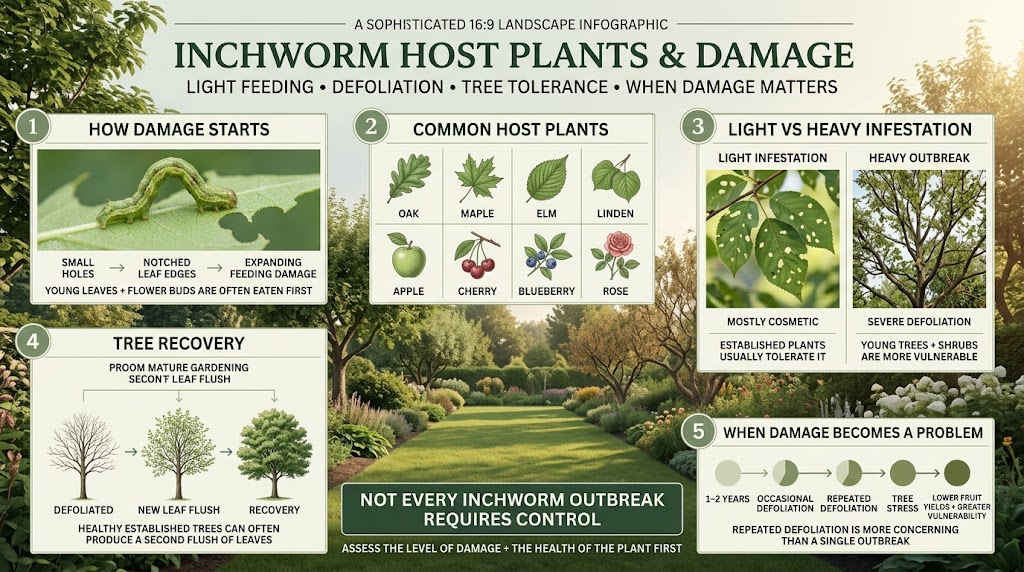
Inchworms feed by chewing leaf tissue, starting with small holes that expand as the larvae grow. In light infestations, damage appears as scattered holes or notched leaf edges — cosmetic but not harmful to plant health. In heavy outbreaks, entire canopies can be stripped bare (defoliation), particularly on oaks, maples, and fruit trees. Young leaves and flower buds are consumed first.
Healthy, established trees can tolerate one or two years of complete defoliation by producing a second flush of leaves. However, repeated defoliation stresses the tree, reduces fruit yields, increases susceptibility to secondary pests and diseases, and can eventually kill weakened specimens. Young transplants and small shrubs are more vulnerable — a single season of heavy feeding can set them back significantly.
Lookalikes: What Else Could It Be?
Sawfly larvae look very similar but have 6+ pairs of prolegs along their entire underside (inchworms have none in the middle). Cabbage loopers also loop when they walk but are heavier-bodied and have a pair of prolegs in the mid-section. Tent caterpillars build conspicuous silk tents in branch forks. If the caterpillar is hairy or brightly coloured (orange, black, or banded), it’s likely a different moth family entirely. The looping walk with a smooth, slender body is the inchworm giveaway.
Control Methods (Least-Disruptive First)
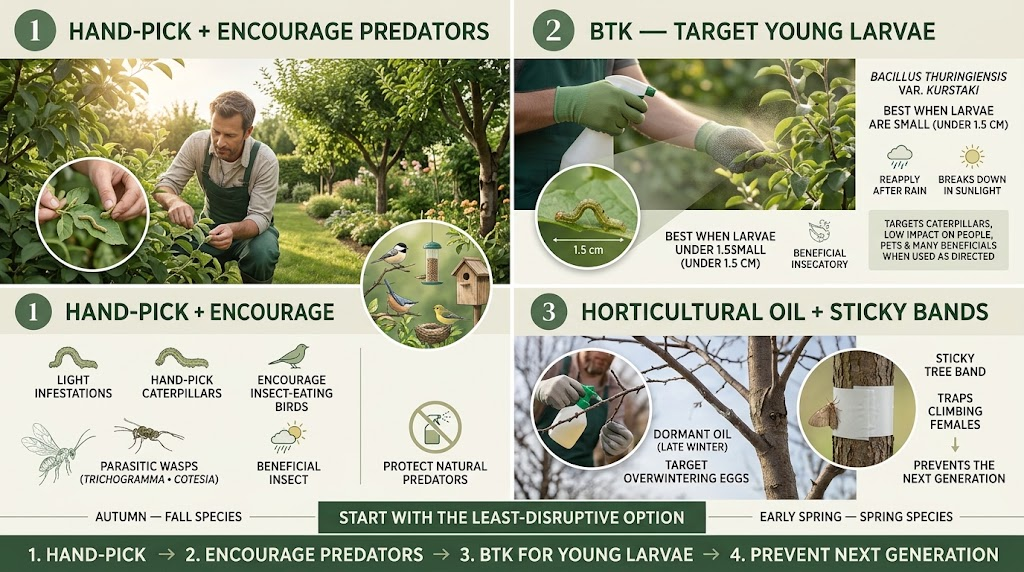
1. Hand-Pick & Encourage Predators
For small gardens or light infestations, pick caterpillars off by hand and drop them in soapy water. Hang bird feeders and nest boxes nearby — chickadees, nuthatches, and warblers consume enormous numbers of inchworms during breeding season. Avoid broad-spectrum insecticides that kill parasitic wasps (Trichogramma, Cotesia), which naturally keep populations in check.
2. Btk (Bacillus thuringiensis var. kurstaki)
Btk is a naturally occurring soil bacterium that targets caterpillars specifically — it’s harmless to humans, pets, birds, bees, and beneficial insects. Spray foliage when larvae are small (under 1.5 cm) for best results. Reapply after rain. Btk breaks down in sunlight within a few days, so timing is important. It’s widely available at garden centres and is organic-certified.
3. Horticultural Oil & Sticky Bands
Dormant horticultural oil sprayed on branches in late winter smothers overwintering eggs before they hatch. Sticky tree bands (applied in autumn for fall cankerworms or early spring for spring species) trap wingless female moths climbing the trunk to lay eggs — this physically prevents the next generation. These methods are preventive rather than reactive and work best when applied before the damage season begins.
Prevention
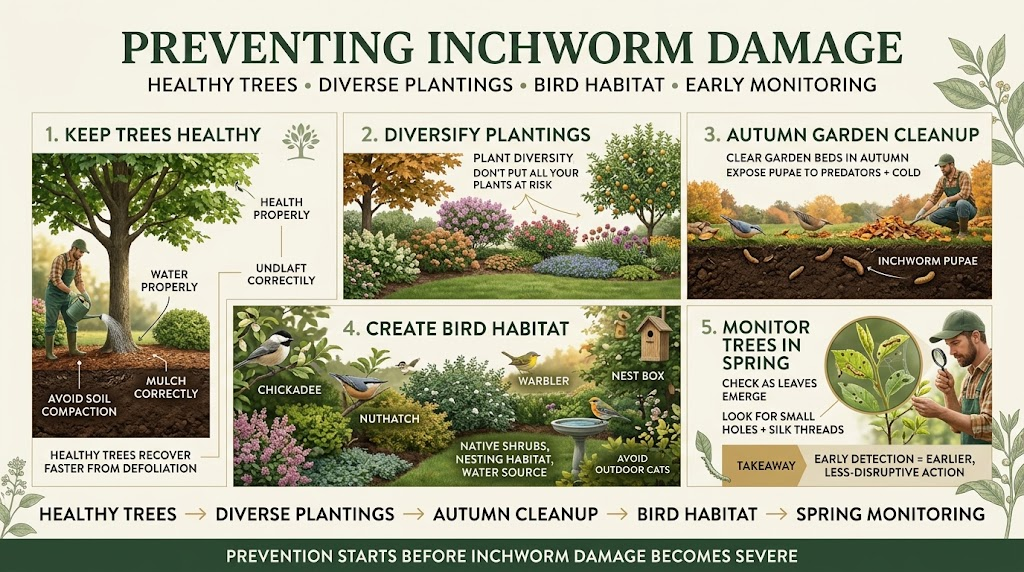
Maintain tree health through proper watering, mulching, and avoiding soil compaction — vigorous trees recover faster from defoliation. Diversify your plantings so a single pest cannot affect everything. Keep garden beds tidy in autumn to expose pupae to predators and cold. Install bird habitat features: native shrubs for nesting, a water source, and avoid outdoor cats. Monitor trees each spring as leaves emerge — early detection of tiny larvae (look for small holes in new leaves or silk threads) lets you act before damage becomes severe.
When to Call a Professional
Contact a certified arborist or pest management professional if: defoliation has occurred two or more years in a row and the tree shows branch dieback; the affected trees are too tall to spray effectively from the ground; you’re unsure whether the pest is actually an inchworm or something else requiring different treatment; or you want a trunk-injection treatment for high-value specimen trees. A professional can confirm the species, assess tree health, and apply targeted treatments safely.
Frequently Asked Questions
Are inchworms harmful to humans or pets?
No. Inchworms don’t bite, sting, or produce irritating hairs. They’re completely harmless to people and animals. The only concern is the plant damage they cause — the caterpillars themselves are safe to handle.
Will my tree die from inch worm damage?
A single year of defoliation rarely kills a healthy, established tree — it will produce a second flush of leaves. However, repeated defoliation over 2–3 consecutive years weakens trees and can lead to decline, especially if combined with drought or other stresses. Young or recently transplanted trees are more at risk.
When is the best time to treat for inchworms?
Treat when larvae are small — typically within 1–2 weeks of egg hatch in spring, when you notice the first tiny holes in new leaves. Btk is most effective on caterpillars under 1.5 cm. Sticky bands should go up in autumn (fall cankerworms) or late winter (spring cankerworms) before adults emerge.
Do inchworms turn into butterflies?
No — inchworms become moths, not butterflies. The adult geometer moths are typically small, drab grey or brown, and often nocturnal. Some species (like the fall cankerworm) have wingless females that can only crawl, which is why sticky tree bands are effective.